Food Container
CN → US| HS Code | Tariff Rate | Origin | Destination | Doc |
|---|---|---|---|---|
| 4819100020 | 35.0% | CN | US | Official Doc |
| 3923109000 | 38.0% | CN | US | Official Doc |
| 7326901000 | 85.0% | CN | US | Official Doc |
| 4819200020 | 35.0% | CN | US | Official Doc |
| 3923109000 | 38.0% | CN | US | Official Doc |
Product Images
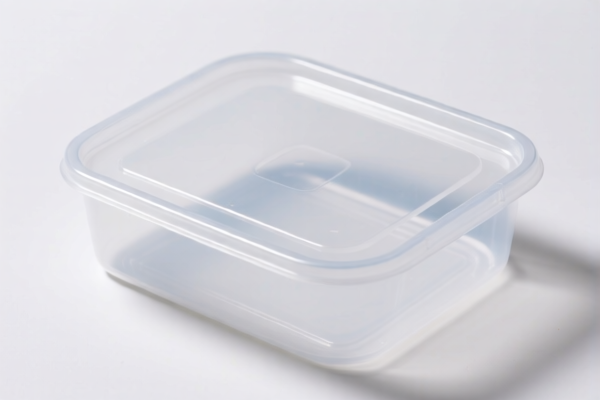
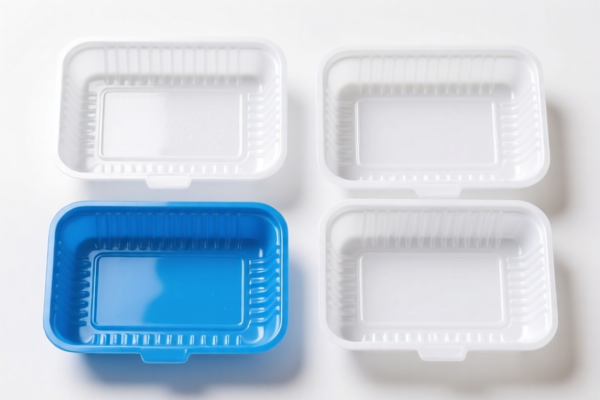


AI Analysis
🍱 Food Container (Packaging for Food & Beverage)
🌐 HS Code Reference & Clearance Guide | 2024 Tax Regime Full Analysis | Professional Logistics Strategy
📌 I. Product Definition & Classification: Do You Really Understand "Food Container"?
Food containers are a broad category in international trade, covering a wide range of packaging materials and designs used for the storage, transportation, and hygiene of food and beverages. Their classification depends heavily on the material composition, structure, and specific use.
In the provided data, three primary material types are identified, each carrying significantly different tariff risks:
- Paper & Corrugated Cartons (Non-Woven/Wood Pulp): Traditional, recyclable packaging for dry and semi-liquid foods.
- Plastic (Polymer): Durable, moisture-resistant containers, often used for sealed or fresh food storage.
- Tinplate (Steel/Iron): Heavy-duty, hermetically sealed cans (often used for long-term preservation).
⚠️ Critical Distinction: * Paper vs. Corrugated: Different HS codes apply based on the paper density and structure (e.g., corrugated boxes vs. flat paper containers). * Material is King: A plastic container is not the same as a steel can, even if the shape is identical. Misclassification can lead to massive tax discrepancies (e.g., 35% vs. 85%). * US Trade Barriers: All these items face heavy Section 301 (25%) and Section 122 (10%) tariffs if originating from China to the US.
📦 II. HS Code Classification Details (2024 Data Match)
Based strictly on your provided data, here is the breakdown of the four specific scenarios found in your dataset.
| HS Code | Material & Structure | Product Description | Total Tax Rate | Tariff Composition |
|---|---|---|---|---|
| 4819.10.00.20 | Paper / Corrugated | Food packaging boxes (Corrugated or Cardboard). Use: Food & Beverage Hygiene Containers |
35.0% | Base: 0% + 301: 25% + Sec 122: 10% |
| 4819.20.00.20 | Paper (Non-Corrugated) | Food packaging boxes (Flat Paper, not corrugated). Use: Sanitary Food Containers |
35.0% | Base: 0% + 301: 25% + Sec 122: 10% |
| 3923.10.90.00 | Plastic | Food boxes or airtight sealed containers. Use: General Packaging Supplies |
38.0% | Base: 3% + 301: 25% + Sec 122: 10% |
| 7326.90.10.00 | Tinplate (Steel/Iron) | Food packaging boxes (Tin cans, steel containers). Use: Other Iron/Steel Articles |
85.0% | Base: 0% + 301: 25% + Sec 122: 10% + Special Steel/Al/Cu: 50% |
🔍 Key Analysis: * Paper Goods (4819 series): At 35%, these are the most cost-effective for standard food packaging. * Plastic Goods (3923 series): Slightly higher at 38% due to a 3% base tariff. * Steel/Tinplate (7326 series): DANGER ZONE. At 85%, this is a massive barrier. This includes the 50% special tariff on steel/aluminum products under Section 122. Avoid this code unless absolutely necessary.
💰 III. Detailed Tariff Structure & Legal Basis (2024/2025 Regime)
✅ Destination Market: United States (US)
✅ Origin: China (CN)
✅ Applicable Policies: Section 301 (Trump/Obama Era) + Section 122 (Newer Additions)
🎯 1. Paper & Corrugated Boxes (4819.10.00.20 & 4819.20.00.20)
- Total Tax: 35.0%
- Breakdown:
- Base Duty: 0% (Paper packaging is generally duty-free).
- Section 301 (301 Tariff): +25.0% (Retaliatory tariff on Chinese goods).
- Section 122: +10.0% (Specific addition for certain Chinese goods).
- Legal Path:
HTSUS: 4819.10.00.20→Section 301 List 3→Section 122 Notice. - Risk: Low on base rate, but the 35% combined rate still significantly impacts margins.
🎯 2. Plastic Containers (3923.10.90.00)
- Total Tax: 38.0%
- Breakdown:
- Base Duty: 3.0% (Plastics generally carry a base duty).
- Section 301 (301 Tariff): +25.0%.
- Section 122: +10.0%.
- Legal Path:
HTSUS: 3923.10.90.00→Section 301 List 3→Section 122 Notice. - Risk: Moderate. The base 3% makes it slightly more expensive than paper.
🎯 3. Tinplate/Steel Containers (7326.90.10.00)
- Total Tax: 85.0%
- Breakdown:
- Base Duty: 0.0%.
- Section 301 (301 Tariff): +25.0%.
- Section 122: +10.0%.
- Section 122 Special (Steel/Al/Cu): +50.0%.
- Calculation: 0 + 25 + 10 + 50 = 85%.
- Legal Path:
HTSUS: 7326.90.10.00→Section 301→Section 122→ Steel/Aluminum Specific Footnote. - Risk: CRITICAL. This code is effectively a tax trap. Unless the product is specifically exempt or the steel content is minimal (unlikely for "Tinplate"), this cost is prohibitive.
🛠️ IV. Clearance & Logistics Practical Advice (Avoiding Pitfalls)
✅ 1. Material Verification (The "Golden Rule")
- Action: Conduct a Physical Lab Test (FTIR for plastics, XRF for metals, Density Test for paper) before shipping.
- Why:
- If you declare a "Plastic" container but it contains Tinplate or steel reinforcement, you face 85% tax instead of 38%.
- If you declare "Paper" but it has a Plastic Coating (laminated), customs may reclassify it as Plastic (3923) or even reject it if not declared correctly.
✅ 2. Naming & Description Precision
- Correct: "Corrugated Paper Box for Cereals" (
4819.10.00.20) - Incorrect: "Food Box" (Too vague, leads to detention) or "Metal Can" (if actually paper-lined).
- Tip: Explicitly state the material in the commercial invoice: "100% Recycled Corrugated Fiberboard, No Plastic Lining."
✅ 3. The "Tinplate" Trap
- Strategy: AVOID HS Code
7326.90.10.00for food containers if possible. - Alternative: If the container is steel, consider if it can be classified under a different duty-free or lower-tariff code (e.g., specific kitchen utensils if applicable, though unlikely for packaging).
- Workaround: Switch to Paper or Plastic alternatives to save 47% to 50% in tariffs (85% vs 35/38%).
✅ 4. Documentation Checklist
| Document | Requirement | Why? |
|---|---|---|
| Commercial Invoice | Must explicitly state "Made in China" and material composition. | Required to calculate the 25% + 10% + 50% surcharges. |
| Bill of Lading | Must match HS Code exactly. | Prevents "Red Line" detention at port. |
| Material Safety Data Sheet (MSDS) | Required for Plastic/Chemical coatings. | Proves safety for food contact; avoids FDA hold. |
| Packing List | Separate lines for Paper vs. Plastic vs. Steel. | Prevents mixed container errors. |
🌍 V. Market Comparison & Strategy
| Material | HS Code | Total Tax (China→US) | Strategy Recommendation |
|---|---|---|---|
| Corrugated Paper | 4819.10.00.20 |
35% | ✅ Recommended: Best balance of cost and protection. |
| Flat Paper | 4819.20.00.20 |
35% | ✅ Recommended: Good for flat packs, lightweight. |
| Plastic | 3923.10.90.00 |
38% | ⚠️ Acceptable: Use for waterproof needs, but watch margins. |
| Tinplate/Steel | 7326.90.10.00 |
85% | ❌ Avoid: Extremely high tax. Only use if legally mandated or if a duty exemption exists. |
📌 Conclusion: For food containers, Paper is the safest bet for US import from China in the current regime (35% total). Plastic is a close second (38%). Steel/Tinplate is a financial disaster (85%) due to the specific steel/aluminum add-on tariff.
🎯 VI. Final Tips for Success
- Pre-Arrival Ruling: Apply for a Binding Ruling from US Customs (CBP) if your product is borderline (e.g., a "paper box with a plastic liner").
- Supplier Communication: Ensure your Chinese supplier uses the correct HS Code on their export documents to match your import declaration.
- Cost Calculation: Always budget for the Full 35-85% when pricing your goods. Do not assume "duty-free" for packaging.
- Section 122 Awareness: Be aware that the 10% + 50% surcharges are dynamic and subject to policy changes. Monitor US Federal Register notices.
✨ Professional Customs Clearance starts with precise HS Code classification!
💼 Don't let the 85% steel tax eat your profit margin!
Customer Reviews
About HS Code Classification
The Harmonized System (HS) is an internationally standardized nomenclature developed by the World Customs Organization (WCO) to classify traded products. Over 200 countries use the HS system as the basis for customs tariffs, trade statistics, and import/export regulations.
Each HS code follows a hierarchical structure:
- Chapter (2 digits) — Broad category of goods (e.g., Chapter 84: Machinery and Mechanical Appliances)
- Heading (4 digits) — More specific grouping within the chapter
- Subheading (6 digits) — Internationally standardized breakdown, used by all WCO member countries
- National subdivisions (8-10 digits) — Country-specific extensions for further classification, such as US HTSUS 10-digit codes
Correct HS code classification is essential for smooth customs clearance, accurate duty payment, and compliance with trade regulations. Misclassification can lead to customs delays, overpayment of duties, or penalties.
When importing from CN to US, the applicable tariff rates may include:
- Most-Favored-Nation (MFN) rate — The standard duty rate applied to WTO members
- General rate — Applied to countries without trade agreements
- Trade remedy duties — Additional tariffs such as Section 301 (anti-dumping), Section 232 (national security), or countervailing duties
The information provided on this page is for reference purposes only. For official classification, please consult with your local customs authority or a licensed customs broker.