Food Flavoring Preparations
CN → USProduct Images
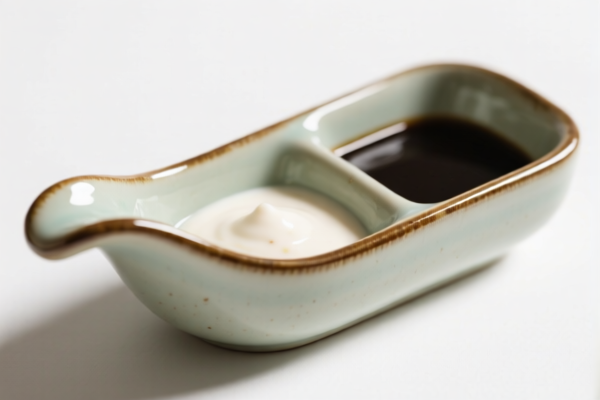
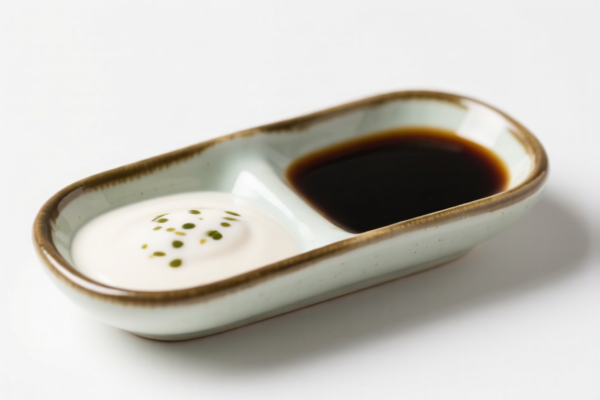
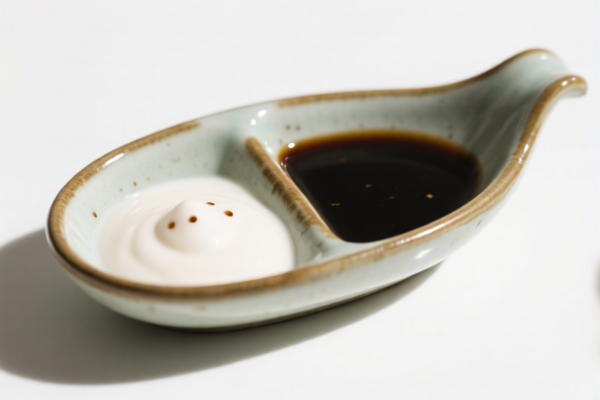
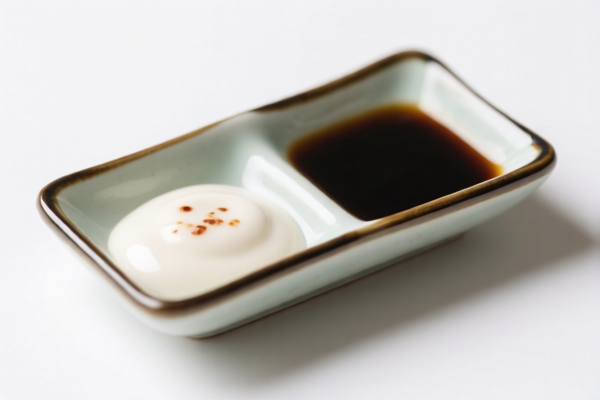
AI Analysis
🍋 Food Flavoring Preparations
🌐 HS Code Reference & Customs Clearance Guide | 2026 Latest Tariff Analysis | Professional Import Strategy
📌 I. Product Definition & Classification: Do You Really Understand "Flavorings"?
Food Flavoring Preparations are substances used to impart, strengthen, modify, or add flavor to food. They are not foods themselves but additives used in minute quantities. In international trade, they are broadly categorized based on their origin and chemical nature:
Natural Flavorings: Extracted from natural sources (plants, animals, fermentation) via physical, enzymatic, or microbiological means.
Artificial/Synthetic Flavorings: Chemically synthesized substances that mimic natural flavors or create new ones.
Nature-Identical: Chemically identical to natural compounds but synthesized.
Flavoring Preparations: Mixtures of the above, often including carriers, solvents, or diluents.
⚠️ Key Distinction Point:
- If the product is a pure chemical substance (e.g., pure vanillin, pure menthol) used as a flavoring, it may fall under Chapter 29 (Organic Chemicals).
- If it is a mixture, extract, or preparation intended specifically for food flavoring (including extracts, oleoresins, essential oils, or compounded preparations), it falls under Chapter 21 (Miscellaneous Edible Preparations).
- Most common commercial "Flavoring Preparations" (especially those sold to food manufacturers for mixing) are classified under 2106.90.
📦 II. HS Code Classification Details (2026 Latest Tariff Authority Reference)
| HS Code | Product Description | Applicable Scenario | Key Characteristics |
|---|---|---|---|
2106.90.92.00 |
Food preparations, nesoi: Flavoring preparations (Other) | Most compounded flavoring preparations, extracts, oleoresins | ✅ Mixture/Preparation |
2922.42.00.00 |
Amino-acids, excluding those containing more than one type of oxygen function; their esters... | Pure Vanillin (if sold as a pure chemical) | ✅ Pure Chemical |
2920.90.00.00 |
Epoxides, epoxyalcohols, epoxyaldehydes and their halogenated, sulphonated, nitrated or nitrosated derivatives | Synthetic flavoring chemicals (e.g., certain esters) | ✅ Pure Chemical |
1302.19.40.00 |
Vegetable saps and extracts; pectic substances, pectinates and pectates | Fruit/Herb extracts used as flavor base | ✅ Natural Extract |
3301.29.00.00 |
Essential oils (terpenous or not terpenous), incl. concretes and absolutes; resinoids; extracted oleoresins; oils obtained from conifers; terpenous by-products of essential oils | Pure essential oils (e.g., orange oil, lemon oil) | ✅ Pure Essential Oil |
3302.10.00.00 |
Mixtures of odoriferous substances and mixtures (including alcoholic solutions) with base of substances falling in heading 3301; kinds serving as base for industrial preparations | Industrial Flavor Bases (for perfumery, detergents, non-food) | ❌ NOT FOOD |
🔍 Critical Reminder:
- Chapter 21 (2106.90) is the default and most common classification for food-grade flavoring preparations sold to food/beverage manufacturers.
- If the product is a pure chemical (e.g., pure ethyl vanillin), it may be classified under Chapter 29. However, if it is a preparation (e.g., vanillin dissolved in glycerin, or mixed with maltodextrin), it must go to 2106.90.
- Essential oils (Chapter 33) are distinct from flavoring preparations (Chapter 21). If the essential oil is processed or mixed for direct food use as a "preparation," it may still fall under 2106.90 depending on local customs interpretation.
- Do NOT misclassify food flavorings as industrial fragrances (3302.10) – this can lead to severe penalties and product rejection.
💰 III. 2026 Latest Tariff Rate Breakdown (Including Surtaxes, Policy Surcharges)
✅ Applicable Country: United States (US)
✅ Country of Origin: China (CN)
✅ Effective Date: November 10, 2025 onwards (including subsequent imports)
🎯 1. 2106.90.92.00 —— Flavoring Preparations
| Item | Content |
|---|---|
| Base Tariff Rate | 0% (ad valorem) |
| USITC Surtax | +25% (from USITC Footnote 9903.88.01) |
| IEEPA Surtax | +10% (for China/Hong Kong products, from Nov 10, 2025) |
| Total Tariff Rate | 45% |
| Tax Calculation | CIF Value × 45% |
| De Minimis Eligibility | ❌ No (deny_de_minimis) |
| Legal Basis Path | IEEPA:9903.01.25 → IEEPA:9903.01.24 → USITC:2106.90.92.00 → FOOTNOTE:9903.88.01 |
📌 Explanation:
- The "25% USITC surtax" comes from the Section 301 tariffs under the US Trade Act;
- The "10% IEEPA surtax" is the additional tariff imposed on Chinese goods under the International Emergency Economic Powers Act;
- Total 45% is a very high tariff rate. Pre-calculation is essential!
🎯 2. 3301.29.00.00 —— Essential Oils (If classified here)
| Item | Content |
|---|---|
| Base Tariff Rate | 0% |
| USITC Surtax | +25% |
| IEEPA Surtax | +10% |
| Total Tariff Rate | 45% |
| Tax Calculation | CIF × 45% |
| De Minimis Eligibility | ❌ No |
| Legal Basis Path | IEEPA:9901.25 → IEEPA:9903.01.24 → USITC:3301.29.00.00 → FOOTNOTE:9903.88.01 |
📌 Note:
- If customs determines your "flavoring" is a pure essential oil, it falls here. Rate is identical.
- Risk: If you declare as 3301 but it’s a mixture, it’s misclassification. If you declare as 2106 but it’s pure, it’s also misclassification.
🛠️ IV. Customs Clearance Practical Advice (Practical Pitfall Avoidance Guide)
✅ 1. Document Checklist (All Required)
| Document | Required | Description |
|---|---|---|
| ✅ Product Specification Sheet | ✔️ | Must include composition, usage (food grade), concentration, carrier/solvent |
| ✅ Formula/Composition List | ✔️ | To prove it’s a "preparation" and not a pure chemical |
| ✅ Product Photos | ✔️ | Clear label showing "For Food Use Only," ingredients, expiration date |
| ✅ Third-Party Test Report | ✔️ | FDA compliance, GRAS status, heavy metals, allergens |
| ✅ Commercial Invoice | ✔️ | Must state "Flavoring Preparation for Food Use" |
| ✅ Certificate of Origin (CO) | ✔️ | If non-China origin, for potential tariff reduction |
| ✅ Packing List | ✔️ | Detail net/gross weight, package type |
✅ 2. Declaration Tips (Key Mnemonic)
🔥 "Food Grade, Mix it, 2106. Pure Chemical, Chapter 29. Don't Mix Up, or You'll Cry!"
| Scenario | Correct Declaration | Incorrect Practice |
|---|---|---|
| Compounded flavoring (mixture) | 2106.90.92.00 |
Declaring as pure chemical → 0% (but risky if audited) |
| Pure Vanillin (chemical) | 2922.42.00.00 |
Declaring as preparation → 45% (higher tax) |
| Essential Oil (pure) | 3301.29.00.00 |
Declaring as preparation → 45% (higher tax) |
| Industrial Fragrance (non-food) | 3302.10.00.00 |
Declaring as food flavoring → Illegal/Severe Penalty |
✅ 3. Special Cases Handling
| Case | Handling Advice |
|---|---|
| ODM/OEM Flavoring | Provide client’s formulation + safety data sheet (SDS) |
| Flavoring with Alcohol Carrier | Still 2106.90 if for food use. Declare alcohol content. |
| Natural Extract vs. Preparation | If extracted and diluted, it’s 2106.90. If pure extract, may be 1302 or 3301. |
| GRAS Status Proof | Provide FDA GRAS notice numbers to expedite customs clearance |
🌍 V. Global Market Customs Clearance Comparison (2026 Latest)
| Country/Region | Recommended HS Code | Tariff | Certification Requirement | Note |
|---|---|---|---|---|
| 🇺🇸 USA | 2106.90.92.00 |
45% (China) | FDA Registration + GRAS | High tariff burden |
| 🇨🇳 China | 2106.90.92.00 |
6% | GB Standards + HACCP | Moderate tariff |
| 🇪🇺 EU | 2106.90.92 |
0% (if E694 compliant) | EFSA Approval + Labeling | Strict regulation |
| 🇦🇺 Australia | 2106.90.90 |
5% | FSANZ Approval | Standard requirements |
| 🇯🇵 Japan | 2106.90.990 |
0-3% | JFC Standards + Listing | Strict positive list |
📌 Conclusion:
- USA has the highest tariff burden due to Section 301 + IEEPA surtaxes.
- EU and Japan are strict on regulation but low/zero tariff.
- China has moderate tariff but increasing regulatory scrutiny on food additives.
📌 VI. Common Errors & Pitfall Avoidance (Lessons Learned)
❌ Error 1: Declaring "Flavoring Preparation" as "Industrial Fragrance" (3302.10)
👉 Consequence: Illegal import, product seizure, heavy fines.
❌ Error 2: Declaring pure chemical (e.g., pure menthol) as "Flavoring Preparation" (2106.90)
👉 Consequence: Overpaying 45% tariff when 0-5% might apply.
❌ Error 3: Failing to declare alcohol/carrier content
👉 Consequence: Customs reclassification, delays, penalties.
❌ Error 4: Providing incomplete formula
👉 Consequence: FDA/Customs rejection due to lack of GRAS proof.
✅ Correct Practice:
"Flavoring Preparation, Food Grade, Contains Vanilla Extract, Ethyl Vanillin, Glycerin, and Ethanol. For Use in Bakery Products. GRAS Notice No. GRN-XXX. HS Code: 2106.90.92.00"
🎯 VII. Conclusion: Precise Classification Saves Money!
🎯 Remember:
🔹 "Mixture = 2106. Pure = 29/33. Food Use Only = 2106. Industrial = 3302."
🔹 "Tariff Differs by 45%, Formula Determines HS Code, Declaration Must Match Reality."
📌 Tip:
If your flavoring is originated from Vietnam, Mexico, or Thailand, you may qualify for IEEPA exemption, reducing tariff to 0-5%.
Apply for Advance Ruling before shipment to avoid clearance delays.
📣 Act Now:
📞 Contact a professional customs broker + Provide Full Formula + Apply for HS Code Advance Ruling
🚀 Ensure your flavorings clear customs smoothly, avoid penalties, and protect your profit margin!
✨ Professional Classification, Starting from Precise HS Codes!
💼 Every Penny of Your Cost Deserves Precise Calculation!
Customer Reviews
About HS Code Classification
The Harmonized System (HS) is an internationally standardized nomenclature developed by the World Customs Organization (WCO) to classify traded products. Over 200 countries use the HS system as the basis for customs tariffs, trade statistics, and import/export regulations.
Each HS code follows a hierarchical structure:
- Chapter (2 digits) — Broad category of goods (e.g., Chapter 84: Machinery and Mechanical Appliances)
- Heading (4 digits) — More specific grouping within the chapter
- Subheading (6 digits) — Internationally standardized breakdown, used by all WCO member countries
- National subdivisions (8-10 digits) — Country-specific extensions for further classification, such as US HTSUS 10-digit codes
Correct HS code classification is essential for smooth customs clearance, accurate duty payment, and compliance with trade regulations. Misclassification can lead to customs delays, overpayment of duties, or penalties.
When importing from CN to US, the applicable tariff rates may include:
- Most-Favored-Nation (MFN) rate — The standard duty rate applied to WTO members
- General rate — Applied to countries without trade agreements
- Trade remedy duties — Additional tariffs such as Section 301 (anti-dumping), Section 232 (national security), or countervailing duties
The information provided on this page is for reference purposes only. For official classification, please consult with your local customs authority or a licensed customs broker.