Food Grade Alpha Cellulose Granules
CN → US| HS Code | Tariff Rate | Origin | Destination | Doc |
|---|---|---|---|---|
| 3912900010 | 40.2% | CN | US | Official Doc |
| 3912900090 | 40.2% | CN | US | Official Doc |
| 4706200000 | 35.0% | CN | US | Official Doc |
| 4706920100 | 35.0% | CN | US | Official Doc |
Product Images
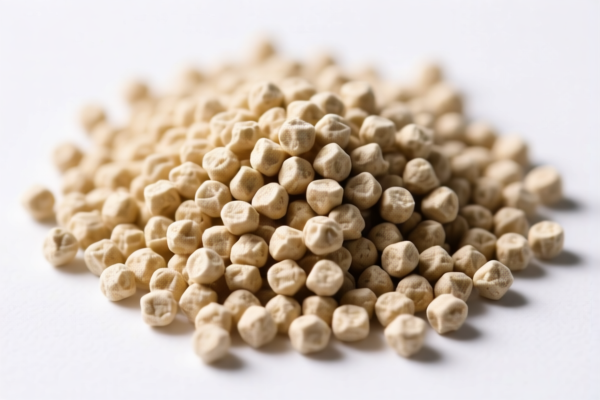
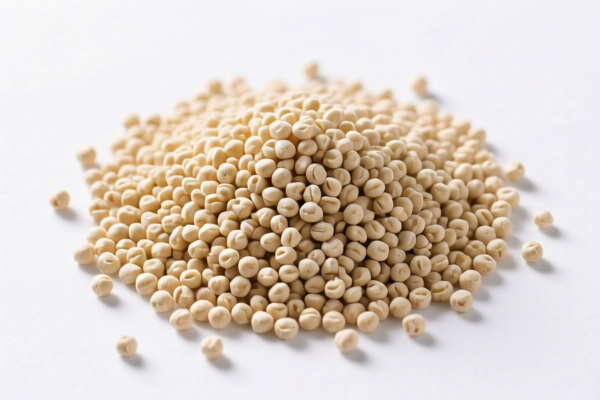
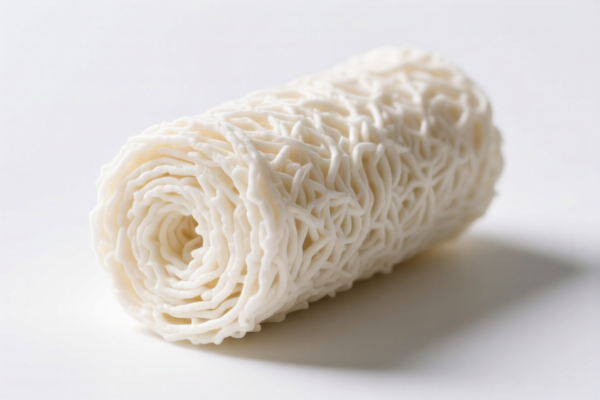
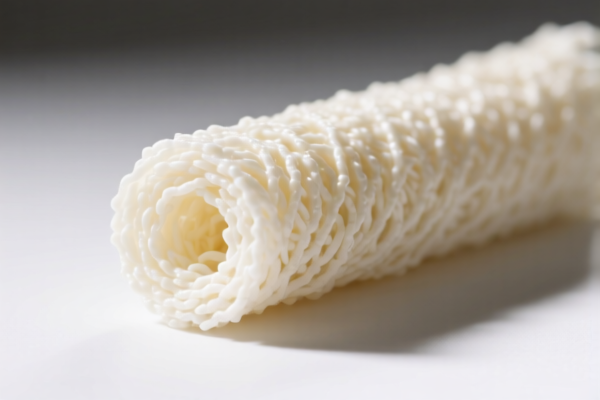
AI Analysis
🌿 Food Grade Alpha Cellulose Granules
🌐 HS Code Reference & Customs Clearance Guide | 2026 Latest Tariff Analysis | Professional Clearance Strategy
📌 I. Product Definition & Classification: What Exactly is "Alpha Cellulose"?
Food Grade Alpha Cellulose Granules are highly purified cellulose derivatives, typically extracted from wood pulp or cotton linters. They are characterized by a high alpha-cellulose content (usually >90-95%) and low lignin/hemicellulose levels. In international trade, they are primarily classified based on their purity, processing degree, and physical form.
Key Distinction Points: * α-Cellulose (Alpha Cellulose): Highly purified, crystalline cellulose. Often used in food additives, pharmaceuticals, or high-end industrial applications. If it is chemically modified or specifically categorized as a "chemical derivative of cellulose," it may fall under 3912. * Chemical Pulp / Unrefined Cellulose: If the material is primarily in its raw fiber/pulp form without extensive chemical modification for plastic-like properties, it may fall under 4706. * Physical State: The "Granular" form suggests it has been processed for easier handling, but the core chemical identity determines the HS Code.
⚠️ Critical Decision Factor:
- If the product is defined specifically as "Alpha-Cellulose Granules" (implying a specific purified chemical category distinct from general pulp), it is often classified under 3912.90.00.10.
- If it is considered a generic chemical pulp or raw material for further processing (not specifically "Alpha" grade in the chemical sense), it may fall under 4706.20.00.00 or 4706.92.01.00.
- If it is a general cellulose derivative not specified as alpha, it may fall under 3912.90.00.90.
📦 II. HS Code Classification Details (2026 Latest Tariff Authority Comparison)
| HS Code | Product Description | Applicable Scenario | Alpha-Cellulose Specific? |
|---|---|---|---|
3912.90.00.10 |
Industrial Grade Cellulose Granules, Material: Cellulose, Form: Granular, Complies with α-Cellulose Granule Form | Specific purification to α-cellulose standards; high purity | ✅ Yes (Explicitly α-Cellulose) |
3912.90.00.90 |
Industrial Grade Cellulose Granules, Material: Cellulose, Form: Granular, Classified as Cellulose & Chemical Derivatives (Non-α-Cellulose) | General cellulose derivatives, not meeting specific α-cellulose classification | ❌ No (General Derivative) |
4706.20.00.00 |
Cellulose Granules, Material: Cellulose, Form: Granules (Primary Form), Complies with Cellulose Fiber Pulp/Material Characteristics | Raw or semi-processed cellulose pulp in granular form | ❌ No (Pulp/Fiber Material) |
4706.92.01.00 |
Cellulose Granules, Material: Cellulose, Form: Granules (Primary Form), Complies with Chemical Pulp Category Raw Material Attributes | Chemical pulp used as raw material, granular form | ❌ No (Chemical Pulp Raw Material) |
🔍 Key Reminder:
- "Alpha-Cellulose" is a specific chemical designation. If your product certificate explicitly states α-Cellulose content >90%, and the form is granular, 3912.90.00.10 is the most accurate classification.
- If the product is simply cellulose granules without the "alpha" specificity, customs may classify it as a general derivative (3912.90.00.90) or even as pulp (4706).
- Granular form does not automatically mean "plastic-like." The chemical processing level is key.
💰 III. 2026 Latest Tariff Rate Breakdown (Including Additional Taxes, Policy Add-ons)
✅ Applicable Country: United States (US)
✅ Origin: China (CN)
✅ Effective Date: From November 10, 2025 (including subsequent imports)
🎯 1. 3912.90.00.10 —— α-Cellulose Granules (Specific Purified Grade)
| Item | Content |
|---|---|
| Base Tariff Rate | 5.2% (ad valorem) |
| USITC Additional Tariff | +25% (under Section 301) |
| IEEPA Additional Tariff | +10% (for China/HK products, effective Nov 10, 2025) |
| Total Tariff Rate | 40.2% |
| Tax Calculation | CIF Value × 40.2% |
| De Minimis Exemption Eligible? | ❌ No (deny_de_minimis) |
| Legal Basis Path | IEEPA:9903.01.25 → IEEPA:9903.01.24 → USITC:3912.90.00.10 → FOOTNOTE:3912.90.00.10 |
📌 Explanation:
- The 25% USITC tariff is the standard Section 301 duty on many Chinese goods.
- The 10% IEEPA tariff is a new layer on top for Chinese-origin products.
- Total 40.2% is significant. This category is for specifically purified alpha-cellulose.
🎯 2. 3912.90.00.90 —— General Cellulose Derivatives (Non-α-Cellulose)
| Item | Content |
|---|---|
| Base Tariff Rate | 5.2% |
| USITC Additional Tariff | +25% |
| IEEPA Additional Tariff | +10% |
| Total Tariff Rate | 40.2% |
| Tax Calculation | CIF Value × 40.2% |
| De Minimis Exemption Eligible? | ❌ No |
| Legal Basis Path | IEEPA:9901.25 → IEEPA:9903.01.24 → USITC:3912.90.00.90 → FOOTNOTE:3912.90.00.90 |
📌 Note:
- Same tax burden as Alpha-Cellulose if misclassified.
- Ensure your product specification does not claim "Alpha-Cellulose" if you want to avoid the specific scrutiny of3912.90.00.10, but note that the base rate is the same. The difference is in the chemical description.
🎯 3. 4706.20.00.00 —— Cellulose Granules (Primary Form, Pulp/Material Characteristics)
| Item | Content |
|---|---|
| Base Tariff Rate | 0.0% |
| USITC Additional Tariff | +25% |
| IEEPA Additional Tariff | +10% |
| Total Tariff Rate | 35.0% |
| Tax Calculation | CIF Value × 35.0% |
| De Minimis Exemption Eligible? | ❌ No |
| Legal Basis Path | IEEPA:9903.01.25 → IEEPA:9903.01.24 → USITC:4706.20.00.00 → FOOTNOTE:4706.20.00.00 |
📌 Advantage:
- Saves 5.2% compared to the 3912 classification because the base tariff is 0%.
- However, this classification implies the product is more like raw chemical pulp in granular form, not a high-purity "Alpha" grade. If your product is truly "Food Grade Alpha Cellulose," using this code might be challenged as misclassification.
🎯 4. 4706.92.01.00 —— Cellulose Granules (Primary Form, Chemical Pulp Category)
| Item | Content |
|---|---|
| Base Tariff Rate | 0.0% |
| USITC Additional Tariff | +25% |
| > IEEPA Additional Tariff | +10% |
| Total Tariff Rate | 35.0% |
| Tax Calculation | CIF Value × 35.0% |
| De Minimis Exemption Eligible? | ❌ No |
| Legal Basis Path | IEEPA:9901.25 → IEEPA:9903.01.24 → USITC:4706.92.01.00 → FOOTNOTE:4706.92.01.00 |
📌 Note:
- Same 35.0% rate as4706.20.00.00.
- This is for Chemical Pulp raw materials. If your "Food Grade Alpha Cellulose" is actually a refined chemical pulp, this might be applicable.
- Risk: If customs inspectors determine it is high-purity Alpha Cellulose, they may reclassify it to 3912, leading to back taxes and penalties.
🛠️ IV. Customs Clearance Practical Advice (Combat Pitfall Guide)
✅ 1. Required Documentation Checklist (Non-negotiable)
| Document | Must Provide | Description |
|---|---|---|
| ✅ Product Specification Sheet | ✔️ | Must clearly state "Alpha-Cellulose Content %", purity, and form. |
| ✅ Technical Data Sheet (TDS) | ✔️ | Shows manufacturing process, origin, and intended use (Food/Industrial). |
| ✅ Certificate of Analysis (COA) | ✔️ | Third-party lab results proving α-cellulose content. |
| ✅ Product Photos (Clear Label) | ✔️ | Show granule form, packaging, and batch numbers. |
| ✅ Commercial Invoice | ✔️ | Must describe as "Alpha Cellulose Granules" or "Cellulose Granules", matching HS Code. |
| ✅ Certificate of Origin (CO) | ✔️ | To confirm China origin for tariff calculation. |
| ✅ Packing List | ✔️ | Detail net/gross weights, container numbers. |
✅ 2. Declaration Strategy (Key Mnemonic)
🔥 "Pure Alpha, 3912; Raw Pulp, 4706; Name Matches, No Tears!"
| Situation | Correct Declaration | Incorrect Practice |
|---|---|---|
| High Purity α-Cellulose (>90%) | 3912.90.00.10 |
Misdeclared as 4706 → Penalty for Misclassification |
| General Cellulose Derivative | 3912.90.00.90 |
Overly vague description → Customs Query |
| Chemical Pulp in Granular Form | 4706.20.00.00 |
Claiming "Alpha-Cellulose" → Audit Risk |
| Food Grade Specific | Clearly state "Food Grade" in description | Omitting "Food Grade" → Regulatory Non-Compliance (FDA) |
✅ 3. Special Cases Handling
| Scenario | Handling Advice |
|---|---|
| OEM Custom Alpha Cellulose | Provide Customer Order + Technical Spec to prove it is indeed α-Cellulose. |
| Mixed Shipment (Alpha + Regular) | Split Declaration. Do not mix HS Codes in one line item. |
| Food vs. Industrial Use | If for Food, ensure FDA compliance docs are ready. Customs may check for food safety standards even if HS Code is industrial. |
| Granular vs. Powder | Granular is specified. Do not declare as "Powder" if it is granular. Shape affects classification in some cases. |
🌍 V. Global Market Customs Comparison (2026 Latest)
| Country/Region | Recommended HS Code | Tariff Rate (China Origin) | Certification Requirement | Notes |
|---|---|---|---|---|
| 🇺🇸 USA | 3912.90.00.10 (Alpha) 4706 (Pulp) |
40.2% (Alpha) 35.0% (Pulp) |
FDA (if food), CBP Pre-Ruling | High Tariff. Pre-ruling recommended. |
| 🇨🇳 China | 3912.90.00.10 |
~5-13% (Import Duty) | CCC (if applicable), GB Standards | Lower tariff. Focus on quality standards. |
| 🇪🇺 EU | 3912.31.00 (Cellulose) |
0-6.5% | REACH, FDA-equivalent | Different HS Code structure. 6-digit EU code. |
| 🇦🇺 Australia | 3912.31.00 |
5% | TGA (if medical), Standard | Lower tariff than US. |
| 🇯🇵 Japan | 3912.31.00 |
0-3% | FSC (Food Sanitation Act) | Very low tariff. Strict food safety. |
📌 Conclusion:
- USA has the highest tariffs due to Section 301 and IEEPA.
- EU, Japan, and Australia have much lower or zero tariffs for cellulose derivatives.
- China Origin triggers extra taxes in the US. Consider supply chain diversification if volume is high.
📌 VI. Common Errors & Pitfall Guide (Blood Lessons)
❌ Mistake 1: Declaring "Alpha Cellulose" under 4706 to save 5.2%
👉 Consequence: Customs audit reveals high purity → Reclassification to 3912 + Back Taxes + Penalties.
❌ Mistake 2: Omitting "Alpha" in the description when it is α-Cellulose
👉 Consequence: Customs may classify as generic derivative (3912.90.00.90) or question accuracy → Delays.
❌ Mistake 3: Ignoring FDA requirements for "Food Grade" products
👉 Consequence: FDA Hold/Refusal even if Customs clears it. Food grade requires separate regulatory compliance.
❌ Mistake 4: Using "Cellulose Powder" instead of "Granules"
👉 Consequence: Mismatch with physical product → Customs Inspection + Potential Fine.
✅ Correct Practice:
"Food Grade Alpha-Cellulose Granules, High Purity (>95%), Granular Form, For Food/Pharmaceutical Use, HS Code 3912.90.00.10, Made in China"
🎯 VII. Conclusion: Professional Declaration, Save Time, Cut Costs!
🎯 Remember the Mantra:
🔹 "Alpha = 3912 (40.2%), Pulp = 4706 (35.0%), Name Must Match, Don't Guess!"
🔹 "HS Code Determines Fate, 5% Difference Matters, Declaration One Step, Tax Bill Huge!"
📌 Pro Tip:
If your product is not strictly "Alpha-Cellulose" but rather Chemical Pulp, use 4706 to save 5.2%. However, ensure your Technical Data Sheet supports this classification.
For Food Grade, always have FDA Compliance Docs ready, regardless of HS Code.
Consider applying for a US Customs Advance Ruling if the classification is ambiguous.
📣 Immediate Action:
📞 Contact a licensed customs broker + Provide Product Spec Sheet + Apply for HS Code Pre-Ruling
🚀 Let your Alpha Cellulose, Clear Customs Smoothly, Export Efficiently, Maximize Profit!
✨ Professional Clearance Starts with Accurate Classification!
💼 Every cent of your cost deserves precise calculation!
Customer Reviews
About HS Code Classification
The Harmonized System (HS) is an internationally standardized nomenclature developed by the World Customs Organization (WCO) to classify traded products. Over 200 countries use the HS system as the basis for customs tariffs, trade statistics, and import/export regulations.
Each HS code follows a hierarchical structure:
- Chapter (2 digits) — Broad category of goods (e.g., Chapter 84: Machinery and Mechanical Appliances)
- Heading (4 digits) — More specific grouping within the chapter
- Subheading (6 digits) — Internationally standardized breakdown, used by all WCO member countries
- National subdivisions (8-10 digits) — Country-specific extensions for further classification, such as US HTSUS 10-digit codes
Correct HS code classification is essential for smooth customs clearance, accurate duty payment, and compliance with trade regulations. Misclassification can lead to customs delays, overpayment of duties, or penalties.
When importing from CN to US, the applicable tariff rates may include:
- Most-Favored-Nation (MFN) rate — The standard duty rate applied to WTO members
- General rate — Applied to countries without trade agreements
- Trade remedy duties — Additional tariffs such as Section 301 (anti-dumping), Section 232 (national security), or countervailing duties
The information provided on this page is for reference purposes only. For official classification, please consult with your local customs authority or a licensed customs broker.