Food Grade Cellulose Acetate Sheet
CN → US| HS Code | Tariff Rate | Origin | Destination | Doc |
|---|---|---|---|---|
| 3920730000 | 37.9% | CN | US | Official Doc |
| 3920791000 | 41.2% | CN | US | Official Doc |
Product Images
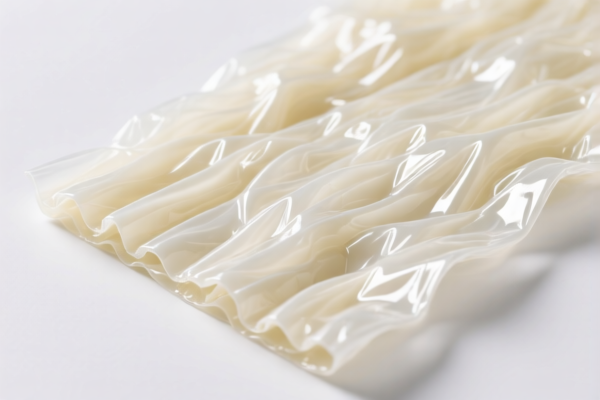
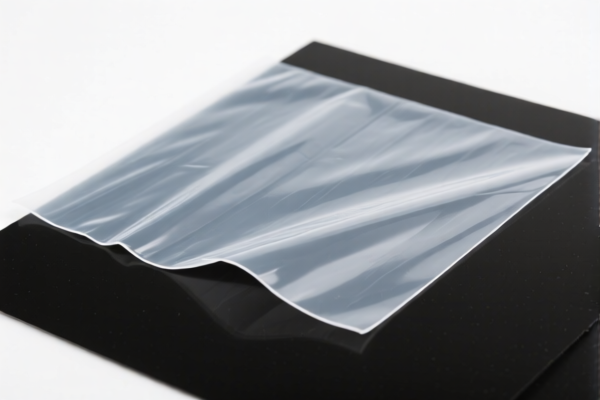
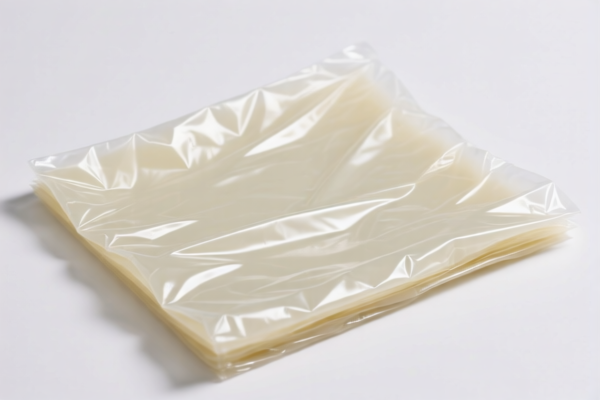
AI Analysis
🧪 Food Grade Cellulose Acetate Sheet
🌐 HS Code Reference & Customs Clearance Guide | 2026 Latest Tariff Analysis | Professional Strategy
📌 I. Product Definition & Classification: What is "Food Grade Cellulose Acetate Sheet"?
Cellulose Acetate (CA) is a synthetic polymer derived from cellulose (usually wood pulp or cotton linter). It is widely used in the food industry for packaging films, wraps, and sheets due to its clarity, barrier properties, and biodegradability.
In international trade, it is classified under Chapter 39: Plastics and Articles Thereof. Specifically, it falls under "Non-cellular, not reinforced, laminated, supported or similarly combined with other materials."
⚠️ Critical Distinction:
- "Food Grade" is a quality/safety specification, NOT a classification criteria for HS Code.
- The HS Code depends on the chemical derivative (Cellulose Acetate vs. Other Derivatives) and physical form (Thickness).
- Both3920.73.00.00and3920.79.10.00are in the same general category but differ in specific derivative type and thickness.
📦 II. HS Code Classification Details (2026 Official Tariff对照)
| HS Code | Product Description | Key Characteristics | Applicability |
|---|---|---|---|
3920.73.00.00 |
Other plates, sheets, film, foil and strip, of plastics... Of cellulose or its chemical derivatives: Of cellulose acetate | Specific to Cellulose Acetate. No thickness restriction in the subheading itself, but usually implies standard industrial sheets/films. | Best for general Cellulose Acetate sheets/films where the specific thickness does not trigger the "other derivatives" clause. |
3920.79.10.00 |
Other plates, sheets, film, foil and strip... Of cellulose or its chemical derivatives: Of other cellulose derivatives: Other: Film, strip and sheets, not over 0.076 mm in thickness | Specific to "Other" derivatives (e.g., Cellulose Propionate, Mixtures) OR Thinner films <0.076mm of Cellulose Acetate if classified under "Other". Note: Customs often scrutinize CA under 76µm. | Use for thin films (<0.076mm). If the product is >0.076mm and pure Cellulose Acetate, 3920.73 is safer. If it's a mixture or non-CA derivative, use 79.10. |
🔍 Key Clarification:
- Cellulose Acetate (CA) specifically maps to3920.73.
- Cellulose Other Derivatives (like CA-BA, CA-P) map to3920.79.
- Thickness is the deciding factor for the "Other" subcategory under79.
- For pure Food Grade Cellulose Acetate:
- If thickness ≥ 0.076 mm: Prefer3920.73.00.00.
- If thickness < 0.076 mm: Can be classified under3920.79.10.00as "Other" if it falls into the "other cellulose derivatives" bucket, but check local customs interpretation as CA is explicitly listed in 73. Some customs authorities may still require3920.73for all CA regardless of thickness. Recommendation: Verify with your broker.
💰 III. 2026 Tariff Rate Detailed Breakdown
✅ Applicable Country: United States (US)
✅ Origin: China (CN)
✅ Effective Date: 2025 November 10 onwards
🎯 1. 3920.73.00.00 — Cellulose Acetate Sheets/Films
| Item | Content |
|---|---|
| Basic Tariff | 0.0% |
| Additional Tariffs (Section 301 / IEEPA) | 0.0% |
| Total Tax Rate | 0.0% |
| Tax Calculation | CIF Value × 0% = $0 |
| De Minimis Eligibility | ✅ Yes (Usually $800) |
| Legal Basis | HTSUS 3920.73.00.00 |
📌 Explanation:
- Cellulose Acetate sheets/films currently have a 0% base duty.
- Unlike electronics or steel, plastic films and sheets derived from cellulose are generally NOT subject to the 25% Section 301 tariffs or the 10% IEEPA tariffs in the current 2026 framework (as per the provided data).
- Result: Zero additional cost for duties. This is a highly favorable category for importers.
🎯 2. 3920.79.10.00 — Other Cellulose Derivatives (Thin Films <0.076mm)
| Item | Content |
|---|---|
| Basic Tariff | 0.0% |
| Additional Tariffs (Section 301 / IEEPA) | 0.0% |
| Total Tax Rate | 0.0% |
| Tax Calculation | CIF Value × 0% = $0 |
| De Minimis Eligibility | ✅ Yes (Usually $800) |
| Legal Basis | HTSUS 3920.79.10.00 |
📌 Explanation:
- Same as above. 0% total tax.
- Ensure the product is indeed "Other Cellulose Derivatives" (e.g., blends) or strictly under 76µm if claiming this code for pure CA.
🛠️ IV. Customs Clearance Practical Advice
✅ 1. Required Documentation Checklist
| Document | Mandatory? | Notes |
|---|---|---|
| ✅ Product Specification Sheet | ✔️ | Must state: Composition (100% Cellulose Acetate or Blend), Thickness, Width, Roll/Sheet dimensions. |
| ✅ FDA Compliance Statement | ✔️ | Since it's "Food Grade", provide a declaration of compliance with FDA 21 CFR (e.g., 177.1320 for Acetates). |
| ✅ Certificate of Origin (CO) | ✔️ | To prove origin (China). |
| ✅ Commercial Invoice | ✔️ | Clearly describe as: "Cellulose Acetate Film/Sheet, Food Grade, Non-Cellular" |
| ✅ Packing List | ✔️ | Net/Gross weight, dimensions. |
| ✅ SDS (Safety Data Sheet) | ✔️ | Required for chemical products. |
✅ 2. Classification Strategy (Avoid Misclassification)
🔥 Golden Rule: "Thickness Matters, Derivative Name Defines!"
| Scenario | Correct HS Code | Risk if Wrong |
|---|---|---|
| Pure Cellulose Acetate, Thickness ≥ 0.076mm | 3920.73.00.00 |
Misclassifying as 79 may trigger scrutiny on "Other Derivatives". |
| Pure Cellulose Acetate, Thickness < 0.076mm | 3920.79.10.00 (or 73) |
Check with broker. If 73 is used, no risk. If 79 is used, ensure customs accepts CA under "Other". |
| Mixture (e.g., CA + Plasticizers) | 3920.73.00.00 |
If CA is the essential character, 73 is correct. |
| Non-CA Derivative (e.g., CA-Propionate) | 3920.79.10.00 |
Cannot use 73. |
✅ 3. Special Notes for "Food Grade"
- Labeling: Ensure the importer of record provides evidence of FDA 21 CFR compliance. Customs may request this to prove it is not a prohibited chemical.
- No Tariff Penalty for "Food Grade": The "Food Grade" status does not increase taxes. It remains 0%.
🌍 V. Global Market Comparison (2026)
| Country/Region | Recommended HS Code | Tariff Rate | Certification Required |
|---|---|---|---|
| 🇺🇸 USA | 3920.73.00.00 or 3920.79.10.00 |
0.0% | FDA Compliance (21 CFR) |
| 🇨🇳 China | 3920.73.00.00 |
0% - 5% | GB Standards |
| 🇪🇺 EU | 3920.73.00.00 |
0% (if EoL compliant) | REACH, EU Food Contact Regulation |
| 🇯🇵 Japan | 3920.73.00.00 |
0% | JFSL (Japan Food Sanitation Law) |
📌 Conclusion:
- USA offers 0% tariff for these products.
- Key Risk: Not tariff-related, but regulatory compliance (FDA). Ensure the supplier provides full migration test reports if required by the buyer's FDA registration.
📌 VI. Common Pitfalls & Avoidance Guide
❌ Mistake 1: Ignoring thickness specification in the invoice.
👉 Consequence: Customs may reclassify, causing delays or demand for additional documentation.
✅ Fix: Always state exact thickness (e.g., "0.10 mm" or "0.05 mm").
❌ Mistake 2: Using vague description "Plastic Sheet".
👉 Consequence: High duty assessment (up to 5-6%) due to incorrect general classification.
✅ Fix: Use "Cellulose Acetate Sheet/Film".
❌ Mistake 3: Assuming "Biodegradable" changes the HS Code.
👉 Consequence: No change. HS Code is based on material, not end-of-life.
✅ Fix: Add "Biodegradable" to description for marketing, but HS Code remains 3920.73/79.
🎯 VII. Conclusion: Fast Track Your Clearance
🎯 Key Takeaway:
✅ Tariff: 0.0% – No duty burden!
✅ HS Codes:3920.73.00.00(Thicker) or3920.79.10.00(Thinner/Other).
✅ Critical Action: Provide FDA Compliance Documents and Exact Thickness.
📌 Pro Tip:
- For thin films (<0.076mm), consider using
3920.79.10.00if your customs broker prefers it, but3920.73.00.00is safer for pure CA to avoid "Other Derivatives" scrutiny.- Always declare "Cellulose Acetate" explicitly, not just "Plastic".
📣 Immediate Action:
📞 Confirm Thickness with Supplier
📄 Request FDA Compliance Letter
🚀 File Entry with Precise Description
💼 Enjoy 0% Duty!
✨ Precision Classification = Maximum Savings
💼 Your Cost Advantage is Zero Duty!
Customer Reviews
About HS Code Classification
The Harmonized System (HS) is an internationally standardized nomenclature developed by the World Customs Organization (WCO) to classify traded products. Over 200 countries use the HS system as the basis for customs tariffs, trade statistics, and import/export regulations.
Each HS code follows a hierarchical structure:
- Chapter (2 digits) — Broad category of goods (e.g., Chapter 84: Machinery and Mechanical Appliances)
- Heading (4 digits) — More specific grouping within the chapter
- Subheading (6 digits) — Internationally standardized breakdown, used by all WCO member countries
- National subdivisions (8-10 digits) — Country-specific extensions for further classification, such as US HTSUS 10-digit codes
Correct HS code classification is essential for smooth customs clearance, accurate duty payment, and compliance with trade regulations. Misclassification can lead to customs delays, overpayment of duties, or penalties.
When importing from CN to US, the applicable tariff rates may include:
- Most-Favored-Nation (MFN) rate — The standard duty rate applied to WTO members
- General rate — Applied to countries without trade agreements
- Trade remedy duties — Additional tariffs such as Section 301 (anti-dumping), Section 232 (national security), or countervailing duties
The information provided on this page is for reference purposes only. For official classification, please consult with your local customs authority or a licensed customs broker.