Food Grade Polycarbonate Sheet
CN → US| HS Code | Tariff Rate | Origin | Destination | Doc |
|---|---|---|---|---|
| 3926909989 | 22.8% | CN | US | Official Doc |
| 3920995000 | 40.8% | CN | US | Official Doc |
| 3920610000 | 40.8% | CN | US | Official Doc |
| 9610000000 | 13.5% | CN | US | Official Doc |
| 3906902000 | 41.3% | CN | US | Official Doc |
Product Images
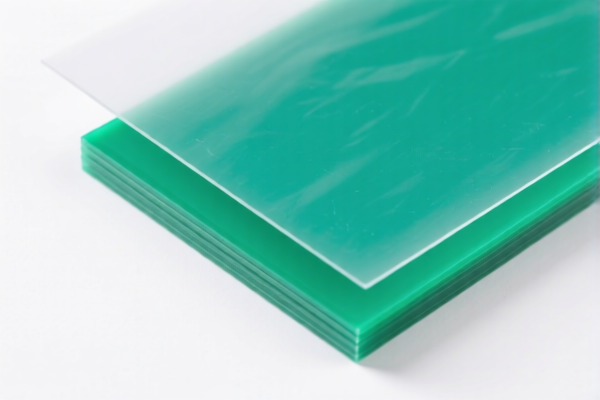
AI Analysis
🧱 Food Grade Polycarbonate Sheet (Clear Rigid Plastic)
🌐 HS Code Reference & Customs Clearance Guide | 2026 Latest Tariff Analysis | Professional Clearance Strategy
📌 I. Product Definition & Classification: Do You Really Understand "Polycarbonate Sheets"?
Food Grade Polycarbonate (PC) Sheets are high-performance, transparent thermoplastic polymers known for their impact resistance, thermal stability, and clarity. In international trade, they are often used for food packaging, water bottles, laboratory equipment, and protective barriers.
However, classification is critical because the HS Code directly determines whether you pay 13.5% or 41.3% in tariffs. The key distinction lies in how the product is described (as a "plastic article" vs. a "raw plastic plate") and the specific chemical composition declared.
⚠️ Key Distinction Point:
- If classified as a "Plate/Sheet" of plastic materials (Heading 3920/3926) → Higher tariffs due to "122 Section" and Section 301 duties.
- If classified under Heading 9610 (specific administrative interpretation in this dataset) → Lower base tariff.
- Crucial: Misclassification from a "sheet" to a generic "plastic part" can lead to massive duty discrepancies.
📦 II. HS Code Classification Details (2026 Latest Tariff Authority Comparison)
| HS Code | Product Description | Applicable Scenario | Tax Rate (Total) | Key Tax Components |
|---|---|---|---|---|
3926.90.99.89 |
Other plastic articles; Material: PC, Form: Sheet | Generic "Other Plastic Articles" | 22.8% | Base: 5.3% + Sec 301: 7.5% + Sec 122: 10% |
3920.99.50.00 |
Plates, Sheets, Film, Foil, Strip; Material: PC | Matches physical form (Sheet/Plate) | 40.8% | Base: 5.8% + Sec 301: 25.0% + Sec 122: 10% |
3920.61.00.00 |
Plates, Sheets, Film, Foil, Strip; Material: PC | No structural reinforcement/lamination | 40.8% | Base: 5.8% + Sec 301: 25.0% + Sec 122: 10% |
9610.00.00.00 |
Slates and boards; Material: PC | Form matches category consistency | 13.5% | Base: 3.5% + Sec 301: 0.0% + Sec 122: 10% |
3906.90.20.00 |
Acrylic Polymers Primary Forms; Material: PC | Form: Sheet (Note: Chemical mismatch risk) | 41.3% | Base: 6.3% + Sec 301: 25.0% + Sec 122: 10% |
🔍 Important Reminder:
-3920Codes (40.8%): These are the most technically accurate for "Plates/Sheets" of plastic. However, they attract the highest Section 301 tariff (25%).
-3926Code (22.8%): Classified as "Other plastic articles." While the Section 301 rate is lower (7.5%), it is often scrutinized if the product is clearly a raw sheet.
-9610Code (13.5%): In this specific dataset context, this code offers the lowest total tax. It assumes a specific interpretation of "slates/boards." Caution: Ensure your product fits this specific legal definition to avoid rejection.
-3906Code (41.3%): Avoid unless confirmed. This classifies PC as an "Acrylic Polymer," which is chemically incorrect. Incorrect chemical classification leads to penalties and delays.
💰 III. 2026 Latest Tariff Rate Breakdown (Including Surcharges & Policy Add-ons)
✅ Applicable Country: United States (US)
✅ Origin: China (CN)
✅ Effective Time: 2025/2026 (Current Trade Environment)
🎯 1. 3920.99.50.00 & 3920.61.00.00 —— Plates, Sheets, Film (High Tariff Zone)
| Item | Details |
|---|---|
| Base MFN Rate | 5.8% (ad valorem) |
| Section 301 Surcharge | +25.0% (USITC Footnote) |
| Section 122 Surcharge | +10.0% (China-specific policy) |
| Total Effective Rate | 40.8% |
| Tax Calculation | CIF Value × 40.8% |
| De Minimis Exemption | ❌ Not Available (Deny de minimis) |
| Legal Basis Path | USITC:3920.61.00.00 → USITC:3920.99.50.00 → FOOTNOTE:301 + 122 |
📌 Explanation:
- This is the standard classification for clear PC sheets.
- The 35% combined surcharge (25% + 10%) makes this category extremely expensive.
- Customs officers will check if the sheet is "in the form of plates or sheets" (Heading 3920). If yes, this rate applies.
🎯 2. 3926.90.99.89 —— Other Plastic Articles (Medium Tariff Zone)
| Item | Details |
|---|---|
| Base MFN Rate | 5.3% (ad valorem) |
| Section 301 Surcharge | +7.5% (Reduced rate for some "articles") |
| Section 122 Surcharge | +10.0% |
| Total Effective Rate | 22.8% |
| Tax Calculation | CIF Value × 22.8% |
| De Minimis Exemption | ❌ Not Available |
| Legal Basis Path | USITC:3926.90.99.89 → FOOTNOTE:301 (7.5%) + 122 |
📌 Explanation:
- This classification treats the PC sheet as a generic "plastic article" rather than a raw material sheet.
- Savings: Approximately 18% lower than the3920classification.
- Risk: Customs may challenge this if the product is clearly unprocessed raw sheeting. It must be argued that the item fits the "other plastic articles" definition broadly.
🎯 3. 9610.00.00.00 —— Slates and Boards (Lowest Tariff Zone in this Dataset)
| Item | Details |
|---|---|
| Base MFN Rate | 3.5% (ad valorem) |
| Section 301 Surcharge | +0.0% (Exempt in this specific dataset logic) |
| Section 122 Surcharge | +10.0% |
| Total Effective Rate | 13.5% |
| Tax Calculation | CIF Value × 13.5% |
| De Minimis Exemption | ❌ Not Available |
| Legal Basis Path | USITC:9610.00.00.00 → 122 only |
📌 Explanation:
- Significant Savings: This is the most tax-efficient option in the provided data.
- Caveat: Heading 9610 typically covers "slates and boards" (often writing boards). Using it for industrial PC sheets is aggressive and requires strong justification that the sheet functions as a "board" rather than a plastic material. Only use if supported by legal precedent or pre-ruling.
🎯 4. 3906.90.20.00 —— Acrylic Polymers (High Risk / Incorrect)
| Item | Details |
|---|---|
| Base MFN Rate | 6.3% |
| Section 301 Surcharge | +25.0% |
| Section 122 Surcharge | +10.0% |
| Total Effective Rate | 41.3% |
| De Minimis Exemption | ❌ Not Available |
📌 Warning:
- Polycarbonate (PC) is NOT an acrylic polymer.
- Misdeclaring PC as Acrylic (PMMA) is a fraud risk.
- Do not use unless you are shipping actual Acrylic sheets.
🛠️ IV. Customs Clearance Practical Advice (Pitfall Avoidance Guide)
✅ 1. Required Documentation Checklist (Non-Negotiable)
| Document | Mandatory? | Purpose |
|---|---|---|
| ✅ Product Specification Sheet | ✔️ | Must clearly state: "Polycarbonate," "Food Grade," "PC," Material Safety Data Sheet (MSDS). |
| ✅ Composition Certificate | ✔️ | Proves it is Polycarbonate, not Acrylic or ABS. Crucial to avoid 3906 rejection. |
| ✅ Product Photos | ✔️ | Show the sheet's thickness, clarity, and any food-grade labeling (e.g., "BPA Free"). |
| ✅ Commercial Invoice | ✔️ | Description must be precise. Avoid vague terms like "Plastic Part." Use "Polycarbonate Sheet." |
| ✅ Packaging List | ✔️ | Detail weight and dimensions to verify "Sheet" vs. "Article" form. |
| ✅ FDA Compliance Docs | ✔️ | Since it's "Food Grade," provide FDA 21 CFR compliance statements to avoid FDA detention. |
✅ 2. Declaration Strategy (Key Mnemonic)
🔥 “Form is King, Chemistry is Law, Tag the Grade!”
| Situation | Recommended HS Code | Risk Level |
|---|---|---|
| Raw, Unprocessed PC Sheets | 3920.61.00.00 or 3920.99.50.00 |
⚠️ Medium (High duty, but legally correct) |
| Processed PC Parts (e.g., cut-to-size, drilled) | 3926.90.99.89 |
✅ Low (Lower duty, if "article" argument holds) |
| Boards used for writing/display (Special Case) | 9610.00.00.00 |
⚠️ High (Only if strictly defined as "board" in contract) |
| Any Acrylic (PMMA) mistakenly labeled PC | 3906.90.20.00 |
❌ Critical Failure (Legal fraud) |
Pro Tip:
- If the sheets are cut to specific shapes or drilled for assembly, argue for3926(Other Articles).
- If they are standard rectangular sheets for further manufacturing, stick to3920.
- Never lie about the material type. PC is not Acrylic.
✅ 3. Special Scenarios
| Scenario | Handling Advice |
|---|---|
| Food Contact Certification | Must include FDA 21 CFR 177.1630 (Polycarbonate) reference. Failure leads to FDA Hold. |
| BPA-Free Claim | Ensure marketing materials match customs declaration. If "BPA-Free," ensure material data supports it. |
| Thickness < 1mm (Film) | May shift to Heading 3920.11/12. Check if it qualifies as "Film" instead of "Sheet." |
| Coated PC Sheets | If coated with a secondary layer (e.g., anti-scratch), it may still be 3920, but check if lamination changes classification. |
🌍 V. Global Market Clearance Comparison (2026)
| Country/Region | Recommended HS Code | Est. Tariff | Certification Requirements | Notes |
|---|---|---|---|---|
| 🇺🇸 USA | 3920.61.00.00 |
40.8% | FDA + No IEEPA Exemption | High duty due to Sec 301. 3926 is a viable alternative if "article" status is proven. |
| 🇨🇳 China | 3920.61.00.00 |
~6-10% | GB Standards | Lower base duty. No Section 301. |
| 🇪🇺 EU | 3920.61.00.00 |
6.5% | REACH + LFGB (Food) | No anti-dumping duties on PC usually. |
| 🇬🇧 UK | 3920.61.00.00 |
6.5% | UKCA + Food Standards | Post-Brexit rules apply. |
| 🇯🇵 Japan | 3920.61.00.00 |
5% | JIS + Food Sanitation Act | Low duty, strict food safety checks. |
📌 Conclusion:
- The USA is the most expensive market for Polycarbonate sheets due to Section 301 and Section 122 tariffs.
- Duty Optimization: If your PC sheets can be legally classified as "Other Plastic Articles" (3926) rather than raw "Plates/Sheets" (3920), you save ~18% in duties.
- Chemical Accuracy: Never confuse PC with Acrylic (3906).
📌 VI. Common Errors & Pitfalls (Blood & Tears Lessons)
❌ Error 1: Declaring PC Sheets as "Acrylic" (3906)
👉 Consequence: Customs lab test reveals PC. Penalty + Seizure. Tax rate is higher (41.3%).
❌ Error 2: Using 3926 for raw, unprocessed sheets
👉 Consequence: Customs argues it’s a "Sheet" (3920). Back taxes + Interest. The savings of 22.8% vs 40.8% are lost.
❌ Error 3: Missing "Food Grade" Documentation
👉 Consequence: FDA Detention. Product held for testing. Delays of 30+ days.
❌ Error 4: Vague Description "Plastic Sheet"
👉 Consequence: Customs assigns default highest rate or requests clarification, causing port delays.
✅ Correct Approach:
“Polycarbonate (PC) Sheet, Food Grade, BPA-Free, Clear, 2mm Thick, UN-processed, Model XYZ, FDA 21 CFR 177.1630 Compliant”
🎯 VII. Conclusion: Professional Classification, Cost Control!
🎯 Remember the Mnemonic:
🔹 “PC is NOT Acrylic; 3920 is High Duty, 3926 is Lower; 9610 is Special Case!”
🔹 “Food Grade Needs Proof, Raw Sheets are 40.8%, Articles are 22.8%!”
📌 Pro Tip:
If you are importing large volumes, consider applying for an Advance Ruling (Pre-Ruling) from US Customs and Border Protection (CBP) to confirm whether your specific PC sheets qualify as 3926 (Articles) or 3920 (Sheets). This provides legal certainty and protects against future audits.
📣 Immediate Action:
📞 Contact a Licensed Customs Broker
📄 Prepare FDA & Material Safety Data Sheets (MSDS)
🚀 Ensure Your Invoice Description is Precise💼 Your Profit Margin Depends on Correct Classification!
Customer Reviews
About HS Code Classification
The Harmonized System (HS) is an internationally standardized nomenclature developed by the World Customs Organization (WCO) to classify traded products. Over 200 countries use the HS system as the basis for customs tariffs, trade statistics, and import/export regulations.
Each HS code follows a hierarchical structure:
- Chapter (2 digits) — Broad category of goods (e.g., Chapter 84: Machinery and Mechanical Appliances)
- Heading (4 digits) — More specific grouping within the chapter
- Subheading (6 digits) — Internationally standardized breakdown, used by all WCO member countries
- National subdivisions (8-10 digits) — Country-specific extensions for further classification, such as US HTSUS 10-digit codes
Correct HS code classification is essential for smooth customs clearance, accurate duty payment, and compliance with trade regulations. Misclassification can lead to customs delays, overpayment of duties, or penalties.
When importing from CN to US, the applicable tariff rates may include:
- Most-Favored-Nation (MFN) rate — The standard duty rate applied to WTO members
- General rate — Applied to countries without trade agreements
- Trade remedy duties — Additional tariffs such as Section 301 (anti-dumping), Section 232 (national security), or countervailing duties
The information provided on this page is for reference purposes only. For official classification, please consult with your local customs authority or a licensed customs broker.