Food Grade Sodium Alginate
CN → USProduct Images


AI Analysis
🌿 Food Grade Sodium Alginate: The "Green Thickener" Powerhouse
🌐 HS Code Reference & Customs Clearance Guide | 2026 Latest Tariff Analysis | Professional-Level Entry Strategy
📌 Part 1: Product Definition & Classification: Do You Really Understand "Sodium Alginate"?
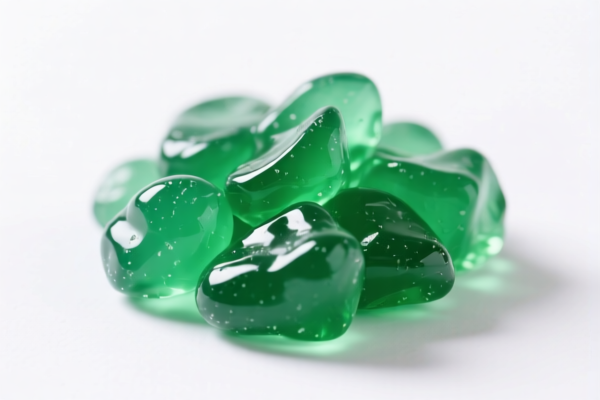
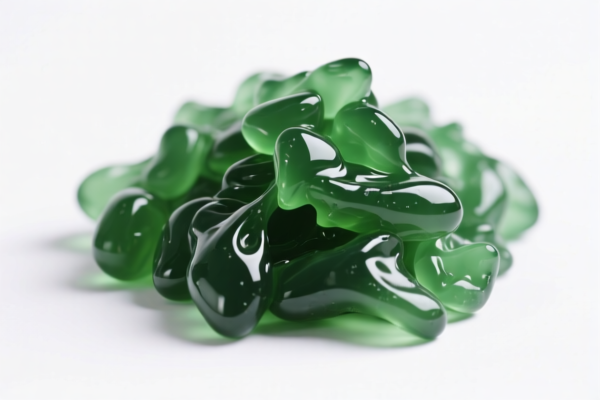
Food Grade Sodium Alginate (E401) is a natural polysaccharide extracted from brown algae (seaweed), widely used in the food industry as a thickener, stabilizer, gelling agent, and emulsifier. In international trade, it is primarily classified based on its state of aggregation (powder, liquid) and purity/application.
Key Distinction:
- Raw Material/Industrial Grade: Often misclassified; lower purity, higher heavy metal content, not suitable for food.
- Food Grade (E401): High purity, strictly regulated for microbial and heavy metal limits, intended for direct food contact.
- Pharmaceutical Grade: Even stricter purity standards, often overlaps with Food Grade HS codes but requires specific certification (USP/BP) for customs declaration.
⚠️ Critical Classification Point:
- If the product is powdered, highly purified, and labeled for food use → Generally falls under 1302.32.00 (Arabic gum, other gum, natural or modified).
- If it is a preparation/mixture containing other stabilizers or sugars → May fall under 2106.90 (Other food preparations).
- Note: Pure Sodium Alginate is almost always classified under Chapter 13 as "Other natural gums".
📦 Part 2: HS Code Classification Details (2026 Latest Tariff Authority Comparison)
| HS Code | Product Description | Application Scenario | Key Characteristics |
|---|---|---|---|
1302.32.00.00 |
Other natural gums (including Agar-agar, etc.) | Pure Sodium Alginate (Powder/Liquid), Food/Pharma Grade | High purity, extracted from brown algae, no additives |
1302.19.90.00 |
Other vegetable saps and extracts | Less common for Alginate, but may apply if mixed with other plant extracts | Mixed natural extracts |
2106.90.90.00 |
Other food preparations | Compound thickeners, Alginate mixed with preservatives, sugars, or flavors | Pre-mixed, not pure alginate |
3824.99.92.00 |
Other prepared binding agents | Industrial grade alginate (e.g., for textile printing, papermaking) | Non-food grade, higher impurities |
🔍 Key Reminder:
- Pure Sodium Alginate must be declared as1302.32.00.00.
- If the product contains anti-caking agents (e.g., silicon dioxide) exceeding a minimal threshold, customs may reclassify it under2106or3824.
- Food Grade vs. Industrial Grade: Clear documentation is crucial. Misdeclaring Industrial as Food Grade can lead to heavy fines and product destruction.
💰 Part 3: 2026 Latest Tariff Rate Breakdown (Including Surtaxes & Policy Additions)
✅ Applicable Country: United States (US)
✅ Country of Origin: China (CN)
✅ Effective Date: November 10, 2025 onwards (for subsequent imports)
🎯 1. 1302.32.00.00 —— Other Natural Gums (Including Sodium Alginate)
| Item | Content |
|---|---|
| Base Tariff Rate | 5.3% (ad valorem) |
| USITC Surtax (Section 301) | +25% |
| IEEPA Surtax | +10% (for China/HK origin, effective from Nov 10, 2025) |
| Total Tariff Rate | ~40.3% (Calculated on CIF Value) |
| De Minimis Exemption | ❌ Not Eligible (deny_de_minimis) |
| Legal Basis Path | IEEPA:9903.01.25 → USITC:1302.32.00.00 → FOOTNOTE:9903.88.01 |
📌 Explanation:
- "USITC Surtax 25%" originates from Section 301 of the Trade Act.
- "IEEPA 10%" is the additional tariff under the International Emergency Economic Powers Act for Chinese goods.
- Total ~40.3% is a high tariff burden, requiring early cost planning.
- Note: Some sources may cite a combined rate of 40.3% or slightly higher depending on specific footnote adjustments. Always verify with the latest USITC database.
🛠️ Part 4: Customs Clearance Practical Advice (Practical Pitfall Avoidance Guide)
✅ 1. Document Checklist (Mandatory)
| Document | Required | Explanation |
|---|---|---|
| ✅ Product Specification Sheet | ✔️ | Must specify "Food Grade", "E401", purity %, viscosity, pH range |
| ✅ Certificate of Analysis (COA) | ✔️ | Must include heavy metal (Pb, As, Hg) and microbial limits (E. coli, Salmonella) |
| ✅ Food Grade Certification | ✔️ | FDA Registration, Halal/Kosher (if applicable), ISO 22000 |
| ✅ Commercial Invoice | ✔️ | Must clearly state "Sodium Alginate, Food Grade, CAS No. 9005-38-3" |
| ✅ Bill of Lading | ✔️ | Consistent with invoice and COA |
| ✅ Country of Origin Certificate | ✔️ | Crucial for determining applicable surtaxes |
✅ 2. Declaration Tips (Key Mnemonic)
🔥 "Purity Defines the Code, Food Grade Needs Proof, No Mix-Ups with Industrial!"
| Scenario | Correct Declaration | Incorrect Practice |
|---|---|---|
| Pure Sodium Alginate Powder | 1302.32.00.00 |
Misdeclaring as 2106 (food prep) → Higher scrutiny |
| Alginate mixed with preservatives | 2106.90.90.00 |
Declaring as pure 1302 → Class error |
| Industrial Grade (Textile) | 3824.99.92.00 |
Declaring as "Food Grade" → Illegal & Dangerous |
| Liquid Alginate Solution | 1302.32.00.00 |
Incorrectly classifying as chemical solution |
✅ 3. Special Handling Cases
| Scenario | Handling Advice |
|---|---|
| Custom Blends | If mixed with other gums (e.g., Carrageenan), declare as "Mixed Natural Gums" and provide precise composition. May still fall under 1302 if natural gums dominate. |
| Small Samples | Even small quantities for testing require proper declaration. Do not use "De Minimis" for chemical substances if suspected of circumventing tariffs. |
| Labeling | Ensure labels in English include "Food Grade", CAS number, and manufacturer info. Non-compliant labels can lead to refusal of entry. |
🌍 Part 5: Global Market Customs Comparison (2026 Latest)
| Country/Region | Recommended HS Code | Tariff Rate | Certification Requirements | Notes |
|---|---|---|---|---|
| 🇺🇸 USA | 1302.32.00.00 |
~40.3% (China) | FDA, COA, Heavy Metal Test | High tariff, strict FDA inspection |
| 🇨🇳 China | 1302.32.00.00 |
5.3% | GB 2760 Compliance, Food Additive License | Low tariff, domestic production dominates |
| 🇪🇺 EU | 1302.32.00.00 |
0% (if compliant) | EFSA Approval, REACH, E401 Labeling | No additional tariffs if quality standards met |
| 🇦🇺 Australia | 1302.32.00.00 |
5% | FSANZ Standards, Halal/Kosher | No surtaxes |
| 🇯🇵 Japan | 1302.32.00.00 |
0% | JFC (Japanese Food Additive Standards) | Strict purity checks |
📌 Conclusion:
- USA imposes the highest burden due to Section 301 + IEEPA surtaxes.
- EU and Japan have 0% or low tariffs but require strict quality certifications (EFSA, JFC).
- China is the world's largest producer, so domestic sourcing avoids all import tariffs.
📌 Part 6: Common Mistakes & Pitfall Guide (Blood Lessons)
❌ Mistake 1: Declaring Industrial Grade as Food Grade
👉 Consequence: Product seized, fined, or destroyed. FDA Form 483 issued.
❌ Mistake 2: Missing CAS Number (9005-38-3) in Declaration
👉 Consequence: Customs may detain for classification review → Delays of 2-4 weeks.
❌ Mistake 3: Not Providing COA for Heavy Metals
👉 Consequence: Rejected at border due to potential toxicity. Return or Re-export.
❌ Mistake 4: Confusing Sodium Alginate with Potassium Alginate
👉 Consequence: Potassium Alginate (E405) may have different HS codes or usage restrictions. Ensure accurate chemical name.
✅ Correct Practice:
"Sodium Alginate, Food Grade, E401, CAS: 9005-38-3, Powder, Purity: 95%, FDA Registered, COA Attached"
🎯 Part 7: Conclusion: Professional Declaration, Save Time, Reduce Costs!
🎯 Remember the Mnemonic:
🔹 "Pure is 1302, Mixed is 2106, Industrial is 3824. Food Grade Needs COA, Heavy Metal Test Saves the Day!"
🔹 "USA Tariff is 40%, Think Twice Before Sourcing from China!"
📌 Pro Tip:
If your Sodium Alginate is sourced from Vietnam, Thailand, or Indonesia, you may still face USITC surtaxes depending on the substantial transformation rule. However, sourcing from non-China origins (e.g., US domestic producers or countries with free trade agreements) can eliminate surtaxes.
📞 Action Now:
📞 Contact a licensed customs broker + Provide Product Spec + Apply for Pre-Ruling if unsure.
🚀 Ensure your Sodium Alginate passes customs smoothly, minimize costs, and maximize profit!
✨ Professional Customs Clearance Starts with Accurate Classification!
💼 Every cent of your cost deserves precise calculation!
Customer Reviews
About HS Code Classification
The Harmonized System (HS) is an internationally standardized nomenclature developed by the World Customs Organization (WCO) to classify traded products. Over 200 countries use the HS system as the basis for customs tariffs, trade statistics, and import/export regulations.
Each HS code follows a hierarchical structure:
- Chapter (2 digits) — Broad category of goods (e.g., Chapter 84: Machinery and Mechanical Appliances)
- Heading (4 digits) — More specific grouping within the chapter
- Subheading (6 digits) — Internationally standardized breakdown, used by all WCO member countries
- National subdivisions (8-10 digits) — Country-specific extensions for further classification, such as US HTSUS 10-digit codes
Correct HS code classification is essential for smooth customs clearance, accurate duty payment, and compliance with trade regulations. Misclassification can lead to customs delays, overpayment of duties, or penalties.
When importing from CN to US, the applicable tariff rates may include:
- Most-Favored-Nation (MFN) rate — The standard duty rate applied to WTO members
- General rate — Applied to countries without trade agreements
- Trade remedy duties — Additional tariffs such as Section 301 (anti-dumping), Section 232 (national security), or countervailing duties
The information provided on this page is for reference purposes only. For official classification, please consult with your local customs authority or a licensed customs broker.