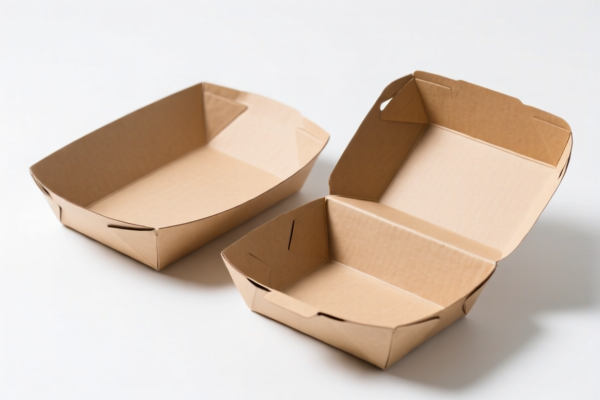
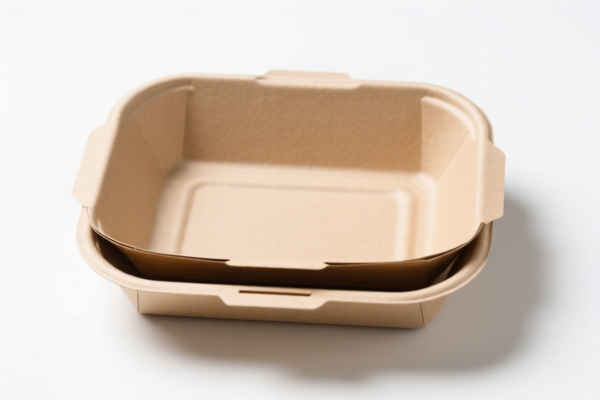
Food Insulation Tray
CN → US| HS Code | Tariff Rate | Origin | Destination | Doc |
|---|---|---|---|---|
| 3924103000 | 22.8% | CN | US | Official Doc |
| 3924104000 | 13.4% | CN | US | Official Doc |
| 7323999080 | 88.4% | CN | US | Official Doc |
| 7323997000 | 65.3% | CN | US | Official Doc |
Product Images


AI Analysis
🍽️ Food Insulation Trays (Tableware & Kitchenware)
🌐 HS Code Reference & Customs Clearance Guide | 2026 Latest Tariff Analysis | Strategic Entry Strategy
📌 I. Product Definition & Classification: What Exactly is a "Food Insulation Tray"?
A Food Insulation Tray is a container designed to keep food warm during service, typically used in restaurants, buffets, or catering services. In international trade, its Harmonized System (HS) classification is strictly determined by the material composition and intended use. Misclassification leads to massive tariff discrepancies (from 13.4% to 88.4%).
The product falls into two main material categories: * Plastic Insulation Trays: Made from synthetic polymers (e.g., PP, PS, Melamine). Used as tableware or serving trays. * Metal Insulation Trays (Stainless Steel/Iron): Made from steel, iron, or aluminum. Used as kitchenware or cookware.
⚠️ Critical Distinction Point:
- If the tray is Plastic →归入 Chapter 39 (Plastics).
- If the tray is Metal → 归入 Chapter 73 (Articles of Iron or Steel).
- Note: The "Insulation" function itself does not change the HS code; the material is the primary determinant.
📦 II. HS Code Classification Details (2026 Latest Tariff Authority)
| HS Code | Product Description | Material | Application |
|---|---|---|---|
3924.10.30.00 |
Tableware, kitchenware, and other household articles and hygienic or toilet articles, of plastics: Insulation Trays | Plastic | Tableware / Serving Trays |
3924.10.40.00 |
Other tableware, kitchenware, and other household articles, of plastics | Plastic (Other) | Tableware / Cookware |
7323.99.90.80 |
Tables, kitchen or other household articles and parts thereof, of iron or steel | Steel / Iron / Stainless Steel | Kitchen / Household Items |
7323.99.70.00 |
Other articles of iron or steel | Non-precious Metal (Iron/Steel) | Kitchen / Household Items |
🔍 Key Reminder:
- Plastic Trays fall under 3924.10. The sub-code30is specifically for "Insulation Trays" or similar items, while40is for "Other" plastic tableware.
- Metal Trays fall under 7323.99. The distinction between90.80and70.00often depends on specific manufacturing details (e.g., whether it is a "table/kitchen article" vs. other parts), but both are subject to heavy steel tariffs.
- Do NOT mix materials: A plastic tray with a steel rim may still be classified based on the essential character (usually the main body), but strict component analysis is required.
💰 III. 2026 Latest Tariff Rate Details (Including Surcharges)
✅ Applicable Country: United States (US)
✅ Country of Origin: China (CN)
✅ Effective Time: Current rates apply (including Section 301 and Section 232/122 measures)
🎯 1. 3924.10.30.00 —— Plastic Insulation Trays (Tableware)
| Item | Content |
|---|---|
| Base Tariff | 5.3% |
| Section 301 Surtax | 7.5% |
| Section 122 Surcharge | 10% |
| Total Tax Rate | 22.8% |
| Tax Calculation | CIF Value × 22.8% |
| De Minimis Eligibility | ❌ No (Subject to full tariff assessment) |
| Legal Basis Path | Base Tariff → Section 301 (7.5%) → Section 122 (10%) |
📌 Explanation:
- Base 5.3%: Standard MFN rate for plastic tableware.
- Section 301 (7.5%): Added duty on Chinese plastics under Trade Act Section 301.
- Section 122 (10%): Specific surcharge applied to certain plastic products from China.
- Total 22.8%: This is a moderate-high rate. Cost calculation must include this accurately.
🎯 2. 3924.10.40.00 —— Other Plastic Tableware/Cookware
| Item | Content |
|---|---|
| Base Tariff | 3.4% |
| Section 301 Surtax | 0.0% |
| Section 122 Surcharge | 10% |
| Total Tax Rate | 13.4% |
| Tax Calculation | CIF Value × 13.4% |
| De Minimis Eligibility | ❌ No |
| Legal Basis Path | Base Tariff → Section 122 (10%) |
📌 Note:
- If the plastic tray is not explicitly classified as "Insulation Tray" (e.g., it’s a general serving dish), it may fall here.
- Significant Savings: 13.4% vs. 22.8%. Ensure the product description matches the specific HS code30if it is indeed an insulation tray, to avoid misclassification penalties. If it is not an insulation tray,40offers a lower rate.
🎯 3. 7323.99.90.80 —— Steel/Iron Food Insulation Trays
| Item | Content |
|---|---|
| Base Tariff | 3.4% |
| Section 301 Surtax | 25.0% |
| Section 122 Surcharge | 10% |
| Steel/Aluminum Surcharge | 50.0% |
| Total Tax Rate | 88.4% |
| Tax Calculation | CIF Value × 88.4% |
| De Minimis Eligibility | ❌ No |
| Legal Basis Path | Base Tariff → Section 301 → Section 122 → Steel/Aluminum Surcharge (50%) |
📌 Critical Warning:
- Steel tariffs are extremely high. The 50% surcharge on steel products is a major cost driver.
- Total 88.4% is prohibitive for most commercial imports without duty mitigation strategies.
- Ensure the material is truly steel; if it is stainless steel, it still falls under Chapter 73.
🎯 4. 7323.99.70.00 —— Other Non-precious Metal Articles
| Item | Content |
|---|---|
| Base Tariff | 5.3% |
| Section 301 Surtax | 0.0% |
| Section 122 Surcharge | 10% |
| Steel/Aluminum Surcharge | 50.0% |
| Total Tax Rate | 65.3% |
| Tax Calculation | CIF Value × 65.3% |
| De Minimis Eligibility | ❌ No |
| Legal Basis Path | Base Tariff → Section 122 → Steel/Aluminum Surcharge (50%) |
📌 Note:
- Even with a 0% Section 301 rate, the 50% Steel Surcharge makes this category expensive.
- This code is for "Other" metal articles, possibly excluding specific tableware forms, but still subject to heavy steel duties.
🛠️ IV. Customs Clearance Practical Advice (Pitfall Avoidance Guide)
✅ 1. Documentation Checklist (Mandatory)
| Document | Must Provide | Description |
|---|---|---|
| ✅ Product Specification Sheet | ✔️ | Material (Plastic vs. Steel), Dimensions, Insulation Method (Double-wall, etc.) |
| ✅ Material Certification | ✔️ | Certificate of Material (e.g., FDA-approved plastic, 304/316 Stainless Steel) |
| ✅ Product Photos | ✔️ | Clear images of the tray, showing structure, joints, and any labels |
| ✅ Commercial Invoice | ✔️ | Must specify "Food Insulation Tray" and correct HS Code |
| ✅ Packing List | ✔️ | Net/Gross weight, piece count |
| ✅ Country of Origin Certificate | ✔️ | To prove origin (China) for surcharge calculation |
✅ 2. Classification Strategy (Key Mnemonics)
🔥 “Material First, Function Second, Steel is Expensive!”
| Scenario | Correct HS Code | Incorrect Action |
|---|---|---|
| Plastic Insulation Tray | 3924.10.30.00 (22.8%) |
Misclassify as 7323... → 88.4% |
| Plastic Serving Dish (Non-Insulation) | 3924.10.40.00 (13.4%) |
Use 3924.10.30.00 → Overpay 9.4% |
| Steel Insulation Tray | 7323.99.90.80 (88.4%) |
Try to avoid → High cost, consider alternative materials |
| Mixed Material (Plastic + Steel Handle) | Analyze Essential Character | Usually Plastic if main body → 3924.10.30.00 |
✅ 3. Special Case Handling
| Situation | Handling Suggestion |
|---|---|
| OEM Custom Trays | Provide design drawings to prove material structure. Avoid ambiguity. |
| Stainless Steel Trays | Prepare steel grade certificates (e.g., 18/8, 304). Customs may verify for steel surcharge. |
| Plastic with Metal Liner | If the plastic is the primary material, argue for Chapter 39. Provide cross-section diagrams. |
| Pre-Commitment (Advance Ruling) | Highly Recommended for steel items due to high risk. Apply to CBP for official HS determination before shipment. |
🌍 V. Global Market Customs Comparison (2026 Latest)
| Country/Region | Recommended HS Code | Tariff (China Origin) | Certification Requirements | Notes |
|---|---|---|---|---|
| 🇺🇸 USA | 3924.10.30.00 (Plastic) |
22.8% | FDA, Prop 65 | High steel tariffs (88.4%) discourage steel imports |
| 🇺🇸 USA | 7323.99.90.80 (Steel) |
88.4% | NSF, FDA | Extremely high cost |
| 🇨🇳 China | 3924.10.30.00 |
5.3% (Import) | CCC (if applicable) | Lower import duties |
| 🇪🇺 EU | 3924.10.30.00 |
6.5% | CE, LFGB | No Section 301/122 equivalent |
| 🇯🇵 Japan | 3924.10.30.00 |
6.0% | Food Sanitation Law | Competitive market |
📌 Conclusion:
- USA imposes the highest barriers on Chinese tableware, especially steel.
- Plastic trays are more viable for US export but still face ~23% duties.
- Steel trays are largely uncompetitive in the US market due to 88.4% duties. Consider sourcing from non-China origins for steel items if targeting the US.
📌 VI. Common Errors & Pitfalls (Lessons Learned)
❌ Error 1: Classifying Steel Trays as Plastic to avoid tariffs
👉 Consequence: Customs inspection reveals steel → 88.4% tax + penalties + seizure risk.
❌ Error 2: Using "Tableware" generic term without specifying "Insulation"
👉 Consequence: May be classified under 3924.10.40.00 (13.4%) incorrectly, or 3924.10.30.00 (22.8%) if deemed insulation. Clarify in description.
❌ Error 3: Ignoring the 50% Steel Surcharge
👉 Consequence: Profit margin erased by unexpected 50% additional duty on steel products.
❌ Error 4: Missing FDA Compliance for Plastic Trays
👉 Consequence: Product held at customs for non-compliance with food contact regulations.
✅ Correct Approach:
"Plastic Food Insulation Tray, Double-Wall, PP Material, BPA-Free, Model XYZ, FDA Compliant, HS Code 3924.10.30.00"
🎯 VII. Conclusion: Precision Classification, Cost Control, Compliance!
🎯 Remember the Mnemonic:
🔹 "Plastic Insulation: 22.8%, Other Plastic: 13.4%, Steel: 88.4%!"
🔹 "HS Code saves money, Steel costs heavily, Claim correctly!"
📌 Pro Tip:
- If you are importing Steel Trays, consider duty drawback programs or exploring Section 301 exclusions if available (though rare for steel tableware).
- For Plastic Trays, ensure the product description explicitly states "Insulation Tray" to align with
3924.10.30.00and avoid disputes.- Always apply for Advance Rulings for high-value shipments to mitigate risk.
📣 Immediate Action:
📞 Consult with a licensed customs broker + Provide material specs + Verify FDA/NSF compliance
🚀 Ensure smooth clearance, accurate taxation, and protected margins!
✨ Professional Clearance Starts with Accurate Classification!
💼 Every percent saved is profit gained!
Customer Reviews
About HS Code Classification
The Harmonized System (HS) is an internationally standardized nomenclature developed by the World Customs Organization (WCO) to classify traded products. Over 200 countries use the HS system as the basis for customs tariffs, trade statistics, and import/export regulations.
Each HS code follows a hierarchical structure:
- Chapter (2 digits) — Broad category of goods (e.g., Chapter 84: Machinery and Mechanical Appliances)
- Heading (4 digits) — More specific grouping within the chapter
- Subheading (6 digits) — Internationally standardized breakdown, used by all WCO member countries
- National subdivisions (8-10 digits) — Country-specific extensions for further classification, such as US HTSUS 10-digit codes
Correct HS code classification is essential for smooth customs clearance, accurate duty payment, and compliance with trade regulations. Misclassification can lead to customs delays, overpayment of duties, or penalties.
When importing from CN to US, the applicable tariff rates may include:
- Most-Favored-Nation (MFN) rate — The standard duty rate applied to WTO members
- General rate — Applied to countries without trade agreements
- Trade remedy duties — Additional tariffs such as Section 301 (anti-dumping), Section 232 (national security), or countervailing duties
The information provided on this page is for reference purposes only. For official classification, please consult with your local customs authority or a licensed customs broker.