Food Mat
CN → US| HS Code | Tariff Rate | Origin | Destination | Doc |
|---|---|---|---|---|
| 3924104000 | 13.4% | CN | US | Official Doc |
| 3926100000 | 15.3% | CN | US | Official Doc |
| 3924901050 | 13.3% | CN | US | Official Doc |
| 3926909989 | 22.8% | CN | US | Official Doc |
| 7013495090 | 25.0% | CN | US | Official Doc |
Product Images
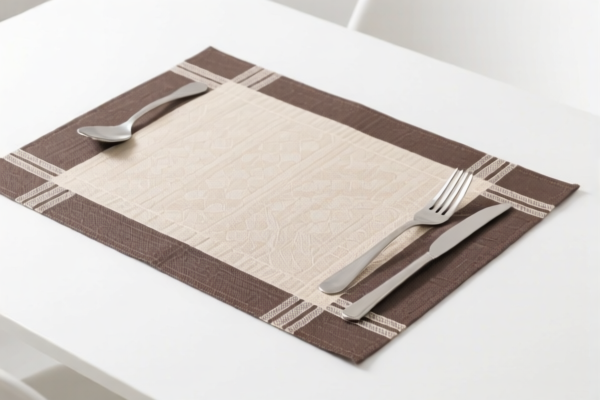
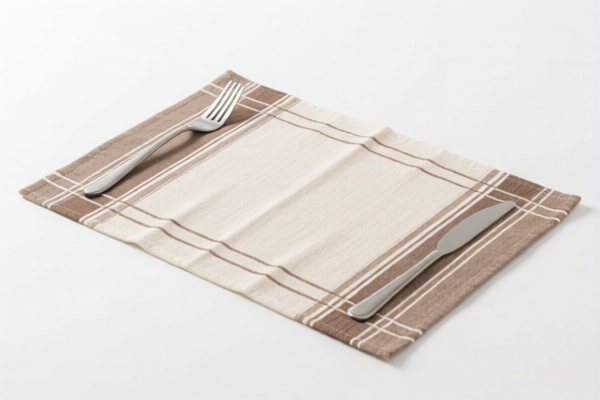
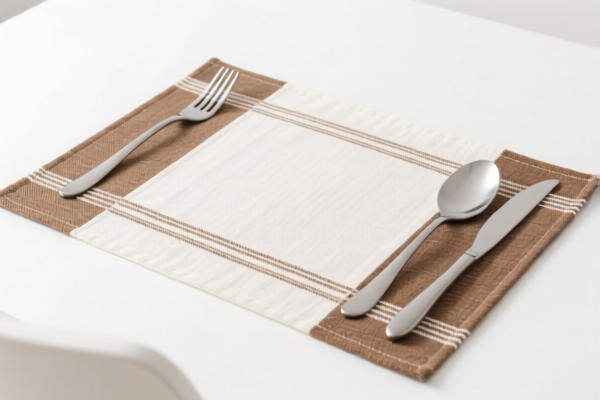
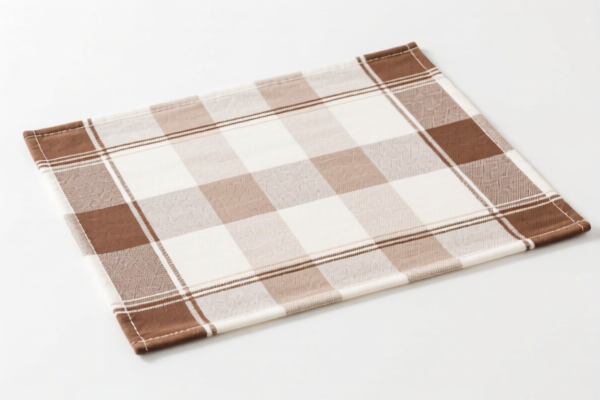
AI Analysis
🍽️ Food Mat (Kitchen Mats / Placemats)
🌐 HS Code Reference & Customs Clearance Guide | 2026 Latest Tariff Analysis | Professional Clearance Strategy
📌 I. Product Definition & Classification: Do You Really Understand "Food Mats"?
A "Food Mat" is a broad term in international trade, typically referring to products placed on tables or countertops for hygiene, protection, or decoration. However, in customs classification, material and specific use are the decisive factors. The data indicates three main material possibilities: Plastic/Silicone, Glass, or Other Synthetic Materials (e.g., Teflon).
⚠️ Key Distinction Points:
- If it is a silicone/plastic tray or placemat used for dining or kitchen aid → It falls under Chapter 39 (Plastics).
- If it is a glass table pad for kitchen use → It falls under Chapter 70 (Glass).
- If it is a specialized non-food-contact synthetic item (e.g., industrial mat or non-standard decor) → It may fall under Other Plastic Articles (90/96) or similar residual categories.
📦 II. HS Code Classification Details (2026 Latest Tariff Authority Comparison)
Based on the provided data, the product is classified into four potential HS Codes depending on its specific physical form and material composition:
| HS Code | Product Description | Material Inference | Application/Use Case | Total Tax Rate |
|--------|--------------------------|---------------------|--------------------------------------|
| 3924.10.40.00 | Plastic/Silicone Tableware/Kitchenware
Plates, bowls, cups, or kitchen auxiliaries | Plastic / Silicone | Dining utensils, kitchen aids, or accessories | 13.4% |
| 3926.10.00.00 | Other Plastic Articles
Office/School supplies excluded | Plastic (Silicone-like) | Non-specific plastic goods, general household items not classified elsewhere | 15.3% |
| 3924.90.10.50 | Other Household Plastic Articles (Pads/Placemats)
Table mats, placemats | Plastic (Silicone-like) | Specifically for table mats/placemats; fits the definition of "pads" for household use | 13.3% |
| 3926.90.99.89 | Other Plastic Articles (Residual)
Specialized synthetic products | Silicone / Teflon | Non-standard items, possibly Teflon-coated mats not fitting specific subheadings; "Other" category | 22.8% |
| 7013.49.50.90 | Glass Tableware/Kitchenware
Other glass kitchen items | Glass / Heat-resistant Silicone | Glass mats or heat-resistant glass kitchen accessories; classified under kitchen use | 25.0% |
🔍 Key Insight:
- Most Preferred Code:3924.90.10.50(13.3%) is likely the most accurate for standard silicone/plastic placemats as it explicitly references "pads" and "household items."
- Risk Code:3926.90.99.89(22.8%) carries the highest tax because it is a residual "catch-all" category, often triggered by lack of specificity or inclusion of non-standard materials like Teflon.
- Material Matter: If the product is Glass, it jumps to 25.0%. Ensure material declarations match physical samples.
💰 III. 2026 Latest Tariff Rate Breakdown (Including Surtaxes & Policy Add-ons)
✅ Applicable Country: United States (US)
✅ Origin: China (CN)
✅ Effective Date: 2025/2026 Imports
The tax structure consists of a Base Tariff, Section 301/122 Surtax, and Other Add-ons.
🎯 1. 3924.10.40.00 — Plastic/Silicone Tableware (Kitchen Use)
| Item | Detail |
|---|---|
| Base Tariff | 3.4% |
| Section 301 Surtax | 0.0% |
| "122 Clause" Surtax | 10.0% |
| Total Tax Rate | 13.4% |
| Tax Calculation | CIF Value × 13.4% |
| De Minimis Exemption | ❌ Not Eligible (High probability of scrutiny due to "122 Clause") |
| Legal Basis | Base Tariff + Specific Surtax Policy |
📌 Explanation:
- This code benefits from a low base tariff (3.4%).
- The 10% surtax is the primary cost driver, likely related to specific trade measures (referred to as "122 Clause" in the data).
- Strategy: Ideal if the product is clearly defined as "tableware" or "kitchen auxiliary."
🎯 2. 3926.10.00.00 — Other Plastic Articles
| Item | Detail |
|---|---|
| Base Tariff | 5.3% |
| Section 301 Surtax | 0.0% |
| "122 Clause" Surtax | 10.0% |
| Total Tax Rate | 15.3% |
| Tax Calculation | CIF Value × 15.3% |
| De Minimis Exemption | ❌ Not Eligible |
| Legal Basis | Base Tariff + Specific Surtax Policy |
📌 Explanation:
- Higher base tariff (5.3%) than3924.10.40.00.
- Used if the item cannot be classified as tableware (e.g., it’s a decorative mat, not for eating/dining).
- Strategy: Only use if the product description explicitly avoids "kitchen/dining" context.
🎯 3. 3924.90.10.50 — Other Household Plastic Articles (Pads/Mats)
| Item | Detail |
|---|---|
| Base Tariff | 3.3% |
| Section 301 Surtax | 0.0% |
| "122 Clause" Surtax | 10.0% |
| Total Tax Rate | 13.3% |
| Tax Calculation | CIF Value × 13.3% |
| De Minimis Exemption | ❌ Not Eligible |
| Legal Basis | Base Tariff + Specific Surtax Policy |
📌 Explanation:
- Lowest Total Tax (13.3%).
- Specifically designed for "pads" (mats/placemats) in household use.
- Strategy: Highly Recommended for standard silicone/plastic food mats. Ensure customs entry highlights "Placemat" or "Table Pad."
🎯 4. 3926.90.99.89 — Other Plastic Articles (Residual/Teflon)
| Item | Detail |
|---|---|
| Base Tariff | 5.3% |
| Section 301 Surtax | 7.5% |
| "122 Clause" Surtax | 10.0% |
| Total Tax Rate | 22.8% |
| Tax Calculation | CIF Value × 22.8% |
| De Minimis Exemption | ❌ Not Eligible |
| Legal Basis | Base Tariff + Section 301 (7.5%) + Surtax Policy |
📌 Explanation:
- Highest Risk Code.
- Includes a 7.5% Section 301 surtax (likely for certain plastic goods under specific lists).
- Often triggered if the material is Teflon or the item is considered a "general plastic article" without a specific kitchen use definition.
- Strategy: Avoid unless no other code fits. High tax impact.
🎯 5. 7013.49.50.90 — Glass Kitchenware/Tableware
| Item | Detail |
|---|---|
| Base Tariff | 15.0% |
| Section 301 Surtax | 0.0% |
| "122 Clause" Surtax | 10.0% |
| Total Tax Rate | 25.0% |
| Tax Calculation | CIF Value × 25.0% |
| De Minimis Exemption | ❌ Not Eligible |
| Legal Basis | Base Tariff + Specific Surtax Policy |
📌 Explanation:
- Highest Base Tariff (15.0%).
- Applies only if the product is Glass.
- Strategy: Only use for genuine glass mats. If the product is "glass-like" but is plastic/silicone, do not use this code (risk of misclassification penalty).
🛠️ IV. Customs Clearance Practical Advice (Real-World Pitfall Avoidance)
✅ 1. Essential Documentation Checklist
| Document | Required | Purpose |
|---|---|---|
| ✅ Product Specifications | ✔️ | Must state material (e.g., "100% Food-Grade Silicone") and dimensions. |
| ✅ Product Photos | ✔️ | Clear images showing the item is a mat/placemat, not a plate or bowl. |
| ✅ Material Declaration Letter | ✔️ | Explicitly confirm material (Plastic vs. Glass vs. Teflon). Crucial for HS Code selection. |
| ✅ Commercial Invoice | ✔️ | Use precise description: "Silicone Food-Grade Table Placemat, Heat Resistant, Non-Slip." |
| ✅ Customs Entry Summary | ✔️ | Ensure HS Code matches the material description exactly. |
| ✅ FCC/CE/RoHS Certificates | ✔️ | If applicable, to prove compliance with safety standards (especially for silicone/plastic). |
✅ 2. Declaration Tips (Key Mnemonics)
🔥 "Material First, Use Second, Name Precise, Tax Lowered!"
| Scenario | Correct Declaration | Incorrect Declaration | Result |
|---|---|---|---|
| Silicone Placemat | 3924.90.10.50Description: "Silicone Table Mat" |
3926.90.99.89Description: "Plastic Pad" |
Save 9.5% (22.8% → 13.3%) |
| Glass Table Pad | 7013.49.50.90Description: "Glass Table Protector" |
3926.10.00.00Description: "Plastic Pad" |
Misclassification Risk → Penalties |
| Teflon-Coated Mat | 3926.90.99.89Description: "Synthetic Non-Stick Mat" |
3924.10.40.00Description: "Dining Plate" |
Overpayment Risk → Wrong Use |
| General Plastic Mat | 3926.10.00.00Description: "Office Desk Pad" |
3924.10.40.00Description: "Kitchen Mat" |
Wrong Use → Audit Flag |
✅ 3. Special Cases & Handling
| Situation | Handling Advice |
|---|---|
| Product is "Food-Grade Silicone" | Must declare as Food Contact Material. Ensure HS Code 3924 (Tableware) is used if it touches food directly. |
| Product is "Non-Stick Teflon" | Likely falls under 3926.90.99.89 (22.8%) unless it’s a specific kitchen tool. Verify if it can be classified as "Kitchen Auxiliary" under 3924. |
| Product is "Glass" | Must declare as Glass. Use 7013.49.50.90. Do not label as "Plastic" to avoid fraud charges. |
| Mixed Packaging (Mat + Tray) | Declare as Set? No. Typically, the main function determines the HS Code. If mat is primary, use Mat code. If tray is primary, use Tray code. |
🌍 V. Global Market Comparison (2026 Latest)
| Country/Region | Recommended HS Code | Tariff (China Origin) | Certification | Notes |
|---|---|---|---|---|
| 🇺🇸 USA | 3924.90.10.50 |
13.3% | FDA (if food contact) | Best Rate. Avoid 3926.90 (22.8%). |
| 🇨🇳 China | 3924.90.10.50 |
5% - 10% (Est.) | CCC (if applicable) | Lower base tariffs globally, but US has surtaxes. |
| 🇪🇺 EU | 3924.90.10 |
0% - 6% | CE + LFGB | No "122 Clause" equivalent. Generally lower taxes. |
| 🇬🇧 UK | 3924.90.10 |
0% - 6% | UKCA | Post-Brexit, similar to EU but separate rules. |
| 🇦🇺 Australia | 3924.90.10 |
5% | ACCC | No significant surtaxes. |
📌 Conclusion:
- USA is the most complex market due to Surtaxes (122 Clause & Section 301).
- Choosing3924.90.10.50(13.3%) is the optimal strategy for silicone/plastic mats.
- Avoid3926.90.99.89(22.8%) unless the product is truly "Other" and not kitchen/tableware related.
📌 VI. Common Errors & Pitfalls (Blood & Tears Lessons)
❌ Error 1: Declaring a Silicone Mat as "Plastic General Article" (3926)
👉 Consequence: Tax jumps from 13.3% to 15.3% or 22.8%. Overpayment of 9.5-10%.
❌ Error 2: Declaring a Glass Mat as "Plastic" (3926)
👉 Consequence: Misclassification. High risk of audit, fine, or seizure. Penalties can be 2-3x the tariff difference.
❌ Error 3: Vague Description ("Food Mat")
👉 Consequence: Customs may assign discretionary HS Code, often the highest tax rate (3926.90.99.89 at 22.8%).
❌ Error 4: Ignoring "122 Clause" Surtax
👉 Consequence: Underestimating landed cost. Always include the 10% surtax in cost calculations.
✅ Correct Declaration Example:
"Silicone Food-Grade Table Placemat, Heat Resistant, Non-Slip, For Kitchen Use, 12x18 inches, Model XYZ"
HS Code:3924.90.10.50
🎯 VII. Conclusion: Precise Classification Saves Money!
🎯 Remember the Mnemonics:
🔹 "Silicone Mat →
3924.90.10.50→ 13.3% (Best!)"
🔹 "Teflon/General →3926.90.99.89→ 22.8% (Expensive!)"
🔹 "Glass →7013.49.50.90→ 25.0% (Highest Base!)"
🔹 "Name Vague → Customs Discretion → Max Tax!"
📌 Pro Tip:
If your product is 100% Food-Grade Silicone, emphasize "Food Contact" and "Tableware" in the description to qualify for 3924 (Kitchenware) categories, which have lower base tariffs than 3926 (Other Plastic Articles).
📣 Immediate Action:
📞 Contact Customs Broker + Provide Material Certificate + Apply for Advance Ruling
🚀 Save 10% Tax with precise classification!
✨ Professional Clearance Starts with Precise Classification!
💼 Your Margins Are Worth Protecting!
Customer Reviews
About HS Code Classification
The Harmonized System (HS) is an internationally standardized nomenclature developed by the World Customs Organization (WCO) to classify traded products. Over 200 countries use the HS system as the basis for customs tariffs, trade statistics, and import/export regulations.
Each HS code follows a hierarchical structure:
- Chapter (2 digits) — Broad category of goods (e.g., Chapter 84: Machinery and Mechanical Appliances)
- Heading (4 digits) — More specific grouping within the chapter
- Subheading (6 digits) — Internationally standardized breakdown, used by all WCO member countries
- National subdivisions (8-10 digits) — Country-specific extensions for further classification, such as US HTSUS 10-digit codes
Correct HS code classification is essential for smooth customs clearance, accurate duty payment, and compliance with trade regulations. Misclassification can lead to customs delays, overpayment of duties, or penalties.
When importing from CN to US, the applicable tariff rates may include:
- Most-Favored-Nation (MFN) rate — The standard duty rate applied to WTO members
- General rate — Applied to countries without trade agreements
- Trade remedy duties — Additional tariffs such as Section 301 (anti-dumping), Section 232 (national security), or countervailing duties
The information provided on this page is for reference purposes only. For official classification, please consult with your local customs authority or a licensed customs broker.