Food Preparation Not Elsewhere Specified
CN → US| HS Code | Tariff Rate | Origin | Destination | Doc |
|---|---|---|---|---|
| 8419899560 | 39.2% | CN | US | Official Doc |
| 8419815080 | 17.5% | CN | US | Official Doc |
| 8438800000 | 35.0% | CN | US | Official Doc |
| 8438909090 | 37.8% | CN | US | Official Doc |
Product Images
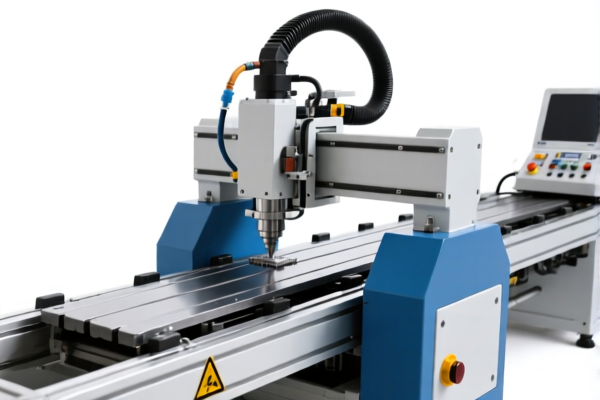
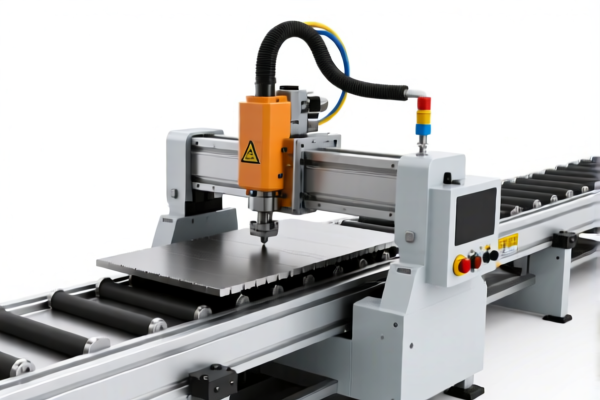
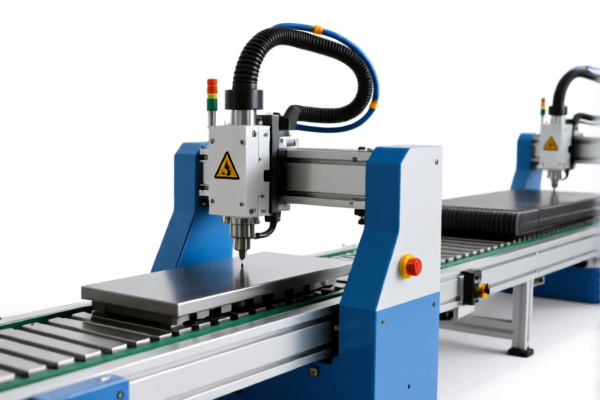
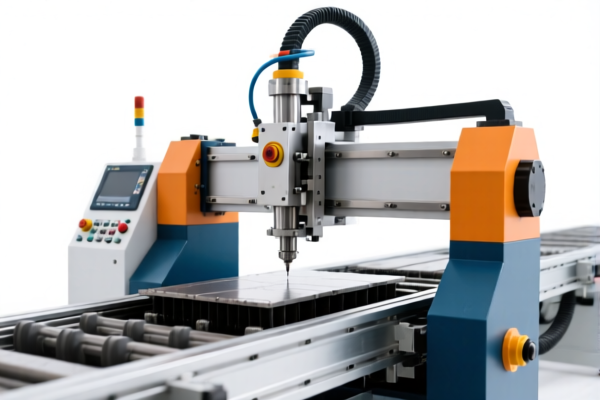
AI Analysis
🍳 Food Preparation Machinery, Not Elsewhere Specified (FNES)
🌐 HS Code Reference & Customs Clearance Guide | 2026 Latest Tariff Analysis | Professional Strategy for Food Processing Equipment
📌 I. Product Definition & Classification: Do You Really Understand "Food Preparation Machinery"?
Food preparation machinery, classified under Chapter 84 (Nuclear reactors, boilers, machinery and mechanical appliances; parts thereof), specifically refers to equipment used for the industrial-scale preparation or manufacture of food and drink.
Crucial Distinction: * Industrial vs. Domestic: This category excludes machinery of a kind used for domestic purposes (e.g., home blenders, home rice cookers). It must be designed for commercial or industrial use. * Exclusions: It specifically excludes machinery for the extraction or preparation of animal/fixed vegetable/microbial fats or oils. These fall under different headings (typically 8418 or 8479 depending on specifics). * Scope: Includes ovens, sterilizers, pasteurizers, cooking stoves, distillers, and other thermal processing equipment used in factories, restaurants (commercial scale), or processing plants.
⚠️ Key Classification Point:
- If the machine is for domestic use only (home kitchen) → Not Chapter 84 (often Chapter 85 or excluded).
- If the machine is for extracting oils/fats → Not FNES (Go to specific extraction headings).
- If the machine is for industrial cooking, heating, sterilizing, or processing → Chapter 84.
📦 II. HS Code Classification Details (2026 Latest Tariff Authority Cross-Reference)
Based on the provided data, the following HS Codes apply to specific types of industrial food preparation machinery.
| HS Code | Product Description | Applicable Scenario | Key Feature |
|---|---|---|---|
8438.80.00.00 |
Other Machinery for industrial preparation/manufacture of food or drink | Industrial mixers, dough sheeters, slicers, grinders, peeling machines (non-oil extraction) | General-purpose industrial food processing gear |
8438.90.90.90 |
Parts of the above machinery | Spare parts for industrial food machines (e.g., blades, motors, frames) | Components only, not whole machines |
8419.89.95.60 |
Machinery/Plant for Temperature Treatment (Heating, Cooking, Sterilizing, etc.) | Industrial pasteurizers, sterilizers, distillers, evaporators, steam dryers for food/bev | Uses temperature change processes; For food and beverages |
8419.81.50.80 |
Machinery for Making Hot Drinks / Cooking / Heating Food | Industrial cooking stoves, ranges, ovens for food/beverage production | Specifically for heating/cooking applications |
🔍 Critical Note:
-8438.80.00.00is the "catch-all" for industrial food machines that don't fit other specific subheadings.
-8419codes are used when the primary function is heat treatment (cooking, sterilizing, drying).
-8438.90.90.90is strictly for parts. Never declare parts under the main machine code if they are shipped separately without proper context, but be aware that parts often have different tax implications.
💰 III. 2026 Latest Tariff Rate Breakdown (Including Surtaxes & Policy Add-ons)
✅ Applicable Country: United States (US)
✅ Origin: China (CN)
✅ Effective Date: Current applicable rates (based on 301 Tariffs and Base Rates)
🎯 1. 8438.80.00.00 —— Other Industrial Food Preparation Machinery
| Item | Content |
|---|---|
| Base Duty Rate | 0.0% |
| Section 301 Surtax | +25.0% (Added for Chinese origin goods) |
| Total Tax Rate | 25.0% |
| Tax Calculation | CIF Value × 25% |
| De Minimis Eligibility | ❌ No (Commercial shipments subject to full duty) |
| Legal Basis | USITC:8438.80.00.00 → Section 301: Footnote 9903.88.01 |
📌 Explanation:
- While the base WTO rate is 0%, the Section 301 additional duty of 25% applies to industrial machinery from China.
- This is a high-cost item for importers. Ensure your pricing strategy accounts for this 25% surcharge.
🎯 2. 8438.90.90.90 —— Parts of Food Preparation Machinery
| Item | Content |
|---|---|
| Base Duty Rate | 0.0% |
| Section 301 Surtax | +0.0% (Specific exemption or lower category application) |
| Total Tax Rate | 0.0% |
| Tax Calculation | CIF Value × 0% |
| De Minimis Eligibility | ⚠️ Check Thresholds (Small parcels may qualify for de minimis if < $800, but commercial bulk does not) |
| Legal Basis | USITC:8438.90.90.90 |
📌 Note:
- Parts often benefit from lower or zero additional duties compared to complete machines.
- Strategy: If possible, import spare parts separately to utilize the 0% rate rather than bundling them with high-duty machinery.
- Warning: Ensure parts are clearly documented as "Spare Parts" and not "Complete Machine Components" that would trigger machine classification.
🎯 3. 8419.89.95.60 —— Temperature Treatment Machinery (Food/Bev Specific)
| Item | Content |
|---|---|
| Base Duty Rate | 0.0% |
| Section 301 Surtax | +0.0% |
| Total Tax Rate | 0.0% |
| Tax Calculation | CIF Value × 0% |
| De Minimis Eligibility | ❌ No (Commercial shipments) |
| Legal Basis | USITC:8419.89.95.60 |
📌 Explanation:
- Machinery specifically designed for heating, sterilizing, pasteurizing, or evaporating food and beverages may qualify for 0% total duty.
- This is a significant cost-saving category. Ensure the product description explicitly states "For food and beverages" and details the temperature treatment process.
🎯 4. 8419.81.50.80 —— Industrial Cooking Stoves, Ranges, Ovens
| Item | Content |
|---|---|
| Base Duty Rate | 0.0% |
| Section 301 Surtax | +7.5% |
| Total Tax Rate | 7.5% |
| Tax Calculation | CIF Value × 7.5% |
| De Minimis Eligibility | ❌ No |
| Legal Basis | USITC:8419.81.50.80 |
📌 Explanation:
- Industrial ovens and cooking ranges have a lower surtax (7.5%) compared to general food machinery (25%).
- Differentiation: Ensure the machine is clearly an "oven/stove/range" for cooking, not a general-purpose mixer or slicer. Misclassification here can lead to a 17.5% penalty (25% - 7.5% difference + fines).
🛠️ IV. Customs Clearance Practical Advice (Real-World Pitfall Avoidance)
✅ 1. Documentation Checklist (Mandatory)
| Document | Required? | Description |
|---|---|---|
| ✅ Technical Specification Sheet | ✔️ | Must detail: Power, Voltage, Capacity, Material of Construction (e.g., 304 Stainless Steel), and Primary Function (e.g., "Sterilization at 121°C"). |
| ✅ Product Photos | ✔️ | Clear images of nameplate, control panel, and internal mechanisms if possible. |
| ✅ Commercial Invoice | ✔️ | Must state: "Industrial Food Processing Machinery," not "Kitchen Appliance." |
| ✅ Packing List | ✔️ | Clearly separate Machinery from Spare Parts to leverage 0% part duties. |
| ✅ Country of Origin Certificate | ✔️ | Critical for Section 301 duty determination. |
| ✅ Safety Certifications | ✔️ | UL, CE, or NSF (for food contact) may be required by customs or health authorities. |
✅ 2. Classification Strategy (Key Mnemonic)
🔥 "Function Defines Code, Parts Are Cheaper, Heat Matters!"
| Scenario | Correct HS Code | Duty Rate | Why? |
|---|---|---|---|
| Industrial Mixer/Slicer | 8438.80.00.00 |
25% | General food machinery, high surtax. |
| Industrial Oven/Stove | 8419.81.50.80 |
7.5% | Specific "cooking/heating" category has lower surtax. |
| Pasteurizer/Sterilizer | 8419.89.95.60 |
0% | Temperature treatment for food/bev often duty-free. |
| Spare Parts (Blades, etc.) | 8438.90.90.90 |
0% | Parts are taxed at 0%, distinct from machines. |
📌 Warning:
- Do NOT misdeclare an oven as a "general machine" (8438.80) to avoid the 7.5% if you think 25% is worse. Always seek the lowest valid rate.
- Do NOT bundle parts with the main machine in a way that obscures their identity. Declare parts separately if possible to benefit from the 0% rate.
✅ 3. Special Cases & Handling
| Situation | Advice |
|---|---|
| Multi-purpose Machines | If a machine does both cutting AND heating, declare based on the essential character. If heating is primary, consider 8419. If cutting is primary, 8438. Consult a broker for borderline cases. |
| Food Contact Materials | Ensure materials comply with FDA regulations. Non-compliance can lead to detention, even if duties are paid. |
| OEM/White Label | Provide OEM agreement and design specs. Customs may scrutinize if the product looks like a domestic appliance disguised as industrial. |
| Used Machinery | Used machinery may face stricter scrutiny for hygiene and safety. Ensure it is cleaned and certified. |
🌍 V. Global Market Comparison (2026 Overview)
| Country/Region | Recommended HS Code | Duty Rate (China Origin) | Key Requirement | Note |
|---|---|---|---|---|
| 🇺🇸 USA | 8419.89.95.60 (Sterilizer) |
0% | FDA Registration, UL | Best for Heat Treatment |
| 🇺🇸 USA | 8438.80.00.00 (Mixer) |
25% | FDA Registration, UL | High Cost |
| 🇨🇳 China | 8419.89.95.60 |
5-10% | CCC (if applicable) | No Section 301 |
| 🇪🇺 EU | 8419.89 |
0-2.7% | CE Mark, Machinery Directive | Generally low duty |
| 🇦🇺 Australia | 8419.89 |
5% | RCM/Standards | Moderate duty |
📌 Conclusion:
- The USA offers a 0% duty opportunity for specific temperature treatment equipment (8419.89.95.60).
- General industrial food machinery (8438.80) suffers from a 25% surcharge.
- Strategy: Design or classify products to fit the 0% or low-rate categories where possible. For example, emphasize "sterilization" or "pasteurization" functions over "mixing."
📌 VI. Common Mistakes & Pitfalls (Lessons Learned)
❌ Mistake 1: Declaring an Industrial Oven as "Kitchen Appliance"
👉 Consequence: Rejected by Customs (USDA/FDA issues) + Misclassification Penalty.
✅ Fix: Use "Industrial Food Oven, Stainless Steel, 380V" in description.
❌ Mistake 2: Bundling Spare Parts with Main Machine Without Separate Line Items
👉 Consequence: Entire shipment may be taxed at the higher machinery rate (25%).
✅ Fix: List Parts on a separate line item in the Invoice with their own HS Code (8438.90.90.90) and weight.
❌ Mistake 3: Ignoring FDA Requirements for Food Contact Surfaces
👉 Consequence: Shipment detained at port, destruction or return costs.
✅ Fix: Provide FDA Material Compliance Statement for all parts touching food.
❌ Mistake 4: Misclassifying a Sterilizer as a "Boiler" (8402)
👉 Consequence: Wrong HS Code, potential duty evasion penalty.
✅ Fix: Use 8419 for temperature treatment of materials, not just steam generation.
🎯 VII. Conclusion: Precision Classification Saves Money!
🎯 Remember These Rules:
🔹 "Parts are Free (0%), Heat is Free (0%), General Machinery is Expensive (25%)."
🔹 "Industrial Not Domestic. Commercial Not Home."
🔹 "Describe Function, Not Just Form."
📌 Pro Tip:
If your product can be classified under 8419 (Temperature Treatment), you save 17.5% to 25% in duties compared to 8438. Work with your engineer to highlight thermal processing features in the product design and documentation.
📣 Immediate Action:
📞 Contact a Licensed Customs Broker to file a Binding Ruling if your product is borderline between
8438and8419.
🚀 Optimize Your Supply Chain: Import parts separately to leverage 0% duties on components.
✨ Professional Customs Clearance Starts with Accurate Classification!
💼 Every Percent Saved is Pure Profit!
Customer Reviews
About HS Code Classification
The Harmonized System (HS) is an internationally standardized nomenclature developed by the World Customs Organization (WCO) to classify traded products. Over 200 countries use the HS system as the basis for customs tariffs, trade statistics, and import/export regulations.
Each HS code follows a hierarchical structure:
- Chapter (2 digits) — Broad category of goods (e.g., Chapter 84: Machinery and Mechanical Appliances)
- Heading (4 digits) — More specific grouping within the chapter
- Subheading (6 digits) — Internationally standardized breakdown, used by all WCO member countries
- National subdivisions (8-10 digits) — Country-specific extensions for further classification, such as US HTSUS 10-digit codes
Correct HS code classification is essential for smooth customs clearance, accurate duty payment, and compliance with trade regulations. Misclassification can lead to customs delays, overpayment of duties, or penalties.
When importing from CN to US, the applicable tariff rates may include:
- Most-Favored-Nation (MFN) rate — The standard duty rate applied to WTO members
- General rate — Applied to countries without trade agreements
- Trade remedy duties — Additional tariffs such as Section 301 (anti-dumping), Section 232 (national security), or countervailing duties
The information provided on this page is for reference purposes only. For official classification, please consult with your local customs authority or a licensed customs broker.