Food Seasoning Preparations
CN → US| HS Code | Tariff Rate | Origin | Destination | Doc |
|---|---|---|---|---|
| 2103907200 | 25.0% | CN | US | Official Doc |
| 2103907400 | 25.0% | CN | US | Official Doc |
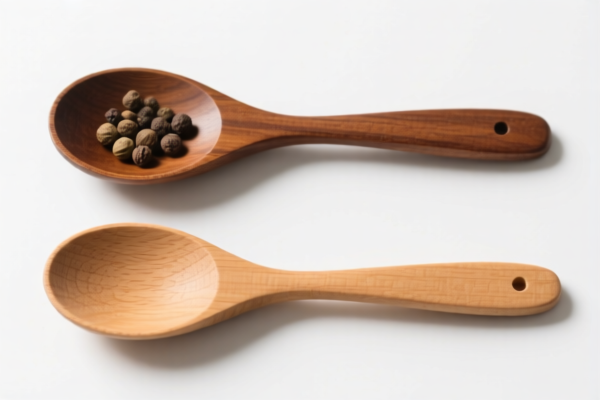
Product Images



AI Analysis
🌶️ Food Seasoning Preparations (Sauces, Mixed Condiments & Mustard Products)
🌐 HS Code Reference & Customs Clearance Guide | 2026 Latest Tariff Analysis | Professional Compliance Strategy
📌 I. Product Definition & Classification: Do You Really Know "Food Seasonings"?
Food seasoning preparations are a broad category of value-added food products used to enhance flavor. In international trade, specifically under Chapter 21 (Miscellaneous Food Preparations), they are primarily classified under Heading 2103.
The key distinction lies in the composition and regulatory notes (specifically U.S. Additional Notes) that determine whether the product falls under general mixed condiments or specific categories with unique tariff treatments.
⚠️ Key Classification Distinctions:
- General Mixed Condiments: Standard blends of spices, salts, and flavorings not covered by specific notes.
- Special Note 3 Products: Certain mixed condiments described in Additional U.S. Note 3 to Chapter 21. These often include specific sauce blends or prepared seasonings with defined ingredient profiles.
- Special Note 4 Products: Other mixed condiments described in Additional U.S. Note 4 to Chapter 21. These are often specific regional or specialty preparations.
📦 II. HS Code Classification Details (2026 Latest Tariff Authority)
Based on the provided data, the following HS Codes apply specifically to Mixed Condiments and Mixed Seasonings under Heading 2103.90.
| HS Code | Product Description | Applicable Scenario | Regulatory Basis |
|---|---|---|---|
2103.90.72.00 |
Mixed condiments and mixed seasonings described in Additional U.S. Note 3 to Chapter 21 | Specific blended sauces, seasoning mixes, or preparations meeting Note 3 criteria | Entered pursuant to Note 3 provisions |
2103.90.74.00 |
Mixed condiments and mixed seasonings described in Additional U.S. Note 4 to Chapter 21 | Specific regional or specialty condiments meeting Note 4 criteria | Entered pursuant to Note 4 provisions |
2103.90.90.00 (Implicit) |
Other mixed condiments and mixed seasonings | General purpose sauces, soy sauce blends, pepper mixes not covered by Notes 3 or 4 | General classification under 2103.90 |
🔍 Critical Reminder:
- Do NOT misclassify as 0908–0910 (Spices). If the product is a preparation (mixed with salt, sugar, thickeners, or other ingredients), it belongs in 2103.
- Mustard Flour/Prepared Mustard: If the product is primarily mustard-based, it may fall under 2103.20 or 2103.90 depending on preparation state. However, the provided data focuses on 2103.90 (Other).
- Accuracy in Description: The customs declaration must explicitly state if the product is "described in Additional U.S. Note 3" or "Note 4" to trigger the correct subheading.
💰 III. 2026 Latest Tariff Rate Detail (Including Supplementary Duties)
✅ Applicable Country: United States (US)
✅ Origin: China (CN) (Assumed based on typical high-tariff analysis context; verify actual origin)
✅ Effective Time: Current 2026 Tariff Schedule
🎯 1. 2103.90.72.00 —— Mixed Condiments (Note 3)
| Item | Content |
|---|---|
| Base Tariff Rate | 0.0% (Ad Valorem) |
| Supplementary Tariff (Section 301/IEEPA) | 0.0% |
| Total Tax Rate | 0.0% |
| Tax Calculation | CIF Value × 0.0% = $0.00 |
| De Minimis Exemption Eligibility | ✅ Yes (If applicable under current de minimis rules) |
| Legal Basis Path | HTSUS:2103.90.72.00 → Additional U.S. Note 3 to Chapter 21 |
📌 Explanation:
- This specific subheading for Note 3 mixed condiments currently enjoys a 0% total tariff rate.
- No Section 301 or IEEPA surcharges apply to this specific code, making it highly competitive.
- Ensure the product strictly meets the definition in Additional U.S. Note 3 to avoid reclassification.
🎯 2. 2103.90.74.00 —— Mixed Condiments (Note 4)
| Item | Content |
|---|---|
| Base Tariff Rate | 0.0% (Ad Valorem) |
| Supplementary Tariff (Section 301/IEEPA) | 0.0% |
| Total Tax Rate | 0.0% |
| Tax Calculation | CIF Value × 0.0% = $0.00 |
| De Minimis Exemption Eligibility | ✅ Yes (If applicable under current de minimis rules) |
| Legal Basis Path | HTSUS:2103.90.74.00 → Additional U.S. Note 4 to Chapter 21 |
📌 Explanation:
- Similar to Note 3, Note 4 mixed condiments are also subject to 0% total tariff.
- This is a low-risk, low-cost classification for qualifying products.
- Critical for importers to verify if their specific sauce/seasoning blend qualifies under Note 4.
🛠️ IV. Customs Clearance Practical Advice (Battle-Tested Pitfall Avoidance)
✅ 1. Required Documentation Checklist (Non-Negotiable)
| Document | Must Provide | Description |
|---|---|---|
| ✅ Product Specification Sheet | ✔️ | Ingredient list, % composition, processing method |
| ✅ Ingredient List | ✔️ | Must detail all components to verify "Mixed Condiment" status |
| ✅ Product Photos | ✔️ | Label, packaging, and internal contents |
| ✅ Certificate of Origin (CO) | ✔️ | To confirm origin and potential FTZ benefits |
| ✅ Commercial Invoice | ✔️ | Must clearly state: "Mixed Condiments, HS 2103.90.72.00/74.00" |
| ✅ Additional U.S. Note Declaration | ✔️ | Explicitly state if the product is described in Note 3 or Note 4 |
✅ 2. Declaration Tips (Key Mantras)
🔥 “Ingredient clarity is king, Note 3/4 is everything!”
| Scenario | Correct Declaration | Incorrect Practice |
|---|---|---|
| Standard Soy Sauce Blend | 2103.90.72.00 (if meets Note 3) or 2103.90.90.00 |
Misclassifying as 0910 (Spices) → Higher Duty |
| Specialty Sauce (Note 4) | 2103.90.74.00 |
General description "Sauce" → Customs Inquiry |
| Mustard-Based Product | Check if 2103.20 or 2103.90 |
Assuming all mustards are 2103.20 |
| Plain Salt & Pepper Mix | 0908.90.00 (Spices) |
Misclassifying as 2103.90 (Preparation) → Wrong Duty |
✅ 3. Special Case Handling
| Scenario | Handling Advice |
|---|---|
| OEM Branded Seasonings | Provide client agreement + formula sheet to prove "Mixed Condiment" nature |
| Product with "Sauces and Preparations" in Name | Must verify if it fits Note 3 or Note 4 criteria to get 0% duty |
| Importing from Non-China Origin | Verify if IEEPA/301 tariffs still apply; origin dictates duty rate |
| Small Samples (De Minimis) | If value < $800 (or current threshold), may enter duty-free under Section 321 |
🌍 V. Global Market Comparison (2026 Latest)
| Country/Region | Recommended HS Code | Tariff (China Origin) | Certification | Notes |
|---|---|---|---|---|
| 🇺🇸 United States | 2103.90.72.00 / 74.00 |
0.0% | FDA + Labeling Compliance | Zero Duty for Note 3/4 products |
| 🇨🇳 China | 2103.90 |
0%–10% | GB Standards | Varies by product type |
| 🇪🇺 European Union | 2103.90 |
0%–6.7% | EFSA + Labeling | Varies by ingredient |
| 🇬🇧 United Kingdom | 2103.90 |
0%–12% | FSA + Labeling | Post-Brexit rules apply |
📌 Conclusion:
- The US offers a unique advantage for Note 3 and Note 4 mixed condiments with 0% duty.
- Ensure precise classification to leverage this zero-tariff benefit. Misclassification could lead to higher duties (e.g., 5–12% for other sauces).
📌 VI. Common Mistakes & Pitfall Avoidance (Lessons Learned)
❌ Mistake 1: Classifying all sauces as 2103.90.90.00 (General)
👉 Consequence: Miss out on 0% duty if product qualifies for Note 3/4.
👉 Fix: Verify if product meets Additional U.S. Note 3 or 4 definitions.
❌ Mistake 2: Listing "Sauce" without ingredient breakdown
👉 Consequence: Customs cannot determine if it’s a "Mixed Condiment" or "Spice Preparation."
👉 Fix: Provide detailed ingredient list by weight.
❌ Mistake 3: Using "Mustard" for all mustard products
👉 Consequence: If it’s prepared mustard, it may fall under 2103.20.00.00 (0% duty) or 2103.90.
👉 Fix: Check if it’s "Mustard Flour" vs. "Prepared Mustard."
❌ Mistake 4: Ignoring U.S. Additional Notes
👉 Consequence: Incorrect HS code entry → Audit Risk + Back Taxes.
👉 Fix: Consult legal counsel to verify Note 3/4 eligibility.
✅ Correct Practice:
"Mixed Condiments, Soy Sauce Base, HS 2103.90.72.00, Described in Additional U.S. Note 3 to Chapter 21, FDA Compliant, Origin: China"
🎯 VII. Conclusion: Precise Classification, Maximum Savings!
🎯 Remember:
🔹 "Note 3/4 is gold, zero duty is the goal!"
🔹 "Ingredients matter more than name, customs will check!"
🔹 "0% duty is not automatic, correct code is key!"
📌 Pro Tip:
If your product is a specialty sauce (e.g., Teriyaki, Hoisin, Sriracha blend), verify if it falls under Additional U.S. Note 3 or Note 4. Many imports qualify for 0% duty if correctly declared.
Action Step:
📞 Consult a Customs Broker + Provide Ingredient Formula + Confirm Note 3/4 Eligibility
🚀 Unlock Zero Tariff Advantage, Boost Profit Margins!
✨ Professional Clearance Starts with Accurate Classification!
💼 Every Cent Saved is Profit Earned!
Customer Reviews
About HS Code Classification
The Harmonized System (HS) is an internationally standardized nomenclature developed by the World Customs Organization (WCO) to classify traded products. Over 200 countries use the HS system as the basis for customs tariffs, trade statistics, and import/export regulations.
Each HS code follows a hierarchical structure:
- Chapter (2 digits) — Broad category of goods (e.g., Chapter 84: Machinery and Mechanical Appliances)
- Heading (4 digits) — More specific grouping within the chapter
- Subheading (6 digits) — Internationally standardized breakdown, used by all WCO member countries
- National subdivisions (8-10 digits) — Country-specific extensions for further classification, such as US HTSUS 10-digit codes
Correct HS code classification is essential for smooth customs clearance, accurate duty payment, and compliance with trade regulations. Misclassification can lead to customs delays, overpayment of duties, or penalties.
When importing from CN to US, the applicable tariff rates may include:
- Most-Favored-Nation (MFN) rate — The standard duty rate applied to WTO members
- General rate — Applied to countries without trade agreements
- Trade remedy duties — Additional tariffs such as Section 301 (anti-dumping), Section 232 (national security), or countervailing duties
The information provided on this page is for reference purposes only. For official classification, please consult with your local customs authority or a licensed customs broker.