Food Warmer Mat
CN → US| HS Code | Tariff Rate | Origin | Destination | Doc |
|---|---|---|---|---|
| 9406900190 | 87.9% | CN | US | Official Doc |
| 3926909989 | 22.8% | CN | US | Official Doc |
| 8516290090 | 38.7% | CN | US | Official Doc |
| 8516808000 | 35.0% | CN | US | Official Doc |
| 9406900130 | 87.9% | CN | US | Official Doc |
Product Images
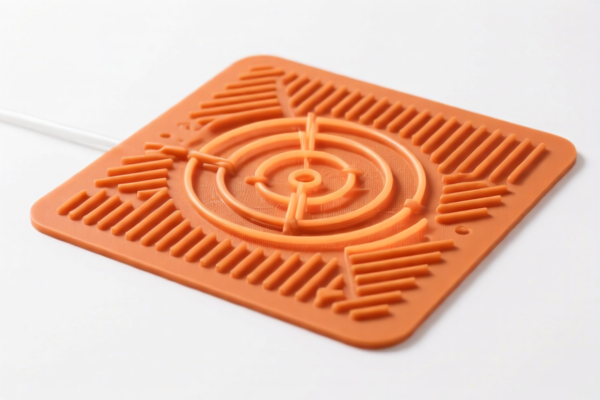
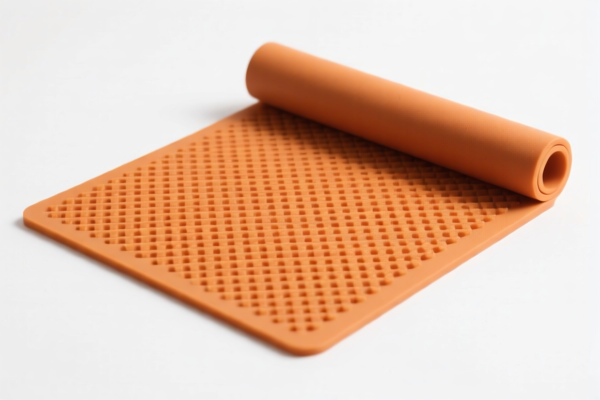
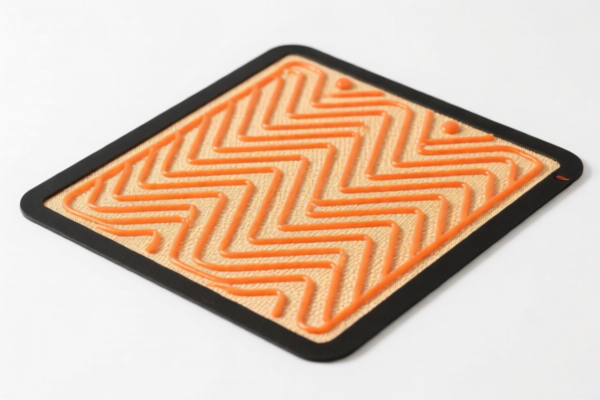

AI Analysis
🍽️ Food Warmer Mat (Heating Pad for Food)
🌐 HS Code Reference & Customs Clearance Guide | 2026 Latest Tariff Analysis | Professional Clearance Strategy
📌 I. Product Definition & Classification: Do You Really Understand "Food Warmer Mat"?
A Food Warmer Mat is a low-temperature heating device designed to maintain the serving temperature of food plates or dishes. In international trade, its classification depends heavily on material composition, structure (prefabricated vs. assembly), and primary function.
Since there is no single HS code for "Food Warmer Mat," customs authorities often categorize it based on its core technical features. Below are the 5 most common classifications based on logical inference, along with their corresponding tax liabilities.
⚠️ Key Distinction Points:
- If it’s a plastic-insulated electric heater → Likely 8516 (Electric heaters).
- If it’s a prefabricated building component (unlikely but possible for large industrial mats) → 9406 (Prefabricated buildings).
- If it’s considered a general plastic item without specific electrical function claims → 3926 (Other plastic articles).
📦 II. HS Code Classification Details (2026 Latest Tariff Authority Comparison)
| HS Code | Product Description | Application Scenario | Material/Structure Logic |
|---|---|---|---|
8516.29.00.90 |
Other electric soil, plant or water heaters; electric instantaneous water heaters; immersion heaters | Most Common: Electric heating mats for food/surfaces. Classified as "Other electric heating apparatus." | ✅ Electrical function dominant. No material conflict. |
8516.80.80.00 |
Electric heating resistors; other electric heating apparatus (e.g., plant heating pads) | Used for plants or general heating elements. Fits "Electric heating resistor" function. | ✅ Core function is electrical resistance heating. |
3926.90.99.89 |
Other articles of plastics and articles of other materials of headings 3901 to 3914 | If declared purely as a plastic heating pad without emphasizing electrical components, or for non-critical insulation layers. | ✅ Inferred material is plastic (case/insulation). |
9406.90.01.30 |
Parts of prefabricated buildings, of metal (other) | If the mat is considered a metal structural part of a larger prefabricated system. | ✅ Inferred material is metal (heating element/structure). |
9406.90.01.90 |
Parts of prefabricated buildings, of non-metallic materials (other) | If classified as a non-metallic prefabricated structure component. | ✅ Inferred material is non-metallic (plastic/fiber). |
🔍 Key Reminder:
- 8516 codes are generally the most accurate for active electrical food warmers because their primary purpose is heating.
- 9406 codes (Prefabricated Buildings) are unusual for consumer food mats but may appear in industrial contexts or due to broad "part" classifications.
- 3926 is a "fallback" if electrical functionality is not the primary declared feature.
💰 III. 2026 Latest Tariff Rate Breakdown (Including Surtaxes, Policy Surcharges)
✅ Applicable Country: United States (US)
✅ Country of Origin: China (CN)
✅ Effective Date: From November 10, 2025 (including subsequent imports)
🎯 1. 8516.29.00.90 —— Other Electric Heating Apparatus (Soil/Water/General)
| Item | Content |
|---|---|
| Base Duty Rate | 3.7% (ad valorem) |
| USITC Surcharge | +25% (Under Section 301 Tariffs) |
| IEEPA Surcharge | +10% (China-specific, effective Nov 10, 2025) |
| Total Duty Rate | 38.7% |
| Tax Calculation | CIF Value × 38.7% |
| De Minimis Exemption | ❌ Not Available (deny_de_minimis) |
| Legal Basis Path | IEEPA:9903.01.24 → USITC:8516.29.00.90 → FOOTNOTE:301 |
📌 Explanation:
- This is a high-risk, high-cost category due to combined Section 301 (25%) and IEEPA (10%) tariffs.
- Total burden: 38.7%. Must be factored into cost models.
🎯 2. 8516.80.80.00 —— Electric Heating Resistors / Other Electric Heaters
| Item | Content |
|---|---|
| Base Duty Rate | 0.0% (ad valorem) |
| USITC Surcharge | +25% (Under Section 301 Tariffs) |
| IEEPA Surcharge | +10% (China-specific, effective Nov 10, 2025) |
| Total Duty Rate | 35.0% |
| Tax Calculation | CIF Value × 35.0% |
| De Minimis Exemption | ❌ Not Available (deny_de_minimis) |
| Legal Basis Path | IEEPA:9903.01.24 → USITC:8516.80.80.00 → FOOTNOTE:301 |
📌 Note:
- Even with a 0% base rate, the 35% total rate is significant.
- This code is often used for plant heating pads or generic electric heaters.
🎯 3. 3926.90.99.89 —— Other Plastic Articles
| Item | Content |
|---|---|
| Base Duty Rate | 5.3% (ad valorem) |
| USITC Surcharge | +7.5% (Under Section 301 Tariffs - reduced rate for some plastics) |
| IEEPA Surcharge | +10% (China-specific, effective Nov 10, 2025) |
| Total Duty Rate | 22.8% |
| Tax Calculation | CIF Value × 22.8% |
| De Minimis Exemption | ❌ Not Available (deny_de_minimis) |
| Legal Basis Path | IEEPA:9903.01.24 → USITC:3926.90.99.89 → FOOTNOTE:301 |
📌 Strategy:
- This is the lowest tax option (22.8%) among the electrical/plastic categories.
- Risk: Customs may reclassify it to 8516 (35–38.7%) if they deem the electrical heating function as primary. Use only if structure is predominantly plastic with minimal electrical exposure.
🎯 4. 9406.90.01.30 —— Parts of Prefabricated Buildings, of Metal
| Item | Content |
|---|---|
| Base Duty Rate | 2.9% (ad valorem) |
| USITC Surcharge | +25% (Under Section 301 Tariffs) |
| IEEPA Surcharge | +10% (China-specific, effective Nov 10, 2025) |
| 122-Clause Surcharge | +50% (Steel, Aluminum, Copper) |
| Total Duty Rate | 87.9% |
| Tax Calculation | CIF Value × 87.9% |
| De Minimis Exemption | ❌ Not Available (deny_de_minimis) |
| Legal Basis Path | IEEPA:9903.01.24 → USITC:9406.90.01.30 → FOOTNOTE:122 |
📌 Warning:
- Extremely High Tax (87.9%).
- Applies only if the mat is classified as a metal part of a prefabricated building.
- Avoid this classification for consumer food warmers unless strictly industrial/building-related.
🎯 5. 9406.90.01.90 —— Parts of Prefabricated Buildings, of Non-Metallic Materials
| Item | Content |
|---|---|
| Base Duty Rate | 2.9% (ad valorem) |
| USITC Surcharge | +25% (Under Section 301 Tariffs) |
| IEEPA Surcharge | +10% (China-specific, effective Nov 10, 2025) |
| 122-Clause Surcharge | +50% (Steel, Aluminum, Copper) |
| Total Duty Rate | 87.9% |
| Tax Calculation | CIF Value × 87.9% |
| De Minimis Exemption | ❌ Not Available (deny_de_minimis) |
| Legal Basis Path | IEEPA:9903.01.24 → USITC:9406.90.01.90 → FOOTNOTE:122 |
📌 Warning:
- Same 87.9% tax as above.
- Applies to non-metallic parts of prefabricated buildings.
- Highly unlikely for a standard food warmer mat. Avoid.
🛠️ IV. Customs Clearance Practical Advice (Battle-Tested Pitfall Guide)
✅ 1. Preparation Checklist (All Documents Required)
| Document | Mandatory | Description |
|---|---|---|
| ✅ Product Specification Sheet | ✔️ | Include dimensions, wattage, voltage, frequency, temperature range. |
| ✅ Electrical Diagram / Schematic | ✔️ | To prove it’s an electric heater (8516) vs. a passive plastic mat. |
| ✅ Product Photos (Label/Nameplate) | ✔️ | Must show input/output specs, brand, model number. |
| ✅ Third-Party Test Reports | ✔️ | UL, ETL, FCC, CE (if applicable) to prove safety compliance. |
| ✅ Commercial Invoice | ✔️ | Clearly state "Electric Food Warmer Mat" or "Heating Pad". |
| ✅ Certificate of Origin (CO) | ✔️ | For China-origin goods; may affect tariff eligibility. |
| ✅ Packing List | ✔️ | Detail components to avoid misclassification as "parts" or "accessories." |
✅ 2. Declaration Tips (Critical Mantra)
🔥 “Electrical Function First, Material Second, Name Accurate, Tax Minimized!”
| Scenario | Correct Declaration | Wrong Approach |
|---|---|---|
| Standard Electric Food Warmer | 8516.29.00.90 or 8516.80.80.00 |
Declare as "Plastic Mat" → Risk of 22.8% but potential penalty for misclassification. |
| Industrial Heating Plate | 8516.29.00.90 |
Declare as "Building Part" → 87.9% Tax! |
| Non-Electric Insulating Mat | 3926.90.99.89 |
Declare as "Electric Heater" → Unjustified 35%+ tax. |
| Mixed Package (Mat + Stand) | Declare as Whole Unit | Split declaration → 87.9% for parts! |
📌 Key Insight:
- Misclassifying an electric heater as a plastic article (3926) saves ~13-16% in tax but carries high customs audit risk.
- Misclassifying as a building part (9406) is catastrophic (87.9%). Never do this for consumer goods.
✅ 3. Special Circumstances Handling
| Situation | Recommendation |
|---|---|
| OEM Custom Mats | Provide customer design drawings to prove specific electrical function. |
| Dual-Use (Heating + Insulation) | Declare as electric heater (8516) as the primary function is heating. |
| Low-Temperature (Under 40°C) | Still falls under 8516 if it’s an electric heating apparatus. |
| Non-US Origin | If manufactured in Vietnam/Mexico, apply for IEEPA Exemption → 0–5% Tax. |
🌍 V. Global Market Comparison (2026 Latest)
| Country/Region | Recommended HS Code | Duty Rate | Certification Required | Notes |
|---|---|---|---|---|
| 🇺🇸 USA | 8516.29.00.90 / 8516.80.80.00 |
35.0%–38.7% | UL/ETL + FCC | High tax due to Section 301 + IEEPA. |
| 🇨🇳 China | 8516.29.00.90 |
5%–10% | CCC | No surtaxes. |
| 🇪🇺 EU | 8516.29.00.90 |
0%–4% | CE + RoHS | No surtaxes. |
| 🇬🇧 UK | 8516.29.00.90 |
0%–4% | UKCA + RoHS | Post-Brexit tariff. |
| 🇦🇺 Australia | 8516.29.00.90 |
5% | RCM | No surtaxes. |
📌 Conclusion:
- USA is the most expensive market for Food Warmer Mats due to Section 301 and IEEPA tariffs.
- China, EU, UK, Australia have significantly lower duties.
- Strategy: Consider supply chain diversification (e.g., Vietnam, Thailand) to avoid US surtaxes.
📌 VI. Common Mistakes & Pitfall Guide (Lessons Learned)
❌ Mistake 1: Declaring as "Plastic Mat" (3926) to save tax
👉 Consequence: Customs audit → Reclassified to 8516 → Back taxes + Penalties.
👉 Savings vs. Risk: Saving 13% is not worth the risk of an audit.
❌ Mistake 2: Declaring as "Building Part" (9406)
👉 Consequence: 87.9% Tax! Total cost multiplier.
👉 Lesson: Only use 9406 for actual prefabricated building components.
❌ Mistake 3: Omitting Electrical Specs on Invoice
👉 Consequence: Customs cannot verify function → Delayed clearance + Storage Fees.
👉 Fix: Always include Wattage, Voltage, Frequency on commercial invoice.
❌ Mistake 4: Using "Heating Pad" for Medical/Personal Use vs. Food
👉 Consequence: Different HS codes may apply. Food warmers are 8516, not medical devices.
👉 Fix: Clearly state "For Food Service" in description.
✅ Correct Declaration Example:
"Electric Food Warmer Mat, 220V/60Hz, 50W, Plastic Shell, for Commercial Food Display, Model XYZ, UL Certified"
🎯 VII. Conclusion: Precision Classification Saves Money!
🎯 Remember the Mantra:
🔹 "Electrical Function First, Material Second."
🔹 "Avoid 9406, Embrace 8516, Watch 3926 Risk."
🔹 "US Tax is 35–38%, Plan Supply Chain Early."
📌 Pro Tip:
If your Food Warmer Mat is manufactured in Vietnam, Mexico, or Thailand, you may qualify for IEEPA Exemption → Tax drops to 0–5%.
Consider Advance Ruling from US Customs to lock in your HS Code and avoid surprises.
📣 Immediate Action:
📞 Contact a licensed customs broker + Provide product specs + Apply for HS Code Advance Ruling
🚀 Clear Customs Smoothly, Reduce Costs, Maximize Profit!
✨ Professional Clearance Starts with Accurate Classification!
💼 Every cent of cost must be precisely calculated!
Customer Reviews
About HS Code Classification
The Harmonized System (HS) is an internationally standardized nomenclature developed by the World Customs Organization (WCO) to classify traded products. Over 200 countries use the HS system as the basis for customs tariffs, trade statistics, and import/export regulations.
Each HS code follows a hierarchical structure:
- Chapter (2 digits) — Broad category of goods (e.g., Chapter 84: Machinery and Mechanical Appliances)
- Heading (4 digits) — More specific grouping within the chapter
- Subheading (6 digits) — Internationally standardized breakdown, used by all WCO member countries
- National subdivisions (8-10 digits) — Country-specific extensions for further classification, such as US HTSUS 10-digit codes
Correct HS code classification is essential for smooth customs clearance, accurate duty payment, and compliance with trade regulations. Misclassification can lead to customs delays, overpayment of duties, or penalties.
When importing from CN to US, the applicable tariff rates may include:
- Most-Favored-Nation (MFN) rate — The standard duty rate applied to WTO members
- General rate — Applied to countries without trade agreements
- Trade remedy duties — Additional tariffs such as Section 301 (anti-dumping), Section 232 (national security), or countervailing duties
The information provided on this page is for reference purposes only. For official classification, please consult with your local customs authority or a licensed customs broker.