Food grade Fabric Reinforced Conveyor Belt
CN → US| HS Code | Tariff Rate | Origin | Destination | Doc |
|---|---|---|---|---|
| 5910009000 | 37.6% | CN | US | Official Doc |
| 5910001070 | 39.0% | CN | US | Official Doc |
| 8431390010 | 35.0% | CN | US | Official Doc |
| 5910009000 | 37.6% | CN | US | Official Doc |
| 5910001070 | 39.0% | CN | US | Official Doc |
Product Images
AI Analysis
📦 Food Grade Fabric Reinforced Conveyor Belt
🌐 HS Code Reference & Customs Clearance Guide | 2026 Latest Tariff Analysis | Professional Clearance Strategy
📌 I. Product Definition & Classification: Do You Really Understand "Conveyor Belts"?
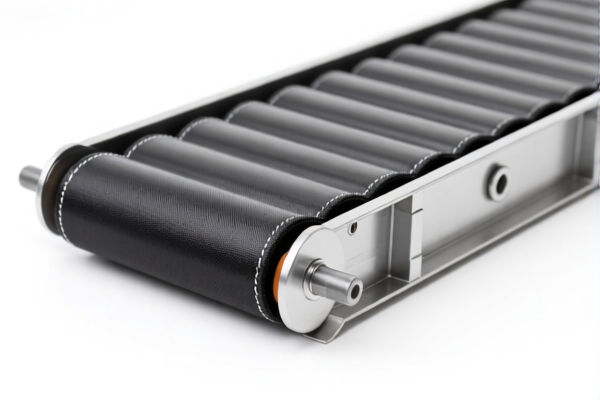
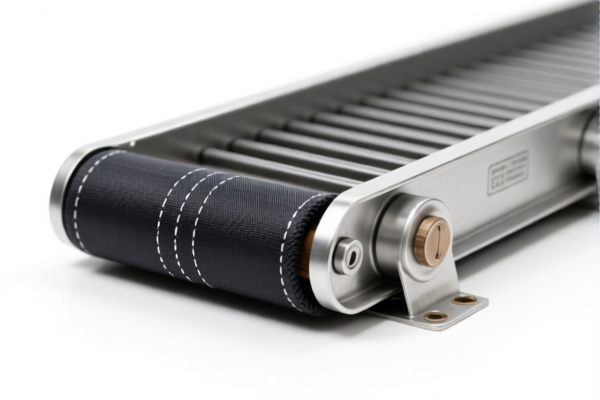
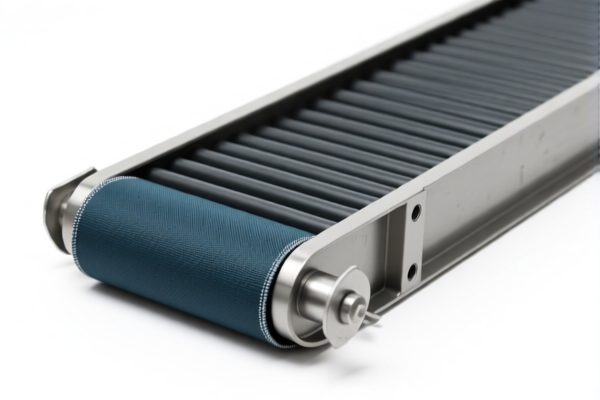
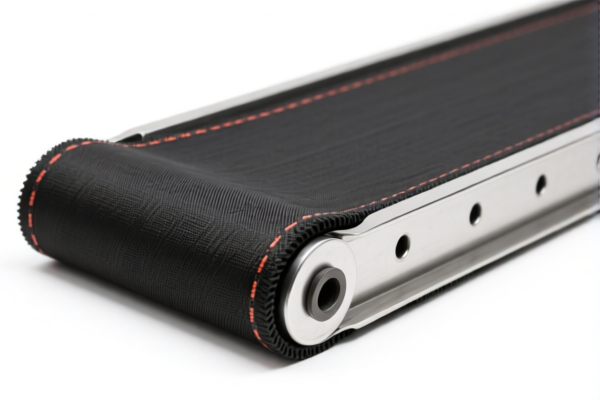
The Fabric Reinforced Conveyor Belt is a critical component in industrial logistics, mining, agriculture, and food processing. It consists of multiple layers of textile material (such as polyester, nylon, or cotton) bonded with rubber or PVC to provide strength, flexibility, and durability.
In international trade, especially when exporting to the United States, classification is strictly determined by:
1. Material Composition (Textile vs. Synthetic Fiber)
2. Application (General Transmission/Conveying vs. Food-Grade)
3. Function (Belt itself vs. Machine Part)
⚠️ Key Distinction Point:
- If the belt is classified under 5910 (Textile materials), it is treated as a finished textile product.
- If classified under 8431 (Parts of machinery), it is treated as an industrial component.
- Food-grade status does NOT automatically change the HS Code but may require additional documentation (FDA compliance).
📊 II. HS Code Classification Details (2026 Latest Tariff Authority Comparison)
Based on the provided data, here are the three possible HS Codes for "Food Grade Fabric Reinforced Conveyor Belt":
| HS Code | Product Description | Application Scenario | Tax Rate Summary |
|---|---|---|---|
5910.00.90.00 |
Textile reinforced conveyor belts, made of textile materials, for conveying | General industrial conveying, non-specific subtype | 37.6% |
5910.00.10.70 |
Textile reinforced conveyor belts, made of man-made fibers or textile materials, for transmission or conveying | Synthetic fiber belts (e.g., Polyester/Nylon) | 39.0% |
8431.39.00.10 |
Textile reinforced conveyor belts, as parts of conveyors, for industrial components | Belts sold as spare parts for machinery | 35.0% |
🔍 Critical Note:
- "Food Grade" is a quality/usage specification, not a classification basis. It falls under the same HS codes as regular belts unless specified otherwise in national regulations (e.g., FDA 21 CFR in the US).
- The choice between5910and8431depends on whether the belt is declared as a standalone textile product or a machine part.
💰 III. 2026 Latest Tariff Rate Details (Including Surtaxes, Policy Surcharges)
✅ Applicable Country: United States (US)
✅ Country of Origin: China (CN)
✅ Effective Date: November 10, 2025 (including subsequent imports)
🎯 1. 5910.00.90.00 —— Textile Reinforced Conveyor Belt (General Textile Material)
| Item | Content |
|---|---|
| Base Tariff | 2.6% |
| Section 301 Surtax | +25.0% |
| Section 122 Surtax | +10.0% |
| Total Tariff Rate | 37.6% |
| Tax Calculation | CIF Value × 37.6% |
| De Minimis Eligibility | ❌ No (Deny De Minimis) |
| Legal Basis Path | USITC:5910.00.90.00 → FOOTNOTE:301 → FOOTNOTE:122 |
📌 Explanation:
- This is the most common classification for general textile-based conveyor belts.
- Base rate (2.6%) is low, but the combined surtaxes (35%) make it expensive.
- No de minimis exemption applies, so even small shipments are fully taxed.
🎯 2. 5910.00.10.70 —— Textile Reinforced Conveyor Belt (Man-Made Fibers/Synthetic)
| Item | Content |
|---|---|
| Base Tariff | 4.0% |
| Section 301 Surtax | +25.0% |
| Section 122 Surtax | +10.0% |
| Total Tariff Rate | 39.0% |
| Tax Calculation | CIF Value × 39.0% |
| De Minimis Eligibility | ❌ No (Deny De Minimis) |
| Legal Basis Path | USITC:5910.00.10.70 → FOOTNOTE:301 → FOOTNOTE:122 |
📌 Explanation:
- Applies to belts made from synthetic fibers (e.g., Polyester, Nylon, Aramid).
- Higher base rate (4.0%) than general textile belts due to higher value-added manufacturing.
- Total rate is 39.0%, the highest among the three options.
🎯 3. 8431.39.00.10 —— Conveyor Belt as a Part of Machinery
| Item | Content |
|---|---|
| Base Tariff | 0.0% |
| Section 301 Surtax | +25.0% |
| Section 122 Surtax | +10.0% |
| Total Tariff Rate | 35.0% |
| Tax Calculation | CIF Value × 35.0% |
| De Minimis Eligibility | ❌ No (Deny De Minimis) |
| Legal Basis Path | USITC:8431.39.00.10 → FOOTNOTE:301 → FOOTNOTE:122 |
📌 Explanation:
- This is the most cost-effective option (35.0% total).
- Requires the belt to be declared as a spare part for a conveyor machine, not as a standalone textile product.
- Risk: If customs determines the belt is not a "part" but a "product," this classification may be challenged.
- Best for: Manufacturers selling belts as replacement parts for existing machinery.
🛠️ IV. Customs Clearance Practical Advice (Real-World Pitfall Avoidance Guide)
✅ 1. Required Document Checklist (All are Mandatory)
| Document | Must Provide | Explanation |
|---|---|---|
| ✅ Product Specification Sheet | ✔️ | Material composition (e.g., Polyester, Rubber), width, length, thickness, food-grade certification (FDA 21 CFR). |
| ✅ Commercial Invoice | ✔️ | Clearly state "Fabric Reinforced Conveyor Belt" and HS Code. |
| ✅ Packing List | ✔️ | Show net/gross weight, dimensions. |
| ✅ Certificate of Origin (CO) | ✔️ | If applicable for preferential treatment (not available for CN-US in this case). |
| ✅ FDA Compliance Statement | ✔️ | Required for "Food Grade" belts. Must confirm no prohibited substances. |
| ✅ Photos of Product & Label | ✔️ | Show belt texture, markings, and food-safe logos if any. |
✅ 2. Declaration Tips (Key Mantra)
🔥 “Material Determines Code, Part vs. Product Matters!”
| Scenario | Correct Declaration | Wrong Practice |
|---|---|---|
| General Textile Belt | 5910.00.90.00 |
Misdeclare as 8431 → Risk of penalty |
| Synthetic Fiber Belt | 5910.00.10.70 |
Misdeclare as 5910.00.90.00 → Over/Under-tax risk |
| **Sp |
are Part for Machine | 8431.39.00.10 | Declare as standalone belt → Higher tax (35% vs 37.6%/39%) |
| Food Grade Belt | Same as above + FDA Doc** | Omit FDA info → Customs hold for inspection |
✅ 3. Special Case Handling
| Situation | Handling Advice |
|---|---|
| OEM Custom Belt | Provide customer order + design specs. Ensure material matches declared HS Code. |
| **Bel |
t with Food-Safe Additives | Include FDA 21 CFR compliance statement. Do not change HS Code solely for "Food Grade." | | Belt Sold with Machinery | If sold together, declare the machine as the main item. The belt may be included in the machine's value. | | Small Sample Shipments | Still subject to 35-39% tax. No de minimis exemption. Do not** ship via small parcel post to avoid rejection. |
🌍 V. Global Market Clearance Comparison (2026 Latest)
| Country/Region | Recommended HS Code | Tariff | Certification | Note |
|---|---|---|---|---|
| 🇺🇸 USA | 8431.39.00.10 (Best) |
35.0% | FDA (for food grade) | Highest tax burden globally |
| 🇨🇳 China | 5910.00.90.00 |
2.6% | CCC (if applicable) | Low tax, easy clearance |
| 🇪🇺 EU | 5910.00.90.00 |
~4% | REACH, LFGB (food) | No Section 301/122 surtaxes |
| 🇬🇧 UK | 5910.00.90.00 |
~4% | UKCA | Post-Brexit rules apply |
| 🇯🇵 Japan | 5910.00.90.00 |
~5% | JIS, Food Sanitation Law | Strict food safety standards |
📌 Conclusion:
- USA is the most expensive market due to Section 301 and Section 122 surtaxes.
- EU, UK, Japan have no additional surtaxes for these goods, making them more cost-effective destinations.
- China has minimal tariffs, but import restrictions may apply.
📌 VI. Common Mistakes & Pitfall Guide (Blood & Tears Lessons)
❌ Mistake 1: Declaring a standalone belt as a machine part (8431) without proof.
👉 Consequence: Customs reclassifies to 5910 → Higher tax (37.6%/39%) + delay.
❌ Mistake 2: Ignoring FDA compliance for "Food Grade" belts.
👉 Consequence: Goods held at port, destroyed, or returned → 100% loss.
❌ Mistake 3: Using "Textile Belt" as a generic description without specifying material composition.
👉 Consequence: Customs cannot determine 5910.00.90.00 vs 5910.00.10.70 → Audit risk.
❌ Mistake 4: Assuming small shipments avoid tax.
👉 Consequence: No de minimis for Chinese-origin goods under 301/122 → Full tax + penalties.
✅ Correct Practice:
"Food Grade Fabric Reinforced Conveyor Belt, Polyester Core, Rubber Cover, FDA Compliant, Model: XYZ, HS Code:
8431.39.00.10(if sold as part) or5910.00.90.00(if standalone)"
🎯 VII. Conclusion: Professional Declaration Saves Money!
🎯 Remember the Mantra:
🔹 "Part vs. Product:
8431is cheapest (35%),5910is standard (37-39%)."
🔹 "Food Grade ≠ Different HS Code, but FDA Doc is Mandatory."
🔹 "No De Minimis for China-US: Every shipment is taxed!"
📌 Pro Tip:
If your conveyor belts are sourced from Vietnam, Mexico, Thailand, or Malaysia, you may qualify for IEEPA exemptions or lower tariffs.
Recommend applying for Advance Ruling from CBP to confirm the correct HS Code before shipment.
📣 Immediate Action:
📞 Contact a professional customs broker + Provide product specs + Apply for HS Code Advance Ruling
🚀 Ensure your conveyor belts clear customs smoothly, avoid penalties, and maximize profit!
✨ Professional clearance starts with accurate classification!
💼 Every cent of your cost deserves precise calculation!
Customer Reviews
About HS Code Classification
The Harmonized System (HS) is an internationally standardized nomenclature developed by the World Customs Organization (WCO) to classify traded products. Over 200 countries use the HS system as the basis for customs tariffs, trade statistics, and import/export regulations.
Each HS code follows a hierarchical structure:
- Chapter (2 digits) — Broad category of goods (e.g., Chapter 84: Machinery and Mechanical Appliances)
- Heading (4 digits) — More specific grouping within the chapter
- Subheading (6 digits) — Internationally standardized breakdown, used by all WCO member countries
- National subdivisions (8-10 digits) — Country-specific extensions for further classification, such as US HTSUS 10-digit codes
Correct HS code classification is essential for smooth customs clearance, accurate duty payment, and compliance with trade regulations. Misclassification can lead to customs delays, overpayment of duties, or penalties.
When importing from CN to US, the applicable tariff rates may include:
- Most-Favored-Nation (MFN) rate — The standard duty rate applied to WTO members
- General rate — Applied to countries without trade agreements
- Trade remedy duties — Additional tariffs such as Section 301 (anti-dumping), Section 232 (national security), or countervailing duties
The information provided on this page is for reference purposes only. For official classification, please consult with your local customs authority or a licensed customs broker.