Food grade Natural Cork Gasket
CN → US| HS Code | Tariff Rate | Origin | Destination | Doc |
|---|---|---|---|---|
| 4823908620 | 35.0% | CN | US | Official Doc |
| 4823908000 | 35.0% | CN | US | Official Doc |
| 8487900080 | 88.9% | CN | US | Official Doc |
| 8487900040 | 38.9% | CN | US | Official Doc |
Product Images
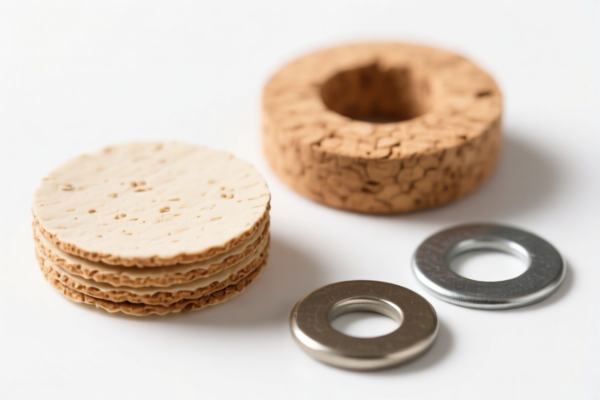
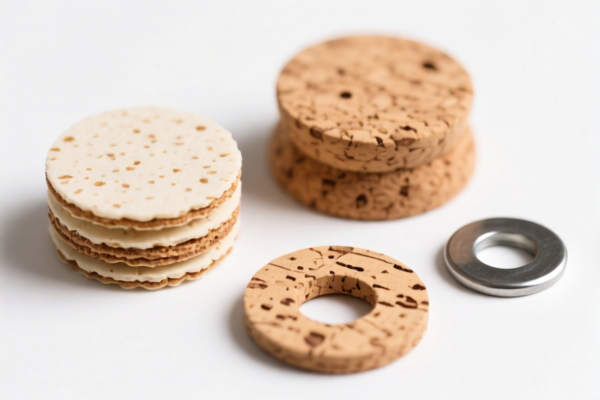
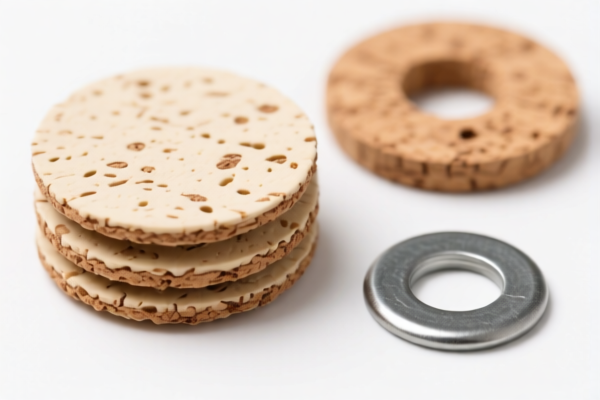
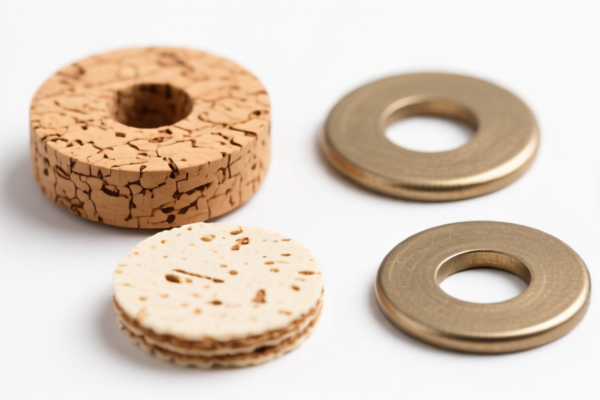
AI Analysis
🍷 Food Grade Natural Cork Gasket (Medical/Food Industrial Seals)
🌐 HS Code Reference & Customs Clearance Guide | 2026 Latest Tariff Analysis | Professional Level Compliance Strategy
📌 Part 1: Product Definition & Classification: Do You Truly Understand "Natural Cork"?
Natural cork gaskets, particularly those designated for medical or food-grade applications, are precision-engineered sealing components derived from the bark of the Quercus suber (cork oak). In international trade, their classification is contentious and depends heavily on two factors: Material Composition vs. Functional Application.
1. Cellulose-Based Material Classification (Chapter 48):
If the gasket is defined primarily by its raw material—natural cork (a plant-based, cellulose material)—and cut into shape, it may be classified under Paper/Paperboard articles. This is often preferred for "Food/Medical Grade" products to highlight material purity, avoiding complex machinery parts definitions.
2. Mechanical Sealing Component Classification (Chapter 84):
If the gasket is marketed strictly as a mechanical part (e.g., for pumps, valves, or reactors) regardless of material, it may fall under "Parts of Machinery." However, using non-rubber/non-metal materials like cork can lead to misclassification risks if not properly documented as "specialized sealing elements."
⚠️ Key Distinction Point:
- If the primary characteristic is "Natural Cork" (Plant Fiber) → Likely Chapter 48 (4823.90).
- If the primary characteristic is "Mechanical Seal/Part" → Likely Chapter 84 (8487.90).
- Medical/Food Specificity: Does not automatically change the HS code but justifies specific documentation for sanitary compliance.
📦 Part 2: HS Code Classification Details (2026 Latest Tariff Authority Comparison)
| HS Code | Product Description | Application Scenario | Material Basis | Total Tax Rate (US from CN) |
|---|---|---|---|---|
4823.90.86.20 |
Medical-Grade Natural Cork Gaskets: Shaped as gaskets, made of natural cork | Medical devices, sterile packaging seals, lab equipment | Natural Cork (Cellulose) | 35.0% |
4823.90.80.00 |
Natural Cork Gaskets: Gaskets conforming to classification uses, natural cork belongs to cellulose materials | General industrial sealing, food processing seals (non-mechanical focus) | Natural Cork (Cellulose) | 35.0% |
8487.90.00.80 |
Cork Sealing Gaskets: Material is cork, classified as other mechanical parts, no electrical components | Heavy machinery seals, pump components, valve gaskets | Cork (Mechanical Part) | 88.9% |
8487.90.00.40 |
Cork Sealing Gaskets: Non-rubber material, gaskets as sealing elements fitting mechanical parts use | Industrial sealing, chemical processing seals | Cork (Sealing Element) | 38.9% |
🔍 Critical Reminder:
-4823Codes (35%) are generally FAVORABLE for "Medical/Food Grade" cork because they emphasize the material (natural cork) rather than the mechanical function.
-8487Codes vary wildly (38.9%to88.9%) depending on how the customs officer views the "specialization" of the part. The88.9%rate is a RED FLAG often applied to generic "other mechanical parts" without specific exclusions.
💰 Part 3: 2026 Latest Tariff Rate Breakdown (Including Surtaxes & Policy Add-ons)
✅ Applicable Country: United States (US)
✅ Origin: China (CN)
✅ Effective Date: November 10, 2025 (and subsequent imports)
🎯 1. 4823.90.86.20 & 4823.90.80.00 —— Medical/Food Grade Natural Cork Gaskets (Cellulose Basis)
| Item | Content |
|---|---|
| Base Tariff | 0% (ad valorem) |
| USITC Surcharge (Section 301) | +25% |
| IEEPA Surcharge (122 Clause) | +10% (Specific to Chinese/HSK products, effective Nov 10, 2025) |
| Total Tax Rate | 35.0% |
| Tax Calculation | CIF Value × 35% |
| De Minimis Exemption | ❌ Not Eligible (deny_de_minimis) |
| Legal Basis Path | IEEPA:122 → USITC:8487/4823 → FOOTNOTE:9903.88.01 (if applicable) |
📌 Explanation:
- The 0% base rate reflects that paper/cellulose articles often have low base duties.
- The 25% Section 301 tariff is standard for many Chinese goods.
- The 10% IEEPA 122 Clause is a new, targeted surcharge on specific Chinese-origin goods, significantly raising the cost.
- Total 35% is high but significantly lower than the machinery parts option if misclassified.
🎯 2. 8487.90.00.40 —— Cork Sealing Gaskets (Non-Rubber Mechanical Parts)
| Item | Content |
|---|---|
| Base Tariff | 3.9% |
| USITC Surcharge (Section 301) | +25% |
| IEEPA Surcharge (122 Clause) | +10% |
| Total Tax Rate | 38.9% |
| Tax Calculation | CIF Value × 38.9% |
| De Minimis Exemption | ❌ Not Eligible |
| Legal Basis Path | IEEPA:122 → USITC:8487.90.00.40 |
📌 Note:
- This code is for "Other mechanical parts" where the material is explicitly non-rubber/non-metal.
- The 3.9% base rate makes it cheaper than the88.9%code, but still higher than the 4823 codes for medical/food grades.
🎯 3. 8487.90.00.80 —— Cork Sealing Gaskets (Generic Mechanical Parts)
| Item | Content |
|---|---|
| Base Tariff | 3.9% |
| USITC Surcharge (Section 301) | +25% |
| IEEPA Surcharge (122 Clause) | +10% |
| Steel/Aluminum/Copper Add-on | +50% (If any metal reinforcement is present) |
| Total Tax Rate | 88.9% (Base + Surtax) or 138.9% (If metal parts included) |
| Tax Calculation | CIF Value × 88.9% (or more) |
| De Minimis Exemption | ❌ Not Eligible |
| Legal Basis Path | IEEPA:122 → USITC:8487.90.00.80 |
📌 Warning:
- This is the MOST DANGEROUS code for cork gaskets.
- If the gasket has any metal ring, screw, or reinforcement, the 50% steel/aluminum/copper surcharge applies on top of the base, leading to >100% tax.
- Pure cork gaskets might avoid the 50% add-on, but still face the 88.9% total.
- AVOID THIS CODE if possible. It is a trap for generic "mechanical parts" with no specific material exemption.
🛠️ Part 4: Customs Clearance Practical Advice (Battle-Tested Pitfall Guide)
✅ 1. Required Documentation Checklist (No Exceptions)
| Document | Mandatory? | Explanation |
|---|---|---|
| ✅ Product Specification Sheet | ✔️ | Must specify: "Natural Cork," "Food-Grade/Medical-Grade," "No Metal Reinforcement," "Cured/Treated." |
| ✅ Material Certificate | ✔️ | Proof of origin from Quercus suber bark, not synthetic rubber or composite. |
| ✅ Sanitary/Medical Certification | ✔️ | FDA 21 CFR compliance, EU 10/2011 (if food), or ISO 13485 (if medical). |
| ✅ Product Photos (Clear) | ✔️ | Show the gasket structure, highlighting pure cork material, no metal edges. |
| ✅ Commercial Invoice | ✔️ | Must use precise wording: "Medical-Grade Natural Cork Gasket, Cellulose-Based" (NOT "Mechanical Part"). |
| ✅ Packing List | ✔️ | Clear separation of units. |
✅ 2. Declaration Strategy (Key Mantra)
🔥 "Material First, Function Second! Say 'Cork,' Not 'Part'!"
| Scenario | Correct Declaration | Incorrect Action |
|---|---|---|
| Medical/Food Grade Cork | 4823.90.86.20 or 4823.90.80.00 |
Use 8487.90.00.80 → 88.9% Tax! |
| Cork with Metal Ring | 8487.90.00.80 (Risk!) |
Hide metal → Fraud Risk & Seizure |
| Pure Cork Gasket (Industrial) | 8487.90.00.40 |
Use 4823 → Customs May Reject (if clearly mechanical) |
| Cork + Rubber Composite | 4016.93 (Rubber Parts) |
Claim "Cork" → Misclassification |
📌 Critical Tip:
- For Medical/Food gaskets, INSIST on4823codes. Emphasize that the product is a material article (cork) cut to shape, not a complex mechanical part.
- Avoid words like "Motor Part," "Engine Seal," or "Hydraulic Component" in the description. Use "Sealing Element," "Gasket," "Spacer."
✅ 3. Special Circumstances Handling
| Situation | Handling Advice |
|---|---|
| OEM Medical Device Gasket | Provide the medical device manufacturer's letter confirming "Non-Metallic, Cork-Based Material." |
| Cork with Adhesive Backing | If adhesive >5% by weight, customs may classify as "Paper Products" (4823) or "Adhesive Products" (3506). Stick to 4823 for pure cork sheets/gaskets. |
| Cork + Metal Reinforcement | HIGH RISK. Likely to be classified as 8487.90.00.80 (+50% metal surcharge). Consider redesigning to pure cork or cork-rubber composite (check rubber codes). |
| Small Sample Shipments | No De Minimis Exemption. All shipments, even <$800, are subject to full 35-88% duties. |
🌍 Part 5: Global Market Customs Comparison (2026 Latest)
| Country/Region | Recommended HS Code | Tariff Rate | Certification Required | Remarks |
|---|---|---|---|---|
| 🇺🇸 USA | 4823.90.86.20 |
35% | FDA, IEEPA Compliance | Avoid 8487.90.00.80 (88.9%) |
| 🇨🇳 China | 4823.90.86.20 |
0-5% | CCC (if applicable) | Low tax, but export restrictions may apply |
| 🇪🇺 EU | 4823.90.86.20 |
0% (if GSP) | CE, Food Contact Compliance | No Section 301/IEEPA surcharges |
| 🇯🇵 Japan | 4823.90.86.20 |
3-5% | FSTB (Food Sanitation Law) | No major surcharges |
| 🇬🇧 UK | 4823.90.86.20 |
3-5% | UKCA | Post-Brexit rules may vary |
📌 Conclusion:
- USA is the most expensive market due to IEEPA 10% + Section 301 25%.
- EU, Japan, UK are much more favorable, with rates under 5-10%.
- Strategy: If exporting to the US, strictly use4823codes for medical/food cork gaskets to save ~50% in taxes compared to8487.
📌 Part 6: Common Mistakes & Pitfall Guide (Lessons Learned)
❌ Mistake 1: Declaring "Cork Gasket" as "Mechanical Part" (8487.90.00.80)
👉 Consequence: 88.9% Tax! (vs. 35%).
👉 Fix: Emphasize "Natural Cork Material" in description.
❌ Mistake 2: Hiding Metal Reinforcements
👉 Consequence: Seizure + Fraud Penalties. If metal is present, you must declare it, leading to the 50% steel surcharge.
👉 Fix: Redesign to pure cork or cork-rubber if possible.
❌ Mistake 3: Using "Gasket" without Material Specification
👉 Consequence: Customs may assume rubber/metal → Higher tax or delay.
👉 Fix: Always specify "Natural Cork," "Cellulose-Based," "Non-Rubber."
✅ Correct Declaration Example:
"Medical-Grade Natural Cork Gasket, Cut from Quercus Suber Bark, Cellulose Material, No Metal Components, FDA Compliant, HS Code 4823.90.86.20"
🎯 Part 7: Conclusion: Precise Classification Saves Millions!
🎯 Remember the Mantra:
🔹 "Cork is Cellulose, Not Metal! Say 4823, Save 50%! Say 8487, Pay 89%! Pure Cork is King!"
🔹 "HS Code Defines Tax, 35% vs 89% is the Difference Between Profit and Loss!"
📌 Pro Tip:
- If your gaskets are 100% pure natural cork (no metal, no rubber), always aim for 4823.90.86.20 or 4823.90.80.00.
- Apply for an Advance Ruling (Pre-Ruling) from US Customs and Border Protection (CBP) if shipping large volumes. This locks in the 35% rate and prevents future disputes.
- For Food-Grade, ensure your supplier provides FDA 21 CFR 175.105 (Adhesives) or 177.1520 (Rubber, if composite) compliance documents.
📣 Take Action Now:
📞 Contact a Licensed Customs Broker + Provide Material Spec Sheet + Request CBP Pre-Ruling
🚀 Ensure your Natural Cork Gaskets Clear Customs Smoothly, Avoid 89% Taxes, and Maximize Profit!
✨ Professional Customs Clearance Starts with Accurate Classification!
💼 Every Percentage Point of Tax Saves is Pure Profit!
Customer Reviews
About HS Code Classification
The Harmonized System (HS) is an internationally standardized nomenclature developed by the World Customs Organization (WCO) to classify traded products. Over 200 countries use the HS system as the basis for customs tariffs, trade statistics, and import/export regulations.
Each HS code follows a hierarchical structure:
- Chapter (2 digits) — Broad category of goods (e.g., Chapter 84: Machinery and Mechanical Appliances)
- Heading (4 digits) — More specific grouping within the chapter
- Subheading (6 digits) — Internationally standardized breakdown, used by all WCO member countries
- National subdivisions (8-10 digits) — Country-specific extensions for further classification, such as US HTSUS 10-digit codes
Correct HS code classification is essential for smooth customs clearance, accurate duty payment, and compliance with trade regulations. Misclassification can lead to customs delays, overpayment of duties, or penalties.
When importing from CN to US, the applicable tariff rates may include:
- Most-Favored-Nation (MFN) rate — The standard duty rate applied to WTO members
- General rate — Applied to countries without trade agreements
- Trade remedy duties — Additional tariffs such as Section 301 (anti-dumping), Section 232 (national security), or countervailing duties
The information provided on this page is for reference purposes only. For official classification, please consult with your local customs authority or a licensed customs broker.