Food grade PS Board
CN → US| HS Code | Tariff Rate | Origin | Destination | Doc |
|---|---|---|---|---|
| 3926100000 | 15.3% | CN | US | Official Doc |
| 3926901000 | 20.9% | CN | US | Official Doc |
| 3926909989 | 22.8% | CN | US | Official Doc |
| 3906902000 | 41.3% | CN | US | Official Doc |
| 3920515090 | 41.5% | CN | US | Official Doc |
Product Images


AI Analysis
🍽️ Food Grade PS Board (Polystyrene Plastic)
🌐 HS Code Reference & Customs Clearance Guide | 2026 Latest Tariff Analysis | Professional Clearance Strategy
📌 I. Product Definition & Classification: Is it a "Board" or a "Tableware"?
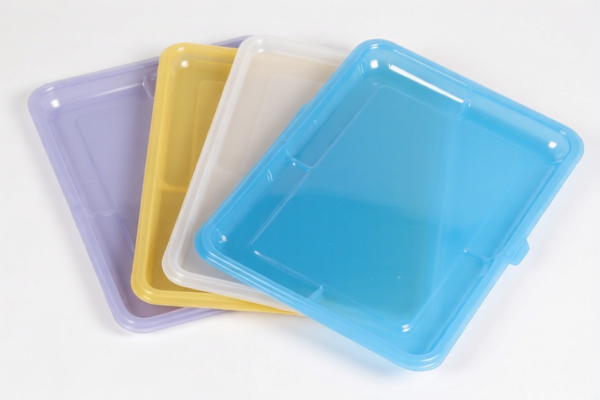
Food Grade PS Board refers to products made of Polystyrene (PS) plastic that are safe for food contact. In international trade, the critical distinction lies not just in the material (Polystyrene), but in the shape/form and intended use:
- Finished Tableware (餐盘/Tableware): If the PS material is molded into a specific shape intended for direct food service (plates, trays, bowls), it is classified as Tableware.
- Semi-finished/Other Plastic Articles (板材/Other Articles): If the PS material is in the form of raw sheets, slabs, or generic "boards" (e.g., for crafting, signage, or further processing into non-tableware items), it is classified as Other Plastic Articles or Raw Sheets.
⚠️ Key Distinction Point:
- If the item is a formed plate/tray meant for eating →归类 to 3926.10.00.00 (Tableware)
- If the item is a flat sheet/board or a generic plastic part not specifically shaped as tableware →归类 to 3926.90.10.00 or 3920.51.50.90 depending on specific polymer type (PS vs PMMA confusion in data) or form.
📦 II. HS Code Classification Details (2026 Latest Tariff Authority Comparison)
| HS Code | Product Description | Application Scenario | Form/State | Total Tax Rate |
|---|---|---|---|---|
3926.10.00.00 |
Tableware and other articles of plastic | Food-grade PS plates, trays, bowls, cups | Molded Tableware | 15.3% |
3926.90.10.00 |
Other plastic articles | Generic PS boards, packaging materials, non-food shaped PS parts | Other Plastic Articles | 20.9% |
3926.90.99.89 |
Other plastic articles (Note: Data lists PMMA) | Data Discrepancy Check: This code is listed for PMMA sheets. If your product is truly PS, do NOT use this code unless it is a niche PMMA mix. | Other Articles | 22.8% |
3906.90.20.00 |
Acrylic polymers in primary forms | Data Discrepancy Check: This is for PMMA/Acrylic primary forms, NOT PS. Only use if your "PS Board" is actually Acrylic. | Primary Form Sheets | 41.3% |
3920.51.50.90 |
Other plates, sheets, film, foil and strip | Data Discrepancy Check: This code specifies PMMA (PolyMethyl MethAcrylate). If your product is PS, this code is likely incorrect unless mislabeled. | Plates/Sheets | 41.5% |
🔍 Critical Warning:
- The provided data contains entries for PMMA (Polymethyl Methacrylate/Acrylic) under3926.90.99.89,3906.90.20.00, and3920.51.50.90.
- Polystyrene (PS) is chemically different from PMMA.
- If you are importing Food Grade PS, the primary candidates are3926.10.00.00(if shaped as tableware) or3926.90.10.00(if generic PS articles).
- Do not use PMMA codes (3906,3920) for PS products, as this constitutes a misdeclaration.
💰 III. 2026 Latest Tariff Rate Details (Including Surcharges & Policy Add-ons)
✅ Applicable Country: United States (US)
✅ Origin: China (CN)
✅ Effective Date: November 10, 2025 (and subsequent imports)
🎯 1. 3926.10.00.00 —— Tableware and other articles of plastic (Food Grade PS Plates)
| Item | Content |
|---|---|
| Base Tariff | 5.3% (ad valorem) |
| Section 301 Surcharge | 0.0% (Note: Data indicates 0%, verify if current rules have updated this specific subheading) |
| Section 122 Tariff | +10% (New trade measure) |
| Total Tax Rate | 15.3% |
| Tax Calculation | CIF Value × 15.3% |
| De Minimis Exemption | ❌ Not Eligible (High-risk category for de minimis) |
| Legal Basis Path | Base Tariff: 5.3% + Sec 122: 10% |
📌 Explanation:
- This is the lowest tax rate among the options for plastic goods.
- Condition: The item must be clearly identifiable as tableware (plates, bowls, cutlery sets).
- If you import "PS Boards" but declare them as "Tableware" without proof of form, Customs may reclassify them, leading to penalties.
🎯 2. 3926.90.10.00 —— Other plastic articles (Generic PS Boards/Pieces)
| Item | Content |
|---|---|
| Base Tariff | 3.4% (ad valorem) |
| Section 301 Surcharge | +7.5% (Higher than tableware) |
| Section 122 Tariff | +10% |
| Total Tax Rate | 20.9% |
| Tax Calculation | CIF Value × 20.9% |
| De Minimis Exemption | ❌ Not Eligible |
| Legal Basis Path | Base Tariff: 3.4% + Sec 301: 7.5% + Sec 122: 10% |
📌 Explanation:
- Used if the PS product is not shaped as tableware (e.g., PS cutting boards, generic plastic components, or unformed sheets).
- Cost Impact: 5.6% higher total tax than tableware classification.
⚠️ Important Note on PMMA Codes in Data
The following codes in the <DATA> section refer to PMMA (Acrylic), not PS. If your product is PS, these are incorrect classifications. If your product is actually PMMA (mistakenly called PS), see below:
🎯 3. 3926.90.99.89 —— PMMA Sheets (Other Plastic Articles)
| Item | Content |
|---|---|
| Base Tariff | 5.3% |
| Section 301 Surcharge | +7.5% |
| Section 122 Tariff | +10% |
| Total Tax Rate | 22.8% |
🎯 4. 3906.90.20.00 —— Acrylic Polymers in Primary Forms
| Item | Content |
|---|---|
| Base Tariff | 6.3% |
| Section 301 Surcharge | +25.0% (High Section 301 rate for primary acrylic forms) |
| Section 122 Tariff | +10% |
| Total Tax Rate | 41.3% |
🎯 5. 3920.51.50.90 —— PMMA Plates/Sheets
| Item | Content |
|---|---|
| Base Tariff | 6.5% |
| Section 301 Surcharge | +25.0% |
| Section 122 Tariff | +10% |
| Total Tax Rate | 41.5% |
🔍 Critical Advice:
- If you are importing Polystyrene (PS), ignore codes3926.90.99.89,3906.90.20.00, and3920.51.50.90unless you have confirmed the material is PMMA.
- Misclassifying PS as PMMA can lead to audits, fines, and duty evasion charges.
- Verify the Material Safety Data Sheet (MSDS) to confirm the polymer type.
🛠️ IV. Customs Clearance Practical Advice (Battle-Tested Pitfall Avoidance)
✅ 1. Document Checklist (Mandatory)
| Document | Required? | Description |
|---|---|---|
| ✅ Product Specification Sheet | ✔️ | Must clearly state: Material = Polystyrene (PS), Food Grade Compliant (FDA 21 CFR 177.1520 or equivalent). |
| ✅ Product Photos | ✔️ | Clear images showing shape. Is it a plate? A sheet? |
| ✅ Commercial Invoice | ✔️ | Must specify "Food Grade Polystyrene Tableware" or "Polystyrene Plastic Boards". Do not use vague terms like "Plastic Goods". |
| ✅ Certificate of Compliance | ✔️ | Proof of FDA/EFSA food contact safety if claiming "Food Grade". |
| ✅ Packing List | ✔️ | Itemized list of quantities and weights. |
✅ 2. Declaration Strategy (Key Mantra)
🔥 “Shape Determines Code, Material Determines Rate, Food Grade Requires Proof!”
| Scenario | Correct Declaration | Wrong Practice |
|---|---|---|
| PS Plates/Bowls | 3926.10.00.00Description: "Food Grade Polystyrene Dinner Plates" |
Declaring as "Plastic Sheets" → Higher Tax (20.9%) |
| PS Cutting Boards | 3926.90.10.00Description: "Polystyrene Kitchen Cutting Boards" |
Declaring as "Tableware" if not standard eating ware → Risk of Rejection |
| Raw PS Sheets | 3926.90.10.00 or 3904.xx (if PS) |
Using PMMA codes (3920.51) → Misdeclaration |
| PMMA Sheets | 3920.51.50.90 |
Using PS codes → Misdeclaration |
✅ 3. Special Case Handling
| Situation | Handling Advice |
|---|---|
| "Board" Ambiguity | If the term "Board" is ambiguous, provide 3D renderings or dimensions to prove it is tableware (e.g., small, shaped for food) vs. industrial sheet. |
| Food Grade Claim | Ensure FDA compliance documentation is ready. Customs may inspect for chemical migration risks. |
| Section 122 Tariff | The 10% surcharge applies broadly. Factor this into your landing cost calculation. |
| Section 301 Variation | Tableware (3926.10) has 0% Sec 301, while other plastics (3926.90) have 7.5%. This is a major cost driver. |
🌍 V. Global Market Customs Comparison (2026 Latest)
| Country/Region | Recommended HS Code (PS Tableware) | Tariff Rate | Certification | Notes |
|---|---|---|---|---|
| 🇺🇸 USA | 3926.10.00.00 |
15.3% (5.3% Base + 10% Sec 122) | FDA Compliance | Lowest rate for PS tableware. |
| 🇨🇳 China | 3926.10.00.00 |
~5-7% | GB 4806 (Food Contact) | Import duty varies by FTAs. |
| 🇪🇺 EU | 3926.10.00 (CN 8-digit) |
6.5% | EU 10/2011 Regulation | No Sec 301/122 surcharges. |
| 🇯🇵 Japan | 3926.10.00 |
6.0% | Food Safety Act | Standard MFN rate. |
📌 Conclusion:
- USA has the most complex tax structure with Section 122 adding 10%.
- Classifying PS Tableware as3926.10.00.00saves 5.6% vs.3926.90.10.00.
- Verify Material: If you have PMMA, costs jump to 22.8%–41.5%.
📌 VI. Common Mistakes & Pitfalls (Blood Lessons)
❌ Mistake 1: Using PMMA Codes (3920.51) for PS Products
👉 Consequence: Customs may flag for material mismatch, leading to duty refunds + fines.
❌ Mistake 2: Declaring Tableware as Generic Plastic Articles (3926.90.10)
👉 Consequence: Paying 20.9% instead of 15.3%. Unnecessary cost increase!
❌ Mistake 3: Not proving Food Grade status
👉 Consequence: Customs may reject the "Food Grade" claim, leading to additional testing fees or rejection of entry.
❌ Mistake 4: Ignoring Section 122 Tariff
👉 Consequence: Underestimating landed cost by 10%.
✅ Correct Approach:
"Food Grade Polystyrene Dinner Plates, Molded, FDA Compliant, Model XYZ, HS 3926.10.00.00"
🎯 VII. Conclusion: Precision Classification Saves Money!
🎯 Remember the Mantra:
🔹 "Tableware is 15.3%, Other Plastic is 20.9%, PMMA is 22-41%!"
🔹 "Shape defines Code 3926.10, Material defines Code 3926.90 or 3920!"
🔹 "Verify PS vs PMMA, or face 41.5% Tax Shock!"
📌 Pro Tip:
If your "PS Board" is actually PMMA (Acrylic), you face 22.8%–41.5% tariffs. Confirm your material before shipping.
For PS Tableware, 3926.10.00.00 is your best friend for cost savings.
📣 Immediate Action:
📞 Contact your customs broker + Provide Material Test Report (PS vs PMMA) + Confirm Shape (Tableware vs Sheet)
🚀 Clear Customs Smoothly, Minimize Tax, Maximize Profit!
✨ Professional Clearance Starts with Accurate Classification!
💼 Every Percent Matters in Global Trade!
Customer Reviews
About HS Code Classification
The Harmonized System (HS) is an internationally standardized nomenclature developed by the World Customs Organization (WCO) to classify traded products. Over 200 countries use the HS system as the basis for customs tariffs, trade statistics, and import/export regulations.
Each HS code follows a hierarchical structure:
- Chapter (2 digits) — Broad category of goods (e.g., Chapter 84: Machinery and Mechanical Appliances)
- Heading (4 digits) — More specific grouping within the chapter
- Subheading (6 digits) — Internationally standardized breakdown, used by all WCO member countries
- National subdivisions (8-10 digits) — Country-specific extensions for further classification, such as US HTSUS 10-digit codes
Correct HS code classification is essential for smooth customs clearance, accurate duty payment, and compliance with trade regulations. Misclassification can lead to customs delays, overpayment of duties, or penalties.
When importing from CN to US, the applicable tariff rates may include:
- Most-Favored-Nation (MFN) rate — The standard duty rate applied to WTO members
- General rate — Applied to countries without trade agreements
- Trade remedy duties — Additional tariffs such as Section 301 (anti-dumping), Section 232 (national security), or countervailing duties
The information provided on this page is for reference purposes only. For official classification, please consult with your local customs authority or a licensed customs broker.