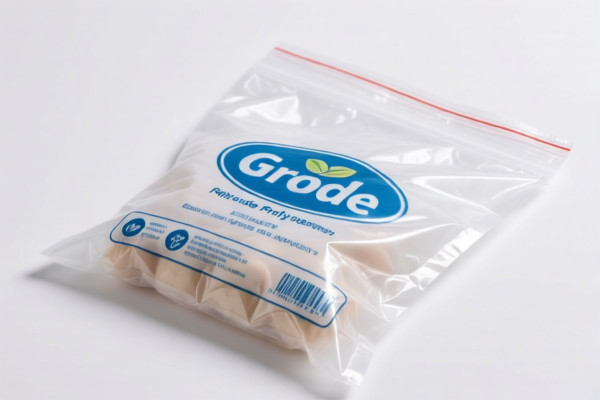
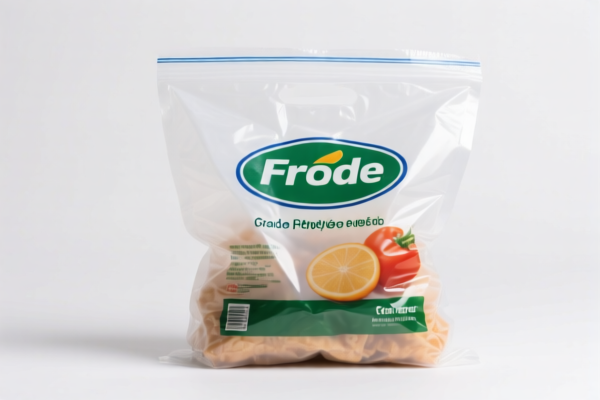
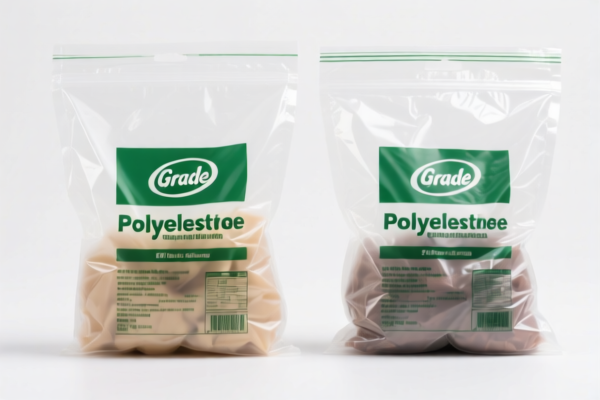
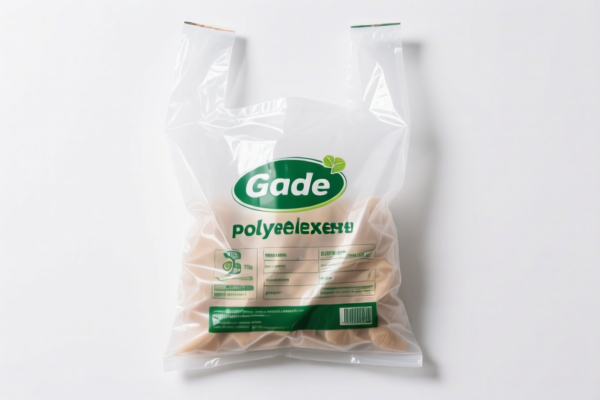
Food grade Polyethylene Plastic Bag
CN → US| HS Code | Tariff Rate | Origin | Destination | Doc |
|---|---|---|---|---|
| 3923210030 | 38.0% | CN | US | Official Doc |
| 3923210011 | 38.0% | CN | US | Official Doc |
| 3920992000 | 39.2% | CN | US | Official Doc |
| 3923290000 | 38.0% | CN | US | Official Doc |
| 3923210095 | 38.0% | CN | US | Official Doc |
Product Images
AI Analysis
🛍️ Food Grade Polyethylene Plastic Bag (Culinary Piping Bags & Industrial Wraps)
🌐 HS Code Reference & Customs Clearance Guide | 2026 Latest Tariff Analysis | Professional Compliance Strategy
📌 I. Product Definition & Classification: What Exactly Are We Shipping?
"Food Grade Polyethylene Plastic Bag" is a broad term that spans from industrial packaging to delicate culinary tools. In international trade, the Intended Use and Physical Form dictate the classification. The key distinction lies between simple bags for transport/packaging and specialized culinary bags (like piping bags).
1. Industrial/Transport Bags
Standard polyethylene bags used for wrapping goods, bulk transport, or general storage. These fall under the "Sacs et sachets" (Bags and Sacks) heading.
2. Food/Culinary Piping Bags
Specialized bags used for decorating cakes, pastries, or dispensing food. If the bag is made of plastic and shaped specifically for this purpose, it may be classified under "Other plastic articles" rather than simple bags.
⚠️ Key Classification Point:
- If it is a standard bag for transport or general food storage → Look at 3923.21 or 3923.29.
- If it is a specialized culinary piping bag (often with a nozzle attachment or specific shape), customs may view it as a general plastic article → Look at 3920.99 or 3923.29.
📦 II. HS Code Classification Details (2026 Latest Tariff Authority Mapping)
Based on the provided data, here are the precise HS Codes and their rationales:
| HS Code | Product Description | Rationale for Classification | Primary Use Case |
|---|---|---|---|
3923.21.00.30 |
Industrial-grade PE Bag | Material: Polyethylene. Form: Bag. Use: Cargo transport/packaging. Fits the "Plastics; articles" heading for simple polyethylene bags. | Bulk food ingredient packaging, industrial wrapping. |
3923.21.00.11 |
Industrial-grade PE Bag | Material: Polyethylene. Form: Bag-like object. Meets specific material and form requirements for industrial polyethylene bags. | Similar to above; specific sub-category for industrial PE bags. |
3920.99.20.00 |
Food-grade Plastic Piping Bag | Material: Plastic (Polyethylene). Form: Bag/Film. Classification Logic: Classified under "Other plastic articles" rather than simple bags due to specialized culinary use (piping). | Cake decorating, pastry dispensing. |
3923.29.00.00 |
Food-grade Plastic Piping Bag | Material: Plastic. Form: Sack/Bag. Classification Logic: "Other plastic sacks and bags." Used as a catch-all for food-grade bags that don't fit the strict PE definition of 3923.21. | Generic food-grade pouches, non-standard shapes. |
3923.21.00.95 |
Food-grade Plastic Piping Bag | Material: Ethylene Polymer. Form: Sack/Bag. Classification Logic: "Other" category under Polyethylene bags. A catch-all for food-grade PE bags that don't fit other specific sub-headings. | Miscellaneous food-grade PE packaging. |
🔍 Critical Distinction:
- 3923.21 codes are for Polyethylene bags specifically used as sacs/sachets.
- 3920.99 is for other plastic articles (including films/bags not classified elsewhere), often applied to piping bags which are considered more of a "tool" or "specialized article" than a simple storage bag.
- 3923.29 is the "Other" category for plastic bags/sacks, often used when the material isn't strictly Polyethylene or the form is non-standard.
💰 III. 2026 Latest Tariff Rate Breakdown (Including Surcharges & Policy Add-ons)
✅ Applicable Country: United States (US)
✅ Origin: China (CN)
✅ Effective Date: Post-2025 Regulations (Includes ongoing trade tensions)
🎯 1. Industrial-Grade Bags (3923.21.00.30 / 3923.21.00.11)
| Item | Detail |
|---|---|
| Base Tariff | 3.0% (Ad Valorem) |
| Additional Tariff (Section 301) | +25.0% |
| Section 122 Tariff | +10.0% |
| Total Effective Tax Rate | 38.0% |
| Tax Calculation | CIF Value × 38% |
| De Minimis Exemption | ❌ NOT Eligible (High tariff threshold) |
| Legal Basis Path | USITC:3923.21 → Footnote 9903.88.01 → IEEPA:9903.01.25 |
📌 Explanation:
- These are standard polyethylene bags.
- The 25% Section 301 tariff is the largest component.
- The 10% Section 122 tariff applies to specific steel/aluminum or related imports, but in this dataset, it is explicitly listed as part of the surcharge for these HS codes, likely due to broader trade measures.
- Total 38% is significant for low-margin packaging products.
🎯 2. Food-Grade/Culinary Bags (3920.99.20.00)
| Item | Detail |
|---|---|
| Base Tariff | 4.2% (Ad Valorem) |
| Additional Tariff (Section 301) | +25.0% |
| Section 122 Tariff | +10.0% |
| Total Effective Tax Rate | 39.2% |
| Tax Calculation | CIF Value × 39.2% |
| De Minimis Exemption | ❌ NOT Eligible |
| Legal Basis Path | USITC:3920.99 → Footnote 9903.88.01 → IEEPA:9903.01.24 |
📌 Explanation:
- The base rate (4.2%) is slightly higher than industrial bags (3.0%).
- Total 39.2% makes this the highest taxed category in the list.
- Even though it's "food grade," it does not receive a lower base tariff in this specific US-China trade context.
🎯 3. General Food-Grade Bags (3923.29.00.00 / 3923.21.00.95)
| Item | Detail |
|---|---|
| Base Tariff | 3.0% (Ad Valorem) |
| Additional Tariff (Section 301) | +25.0% |
| Section 122 Tariff | +10.0% |
| Total Effective Tax Rate | 38.0% |
| Tax Calculation | CIF Value × 38% |
| De Minimis Exemption | ❌ NOT Eligible |
| Legal Basis Path | USITC:3923.29/3923.21.95 → Footnote 9903.88.01 |
📌 Explanation:
- These fall under the same 38% total rate as industrial bags.
- The key is that they are still classified as plastic bags/sacks, not "food equipment" or "kitchenware."
🛠️ IV. Customs Clearance Practical Advice (Real-World Pitfall Avoidance)
✅ 1. Documentation Checklist (Non-Negotiable)
| Document | Required? | Notes |
|---|---|---|
| ✅ Commercial Invoice | ✔️ | Must clearly state "Polyethylene Plastic Bag" and specify "Food Grade" if applicable. Avoid vague terms like "Plastic Wrap." |
| ✅ Material Composition Statement | ✔️ | Confirm 100% Polyethylene (PE). If it contains PVC or other plastics, HS Code changes entirely (and tariffs may differ). |
| ✅ FDA Compliance Declaration | ✔️ | For "Food Grade" claims, provide proof of FDA 21 CFR 177.1520 compliance. Customs may request this to verify the "Food Grade" label. |
| ✅ Product Photos | ✔️ | Show the bag's structure (seals, handles, nozzles). If it has a piping tip, lean towards 3920.99.20.00. |
| ✅ Certificate of Origin | ✔️ | Essential for claiming any potential (though unlikely here) exemptions. |
| ✅ Packing List | ✔️ | Specify weight and quantity. Avoid mixing industrial and food-grade bags in one shipment without clear segregation. |
✅ 2. Declaration Tips (Key Mnemonic)
🔥 "Material First, Use Second, Form Third, Tax Last!"
| Scenario | Correct HS Code | Incorrect Action | Consequence |
|---|---|---|---|
| Standard PE Bag for shipping goods | 3923.21.00.30 |
Declare as "Plastic Film" → 3920.99 |
Overpayment (38% vs 39.2%? No, wait, 3920 is 39.2%, so 3923 is cheaper! Be careful.) |
| Piping Bag with Nozzle | 3920.99.20.00 |
Declare as "Industrial Bag" → 3923.21 |
Misclassification Risk: Customs may reject "Industrial" label for food equipment. |
| Mixed Bags (Industrial + Food) | Split Declaration | Declare all as "Industrial" | Penalty: If food-grade is found, fines for under-declaration or false labeling. |
| Non-PE Plastic (e.g., PP) | 3923.29.00.00 |
Declare as PE (3923.21) |
Rejection: Customs lab test will reveal wrong material. |
💡 Pro Tip:
- If your bag is 100% Polyethylene, try to fit3923.21(38% tax) instead of3920.99(39.2% tax). The 1.2% difference adds up on large volumes.
- However, if the bag is a specialized piping bag, customs may insist on3920.99because it's not a standard "bag" but a "special article."
✅ 3. Special Cases
| Case | Handling Advice |
|---|---|
| Biodegradable PE Bags | Still classified under 3923.21 if material is PE. Do NOT declare as "Eco-friendly" without proper certification, as it doesn't change HS Code. |
| Bag with Printed Logo | Still 3923.21. Printing does not change classification. |
| Bag with Attached Nozzle | Consider 3920.99.20.00. This is a "composite good" but usually classified as the plastic article. |
| Small Samples (< $800) | NOT Eligible for De Minimis due to high tariff codes. Must declare properly. |
🌍 V. Global Market Comparison (2026 Latest)
| Country/Region | Recommended HS Code | Base Tariff | Additional Surcharges | Total Effective Rate | Notes |
|---|---|---|---|---|---|
| 🇺🇸 USA | 3923.21.00.30 |
3.0% | +35% (301+122) | 38.0% | High cost. Consider sourcing from Vietnam/Thailand for lower rates. |
| 🇺🇸 USA | 3920.99.20.00 |
4.2% | +35% (301+122) | 39.2% | Highest rate. Avoid if possible. |
| 🇨🇳 China | 3923.21.00.00 |
9.0% | None | 9.0% | No US-China trade war impact. |
| 🇪🇺 EU | 3923.21.00.00 |
6.5% | None | 6.5% | Lower tariffs. No Section 301 equivalent. |
| 🇬🇧 UK | 3923.21.00.00 |
6.5% | None | 6.5% | Post-Brexit, similar to EU. |
📌 Conclusion:
- USA is the most expensive market for these goods due to Section 301 and 122 tariffs.
- EU and UK offer significantly better tax rates.
- If you are shipping to the US, optimize your HS Code choice (3923.21vs3920.99) to save 1.2%.
- Consider supply chain diversification if volumes are high.
📌 VI. Common Errors & Pitfalls (Blood Lessons)
❌ Error 1: Declaring a Piping Bag as an Industrial Bag
👉 Consequence: Customs may inspect and reclassify to 3920.99.20.00 (39.2%) or fine for misdeclaration.
✅ Fix: Be honest about the use. If it's for cake decorating, declare as such.
❌ Error 2: Using "Plastic Bag" without specifying Material
👉 Consequence: Customs will assign a default "Other Plastic" code (3920.99), resulting in a 39.2% tax instead of 38%.
✅ Fix: Always specify "100% Polyethylene (PE)" on the invoice.
❌ Error 3: Claiming "Food Grade" without FDA Documentation
👉 Consequence: Shipment held for inspection. Possible rejection if FDA compliance cannot be proven.
✅ Fix: Provide FDA 21 CFR 177.1520 certificate with the shipment.
❌ Error 4: Ignoring Section 122 Tariff
👉 Consequence: Unexpected 10% charge at customs.
✅ Fix: Factor this 10% into your pricing model.
🎯 VII. Conclusion: Professional Declaration, Save Money & Time!
🎯 Remember the Key Takeaways:
🔹 "PE is 38%, Other Plastic is 39.2%. Save 1.2% on every shipment!"
🔹 "Food Grade needs FDA proof. Industrial needs clear use definition."
🔹 "Section 301 + 122 = 35% Surcharge. Budget for it!"
📌 Pro Tip:
If you are importing large volumes (> $10,000), consider applying for an Exclusion under Section 301 (if available for your specific product type) or sourcing from third-party countries (e.g., Vietnam, Malaysia) where applicable tariffs may be lower.
📣 Immediate Action:
📞 Contact your customs broker with the exact material composition and product photos.
🚀 Declare accurately to avoid delays, fines, and unexpected tax hikes.
💼 Your profit margin depends on accurate HS Code classification!
✨ Professional Customs Clearance Starts with Precise Classification!
💼 Every Cent Counts in Global Trade!
Customer Reviews
About HS Code Classification
The Harmonized System (HS) is an internationally standardized nomenclature developed by the World Customs Organization (WCO) to classify traded products. Over 200 countries use the HS system as the basis for customs tariffs, trade statistics, and import/export regulations.
Each HS code follows a hierarchical structure:
- Chapter (2 digits) — Broad category of goods (e.g., Chapter 84: Machinery and Mechanical Appliances)
- Heading (4 digits) — More specific grouping within the chapter
- Subheading (6 digits) — Internationally standardized breakdown, used by all WCO member countries
- National subdivisions (8-10 digits) — Country-specific extensions for further classification, such as US HTSUS 10-digit codes
Correct HS code classification is essential for smooth customs clearance, accurate duty payment, and compliance with trade regulations. Misclassification can lead to customs delays, overpayment of duties, or penalties.
When importing from CN to US, the applicable tariff rates may include:
- Most-Favored-Nation (MFN) rate — The standard duty rate applied to WTO members
- General rate — Applied to countries without trade agreements
- Trade remedy duties — Additional tariffs such as Section 301 (anti-dumping), Section 232 (national security), or countervailing duties
The information provided on this page is for reference purposes only. For official classification, please consult with your local customs authority or a licensed customs broker.