Food grade Polymer Ion Exchange Resin
CN → US| HS Code | Tariff Rate | Origin | Destination | Doc |
|---|---|---|---|---|
| 3914002000 | 35.0% | CN | US | Official Doc |
| 3914006000 | 38.9% | CN | US | Official Doc |
| 3907995050 | 41.5% | CN | US | Official Doc |
| 3824992900 | 41.5% | CN | US | Official Doc |
| 3907290000 | 41.5% | CN | US | Official Doc |
Product Images

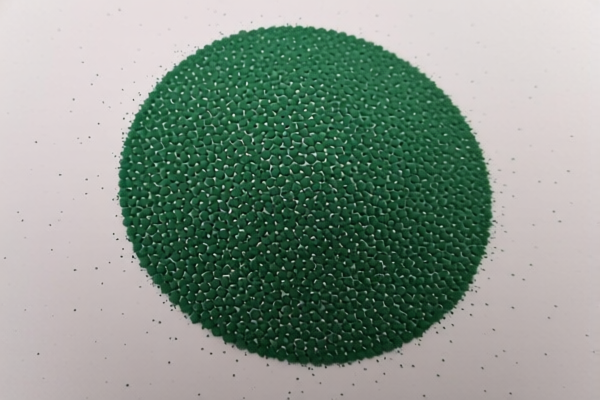

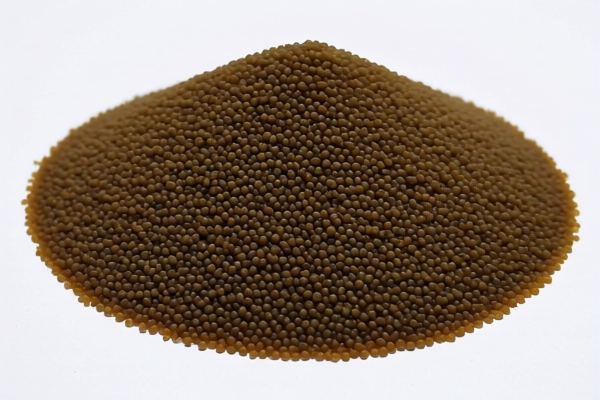
AI Analysis
🧪 Food Grade Polymer Ion Exchange Resin: HS Code Classification & 2026 US Customs Clearance Guide
🌐 HS Code Reference & Customs Strategy | 2026 Latest Tariff Analysis | Professional Clearance Guide
📌 Part 1: Product Definition – What Exactly is "Food Grade Polymer Ion Exchange Resin"?
Polymer Ion Exchange Resins are synthetic, porous organic polymers that contain active functional groups. They are widely used in water purification, food processing (e.g., sugar decolorization, sweetener production), pharmaceuticals, and chemical separation.
Key Distinction for Customs: The classification depends heavily on the chemical composition (polyester vs. polyacrylic vs. polystyrene) and the state of the resin (primary form vs. prepared). In the provided data, all entries refer to "Polymer-based Ion Exchange Resins," but they diverge based on the specific polymer matrix and regulatory context.
⚠️ Critical Clarification:
- "Food Grade" is a quality standard, NOT a tariff classification criterion. Customs do not classify goods as "Food Grade."
- Classification relies on the polymer type (e.g., polyester, polyacrylic, polystyrene) and physical form.
- The data provided reflects high-tariff scenarios (25% Section 301 + 10% IEEPA) due to the likely origin (China) and specific HS codes triggering these penalties.
📦 Part 2: HS Code Classification Matrix (Based on Provided Data)
The following HS Codes are derived strictly from the <DATA> provided. Each code represents a different polymer type or chemical categorization, all carrying significant additional tariffs.
| HS Code | Product Description (from DATA) | Total Tax Rate | Tariff Composition | Key Polymer Type |
|---|---|---|---|---|
3914.00.20.00 |
Polymer ion exchange resin, matches polymer material and ion exchange agent use | 35.0% | Base: 0% Add'l: 25% (Sec 301) Add'l: 10% (IEEPA 122) |
General Ion Exchange Resin |
3914.00.60.00 |
Polymer ion exchange resin, matches polymer material and primary form ion exchange resin | 38.9% | Base: 3.9% Add'l: 25% (Sec 301) Add'l: 10% (IEEPA 122) |
Primary Form Resin |
3907.99.50.50 |
Polymer-based ion exchange resin, belongs to polyester and related polymers, primary form | 41.5% | Base: 6.5% Add'l: 25% (Sec 301) Add'l: 10% (IEEPA 122) |
Polyester-based |
3824.99.29.00 |
Polymer-based ion exchange resin, belongs to chemical products and preparations, other chemicals | 41.5% | Base: 6.5% Add'l: 25% (Sec 301) Add'l: 10% (IEEPA 122) |
Other Chemical Product |
3907.29.00.00 |
Polymer-based ion exchange resin, matches other polyethers belonging to polymer/resin category | 41.5% | Base: 6.5% Add'l: 25% (Sec 301) Add'l: 10% (IEEPA 122) |
Polyether-based |
🔍 Key Insight:
- HS 3914.00 is the standard heading for "Ion-exchange resins."
- HS 3907 refers to "Other polyesters" and "Other polyethers."
- HS 3824 is a residual category for "Chemical products and preparations."
- All options incur additional tariffs (25% + 10%) due to Section 301 and IEEPA provisions, likely impacting Chinese-origin goods.
💰 Part 3: 2026 Tariff Rate Detailed Breakdown (US Import from China)
✅ Applicable Country: United States (US)
✅ Origin: China (CN)
✅ Effective Date: Post-2025 policies (including IEEPA Section 122)
🎯 1. 3914.00.20.00 – General Polymer Ion Exchange Resin
| Item | Detail |
|---|---|
| Base MFN Duty | 0.0% |
| Section 301 Add'l Duty | +25.0% |
| IEEPA Section 122 Duty | +10.0% |
| Total Effective Rate | 35.0% |
| Calculation | CIF Value × 35.0% |
| De Minimis Exemption? | ❌ NO (Values > $800 are taxed; even if below, proper classification is required) |
| Legal Basis | HTSUS 3914.00.20.00 → Section 301 (USITC Footnote) → IEEPA 122 |
📌 Explanation:
- This is the lowest tariff option among the provided data.
- Applicable if the resin is classified purely as an "ion exchange resin" under heading 3914, without specifying a base polymer like polyester or polyether.
- Cost Impact: For a $10,000 shipment, tax = $3,500.
🎯 2. 3914.00.60.00 – Primary Form Ion Exchange Resin
| Item | Detail |
|---|---|
| Base MFN Duty | 3.9% |
| Section 301 Add'l Duty | +25.0% |
| IEEPA Section 122 Duty | +10.0% |
| Total Effective Rate | 38.9% |
| Calculation | CIF Value × 38.9% |
| De Minimis Exemption? | ❌ NO |
| Legal Basis | HTSUS 3914.00.60.00 → Section 301 → IEEPA 122 |
📌 Explanation:
- Slightly higher due to the 3.9% base duty.
- Used when the resin is explicitly in its primary form (unprocessed).
- Cost Impact: For a $10,000 shipment, tax = $3,890.
🎯 3. 3907.99.50.50 – Polyester-Based Ion Exchange Resin
| Item | Detail |
|---|---|
| Base MFN Duty | 6.5% |
| Section 301 Add'l Duty | +25.0% |
| IEEPA Section 122 Duty | +10.0% |
| Total Effective Rate | 41.5% |
| Calculation | CIF Value × 41.5% |
| De Minimis Exemption? | ❌ NO |
| Legal Basis | HTSUS 3907.99.50.50 → Section 301 → IEEPA 122 |
📌 Explanation:
- Classified under polyesters (Chapter 39, Heading 3907).
- Higher base duty (6.5%) due to the polymer type.
- Cost Impact: For a $10,000 shipment, tax = $4,150.
🎯 4. 3824.99.29.00 – Other Chemical Products
| Item | Detail |
|---|---|
| Base MFN Duty | 6.5% |
| Section 301 Add'l Duty | +25.0% |
| IEEPA Section 122 Duty | +10.0% |
| Total Effective Rate | 41.5% |
| Calculation | CIF Value × 41.5% |
| De Minimis Exemption? | ❌ NO |
| Legal Basis | HTSUS 3824.99.29.00 → Section 301 → IEEPA 122 |
📌 Explanation:
- A residual category for chemical products not elsewhere specified.
- Often used if the resin does not fit neatly into polymeric headings 3907 or 3914.
- Cost Impact: Same as polyester-based.
🎯 5. 3907.29.00.00 – Polyether-Based Ion Exchange Resin
| Item | Detail |
|---|---|
| Base MFN Duty | 6.5% |
| Section 301 Add'l Duty | +25.0% |
| > IEEPA Section 122 Duty | +10.0% |
| Total Effective Rate | 41.5% |
| Calculation | CIF Value × 41.5% |
| De Minimis Exemption? | ❌ NO |
| Legal Basis | HTSUS 3907.29.00.00 → Section 301 → IEEPA 122 |
📌 Explanation:
- Classified under polyethers (Chapter 39, Heading 3907).
- Common for resins with polyether backbones.
- Cost Impact: Same as polyester-based.
🛠️ Part 4: Customs Clearance Practical Advice (Real-World Pitfalls)
✅ 1. Documentation Checklist (Mandatory)
| Document | Required? | Purpose |
|---|---|---|
| Product Specification Sheet | ✔️ | Must detail chemical composition (e.g., polystyrene cross-linked with divinylbenzene) to justify HS Code. |
| SDS (Safety Data Sheet) | ✔️ | Confirms "Food Grade" status (e.g., FDA 21 CFR 173.160 compliance). |
| FDA Registration Evidence | ✔️ | Proof that the resin is approved for food contact. |
| Certificate of Origin | ✔️ | Critical for applying Section 301/IEEPA tariffs. If not Chinese, exemptions may apply. |
| Commercial Invoice | ✔️ | Must clearly state: "Polymer Ion Exchange Resin, Not Food, Drug or Medical Device" (unless intended as such). |
| Packing List | ✔️ | Item weight, volume, and packaging details. |
✅ 2. Classification Strategy (Key Mnemonic)
🔥 "Base Polymer Dictates Code, Section 301 Hits Hard!"
| Scenario | Recommended HS Code | Why? |
|---|---|---|
| General Purpose Resin | 3914.00.20.00 |
Lowest base duty (0%). Best if polymer type is unspecified or mixed. |
| Primary Form Only | 3914.00.60.00 |
Used if sold as raw beads/powder before processing. |
| Known Polyester Base | 3907.99.50.50 |
Specific classification for polyester-based resins. |
| Known Polyether Base | 3907.29.00.00 |
Specific classification for polyether-based resins. |
| Unknown/Residual | 3824.99.29.00 |
Fallback for chemical preparations not fitting other headings. |
⚠️ Critical Warning:
- Do NOT misclassify as "Food" (Chapter 21) or "Pharmaceutical" (Chapter 30) unless specifically intended and regulated as such. Ion exchange resins are chemicals, not food ingredients themselves.
- "Food Grade" does not reduce tariffs. It only ensures regulatory compliance (FDA).
✅ 3. Special Cases & Exemptions
| Case | Strategy |
|---|---|
| Non-Chinese Origin | If resin is made in India, Vietnam, or EU, Section 301 (25%) and IEEPA (10%) may not apply. Verify Country of Origin. |
| FDA Compliance | Ensure the resin meets FDA 21 CFR 173.160 (Water Treatment Resins) or 177.1520 (Food Contact). Failure leads to detention. |
| Hydrogen Form vs. Salt Form | Both are classified under 3914, but specify the form in documentation to avoid FDA questions. |
| Sample Shipments | Even samples are subject to tariffs. Declare accurately. |
🌍 Part 5: Global Market Comparison (2026)
| Region | Recommended HS Code | Est. Total Tariff | Key Regulatory Body | Notes |
|---|---|---|---|---|
| 🇺🇸 USA | 3914.00.20.00 |
35.0% (if CN origin) | CBP + FDA | High tariffs due to 301/IEEPA. |
| 🇨🇳 China | 3914.00.20.00 |
0% - 5% | CIQ | Low tariffs for import into China. |
| 🇪🇺 EU | 3914.00 |
0% | ECHA + EFSA | No Section 301 equivalent. REACH compliance needed. |
| 🇯🇵 Japan | 3914.00 |
0% - 3.5% | PFIA + MHLW | FAL (Food Additive List) compliance required. |
| 🇦🇺 Australia | 3914.00 |
5% | FSANZ | No major trade war tariffs. |
📌 Conclusion:
- USA has the highest barrier due to political tariffs.
- EU, Japan, and Australia are more favorable from a tariff perspective, but regulatory compliance (REACH, FAL, FSANZ) is strict.
📌 Part 6: Common Mistakes & Pitfalls (Lessons Learned)
❌ Mistake 1: Classifying as "Food Additive" (Chapter 21)
👉 Consequence: Misclassification, penalties, and shipment delay. Resins are chemicals, not direct food additives.
✅ Correct: Use Chapter 39 or 38.
❌ Mistake 2: Ignoring Section 301 & IEEPA
👉 Consequence: Underpayment of duties by 35%.
✅ Correct: Always account for 25% + 10% for Chinese origin.
❌ Mistake 3: Not providing FDA Compliance Evidence
👉 Consequence: FDA holds shipment for "Food Contact Material" verification.
✅ Correct: Include FDA 21 CFR reference in docs.
❌ Mistake 4: Vague Description: "Resin"
👉 Consequence: Customs may assign a higher default duty or require additional review.
✅ Correct: Specify: "Polymer Ion Exchange Resin, Polystyrene-based, Food Grade, Bead Form."
🎯 Part 7: Conclusion – Precision Clearance, Cost Optimization!
🎯 Key Takeaways:
1. HS Code Choice: 3914.00.20.00 is the most cost-effective (35% total) if the polymer base is not strictly polyester or polyether.
2. Tariff Reality: Expect 35%–41.5% for Chinese-origin goods in the US.
3. Regulatory Focus: FDA compliance is critical for "Food Grade" status, but does not affect tariff rates.
4. Origin Matters: If you can source from non-China countries, you may save 35% in duties.
📞 Action Step:
- Confirm the exact polymer base with your supplier.
- Verify Country of Origin to assess tariff exposure.
- Obtain FDA Compliance Certificate.
- Consult a customs broker for Advance Ruling if uncertain.
✨ Professional Clearance Starts with Accurate Classification!
💼 Your profit margin depends on every percentage point!
Customer Reviews
About HS Code Classification
The Harmonized System (HS) is an internationally standardized nomenclature developed by the World Customs Organization (WCO) to classify traded products. Over 200 countries use the HS system as the basis for customs tariffs, trade statistics, and import/export regulations.
Each HS code follows a hierarchical structure:
- Chapter (2 digits) — Broad category of goods (e.g., Chapter 84: Machinery and Mechanical Appliances)
- Heading (4 digits) — More specific grouping within the chapter
- Subheading (6 digits) — Internationally standardized breakdown, used by all WCO member countries
- National subdivisions (8-10 digits) — Country-specific extensions for further classification, such as US HTSUS 10-digit codes
Correct HS code classification is essential for smooth customs clearance, accurate duty payment, and compliance with trade regulations. Misclassification can lead to customs delays, overpayment of duties, or penalties.
When importing from CN to US, the applicable tariff rates may include:
- Most-Favored-Nation (MFN) rate — The standard duty rate applied to WTO members
- General rate — Applied to countries without trade agreements
- Trade remedy duties — Additional tariffs such as Section 301 (anti-dumping), Section 232 (national security), or countervailing duties
The information provided on this page is for reference purposes only. For official classification, please consult with your local customs authority or a licensed customs broker.