Food grade plastic film
CN → US| HS Code | Tariff Rate | Origin | Destination | Doc |
|---|---|---|---|---|
| 3921190090 | 41.5% | CN | US | Official Doc |
| 3921905050 | 39.8% | CN | US | Official Doc |
| 3920620090 | 39.2% | CN | US | Official Doc |
| 3920620020 | 39.2% | CN | US | Official Doc |
| 3921190090 | 41.5% | CN | US | Official Doc |
Product Images
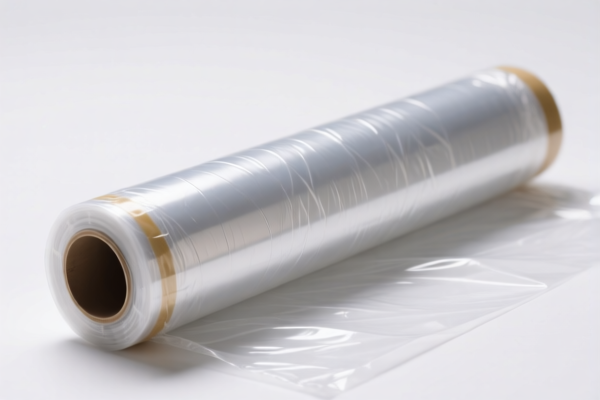
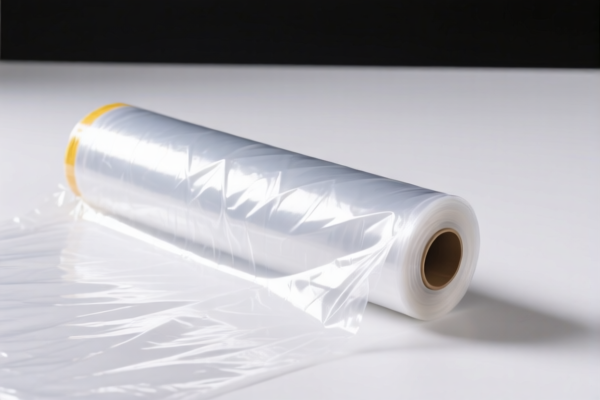
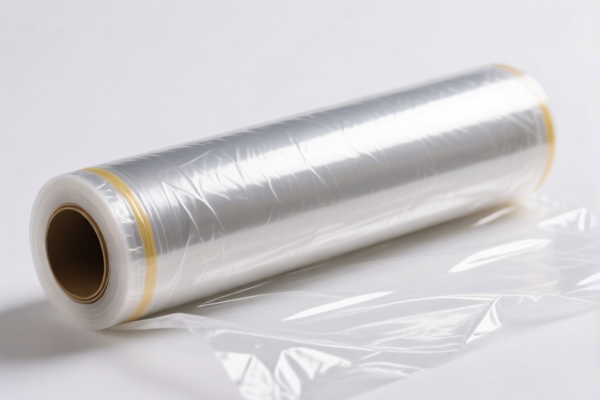
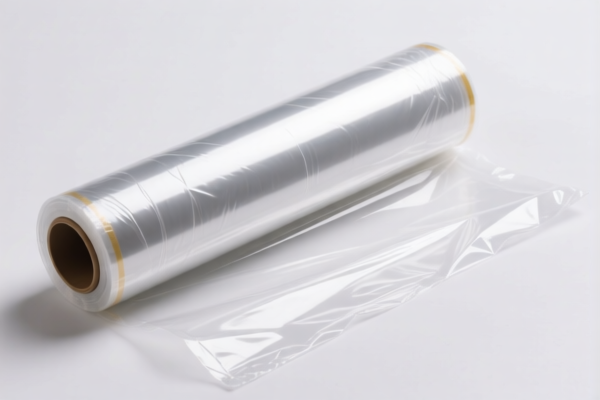
AI Analysis
🌍 Food Grade Plastic Film (食品级塑料薄膜)
🌐 HS Code Reference & Customs Clearance Guide | 2026 Latest Tariff Analysis | Professional Customs Strategy
📌 I. Product Definition & Classification: Do You Really Understand "Food Grade Plastic Film"?
Food Grade Plastic Film is a critical packaging material used in the food and beverage industry to ensure hygiene, preservation, and safety. In international trade, it is primarily classified based on its material composition (e.g., PET, generic plastic) and form (e.g., sheet, film, foil). The classification significantly impacts the total import duty, especially under current US trade policies involving Section 301 and Section 122 tariffs.
⚠️ Key Distinction:
- If the material is explicitly identified as Polyethylene Terephthalate (PET) and meets specific structural criteria, it may fall under Chapter 3900 (Specific Plastic Articles).
- If the material is a generic "plastic" without specific chemical designation in the subheading, it often falls under Chapter 3921 (Other Plates, Sheets, Film, Foil, and Strip, of Plastics).
- Food Grade Certification: While "Food Grade" is a functional description, customs classification relies on material identity. Always declare the specific polymer (e.g., PET, PE, PP) to avoid misclassification.
📦 II. HS Code Classification Details (2026 Latest Tariff Authority Comparison)
Based on the provided data, here are the authorized HS Codes for Food Grade Plastic Films, categorized by material and form:
| HS Code | Product Description | Application Scenario | Material/Form Detail |
|---|---|---|---|
3920.62.00.20 |
Sheets/Plates of Polyethylene Terephthalate (PET) | Food packaging sheets, rigid food containers, specialized PET films | Material: PET Form: Sheet |
3920.62.00.90 |
Other Plates, Sheets, Film of Polyethylene Terephthalate (PET) | Flexible PET food packaging, metallized films (if no metal conflict), general PET film | Material: PET Form: Sheet/Film |
3921.19.00.90 |
Other Plates, Sheets, Film, Foil of Plastics (Generic) | General purpose food-grade plastic films (e.g., PE, PP, mixed polymers not specified elsewhere) | Material: Plastic (Generic) Form: Film/Sheet/Foil |
🔍 Key Insight:
- PET-specific codes (3920.62.xx.xx) generally carry a slightly lower base tariff (4.2%) compared to generic plastics.
- Generic plastic codes (3921.19.00.90) are used when the specific polymer is not PET or falls under "other" categories.
- Note on3921.19.00.90: The data also lists an "Industrial Grade" entry for this code. Ensure your declaration explicitly states "Food Grade" to qualify for the intended regulatory compliance, though the tariff structure remains the same as per the provided data.
💰 III. 2026 Latest Tariff Rate Breakdown (Including Surtaxes & Policy Surcharges)
✅ Applicable Country: United States (US)
✅ Country of Origin: China (CN)
✅ Effective Time: Current policies (Post-2024 updates)
🎯 1. 3920.62.00.20 & 3920.62.00.90 — PET Sheets/Films
| Item | Content |
|---|---|
| Base Tariff Rate | 4.2% (Ad Valorem) |
| Section 301 Surcharge | +25.0% |
| Section 122 Surcharge | +10.0% |
| Total Tariff Rate | 39.2% |
| Tax Calculation | CIF Value × 39.2% |
| De Minimis Exemption | ❌ Not Available (High tariff goods are excluded from $800 exemption) |
| Legal Basis Path | HTSUS:3920.62.xx → USITC:Footnote_301 → EO:122_Surcharges |
📌 Explanation:
- The Base Rate (4.2%) reflects the standard Most Favored Nation (MFN) treatment for PET plastics.
- Section 301 (25%) is applied due to trade tensions with China.
- Section 122 (10%) is an additional surcharge applied to certain Chinese imports.
- Total: 39.2%. This is a high-cost category. Precise material declaration (PET) helps avoid higher base rates but does not eliminate surcharges.
🎯 2. 3921.19.00.90 — Other Plastic Sheets/Films (Generic/Industrial/Food Grade)
| Item | Content |
|---|---|
| Base Tariff Rate | 6.5% (Ad Valorem) |
| Section 301 Surcharge | +25.0% |
| Section 122 Surcharge | +10.0% |
| Total Tariff Rate | 41.5% |
| Tax Calculation | CIF Value × 41.5% |
| De Minimis Exemption | ❌ Not Available |
| Legal Basis Path | HTSUS:3921.19.00 → USITC:Footnote_301 → EO:122_Surcharges |
📌 Explanation:
- The Base Rate (6.5%) is higher than PET-specific codes because it covers a broader, less specific category of plastics.
- Total: 41.5%.
- Risk: If you import generic food-grade film (e.g., PE or PP) and declare it incorrectly as PET, or vice versa, customs may reclassify and penalize. Always match the Material Safety Data Sheet (MSDS) and Product Specification to the HS Code.
🛠️ IV. Customs Clearance Practical Advice (Battle-Tested Pitfall Avoidance Guide)
✅ 1. Required Documentation Checklist (Non-Negotiable)
| Document | Mandatory? | Description |
|---|---|---|
| ✅ Product Specification Sheet | ✔️ | Must explicitly state Material (e.g., PET, PE) and Food Grade Certification (FDA 21 CFR compliance). |
| ✅ Commercial Invoice | ✔️ | Clear description: "Food Grade PET Film, 50 Micron, for Food Packaging." Avoid vague terms like "Plastic Wrap." |
| ✅ Certificate of Origin (CO) | ✔️ | Essential for determining origin (China) and applying surcharges. |
| ✅ Bill of Lading/Air Waybill | ✔️ | Standard shipping docs. |
| ✅ FDA Prior Notice | ✔️ | Required for food-contact materials entering the US. |
| ✅ Test Reports | ✔️ | FDA migration tests or general food safety tests to prove "Food Grade" status. |
✅ 2. Declaration Tips (Critical Mnemonics)
🔥 “Material Specific, Food Grade Clear, No Vague Terms, Taxes Don’t Appear!”
| Scenario | Correct Declaration | Incorrect Practice |
|---|---|---|
| PET Film | 3920.62.00.90 - "Plastic Film, Polyethylene Terephthalate (PET), Food Grade" |
Declaring as "Plastic Sheet" → 3921.19.00.90 (Higher Base Rate) |
| Generic Plastic Film (PE/PP) | 3921.19.00.90 - "Plastic Film, Polyethylene, Food Grade" |
Declaring as "PET" if it’s PE → Customs Penalty & Re-classification |
| Industrial vs. Food Grade | Explicitly state "Food Grade" and provide FDA compliance proof | If food grade is claimed but not proven, customs may deny entry or impose fines |
| Multilayer Films | Declare the constituent material that defines the heading (usually the polymer layer) | Vague "Composite Plastic" → May trigger manual examination |
✅ 3. Special Case Handling
| Scenario | Handling Advice |
|---|---|
| Metallized PET Film | Ensure it does not contain significant metal layers that would shift classification to Chapter 76 (Aluminum) or Chapter 79 (Zinc). The data notes "No metalization conflict" for 3920.62.00.90, implying light metallization for barrier properties is acceptable under PET classification. |
| OEM/White Label | Provide supplier contracts and material composition sheets. Customs focuses on the physical product, not the brand. |
| Small Samples | Even for samples, if declared as "Food Grade," ensure FDA compliance is documented. De minimis ($800) does not apply to goods subject to Section 301/122 surcharges in many enforcement contexts, or requires specific exclusion. Check latest CBP guidance. |
🌍 V. Global Market Comparison (2026 Latest)
| Country/Region | Recommended HS Code | Base Tariff | Surcharges | Total Cost Impact | Notes |
|---|---|---|---|---|---|
| 🇺🇸 USA | 3920.62.00.90 (PET) |
4.2% | +25% (301) +10% (122) | 39.2% | High barrier for Chinese PET films. |
| 🇺🇸 USA | 3921.19.00.90 (Generic) |
6.5% | +25% (301) +10% (122) | 41.5% | Higher base rate; avoid if PET qualifies. |
| 🇨🇳 China | 3920.62.00.00 |
~4-5% | None | ~5% | Low import duty for domestic use. |
| 🇪🇺 EU | 3920.62.00.00 |
6.5% | None | 6.5% | No Section 301/122 equivalent. Easier access. |
| 🇬🇧 UK | 3920.62.00.00 |
6.5% | None | 6.5% | Post-Brexit tariff structure similar to EU. |
📌 Conclusion:
- The US market is the most costly due to the 35% total surcharge (25% + 10%).
- PET-specific classification (3920.62) saves 2.3% in base tariffs compared to generic plastics (3921.19).
- Diversification Strategy: Consider sourcing from Vietnam, Mexico, or Thailand for US-bound goods to potentially avoid Section 301 surcharges (subject to rules of origin).
📌 VI. Common Mistakes & Pitfall Guide (Blood-Teaching Lessons)
❌ Mistake 1: Declaring "Plastic Film" without specifying the polymer.
👉 Consequence: Customs will apply the highest applicable base rate or initiate an investigation → Delays & Fines.
❌ Mistake 2: Using "Food Grade" as the primary product description without material specifics.
👉 Consequence: HS Code classification is based on material, not function. Vague declarations lead to misclassification penalties.
❌ Mistake 3: Ignoring Section 122 Surcharges.
👉 Consequence: Unexpected 10% additional duty on top of the 25% Section 301 tariff. Total cost underestimated by 10%.
❌ Mistake 4: Assuming De Minimis ($800) applies.
👉 Consequence: Goods subject to Section 301 and 122 are often excluded from de minimis treatment or require strict documentation. Do not rely on it.
✅ Correct Approach:
"Food Grade Polyethylene Terephthalate (PET) Film, 10 Micron Thickness, FDA 21 CFR Compliant, For Food Packaging Use, Model: XYZ-123"
🎯 VII. Conclusion: Professional Declaration, Save Money, Avoid Risks!
🎯 Remember the Mantra:
🔹 "Specify PET, Save 2.3%, Declare Food Grade, Prove Compliance!"
🔹 "US Tariffs are High (39.2%-41.5%), Plan Ahead!"
🔹 "No De Minimis Exemption for Surcharged Goods!"
📌 Pro Tip:
If your plastic film is originating from Vietnam, Mexico, Malaysia, or Thailand, you may be eligible to avoid Section 301 and 122 surcharges, reducing your total duty to just the base rate (4.2%-6.5%).
Recommendation: Apply for a Pre-Ruling (Advance Ruling) from CBP to confirm the HS Code and tax liability before shipment.
📣 Take Action Now:
📞 Contact a licensed customs broker + Provide Material Specs + Request CBP Pre-Ruling
🚀 Ensure your Food Grade Plastic Film passes US customs smoothly, tax-efficiently, and risk-free!
✨ Professional Customs Clearance Starts with Accurate Classification!
💼 Every Percent Saved in Tariffs is Pure Profit!
Customer Reviews
About HS Code Classification
The Harmonized System (HS) is an internationally standardized nomenclature developed by the World Customs Organization (WCO) to classify traded products. Over 200 countries use the HS system as the basis for customs tariffs, trade statistics, and import/export regulations.
Each HS code follows a hierarchical structure:
- Chapter (2 digits) — Broad category of goods (e.g., Chapter 84: Machinery and Mechanical Appliances)
- Heading (4 digits) — More specific grouping within the chapter
- Subheading (6 digits) — Internationally standardized breakdown, used by all WCO member countries
- National subdivisions (8-10 digits) — Country-specific extensions for further classification, such as US HTSUS 10-digit codes
Correct HS code classification is essential for smooth customs clearance, accurate duty payment, and compliance with trade regulations. Misclassification can lead to customs delays, overpayment of duties, or penalties.
When importing from CN to US, the applicable tariff rates may include:
- Most-Favored-Nation (MFN) rate — The standard duty rate applied to WTO members
- General rate — Applied to countries without trade agreements
- Trade remedy duties — Additional tariffs such as Section 301 (anti-dumping), Section 232 (national security), or countervailing duties
The information provided on this page is for reference purposes only. For official classification, please consult with your local customs authority or a licensed customs broker.