Food grade plastic pipe fittings
CN → US| HS Code | Tariff Rate | Origin | Destination | Doc |
|---|---|---|---|---|
| 3917230000 | 38.1% | CN | US | Official Doc |
| 3917320010 | 38.1% | CN | US | Official Doc |
| 3916200091 | 40.8% | CN | US | Official Doc |
| 3916200020 | 40.8% | CN | US | Official Doc |
| 3926909987 | 22.8% | CN | US | Official Doc |
Product Images
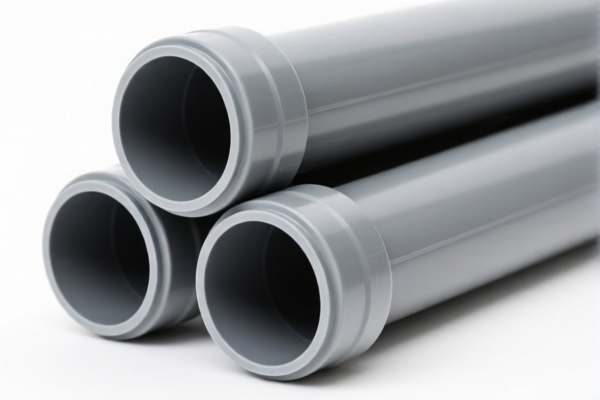
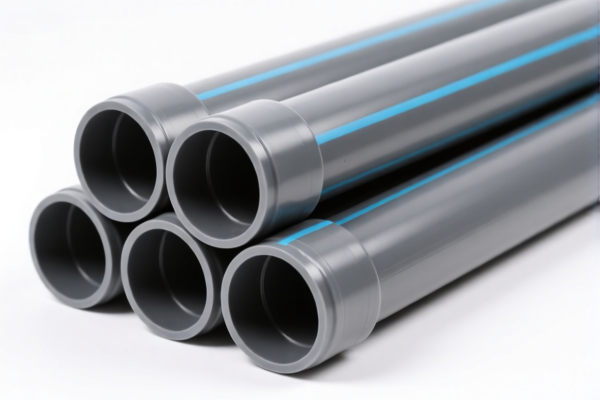
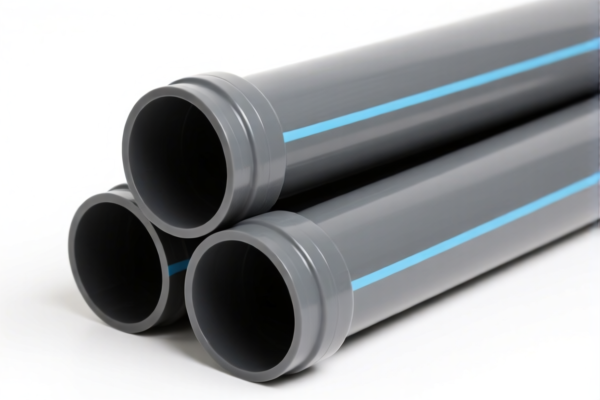
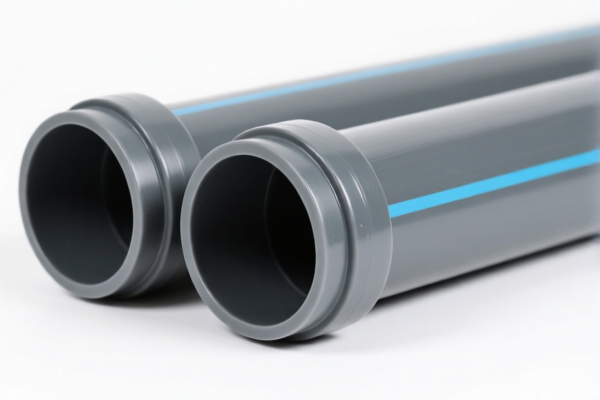
AI Analysis
🚰 Food Grade PVC Plastic Pipe Fittings (and Related PVC Pipes)
🌐 HS Code Reference & Customs Clearance Guide | 2024-2025 Latest Tariff Analysis | Professional Entry Strategy
📌 Part I: Product Definition and Classification: What Exactly Are "Food Grade PVC Pipe Fittings"?
"Food Grade PVC Plastic Pipe Fittings" refers to connection components (such as elbows, tees, couplings, reducers, etc.) made from Polyvinyl Chloride (PVC) that comply with food safety standards (e.g., FDA 21 CFR, EU 10/2011). These are used in drinking water distribution, brewery, dairy, and beverage processing systems.
In international trade (specifically under the US HTSUS), these products are not always classified simply as "fittings." The classification depends heavily on the physical form (pipe vs. fitting) and the material composition (homogeneous PVC vs. compounded polymer).
⚠️ Key Distinction Point:
- If the product is strictly a "Fitting" (complex shape, connecting pipes) → Likely 3917.23.00.00 or 3917.32.00.10.
- If the product is a "Pipe," "Rod," or "Profile" (simple linear shape, even if used for connections) → Likely 3916.20.00.91 or 3916.20.00.20.
- If declared vaguely as "Tube" or generic "Pipe" without specific fitting characteristics → Risk of misclassification under 3926.90.99.87 (Other articles of plastic).
📦 Part II: HS Code Classification Details (Based on Provided Data)
The provided data contains 5 specific HS Codes related to "Food Grade PVC Plastic Pipes/Fittings." Here is the detailed breakdown of why each code applies and its tax implications.
| HS Code | Product Summary (from Data) | Material/Form Specifics | Why This Code Applies? |
|---|---|---|---|
| 3917.23.00.00 | Food grade PVC plastic pipe; Material: PVC; Form: Pipe | PVC, Pipe form | For rigid PVC pipes (not flexible). "3917" covers artificial/plastic pipes and hoses. "23" specifies PVC. |
| 3917.32.00.10 | Food grade PVC plastic pipe; Material & Form compliant | PVC, Pipe form | Similar to 3917.23, but a specific sub-classification for PVC pipes meeting certain manufacturing or quality standards. |
| 3916.20.00.91 | Food grade PVC plastic pipe; Material: Vinyl Chloride Polymer; Form: Rods, Bars, Profiles | Vinyl Chloride Polymer, Rod/Bar/Profile | If the "fitting" is actually a profile or rod used for structural support or as a semi-finished product, it falls under 3916 (Plastics in primary forms). |
| 3916.20.00.20 | Food grade PVC plastic pipe; Material: PVC; Form: Pipe | PVC, Pipe form | Specific classification for PVC pipes under the 3916 chapter (likely for specific diameter or pressure ratings distinct from 3917.23). |
| 3926.90.99.87 | Food grade PVC plastic pipe; Material: PVC; Form: Tube | PVC, Tube | If declared as a generic "Tube" or "Other article," it may fall here. Warning: This is often a "catch-all" with lower base duty but different surcharge rules. |
🔍 Critical Note on Classification:
- 3917 vs. 3916: Chapter 3917 is specifically for "Tubes, Pipes and Hoses." Chapter 3916 is for "Plastics in Primary Forms (Rods, Bars, Profiles)."
- Fittings vs. Pipes: True fittings (elbows, tees) should ideally go under 3917.23 or 3917.32. If they are simple straight connectors or profiles, they might be pushed to 3916.
- "Tube" Risk: Declaring a fitting as a "Tube" (3926.90) is a common misclassification that can trigger scrutiny because 3926 is for "Other Articles of Plastic."
💰 Part III: 2024-2025 Tariff Rate Breakdown (Including Additional Duties)
✅ Applicable Country: United States (US)
✅ Origin: China (CN)
✅ Effective Period: Current tariffs (including Section 301, Section 232, and IEEPA measures)
🎯 1. HS Code 3917.23.00.00 & 3917.32.00.10
Product: PVC Pipes (Food Grade)
Total Tax Rate: 38.1%
| Component | Rate | Source/Legal Basis |
|---|---|---|
| Base Duty | 3.1% | General Column 1 Rate for PVC Pipes |
| Section 301 Surcharge | 25.0% | 122 Terms / USITC Footnote 301 (China-specific) |
| 122 Terms Duty | 10.0% | Additional trade remedy or specific clause |
| Total Effective Rate | 38.1% | Sum of all above |
📌 Explanation:
- This is the standard classification for rigid PVC pipes.
- If your "fittings" are actually classified as pipes (e.g., short sections of pipe used as connectors), this rate applies.
- No de minimis exemption for Section 301 goods.
🎯 2. HS Code 3916.20.00.91 & 3916.20.00.20
Product: PVC Rods, Bars, Profiles, or Specific Pipes
Total Tax Rate: 40.8%
| Component | Rate | Source/Legal Basis |
|---|---|---|
| Base Duty | 5.8% | Higher base rate for PVC profiles/rods |
| Section 301 Surcharge | 25.0% | 122 Terms / USITC Footnote 301 |
| 122 Terms Duty | 10.0% | Additional trade remedy |
| Total Effective Rate | 40.8% | Sum of all above |
📌 Explanation:
- Higher Base Duty: The base duty for PVC rods/profiles (5.8%) is higher than for pipes (3.1%).
- Total Cost: This is the most expensive option among the pipe-related codes.
- Avoidance Strategy: Ensure you are not classifying simple pipes as "profiles" unless they are truly complex cross-sections.
🎯 3. HS Code 3926.90.99.87
Product: Other Plastic Articles (Declared as "Tube" or Generic Fitting)
Total Tax Rate: 22.8%
| Component | Rate | Source/Legal Basis |
|---|---|---|
| Base Duty | 5.3% | General duty for Other Plastic Articles |
| Section 301 Surcharge | 7.5% | Note: Reduced Section 301 rate for certain categories |
| 122 Terms Duty | 10.0% | Additional trade remedy |
| Total Effective Rate | 22.8% | Sum of all above |
⚠️ CRITICAL WARNING:
- Lower Total Rate? Yes, 22.8% is lower than 38.1% or 40.8%.
- BUT: This classification (3926) is for "Other Articles of Plastic."
- Risk of Misclassification: Customs may reject this code for PVC Pipes/Fittings because Chapter 3917 is more specific. Misclassification can lead to:
1. Backdated duties (difference between 22.8% and 38.1%).
2. Penalties for false declaration.
3. Seizure if the intent is deemed to evade higher duties.
- Recommendation: Only use this if the item is truly a "fitting" (not a pipe) and not covered by 3917. However, PVC fittings are typically covered by 3917. Proceed with extreme caution.
🛠️ Part IV: Customs Clearance Practical Advice
✅ 1. Documentation Checklist (Must-Have)
| Document | Required? | Purpose |
|---|---|---|
| Product Specification Sheet | ✔️ | Detail: Material (PVC), FDA Compliance Statement, Pressure Rating, Temperature Range. |
| Commercial Invoice | ✔️ | Must clearly state: "Food Grade PVC Plastic Pipe Fittings" or "PVC Pipes," not generic "Plastic Parts." |
| Packing List | ✔️ | Itemize each type (Elbow, Tee, Straight) separately if possible. |
| FDA Compliance Letter | ✔️ | Certificate stating materials comply with 21 CFR 177.1630 (PVC Resins) or relevant food contact standards. |
| HS Code Pre-Ruling | ✔️ | Strongly Recommended: Apply for an IRS Pre-Ruling to confirm 3917 vs. 3926. |
| Photos of Product | ✔️ | Show cross-section, labeling (e.g., "PVC," "Food Grade," "NSF/ANSI 61"). |
✅ 2. Declaration Tips (Key Mnemonics)
🔥 "Form Dictates Code: Pipe = 3917, Profile = 3916, Fitting = 3917 (Careful!)"
| Scenario | Correct Classification | Risk if Wrong |
|---|---|---|
| Straight PVC Pipe (Food Grade) | 3917.23.00.00 (38.1%) |
Misclassifying as 3926 → Penalty for undervaluation/duty evasion. |
| PVC Elbow/Tee/Fitting | 3917.23.00.00 or 3917.32.00.10 |
Misclassifying as 3916 → Higher duty (40.8%) or rejection. |
| PVC Rod/Profile (Semi-finished) | 3916.20.00.91 (40.8%) |
Misclassifying as 3917 → Possible duty saving but high audit risk. |
| Generic "Plastic Tube" | 3926.90.99.87 (22.8%) |
High Risk: If it's a pipe, CBP will reassess at 38.1% + penalties. |
✅ 3. Special Case Handling
| Situation | Recommendation |
|---|---|
| Mixed Shipment (Pipes + Fittings) | Declare separately. Do not lump all under "Plastic Parts." |
| OEM Custom Fittings | Provide blueprints showing they are not simple pipes but complex shapes. Still likely 3917. |
| Food Grade Certification | Must attach NSF/ANSI 61 or FDA compliance docs. Without it, CBP may flag for health/safety issues. |
| Section 301 Exclusion | Check if any exclusion applies. Most PVC pipes/fittings are NOT excluded. |
🌍 Part V: Market Comparison (2024-2025)
| Country | Recommended HS Code | Base Duty | Additional Duties (China) | Total Approx. | Notes |
|---|---|---|---|---|---|
| 🇺🇸 USA | 3917.23.00.00 |
3.1% | 35.0% (301+122) | 38.1% | High tariffs. Ensure accurate classification to avoid penalties. |
| 🇺🇸 USA (Risk) | 3926.90.99.87 |
5.3% | 17.5% (301+122) | 22.8% | Lower rate but high misclassification risk. |
| 🇪🇺 EU | 3917.21.00 |
6.5% | 0% | 6.5% | No Section 301. Standard EU duty. |
| 🇨🇳 China | 3917.23.00 |
5.0% | 0% | 5.0% | Import duty is low. |
| 🇦🇺 Australia | 3917.29.00 |
5.0% | 0% | 5.0% | Low duty, no major surcharges. |
📌 Conclusion:
- USA is the most challenging market due to Section 301 and 122 terms.
- EU, China, Australia have significantly lower duties (0-6.5%).
- For USA, accuracy is more important than minimizing rate. Misclassifying 3917 as 3926 saves 15.3% now but risks 100% of duty + 25% penalty later.
📌 Part VI: Common Mistakes & Pitfalls (Blood Lessons)
❌ Mistake 1: Declaring PVC Fittings as "Plastic Tubes" (3926) to save taxes.
👉 Consequence: CBP audits find they are pipes/fittings → Back duties + Penalties.
❌ Mistake 2: Not providing FDA/Food Grade Compliance Docs.
👉 Consequence: Shipment held at port for health/safety inspection → Delays + Storage fees.
❌ Mistake 3: Mixing Pipe and Fitting codes incorrectly.
👉 Consequence: If you declare an Elbow as a Pipe (3917.23), it might be accepted, but if you declare a Pipe as a Profile (3916), you pay 40.8% instead of 38.1%.
❌ Mistake 4: Ignoring "122 Terms" (10%).
👉 Consequence: Many importers only budget for Base + 301. Forgetting 122 terms leads to budget shortfalls.
✅ Correct Approach:
"Food Grade PVC Elbows, ASTM D2466, NSF/ANSI 61 Certified, HS Code 3917.23.00.00"
🎯 Part VII: Conclusion: Professional Classification Saves Money
🎯 Key Takeaways:
🔹 PVC Pipes/Fittings = 3917.23/3917.32 (38.1% Total Duty).
🔹 PVC Profiles/Rods = 3916.20 (40.8% Total Duty).
🔹 "Other Plastic" (3926) = 22.8% but HIGH RISK of misclassification.
🔹 Never ignore 122 Terms (10%) in US imports from China.
🔹 Food Grade Certification is Mandatory for customs clearance.
📌 Pro Tip:
If you are importing high volumes, apply for a Customs Ruling from CBP. This legally binds CBP to your classification.
For USA imports, budget 38.1% for standard PVC pipes/fittings.
Do not risk 22.8% unless you have a legal ruling confirming 3926 applicability.
📣 Immediate Action:
📞 Contact your Customs Broker with:
1. Product Photos (Cross-section, Label)
2. FDA/Food Compliance Certs
3. Intended Use (Drinking Water, Beer, etc.)
🚀 Clear Your Cargo Faster, Avoid Penalties, Protect Your Margins!
✨ Professional Customs Compliance Starts with Accurate Classification!
💼 Every Penny Saved in Duties Must Be Earned Legally!
Customer Reviews
About HS Code Classification
The Harmonized System (HS) is an internationally standardized nomenclature developed by the World Customs Organization (WCO) to classify traded products. Over 200 countries use the HS system as the basis for customs tariffs, trade statistics, and import/export regulations.
Each HS code follows a hierarchical structure:
- Chapter (2 digits) — Broad category of goods (e.g., Chapter 84: Machinery and Mechanical Appliances)
- Heading (4 digits) — More specific grouping within the chapter
- Subheading (6 digits) — Internationally standardized breakdown, used by all WCO member countries
- National subdivisions (8-10 digits) — Country-specific extensions for further classification, such as US HTSUS 10-digit codes
Correct HS code classification is essential for smooth customs clearance, accurate duty payment, and compliance with trade regulations. Misclassification can lead to customs delays, overpayment of duties, or penalties.
When importing from CN to US, the applicable tariff rates may include:
- Most-Favored-Nation (MFN) rate — The standard duty rate applied to WTO members
- General rate — Applied to countries without trade agreements
- Trade remedy duties — Additional tariffs such as Section 301 (anti-dumping), Section 232 (national security), or countervailing duties
The information provided on this page is for reference purposes only. For official classification, please consult with your local customs authority or a licensed customs broker.