Food grade plastic pipes
CN → US| HS Code | Tariff Rate | Origin | Destination | Doc |
|---|---|---|---|---|
| 3917230000 | 38.1% | CN | US | Official Doc |
| 3917320010 | 38.1% | CN | US | Official Doc |
| 3916200091 | 40.8% | CN | US | Official Doc |
| 3916200020 | 40.8% | CN | US | Official Doc |
| 3926909987 | 22.8% | CN | US | Official Doc |
Product Images
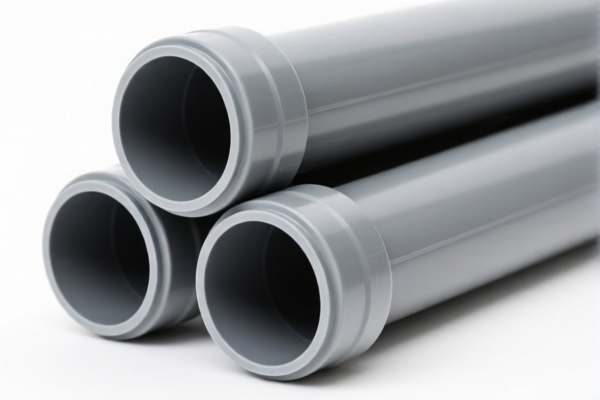
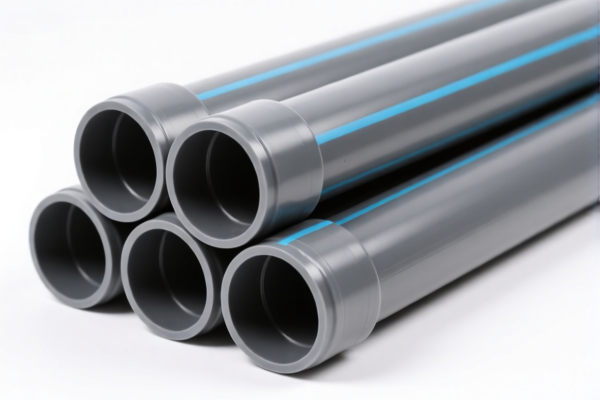
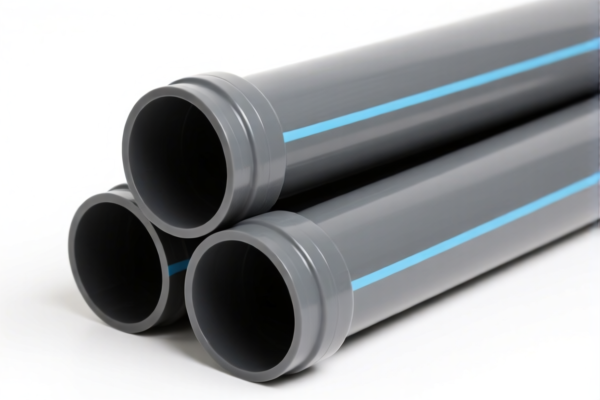
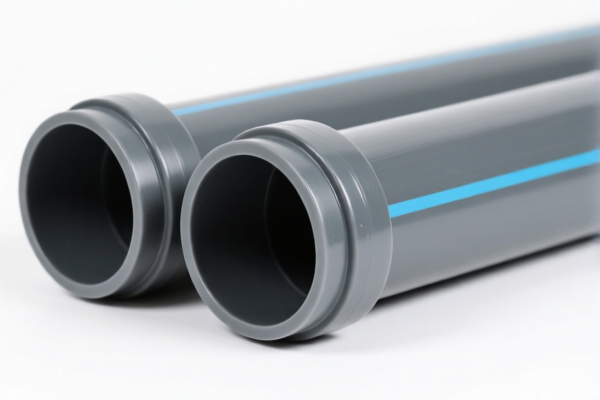
AI Analysis
🏗️ Food Grade Plastic Pipes (PVC Conduits & Tubing)
🌐 HS Code Reference & Customs Clearance Guide | 2026 Latest Tariff Analysis | Professional Compliance Strategy
📌 I. Product Definition & Classification: Do You Really Know "Food Grade Plastic Pipes"?
Food-grade plastic pipes are essential components in beverage processing, dairy production, water purification, and pharmaceutical packaging systems. In international trade, these products are often misunderstood because the HS Code depends strictly on the physical form (shape) and material composition, not just the end-use ("food grade").
The Critical Distinction:
1. Pipes/Tubes (管道/管子): Hollow, extruded products designed for fluid transport. These generally fall under Chapter 3917.
2. Rods/Bars/Profiles (棒/杆/型材): Solid or semi-solid forms used as structural components or raw materials for further processing. These generally fall under Chapter 3916.
⚠️ Key Differentiator:
- If the product is hollow and used for transport → Likely 3917.
- If the product is solid (rod/bar) or a profile (trunking/trunking profiles) → Likely 3916 or 3926.
- "Food Grade" is not a standalone HS code category. It affects compliance standards (FDA/LFGB), but the tariff classification remains tied to the physical shape and material (PVC/Polyvinyl Chloride).
📦 II. HS Code Classification Details (2026 Latest Tariff Authority Comparison)
Based on the provided data, here is the precise breakdown for Food Grade Polyvinyl Chloride (PVC) Pipes:
| HS Code | Product Description | Material & Form | Total Tax Rate | Applicable Scenario |
|---|---|---|---|---|
3917.23.00.00 |
Food-grade PVC plastic pipes | Material: PVC Form: Pipes |
38.1% | Standard hollow PVC pipes for fluid transport |
3917.32.00.10 |
Food-grade PVC plastic pipes | Material: PVC Form: Pipes (specific sub-category) |
38.1% | Specific PVC pipe variants meeting 3917.32 criteria |
3916.20.00.91 |
Food-grade PVC plastic pipes | Material: PVC Polymer Form: Rods, Bars, Profiles |
40.8% | Solid rods or trunking profiles (NOT hollow pipes) |
3916.20.00.20 |
Food-grade PVC plastic pipes | Material: PVC Form: Pipes (misclassified as profiles in some contexts?) (Note: Description says "Pipes" but HS 3916 is typically rods/profiles) |
40.8% | ⚠️ Caution: Ensure physical form matches description. If hollow, 3917 is usually correct. If solid/profile, 3916 applies. |
3926.90.99.87 |
Food-grade PVC plastic pipes | Material: Plastic (General) Form: Tubes |
22.8% | General plastic tubes not specifically classified under 3917/3916 (e.g., non-PVC plastics or specific tube types) |
🔍 Critical Note on
3916.20.00.20:
Although the summary says "Pipes," HS Code 3916 generally covers "Rods, bars, and profiles" of plastics. If your product is a hollow pipe, it should ideally be classified under 3917. Misclassifying a hollow pipe as a 3916 profile can lead to customs audits. Always verify the physical cross-section (Hollow vs. Solid).
💰 III. 2026 Latest Tariff Rate Breakdown (Including Surcharges & Policy Add-ons)
✅ Applicable Market: United States (US)
✅ Origin: China (CN)
✅ Effective Time: 2025 November 10 onwards (including subsequent imports)
🎯 1. 3917.23.00.00 & 3917.32.00.10 — PVC Pipes
| Item | Content |
|---|---|
| Base Duty Rate | 3.1% (ad valorem) |
| Section 301 Additional Duty | +25.0% |
| Section 122 Duty | +10.0% |
| Total Effective Tax Rate | 38.1% |
| Tax Calculation | CIF Value × 38.1% |
| De Minimis Exemption | ❌ Not Eligible (deny_de_minimis) |
| Legal Basis Path | USITC:3917.23.00.00 → SECTION_301:25% → SECTION_122:10% |
📌 Explanation:
- Base 3.1%: Standard MFN duty for plastic pipes.
- +25% (Section 301): Trump-era/Biden-maintained tariffs on Chinese PVC goods.
- +10% (Section 122): Additional safeguard duty on specific plastic imports.
- Total 38.1%: High cost. Must be factored into landed cost calculations.
🎯 2. 3916.20.00.91 & 3916.20.00.20 — PVC Rods/Profiles/Pipes (Misclassified?)
| Item | Content |
|---|---|
| Base Duty Rate | 5.8% (ad valorem) |
| Section 301 Additional Duty | +25.0% |
| Section 122 Duty | +10.0% |
| Total Effective Tax Rate | 40.8% |
| Tax Calculation | CIF Value × 40.8% |
| De Minimis Exemption | ❌ Not Eligible |
| Legal Basis Path | USITC:3916.20.00.xx → SECTION_301:25% → SECTION_122:10% |
📌 Note:
- These codes have a higher base duty (5.8%) than pipes (3.1%), resulting in a higher total rate (40.8%).
- If you are importing hollow pipes, ensure you are not mistakenly classified under 3916. If you are importing solid rods/profiles, this is the correct code.
🎯 3. 3926.90.99.87 — General Plastic Tubes
| Item | Content |
|---|---|
| Base Duty Rate | 5.3% (ad valorem) |
| Section 301 Additional Duty | +7.5% |
| Section 122 Duty | +10.0% |
| Total Effective Tax Rate | 22.8% |
| Tax Calculation | CIF Value × 22.8% |
| De Minimis Exemption | ❌ Not Eligible |
| Legal Basis Path | USITC:3926.90.99.87 → SECTION_301:7.5% → SECTION_122:10% |
📌 Explanation:
- This code has the lowest total tax rate (22.8%) among the options.
- However, it is for "Plastic" tubes generally, not specifically classified as PVC pipes under 3917.
- Use Case: Only use if the product does not fit the specific PVC pipe definitions in 3917 or the rod/profile definitions in 3916. Misclassification here to save 15% in taxes can lead to severe penalties if customs determines it is actually a PVC pipe.
🛠️ IV. Customs Clearance Practical Advice (Battle-Tested Pitfall Guide)
✅ 1. Required Documentation Checklist (None Can Be Missing)
| Document | Mandatory? | Notes |
|---|---|---|
| ✅ Product Specifications | ✔️ | Must specify: Material (PVC), Form (Pipe/Rod), Diameter, Wall Thickness, Pressure Rating |
| ✅ Food Contact Compliance | ✔️ | FDA 21 CFR, EU 10/2011, or LFGB certificates are mandatory for "Food Grade" claims |
| ✅ Product Photos (Clear) | ✔️ | Must show cross-section (hollow vs. solid) to prove HS Code accuracy |
| ✅ Commercial Invoice | ✔️ | Clearly state: "PVC Pipe for Food Processing," NOT just "Plastic Tube" |
| ✅ Packing List | ✔️ | Detail dimensions and weight. Ensure no mixed shipments of rods and pipes |
| ✅ Bill of Lading/Air Waybill | ✔️ | Standard shipping docs |
✅ 2. Declaration Strategy (Key Mantra)
🔥 “Shape Determines Code, Material Matters Less, Food Grade Needs Proof!”
| Scenario | Correct Declaration | Wrong Practice |
|---|---|---|
| Hollow PVC Pipes | HS 3917.23.00.00 / 3917.32.00.10Rate: 38.1% |
Declaring as 3916 (Rod) → 40.8% (Overpaid) |
| Solid PVC Rods/Profiles | HS 3916.20.00.91 / 20Rate: 40.8% |
Declaring as 3917 (Pipe) → Incorrect Classification |
| Non-PVC Plastic Tubes | HS 3926.90.99.87Rate: 22.8% |
Declaring as PVC 3917 → Incorrect Material |
| "Food Grade" Claim | Must provide FDA/LFGB Certs | No docs → Customs denies "Food Grade" status, may seize goods |
✅ 3. Special Cases Handling
| Situation | Handling Advice |
|---|---|
| Mixed Shipment (Pipes + Rods) | Split the declaration! Declare pipes under 3917 and rods under 3916. Do not mix. |
| Co-extruded Pipes (Inner PVC, Outer PE) | Classify based on the essential character material. Usually, if PVC is inner layer, it’s 3917. Provide layer-by-layer specs. |
| Colored vs. Clear | Color does not affect HS Code. However, for "Food Grade," clear pipes are easier to inspect for compliance. |
| Customs Audit on "Food Grade" | If customs questions the "Food Grade" claim, you must provide Certificate of Analysis (CoA) showing migration limits are met. |
🌍 V. Global Market Customs Comparison (2026 Latest)
| Country/Region | Recommended HS Code | Duty Rate | Certification | Notes |
|---|---|---|---|---|
| 🇺🇸 USA | 3917.23.00.00 |
38.1% | FDA + CE | High tariffs due to Sec 301 & 122. |
| 🇨🇳 China | 3917.23.00.00 |
3.1% | GB 4806.6 | No additional surcharges. |
| 🇪🇺 EU | 3917.23.00 |
0-4% | EU 10/2011, REACH | Low base duty, but strict food contact rules. |
| 🇯🇵 Japan | 3917.23.00 |
3.0-6.0% | Food Sanitation Law | No extra surcharges. |
| 🇦🇺 Australia | 3917.23.00 |
5.0% | FSANZ | Standard duty. |
📌 Conclusion:
- The USA imposes the highest burden on Chinese-origin PVC pipes due to the 38.1% total rate.
- EU and Japan have lower base duties but strict food safety regulations.
- Cost Optimization: If possible, explore if the product can be classified under3926(22.8%) — ONLY IF it legally fits the definition of "General Plastic Tubes" and not specific PVC pipes. Do not misclassify.
📌 VI. Common Mistakes & Pitfall Guide (Blood & Tears Lessons)
❌ Mistake 1: Declaring Hollow Pipes as Rod/Profile (3916)
👉 Consequence: You pay 40.8% instead of 38.1%. Unnecessary cost increase.
❌ Mistake 2: Declaring Solid Rods as Pipes (3917)
👉 Consequence: Customs detects mismatch between physical goods and HS code. Penalties, fines, and potential seizure.
❌ Mistake 3: Ignoring Food Grade Documentation
👉 Consequence: Even with correct HS Code, if "Food Grade" is claimed but no FDA/LFGB cert is provided, customs may reclassify it as industrial grade or block entry for safety violations.
❌ Mistake 4: Using "Plastic Pipe" as a generic description
👉 Consequence: Ambiguity leads to customs officer discretion. They may choose the worst-case HS Code (e.g., 3926 or 3916) based on their interpretation. Be specific.
✅ Correct Approach:
"Polyvinyl Chloride (PVC) Pipe, Food Grade, FDA Compliant, Inner Diameter 25mm, Wall Thickness 2mm, Color White, for Beverage Processing. HS Code: 3917.23.00.00."
🎯 VII. Conclusion: Precise Classification Saves Money!
🎯 Remember the Mantra:
🔹 "Hollow Pipe = 3917 (38.1%)
🔹 Solid Rod/Profile = 3916 (40.8%)
🔹 General Tube (Non-PVC) = 3926 (22.8%)
🔹 Food Grade = Requires Docs, Not Just a Code"
🔹 "Misclassification costs more than compliance!"
📌 Pro Tip:
If your volume is high, consider applying for an Advance Ruling from US Customs (CBP). This provides legal certainty on the HS Code before shipment, protecting you from future audits and retroactive duties.
📣 Immediate Action:
📞 Contact your freight forwarder + Prepare FDA/LFGB Certs + Verify Cross-Section Shape (Hollow vs. Solid)
🚀 Ensure your PVC Pipes pass customs smoothly, avoid 40.8% traps, and maximize profit margins!
✨ Professional Customs Clearance Starts with Accurate Classification!
💼 Every percentage point of duty is a point of profit lost!
Customer Reviews
About HS Code Classification
The Harmonized System (HS) is an internationally standardized nomenclature developed by the World Customs Organization (WCO) to classify traded products. Over 200 countries use the HS system as the basis for customs tariffs, trade statistics, and import/export regulations.
Each HS code follows a hierarchical structure:
- Chapter (2 digits) — Broad category of goods (e.g., Chapter 84: Machinery and Mechanical Appliances)
- Heading (4 digits) — More specific grouping within the chapter
- Subheading (6 digits) — Internationally standardized breakdown, used by all WCO member countries
- National subdivisions (8-10 digits) — Country-specific extensions for further classification, such as US HTSUS 10-digit codes
Correct HS code classification is essential for smooth customs clearance, accurate duty payment, and compliance with trade regulations. Misclassification can lead to customs delays, overpayment of duties, or penalties.
When importing from CN to US, the applicable tariff rates may include:
- Most-Favored-Nation (MFN) rate — The standard duty rate applied to WTO members
- General rate — Applied to countries without trade agreements
- Trade remedy duties — Additional tariffs such as Section 301 (anti-dumping), Section 232 (national security), or countervailing duties
The information provided on this page is for reference purposes only. For official classification, please consult with your local customs authority or a licensed customs broker.