Food grade plastic tubes
CN → US| HS Code | Tariff Rate | Origin | Destination | Doc |
|---|---|---|---|---|
| 3917230000 | 38.1% | CN | US | Official Doc |
| 3917320010 | 38.1% | CN | US | Official Doc |
| 3916200091 | 40.8% | CN | US | Official Doc |
| 3916200020 | 40.8% | CN | US | Official Doc |
| 3926909987 | 22.8% | CN | US | Official Doc |
Product Images
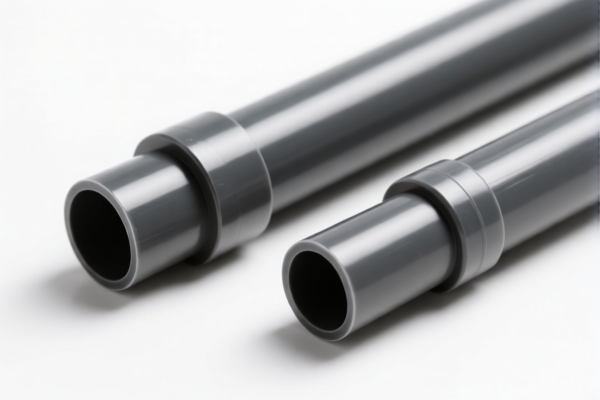
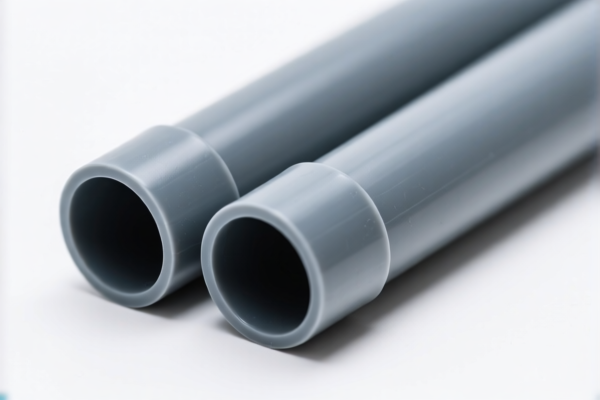
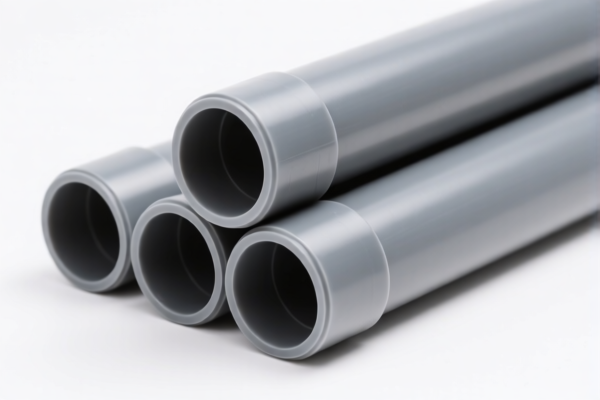
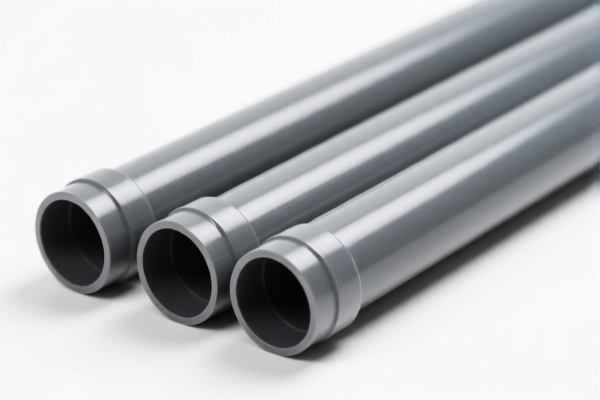
AI Analysis
🚰 Food Grade PVC Pipes (Food Grade Plastic Tubes)
🌐 HS Code Reference & Customs Clearance Guide | 2026 Latest Tariff Analysis | Professional Clearance Strategy
📌 I. Product Definition & Classification: Do You Really Understand "Food Grade Plastic Tubes"?
Food Grade Polyvinyl Chloride (PVC) pipes are critical components in beverage processing, dairy production, pharmaceutical packaging, and municipal water supply systems. In international trade, these products are often misclassified due to similarities in material (PVC) but differences in form (pipe vs. rod/profile) and application (food contact).
Key Classification Nuances: - Pipe Fittings/Conduits (3917) : Hollow, extruded products specifically designed for fluid transport. - Solid Profiles/Rods (3916) : Solid PVC bars, rods, or shapes not yet shaped into pipes. - Other Plastic Articles (3926) : General plastic articles that do not fit specific chapter headings (less common for pure pipes but possible if misdescribed).
⚠️ Critical Distinction:
- If the product is a hollow tube/pipe → Likely Chapter 3917 (Higher base tariff in some cases, but critical for correct classification).
- If the product is a solid rod/bar → Chapter 3916 (Different base tariff).
- If the product is a miscellaneous plastic item (e.g., pre-formed fittings not covered elsewhere) → Chapter 3926 (Potential tariff optimization).
📦 II. HS Code Classification Details (2026 Latest Tariff Authority Comparison)
| HS Code | Product Description | Application Scenario | Material/Form |
|---|---|---|---|
3917.23.00.00 |
Plastic pipes, tubes, and hoses, of polyvinyl chloride | Food-grade PVC pipes, hollow, rigid/flexible | PVC, Pipe Form |
3917.32.00.10 |
Plastic pipes, tubes, and hoses, of other plastics | Food-grade PVC pipes, if classified under "other" | PVC, Pipe Form |
3916.20.00.91 |
Rods, sticks, profile shapes, of PVC, not joined | PVC rods, bars, solid profiles | PVC, Solid Profile |
3916.20.00.20 |
Rods, sticks, profile shapes, of PVC, joined | PVC profiles, assembled shapes | PVC, Joined Profile |
3926.90.99.87 |
Other articles of plastics, nesoi | Miscellaneous plastic tubes/fittings not elsewhere specified | Plastic, Tube/Article |
🔍 Key Reminder:
- 3917.23.00.00 and 3917.32.00.10 are the most accurate for hollow pipes.
- 3916.20.00.91 and 3916.20.00.20 apply only if the product is solid (rods/bars), not hollow pipes.
- 3926.90.99.87 is a fallback for items that don’t fit 3917/3916 but are still plastic articles (e.g., complex pre-formed fittings).
💰 III. 2026 Latest Tariff Rate Breakdown (Including Supplementary Taxes)
✅ Applicable Country: United States (US)
✅ Origin: China (CN)
✅ Effective Date: November 10, 2025 onwards (including subsequent imports)
🎯 1. 3917.23.00.00 – Plastic Pipes, Tubes, Hoses, of PVC
| Item | Content |
|---|---|
| Base Tariff | 3.1% (ad valorem) |
| USITC Supplementary Tax | +25% (from USITC Footnote 9903.88.01) |
| IEEPA Supplementary Tax | +10% (for China/HK products, effective Nov 10, 2025) |
| Total Tariff Rate | 38.1% |
| Tax Calculation | CIF Value × 38.1% |
| De Minimis Eligibility | ❌ No (deny_de_minimis) |
| Legal Basis Path | IEEPA:9903.01.25 → IEEPA:9903.01.24 → USITC:3917.23.00.00 → FOOTNOTE:9903.88.01 |
📌 Explanation:
- 25% USITC Tax: From Section 301 of the Trade Act;
- 10% IEEPA Tax: Additional tariff on Chinese PVC products;
- Total 38.1%: High tariff burden; requires advance planning!
🎯 2. 3917.32.00.10 – Plastic Pipes, Tubes, Hoses, of Other Plastics
| Item | Content |
|---|---|
| Base Tariff | 3.1% |
| USITC Supplementary Tax | +25% |
| IEEPA Supplementary Tax | +10% |
| Total Tariff Rate | 38.1% |
| Tax Calculation | CIF × 38.1% |
| De Minimis Eligibility | ❌ No |
| Legal Basis Path | IEEPA:9901.25 → IEEPA:9903.01.24 → USITC:3917.32.00.10 → FOOTNOTE:9903.88.01 |
📌 Note:
- Same tariff as 3917.23; applies if classified under "other plastics" (though PVC usually falls under 3917.23);
- Ensure accurate material description to avoid misclassification.
🎯 3. 3916.20.00.91 – PVC Rods, Sticks, Profile Shapes
| Item | Content |
|---|---|
| Base Tariff | 5.8% |
| USITC Supplementary Tax | +25% |
| IEEPA Supplementary Tax | +10% |
| Total Tariff Rate | 40.8% |
| Tax Calculation | CIF × 40.8% |
| De Minimis Eligibility | ❌ No |
| Legal Basis Path | IEEPA:9903.01.25 → IEEPA:9903.01.24 → USITC:3916.20.00.91 → FOOTNOTE:9903.88.01 |
📌 Warning:
- If your product is a pipe, do NOT use this HS Code!
- Using 3916 for pipes is a common error leading to higher base tariff (5.8% vs 3.1%) and potential penalties.
🎯 4. 3916.20.00.20 – PVC Rods, Sticks, Profile Shapes (Joined)
| Item | Content |
|---|---|
| Base Tariff | 5.8% |
| USITC Supplementary Tax | +25% |
| IEEPA Supplementary Tax | +10% |
| Total Tariff Rate | 40.8% |
| Tax Calculation | CIF × 40.8% |
| De Minimis Eligibility | ❌ No |
| Legal Basis Path | IEEPA:9903.01.25 → IEEPA:9903.01.24 → USITC:3916.20.00.20 → FOOTNOTE:9903.88.01 |
📌 Note:
- Same as above; applies only to joined profiles/rods, not hollow pipes.
🎯 5. 3926.90.99.87 – Other Plastic Articles
| Item | Content |
|---|---|
| Base Tariff | 5.3% |
| USITC Supplementary Tax | +7.5% |
| IEEPA Supplementary Tax | +10% |
| Total Tariff Rate | 22.8% |
| Tax Calculation | CIF × 22.8% |
| De Minimis Eligibility | ❌ No |
| Legal Basis Path | IEEPA:9901.25 → IEEPA:9903.01.24 → USITC:3926.90.99.87 → FOOTNOTE:9903.88.01 |
📌 Strategic Insight:
- This HS Code has the lowest total tariff (22.8%) but is high-risk for pipes.
- Only applicable if the product is not clearly a pipe (e.g., complex fittings, non-standard shapes).
- Misclassification as 3926 for standard pipes can lead to ** Customs audits and penalties**.
🛠️ IV. Customs Clearance Practical Advice (Real-World Pitfall Guide)
✅ 1. Required Documentation Checklist (All Mandatory)
| Document | Required | Description |
|---|---|---|
| ✅ Product Specification Sheet | ✔️ | Dimensions, inner/outer diameter, wall thickness, pressure rating |
| ✅ Material Safety Data Sheet (MSDS) | ✔️ | Proves food-grade certification (FDA, EFSA, etc.) |
| ✅ Product Photos (with Labels) | ✔️ | Clear view of markings, brand, model |
| ✅ Third-Party Test Reports | ✔️ | FDA, LFGB, REACH, RoHS (if applicable) |
| ✅ Commercial Invoice | ✔️ | Explicitly state "Food Grade PVC Pipe" |
| ✅ Certificate of Origin (CO) | ✔️ | For preferential treatment (if non-China origin) |
| ✅ Packing List | ✔️ | Detailing pipe lengths, quantities, packaging |
✅ 2. Declaration Tips (Key Mantras)
🔥 “Hollow is 3917, Solid is 3916, Fit the Form, Save the Cost!”
| Scenario | Correct Declaration | Incorrect Practice |
|---|---|---|
| Hollow PVC Pipe | 3917.23.00.00 (38.1%) |
Misdeclare as 3926 → 22.8% (Risk of penalty) |
| Solid PVC Rod | 3916.20.00.91 (40.8%) |
Misdeclare as 3917 → Lower base but wrong form |
| Complex Fittings | 3926.90.99.87 (22.8%) |
Misdeclare as pipe → Wrong classification |
| Standard Pipe | 3917.32.00.10 (38.1%) |
Use 3916 → Higher base tariff |
✅ 3. Special Case Handling
| Scenario | Recommendation |
|---|---|
| OEM Custom Pipes | Provide customer orders + design drawings to avoid "non-standard" classification |
| Food-Grade Certification | Ensure FDA/EFSA certificates are valid; customs may inspect |
| Pipes + Fittings Sold Together | Declare as whole set under primary item (pipe), do not split |
| Non-China Origin | Check for IEEPA exemptions (e.g., Vietnam, Mexico) → Tariff may drop to 0-5% |
🌍 V. Global Market Comparison for PVC Pipes (2026 Latest)
| Country/Region | Recommended HS Code | Tariff (China Origin) | Certification | Notes |
|---|---|---|---|---|
| 🇺🇸 USA | 3917.23.00.00 |
38.1% | FDA + RoHS | High tariff; verify form |
| 🇨🇳 China | 3917.23.00.00 |
3.1% | CCC + GB | No supplementary tax |
| 🇪🇺 EU | 3917.23.00.00 |
0% (if CE) | CE + REACH | No supplementary tax |
| 🇦🇺 Australia | 3917.23.00.00 |
5% | RCM | No supplementary tax |
| 🇯🇵 Japan | 3917.23.00.00 |
0% | PSE | No supplementary tax |
📌 Conclusion:
- USA is the only market with high supplementary tariffs on PVC pipes from China;
- China-origin PVC pipes face high US clearance costs; consider supply chain adjustments.
📌 VI. Common Mistakes & Pitfall Guide (Lessons from Tears)
❌ Mistake 1: Declaring hollow pipes as solid rods (3916)
👉 Consequence: Base tariff increases from 3.1% to 5.8% → Total tax rises to 40.8%!
❌ Mistake 2: Declaring standard pipes as miscellaneous articles (3926)
👉 Consequence: Appears as tax evasion attempt → Customs audit, penalties, delays!
❌ Mistake 3: Missing FDA/Food-grade certification
👉 Consequence: Goods held at port for inspection → Storage fees, rework costs!
❌ Mistake 4: Splitting pipe + fittings into separate declarations
👉 Consequence: Each item taxed separately → Higher total cost!
✅ Correct Approach:
“Food Grade PVC Pipe, 2-inch, 10ft, ASTM F891, FDA Compliant, Model XYZ”
🎯 VII. Conclusion: Professional Declaration Saves Time, Money, and Stress!
🎯 Remember the Mantra:
🔹 “Hollow is 3917, Solid is 3916, Fit the Form, Save the Cost!”
🔹 “HS Code Determines Tariff, 38.1% vs 22.8%, One Mistake, Thousands Lost!”
📌 Pro Tip:
If your PVC pipes are originating from Vietnam, Mexico, Thailand, or Malaysia, you may apply for IEEPA Exemptions, reducing tariffs to 0-5%.
Apply for Advance Rulings to avoid clearance risks.
📣 Take Action Now:
📞 Contact Professional Customs Brokers + Provide Product Photos + Apply for HS Code Advance Ruling
🚀 Let your PVC pipes clear smoothly, export efficiently, and double your profits!
✨ Professional Clearance Starts with Accurate Classification!
💼 Every Cost Cent Counts!
Customer Reviews
About HS Code Classification
The Harmonized System (HS) is an internationally standardized nomenclature developed by the World Customs Organization (WCO) to classify traded products. Over 200 countries use the HS system as the basis for customs tariffs, trade statistics, and import/export regulations.
Each HS code follows a hierarchical structure:
- Chapter (2 digits) — Broad category of goods (e.g., Chapter 84: Machinery and Mechanical Appliances)
- Heading (4 digits) — More specific grouping within the chapter
- Subheading (6 digits) — Internationally standardized breakdown, used by all WCO member countries
- National subdivisions (8-10 digits) — Country-specific extensions for further classification, such as US HTSUS 10-digit codes
Correct HS code classification is essential for smooth customs clearance, accurate duty payment, and compliance with trade regulations. Misclassification can lead to customs delays, overpayment of duties, or penalties.
When importing from CN to US, the applicable tariff rates may include:
- Most-Favored-Nation (MFN) rate — The standard duty rate applied to WTO members
- General rate — Applied to countries without trade agreements
- Trade remedy duties — Additional tariffs such as Section 301 (anti-dumping), Section 232 (national security), or countervailing duties
The information provided on this page is for reference purposes only. For official classification, please consult with your local customs authority or a licensed customs broker.