Foot Brush
CN → US| HS Code | Tariff Rate | Origin | Destination | Doc |
|---|---|---|---|---|
| 9603298090 | 0.0% | CN | US | Official Doc |
| 4417008010 | 40.1% | CN | US | Official Doc |
| 4417006000 | 35.0% | CN | US | Official Doc |
Product Images


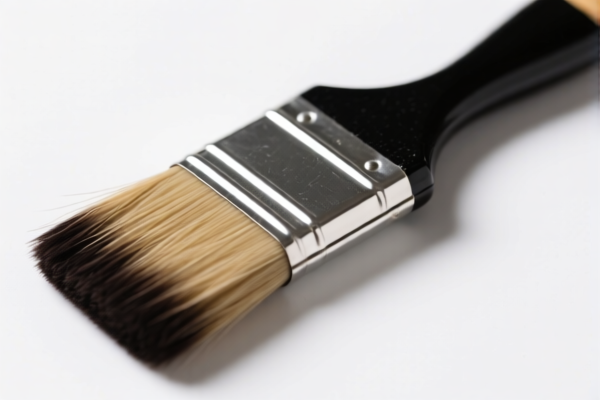
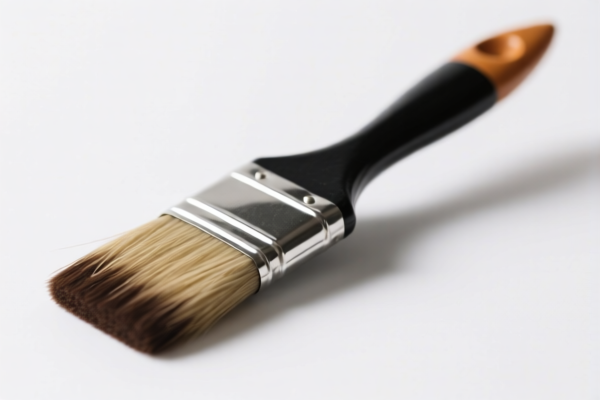
AI Analysis
🧼 Foot Brush (Shoe/Brush Hygiene Tools)
🌐 HS Code Reference & Customs Clearance Guide | 2024/2025 Tax Analysis | Professional Clearance Strategy
📌 I. Product Definition & Classification: What Exactly Is a "Foot Brush"?
A "Foot Brush" (often categorized under general shoe or hygiene brushes) is a cleaning tool consisting of a handle and bristles, used for scrubbing soles of shoes or feet. In international trade, its classification hinges on material composition and functional specificity.
⚠️ Key Distinction:
- If the brush is made of plastic/natural fibers and is primarily used for human body hygiene (even if designed for feet/shoes in a general sense), it falls under Chapter 96 (Miscellaneous Manufactured Articles).
- If the brush is made of wood (with wooden handles/frames) and is considered a general tool or part of a set, it may fall under Chapter 44 (Wood and Wood Products).
- Critical Note: Misclassification can lead to drastic tariff differences (e.g., ~10% vs. ~40%).
📦 II. HS Code Classification Details (Based on Provided Data)
| HS Code | Product Description | Summary / Rationale | Total Tax Rate* |
|---|---|---|---|
9603.29.80.90 |
Other Brushes (for human use) | Categorized as "other brushes" for use on the human body. No material conflict with plastic/fiber bristles. Fits general hygiene brush category. | 0.3¢/each + 3.6% + 10.0% |
4417.00.80.10 |
Wooden Tools (general) | If the brush has a wooden handle/frame and is treated as a wooden tool. Combines wooden handle + bristles. | 40.1% |
4417.00.60.00 |
Wooden Tools (other) | Another classification for wooden brush tools, often based on specific sub-heading interpretations for wooden articles. | 35.0% |
🔍 Important Clarification:
- HS Code9603.29.80.90is generally the most common and cost-effective classification for standard plastic/fiber foot/shoe brushes used for hygiene or cleaning.
- HS Codes4417.xxxxapply if the product is primarily wooden and classified as a "wooden tool," which incurs significantly higher tariffs due to trade restrictions.
💰 III. Detailed Tariff Breakdown (2024/2025)
✅ Applicable Country: United States (US)
✅ Origin: China (CN)
✅ Effective Date: Current trade policy (Section 301 & IEEPA)
🎯 1. 9603.29.80.90 – Other Brushes (Hygiene/General Use)
| Item | Detail |
|---|---|
| Basic Duty | 0.3¢ per each + 3.6% (ad valorem) |
| Section 301 Duty | 0.0% (Exempt or low-tier under certain conditions, or included in the 3.6%) |
| Section 122 Duty (IEEPA) | +10% (Specific additional tariff for Chinese goods) |
| Total Effective Rate | ~3.6% + 10% + 0.3¢/unit (Significantly lower than wooden classifications) |
| Calculation Method | (CIF Value × 13.6%) + (0.3¢ × Quantity) |
| De Minimis Eligibility | ❌ Likely Not Eligible for Section 301/IEEPA waivers if value exceeds $800 |
| Legal Basis | USITC:9603.29.80.90 → Section 122: 10% |
📌 Interpretation:
- This classification is highly favorable compared to wooden tool classifications.
- The 10% Section 122 tariff is the main cost driver, but the base rate is very low.
- The 0.3¢ per unit is a nominal fee, negligible for bulk shipments.
🎯 2. 4417.00.80.10 & 4417.00.60.00 – Wooden Tools
| Item | Detail |
|---|---|
| Basic Duty | 0.0% – 5.1% (varies by sub-heading) |
| Section 301 Duty | +25.0% (Standard high tariff for Chinese wooden goods) |
| Section 122 Duty (IEEPA) | +10% |
| Total Effective Rate | 35.0% (4417.00.60.00) to 40.1% (4417.00.80.10) |
| Calculation Method | CIF Value × (35% to 40.1%) |
| De Minimis Eligibility | ❌ Not Eligible |
| Legal Basis | USITC:4417.00.xxxx → Section 301: 25% + Section 122: 10% |
📌 Interpretation:
- These classifications are prohibitively expensive for most consumer goods.
- The 25% Section 301 tariff makes this category uncompetitive compared to9603.
- Only consider if the product is exclusively wooden and marketed as a craft/tool rather than a hygiene brush.
🛠️ IV. Customs Clearance Practical Advice
✅ 1. Required Documentation Checklist
| Document | Required | Notes |
|---|---|---|
| ✅ Product Description | ✔️ | Specify: "Plastic Foot Brush with Bristles" vs. "Wooden Handle Brush" |
| ✅ Material Composition | ✔️ | List % of plastic, nylon, wood, etc. Crucial for HS Code determination |
| ✅ Product Photos | ✔️ | Show handle material, bristle type, and overall structure |
| ✅ Commercial Invoice | ✔️ | Clearly state "Foot Brush" or "Shoe Cleaning Brush" |
| ✅ Packing List | ✔️ | Include unit count for the 0.3¢/unit calculation |
✅ 2. Strategic Recommendations
🚀 Recommendation A: Prioritize HS Code 9603.29.80.90
- Why? The total tax rate is ~13.6% (10% + 3.6%) vs. 35-40% for wooden classifications.
- How?
- Ensure the product description emphasizes hygiene use ("for use on the human body").
- If the brush has a plastic handle, it is almost certainly
9603. - If it has a wooden handle, argue that the primary function is hygiene/brushing (Chapter 96) rather than a "wooden tool" (Chapter 44).
- Tip: Use terms like "Plastic/Bristle Foot Brush" in the invoice.
⚠️ Avoid HS Codes 4417.xxxx Unless Necessary
- Risk: The 25% Section 301 tariff will destroy profit margins.
- Exception: Only if the product is a high-end wooden artisan tool with no plastic components, and you have absorbed the cost.
✅ 3. Common Pitfalls to Avoid
| Mistake | Consequence | Solution |
|---|---|---|
| Mislabeling as "Wooden Tool" | 35-40% tax instead of ~13.6% | Always specify material composition clearly |
| Ignoring Section 122 | Unexpected 10% surcharge | Factor in the 10% IEEPA tariff in pricing |
| Vague Description | Customs delay or reclassification | Use precise terms: "Foot Cleaning Brush, Plastic Handle, Nylon Bristles" |
| Assuming De Minimis | Seizure or back-tariff | Foot brushes are not eligible for $800 de minimis under Section 301/122 |
🌍 V. Global Market Comparison (2024/2025)
| Market | Recommended HS Code | Est. Tariff | Notes |
|---|---|---|---|
| 🇺🇸 USA | 9603.29.80.90 |
~13.6% | Best option for foot brushes |
| 🇺🇸 USA (Wooden) | 4417.00.60.00 |
35.0% | High cost, avoid if possible |
| 🇪🇺 EU | 9603.29 |
0-6.5% | No Section 301/122, much cheaper |
| 🇨🇳 China | 9603.29 |
6-10% | Standard import duty |
📌 Conclusion:
- USA is the most challenging market due to Section 301 and Section 122 tariffs.
- Stick to9603.29.80.90for any foot/shoe brush to minimize costs.
- Avoid wooden tool classifications unless you have a specific niche product that cannot be classified elsewhere.
📌 VI. Summary & Action Plan
- Classify as
9603.29.80.90unless the product is exclusively a wooden tool with no hygiene context. - Total Tax Cost: ~13.6% (3.6% base + 10% Section 122) + 0.3¢/unit.
- Documentation: Clearly state "Foot Brush" and "Plastic/Bristle" materials.
- Pricing: Factor in the 10% Section 122 tariff to maintain margins.
- Avoid:
4417codes due to 25% Section 301 tariff.
🎯 Final Tip:
"Brush for body use → Chapter 96 (Low Tax). Wooden Tool → Chapter 44 (High Tax). Choose wisely!"
✨ Professional Customs Clearance Starts with Accurate Classification!
💼 Your Cost Efficiency Depends on the Right HS Code!
Customer Reviews
About HS Code Classification
The Harmonized System (HS) is an internationally standardized nomenclature developed by the World Customs Organization (WCO) to classify traded products. Over 200 countries use the HS system as the basis for customs tariffs, trade statistics, and import/export regulations.
Each HS code follows a hierarchical structure:
- Chapter (2 digits) — Broad category of goods (e.g., Chapter 84: Machinery and Mechanical Appliances)
- Heading (4 digits) — More specific grouping within the chapter
- Subheading (6 digits) — Internationally standardized breakdown, used by all WCO member countries
- National subdivisions (8-10 digits) — Country-specific extensions for further classification, such as US HTSUS 10-digit codes
Correct HS code classification is essential for smooth customs clearance, accurate duty payment, and compliance with trade regulations. Misclassification can lead to customs delays, overpayment of duties, or penalties.
When importing from CN to US, the applicable tariff rates may include:
- Most-Favored-Nation (MFN) rate — The standard duty rate applied to WTO members
- General rate — Applied to countries without trade agreements
- Trade remedy duties — Additional tariffs such as Section 301 (anti-dumping), Section 232 (national security), or countervailing duties
The information provided on this page is for reference purposes only. For official classification, please consult with your local customs authority or a licensed customs broker.