Foot Massage Mat
CN → US| HS Code | Tariff Rate | Origin | Destination | Doc |
|---|---|---|---|---|
| 9019102050 | 10.0% | CN | US | Official Doc |
| 8509805095 | 14.2% | CN | US | Official Doc |
| 9404909670 | 17.3% | CN | US | Official Doc |
| 9404902090 | 23.5% | CN | US | Official Doc |
| 9019102045 | 10.0% | CN | US | Official Doc |
Product Images
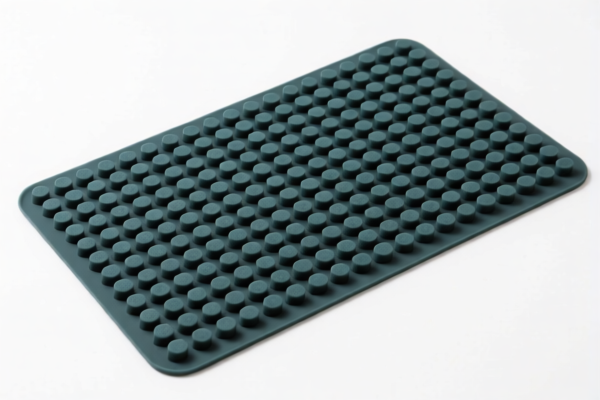
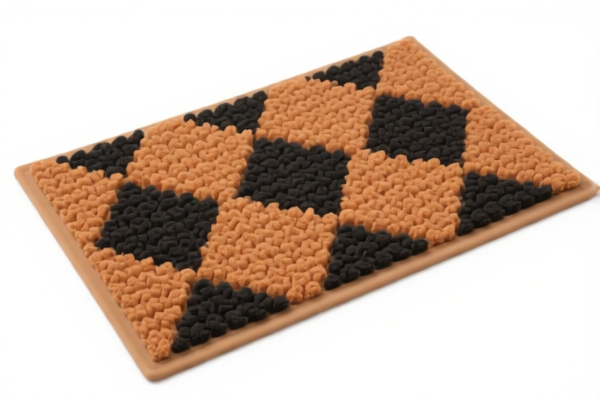
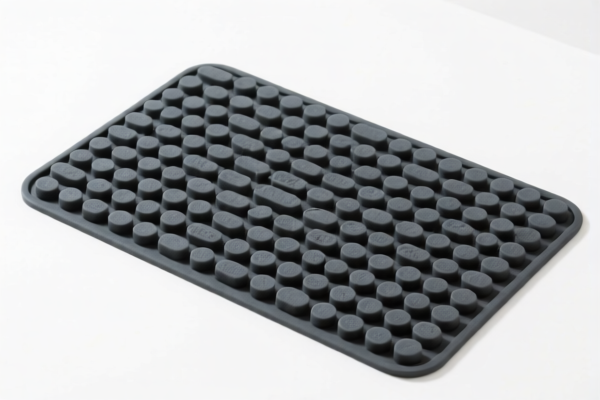
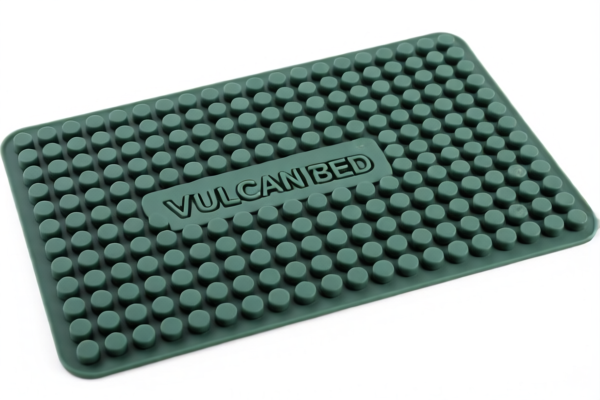
AI Analysis
🦶 Foot Massage Mat: Precision Classification & Customs Clearance Strategy
🌐 HS Code Reference & Customs Guide | 2026 Tariff Structure Analysis | Professional Clearance Strategy
📌 I. Product Definition & Classification: What is a "Foot Massage Mat"?
A Foot Massage Mat is a therapeutic device designed to provide mechanical or electrical stimulation to the feet and lower legs. In international trade, its classification hinges on two critical factors: 1. Function: Is it primarily a medical/therapeutic device or a household appliance? 2. Form/Material: Is it a mechanical mat or an electronic device? Is it made of textiles or plastics/rubber?
⚠️ Key Classification Conflict:
- If viewed as a medical/therapeutic tool (massaging action) → Potential for Chapter 90 (Medical Instruments).
- If viewed as an electronic household item (powered by electricity) → Potential for Chapter 85 (Electrical Machinery).
- If viewed as a textile/plastic bedding accessory (soft, cushion-like) → Potential for Chapter 94 (Furniture/Bedding).
📦 II. HS Code Classification Matrix (Based on Provided Data)
The following table outlines the potential HS Codes derived from the provided dataset, highlighting the logical reasoning for each classification.
| HS Code | Product Description (Inferred) | Classification Logic (From Data) | Total Tax Rate |
|---|---|---|---|
| 9019.10.20.50 | Mechanical/Electrical Massage Devices | Logic: Purpose matches "Massage". Shape fits "Massage Equipment". No conflict with "Other massage appliances". Verdict: Primary candidate for therapeutic intent. |
10.0% |
| 9019.10.20.45 | Other Therapeutic Massage Devices | Logic: Belongs to "Massage Equipment". Inferred as electric/mechanical therapeutic device. No material/shape conflict with "Other" category. Verdict: Alternative therapeutic classification. |
10.0% |
| 8509.80.50.95 | Electro-Mechanical Household Appliances | Logic: Contains electric motor. Fits "Other Electrical Appliances". No material/shape conflict. Verdict: Classified as a generic home appliance rather than medical. |
14.2% |
| 9404.90.96.70 | Other Made-Up Bedding/Accessories | Logic: Matches "Mat" form factor. Inferred as non-specific material (not cotton/silk/man-made fiber shell). Fallback "Other" category. Verdict: Classified as a textile/plastic accessory. |
17.3% |
| 9404.90.20.90 | Other Bedding & Similar Articles | Logic: Matches "Similar Articles" (cushions/pads). Inferred material: Filling or honeycomb rubber/plastic. Fits bedding/pillow category. Verdict: Classified as a soft furnishing. |
23.5% |
🔍 Key Insight:
- The lowest tax rate (10.0%) applies if the product is successfully classified as a Therapeutic Massage Device (HS 9019).
- The highest tax rate (23.5%) applies if it is misclassified as a Bedding Accessory (HS 9404).
- The choice depends heavily on product demonstration (does it look like a medical device or a rug?) and marketing claims (is it marketed as "therapy" or "relaxation/decoration"?).
💰 III. Detailed Tariff Breakdown (2026 Analysis)
✅ Applicable Jurisdiction: United States (US)
✅ Origin: China (CN) (Inferred from "Section 301/122" context in tax details)
✅ Effective Date: Post-2025 Regulations (Including Section 301 & 122 tariffs)
🎯 1. 9019.10.20.50 & 9019.10.20.45 — Therapeutic Massage Devices
Best Case Scenario: Lowest Duty Burden
| Item | Detail |
|---|---|
| Base Duty | 0.0% (Free for most medical/massage devices) |
| Additional Duty (Sec. 301) | 0.0% (Often exempted or low rate for therapeutic devices) |
| Section 122 Tariff | 10.0% (Specific tariff applied to "Other massage appliances") |
| Total Effective Rate | 10.0% |
| Calculation | CIF Value × 10% |
| De Minimis Exemption? | ❌ No (High value goods generally excluded) |
📌 Explanation:
- Chapter 90 items often enjoy lower base duties.
- The 10% Section 122 tariff is the primary cost driver here.
- Advantage: This is the most cost-effective classification if the product can be proven to be a therapeutic device.
🎯 2. 8509.80.50.95 — Electro-Mechanical Household Appliances
| Item | Detail |
|---|---|
| Base Duty | 4.2% |
| Additional Duty (Sec. 301) | 0.0% (Often lower or zero for certain electronics) |
| Section 122 Tariff | 10.0% |
| Total Effective Rate | 14.2% |
| Calculation | CIF Value × 14.2% |
| De Minimis Exemption? | ❌ No |
📌 Explanation:
- Classified as a "Household Appliance" rather than medical.
- Higher base duty (4.2%) pushes the total cost above the therapeutic classification.
- Risk: If customs determines it is medical, you may owe back-differences + penalties.
🎯 3. 9404.90.96.70 — Other Bedding/Textile Accessories
| Item | Detail |
|---|---|
| Base Duty | 7.3% |
| Additional Duty (Sec. 301) | 0.0% |
| Section 122 Tariff | 10.0% |
| Total Effective Rate | 17.3% |
| Calculation | CIF Value × 17.3% |
| De Minimis Exemption? | ❌ No |
📌 Explanation:
- Higher base duty (7.3%) due to textile/plastic nature.
- Often applies if the product is purely mechanical (no motor) and marketed as a "mat" or "rug" for relaxation.
🎯 4. 9404.90.20.90 — Similar Bedding Articles (Cushions/Pads)
| Item | Detail |
|---|---|
| Base Duty | 6.0% |
| Additional Duty (Sec. 301) | 7.5% (Significant added cost) |
| Section 122 Tariff | 10.0% |
| Total Effective Rate | 23.5% |
| Calculation | CIF Value × 23.5% |
| De Minimis Exemption? | ❌ No |
📌 Explanation:
- Most Expensive Option.
- The 7.5% Section 301 tariff on this specific subheading makes it prohibitively expensive for commercial import.
- Only apply if the product is strictly a "cushion" with no massage function claimed.
🛠️ IV. Customs Clearance Practical Advice (Risk Mitigation)
✅ 1. Documentation Checklist (Critical for Clearance)
| Document | Requirement | Purpose |
|---|---|---|
| Product Specifications | ✔️ Must Include | Detailing motor voltage, massage type (shockwave/vibration/roll), and therapeutic claims. |
| User Manual | ✔️ Must Include | Crucial: Does it claim "pain relief," "therapy," or "treatment"? If yes, HS 9019 is likely required. If "relaxation/decoration," HS 9404 might be argued. |
| Product Photos | ✔️ Must Include | Clear shots of the mat, controls, power cord, and any medical certification labels. |
| Composition Statement | ✔️ Must Include | Material breakdown (e.g., PVC top, TPE base, foam filling) to distinguish from Chapter 94 textiles. |
| Certificate of Origin | ✔️ Required | To verify country of origin for Section 301/122 applicability. |
| Commercial Invoice | ✔️ Required | Description must match the chosen HS Code logic (e.g., "Electric Therapeutic Massaging Mat" vs. "Textile Massage Mat"). |
✅ 2. Strategic Declaration Tips (Avoiding Audits)
🔥 Golden Rule: "Function Dictates Code, Not Just Material."
| Scenario | Recommended HS Code | Rationale |
|---|---|---|
| Electric Mat with Controls & Therapeutic Claims | 9019.10.20.50 | Highest functionality, lowest duty (10%). Must prove it's a "massage apparatus." |
| Electric Mat, No Medical Claims, Purely Household | 8509.80.50.95 | Safe fallback. Moderate duty (14.2%). Avoids medical scrutiny. |
| Non-Electric, Rubber/Plastic Mat (No Motor) | 9404.90.96.70 | If no motor, it can't be 9019 or 8509. Best bet among non-electric options. |
| Textile/Cushion-Style Mat (Soft, No Hard Mechanics) | 9404.90.20.90 | AVOID if possible due to 23.5% duty. Only use if explicitly marketed as a "decorative cushion." |
⚠️ Warning:
- Do NOT describe an electric, motorized massage mat as a "Textile Mat" (HS 9404) to save duty. Customs will inspect the product, find the motor, and reassess to HS 9019 or 8509, potentially adding penalties for misdeclaration.
✅ 3. Special Circumstances Handling
| Situation | Action Plan |
|---|---|
| Dual-Use Product (e.g., Mat can be used as a pillow) | Declare as Massage Device (HS 9019). The primary function determines classification. |
| OEM Customization | Provide design files showing motor placement and control interface. This supports the "Electrical/Mechanical" classification. |
| Medical Device Certification (FDA/CE) | Strongly Advantageous. If the product has FDA clearance for "pain relief," HS 9019 is almost mandatory. |
| Sample for Inspection | Ensure the sample provided to customs brokers includes the power adapter and control unit. Hidden electronics can lead to reclassification. |
🌍 V. Global Market Comparison (2026 Overview)
| Market | Recommended HS Code | Est. Duty (China Origin) | Key Certification |
|---|---|---|---|
| 🇺🇸 USA | 9019.10.20.50 | 10.0% | FCC (for electronics), FDA (if medical claim) |
| 🇨🇳 China | 9019.10.20.50 | ~10-15% (Varies) | CCC (if electrical) |
| 🇪🇺 EU | 9019.10.00 | 0-2% (Likely Free) | CE, RoHS, REACH |
| 🇬🇧 UK | 9019.10.00 | 0-2% | UKCA, RoHS |
📌 Conclusion for US Imports:
- The US market is highly sensitive to the "Medical vs. Household" distinction.
- HS 9019 (10%) is the strategic sweet spot: Lower than household appliances (14.2%) and significantly lower than bedding (17-23.5%).
- Key to Success: Ensure your product marketing and technical specs align with "Therapeutic Massage Device" to justify HS 9019.
📌 VI. Common Pitfalls & How to Avoid Them
❌ Pitfall 1: Calling it a "Spa Mat" or "Yoga Mat" to fit into HS 9404.
👉 Risk: Customs sees the motor and reclassifies to HS 8509 or 9019. If 9019 is correct, you save money. If 9019 is wrong and it's actually 8509, you still pay ~14.2%. Better to be honest and target 9019.
❌ Pitfall 2: Ignoring the "Section 122" tariff.
👉 Risk: Assuming "No Additional Tariff" because it's a "Medical Device." Data confirms 10% Section 122 tariff applies even to HS 9019.
❌ Pitfall 3: Inconsistent Descriptions.
👉 Risk: Invoice says "Massage Mat," Packing List says "Rubber Pad."
👉 Fix: Use consistent terminology: "Electric Therapeutic Foot Massage Mat."
✅ Correct Declaration Example:
"Electric Foot Massage Mat with Vibration Function, Model X100, Made of PVC/TPE, Includes Power Adapter. Intended for Muscle Relaxation and Circulation Improvement."
🎯 VII. Conclusion: Strategic Recommendation
🎯 Final Verdict:
For a Foot Massage Mat imported into the US, the optimal strategy is to classify under HS Code 9019.10.20.50.
-
Why?
- Lowest Total Duty (10%) compared to 14.2% (Appliance) and 17-23.5% (Bedding).
- Logical Fit: The product's primary function is massage (therapeutic/relaxation), which aligns with Chapter 90.
-
Action Items:
- Confirm Motor/Power: Ensure the product is electric/mechanical.
- Align Marketing: Use terms like "Therapeutic," "Massage," and "Relaxation" in manuals and labels.
- Document Material: Clearly state non-textile materials (PVC, TPE, Rubber) to avoid Chapter 94 confusion.
-
Pre-Clearance Step:
- Request a Binding Tariff Ruling from CBP if the product volume is high. This provides legal certainty for the 10% duty rate.
📣 Immediate Next Step:
📞 Consult a Licensed Customs Broker
📄 Prepare Technical Spec Sheet highlighting electrical/therapeutic features
🚀 Declare as9019.10.20.50to maximize profit margins!
✨ Precision in Classification = Precision in Profit!
💼 Don't let duty rates inflate your costs. Classify correctly.
Customer Reviews
About HS Code Classification
The Harmonized System (HS) is an internationally standardized nomenclature developed by the World Customs Organization (WCO) to classify traded products. Over 200 countries use the HS system as the basis for customs tariffs, trade statistics, and import/export regulations.
Each HS code follows a hierarchical structure:
- Chapter (2 digits) — Broad category of goods (e.g., Chapter 84: Machinery and Mechanical Appliances)
- Heading (4 digits) — More specific grouping within the chapter
- Subheading (6 digits) — Internationally standardized breakdown, used by all WCO member countries
- National subdivisions (8-10 digits) — Country-specific extensions for further classification, such as US HTSUS 10-digit codes
Correct HS code classification is essential for smooth customs clearance, accurate duty payment, and compliance with trade regulations. Misclassification can lead to customs delays, overpayment of duties, or penalties.
When importing from CN to US, the applicable tariff rates may include:
- Most-Favored-Nation (MFN) rate — The standard duty rate applied to WTO members
- General rate — Applied to countries without trade agreements
- Trade remedy duties — Additional tariffs such as Section 301 (anti-dumping), Section 232 (national security), or countervailing duties
The information provided on this page is for reference purposes only. For official classification, please consult with your local customs authority or a licensed customs broker.