Foot Pedal
CN → US| HS Code | Tariff Rate | Origin | Destination | Doc |
|---|---|---|---|---|
| 8714961000 | 43.0% | CN | US | Official Doc |
| 8714100050 | 17.5% | CN | US | Official Doc |
| 8431499084 | 85.0% | CN | US | Official Doc |
| 8708998180 | 12.5% | CN | US | Official Doc |
Product Images
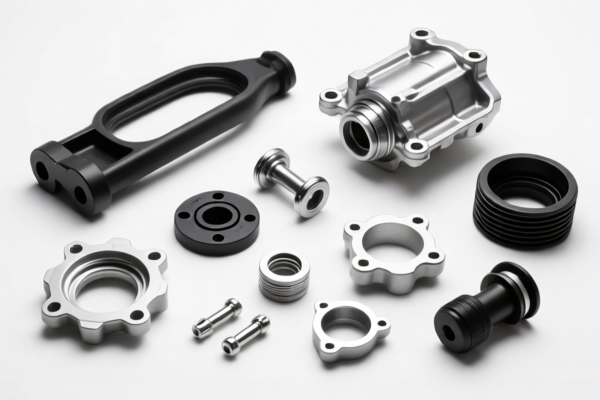
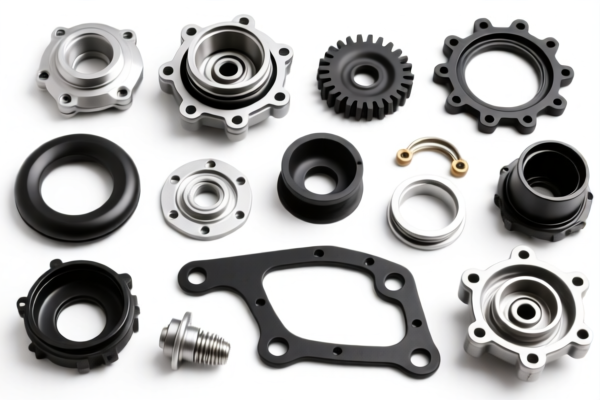
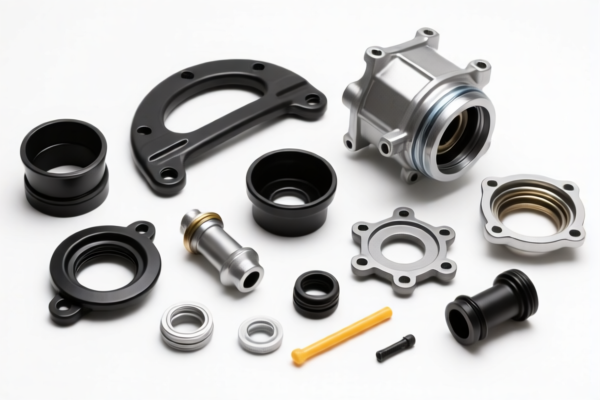
AI Analysis
🦶 Foot Pedal (脚踏板)
🌐 HS Code Reference & Customs Clearance Guide | 2026 Latest Tariff Analysis | Professional Clearance Strategy
📌 I. Product Definition & Classification: Do You Really Know the "Foot Pedal"?
The Foot Pedal is a critical control interface component used in various mechanical and vehicular systems. In international trade, its classification depends heavily on its specific application (e.g., automotive, motorcycle, industrial machinery) and structural characteristics.
Key Distinction Criteria:
- Automotive Application: If designed specifically for cars (e.g., accelerator, brake, clutch pedals), it falls under Chapter 87 (Motor Vehicles).
- Motorcycle Application: If designed for motorcycles, it is classified as a motorcycle part under Chapter 87.
- General Mechanical/Other: If used in non-vehicular machinery or does not fit specific vehicular definitions, it may fall under Chapter 84 (Machinery) or other general parts categories.
⚠️ Critical Classification Point:
- If it is a car part → Look at 8708 (Parts & Accessories of Motor Vehicles).
- If it is a motorcycle part → Look at 8714 (Parts & Accessories of Motorcycles).
- If it is a generic mechanical component (e.g., for industrial equipment) → Look at 8431 (Parts of Machinery).
📦 II. HS Code Classification Details (2026 Latest Tariff Authority对照)
Based on the provided data, here are the four primary HS Code classifications for Foot Pedals, their rationale, and associated tax implications.
| HS Code | Product Description & Rationale | Application Context | Total Tax Rate (China Origin → US) |
|---|---|---|---|
| 8714.96.10.00 | Direct Match: "Pedal" is explicitly defined in the classification summary. Usage and form fully comply. | Motorcycle Pedals (General/Motorcycle parts) | 43.0% |
| 8714.10.00.50 | Motorcycle Parts: Classified as a part/attachment for motorcycles. | Motorcycle Parts (Other parts & accessories) | 17.5% |
| 8431.49.90.84 | Mechanical Auxiliary Component: Treated as a general mechanical part. High Risk: Includes additional tariffs for Steel/Aluminum/Copper products. | Industrial/Machinery Parts (Parts of machinery not specified elsewhere) | 85.0% |
| 8708.99.81.80 | Automotive Parts: Classified as a "catch-all" part for motor vehicles with no material conflict. | Car Parts (Parts & accessories of cars) | 12.5% |
🔍 Key Insight:
- 8714.96.10.00 is a literal match but carries a 43% tax.
- 8714.10.00.50 is a functional match for motorcycles but has a lower 17.5% tax.
- 8431.49.90.84 is the most expensive (85%) due to material-based additional tariffs (Steel/Aluminum/Copper +50%). Avoid this unless absolutely necessary.
- 8708.99.81.80 is the cheapest (12.5%) if the pedal is indeed for a car.
💰 III. 2026 Latest Tariff Rate Breakdown (Including Additional Taxes)
✅ Applicable Country: United States (US)
✅ Origin: China (CN)
✅ Effective Date: 2025 November 10 onwards (for subsequent imports)
🎯 1. 8714.96.10.00 —— Foot Pedal (Direct Classification)
| Item | Detail |
|---|---|
| Base Tariff | 8.0% |
| Section 301 Additional Tariff | +25.0% |
| 122 Clause Tariff | +10.0% |
| Total Tax Rate | 43.0% |
| Tax Calculation | CIF Value × 43% |
| De Minimis Exemption | ❌ Not Applicable (High tariff goods are excluded) |
| Legal Basis Path | Base: 8714.96.10.00 → Section 301: 301.03.01 → 122 Clause: 122.01 |
📌 Explanation:
- This code is the most literally accurate for "pedal," but it attracts the standard Section 301 (25%) + 122 Clause (10%) + Base (8%).
- Total: 43%. High cost, but low risk of misclassification.
🎯 2. 8714.10.00.50 —— Motorcycle Parts (Other Parts & Accessories)
| Item | Detail |
|---|---|
| Base Tariff | 0.0% |
| Section 301 Additional Tariff | +7.5% |
| 122 Clause Tariff | +10.0% |
| Total Tax Rate | 17.5% |
| Tax Calculation | CIF Value × 17.5% |
| De Minimis Exemption | ❌ Not Applicable |
| Legal Basis Path | Base: 8714.10.00.50 → Section 301: 301.01.25 (Reduced) → 122 Clause: 122.01 |
📌 Note:
- If your foot pedal is for a motorcycle, this code offers significant savings.
- Base tariff is 0%, but Section 301 is reduced to 7.5% (possibly due to specific exclusions or sub-category rules) + 10% 122 Clause.
- Total: 17.5%. A strong candidate for motorcycle parts.
🎯 3. 8431.49.90.84 —— Mechanical Parts (High Risk)
| Item | Detail |
|---|---|
| Base Tariff | 0.0% |
| Section 301 Additional Tariff | +25.0% |
| 122 Clause Tariff | +10.0% |
| Steel/Aluminum/Copper Additional Tariff | +50.0% |
| Total Tax Rate | 85.0% |
| Tax Calculation | CIF Value × 85% |
| De Minimis Exemption | ❌ Not Applicable |
| Legal Basis Path | Base: 8431.49.90.84 → Section 301: 301.03.01 → 122 Clause: 122.01 → Material Surcharge: Steel/Al/Cu |
📌 Warning:
- This is the most expensive option.
- The 50% surcharge applies because foot pedals are often made of steel, aluminum, or copper.
- Total: 85%. Avoid this classification unless the product is explicitly for non-vehicular machinery and cannot be classified elsewhere.
🎯 4. 8708.99.81.80 —— Car Parts (Catch-All)
| Item | Detail |
|---|---|
| Base Tariff | 2.5% |
| Section 301 Additional Tariff | 0.0% (Exempt/Excluded) |
| 122 Clause Tariff | +10.0% |
| Total Tax Rate | 12.5% |
| Tax Calculation | CIF Value × 12.5% |
| De Minimis Exemption | ❌ Not Applicable |
| Legal Basis Path | Base: 8708.99.81.80 → Section 301: Excluded → 122 Clause: 122.01 |
📌 Opportunity:
- If the foot pedal is for a car (automotive), this code is the most cost-effective.
- Base tariff is low (2.5%), and Section 301 is 0% (likely due to exclusions for certain auto parts).
- Only 122 Clause (10%) applies.
- Total: 12.5%. Best option for automotive applications.
🛠️ IV. Customs Clearance Practical Advice (Avoiding Pitfalls)
✅ 1. Documentation Checklist (Mandatory)
| Document | Required | Notes |
|---|---|---|
| ✅ Product Specification Sheet | ✔️ | Must specify: Material (Steel/Aluminum/Plastic), Application (Car/Motorcycle/Industrial), Weight, Dimensions. |
| ✅ Product Photos | ✔️ | Clear images of the pedal, mounting holes, linkage mechanism, and any branding. |
| ✅ Commercial Invoice | ✔️ | Clearly state "Foot Pedal for [Car/Motorcycle/Machinery]." Do not just write "Pedal." |
| ✅ Bill of Lading/Air Waybill | ✔️ | Ensure commodity description matches the invoice. |
| ✅ Material Declaration | ✔️ | Crucial for 8431 code. If Steel/Aluminum/Copper, expect +50% tariff. |
✅ 2. Classification Strategy (Key Mnemonic)
🔥 “Auto 12.5%, Moto 17.5%, Direct 43%, Mech 85% - Choose Wisely!”
| Scenario | Recommended HS Code | Tax Rate | Risk Level |
|---|---|---|---|
| Car Foot Pedal (Brake/Clutch/Accelerator) | 8708.99.81.80 |
12.5% | 🟢 Low (Best Price) |
| Motorcycle Foot Peg/Pedal | 8714.10.00.50 |
17.5% | 🟢 Low (Best Price for Moto) |
| General Motorcycle Part (Literal "Pedal") | 8714.96.10.00 |
43.0% | 🟡 Medium (Higher Tax) |
| Industrial/Machinery Part (Steel/Al) | 8431.49.90.84 |
85.0% | 🔴 High (Avoid if possible) |
✅ 3. Special Considerations
| Situation | Recommendation |
|---|---|
| Material is Steel/Aluminum/Copper | Avoid 8431.49.90.84 if possible. The +50% material surcharge makes it prohibitive. Prefer 8708 or 8714. |
| OEM Parts for Cars | Ensure the invoice specifies "For [Brand/Model] Car" to justify 8708. |
| Universal Pedals | If not specific to a vehicle, consult a customs broker. Misclassification can lead to audits. |
| Plastic Pedals | Check if 8431 still applies. Even if plastic, if it’s a "part of machinery," it might fall under 8431. However, 8708/8714 are safer for vehicular use. |
🌍 V. Global Market Comparison (2026 Latest)
| Country/Region | Recommended HS Code (if Auto) | Tariff (China Origin) | Key Certifications | Notes |
|---|---|---|---|---|
| 🇺🇸 USA | 8708.99.81.80 |
12.5% | None specific | Highest tariff exposure due to Section 301 & 122 Clause. |
| 🇨🇳 China | 8708.99.81.80 |
~2.5% - 10% | CCC (if applicable) | Lower tariffs. |
| 🇪🇺 EU | 8708.99.90 |
~4.5% | E-mark (for auto parts) | No Section 301 or 122 Clause. |
| 🇦🇺 Australia | 8708.99.90 |
~5% | RCM | Moderate tariffs. |
| 🇯🇵 Japan | 8708.99.00 |
~0% - 7% | JIS | Varies by material. |
📌 Conclusion:
- The USA has the most complex tariff structure for foot pedals due to Section 301 and 122 Clause.
- Automotive parts (8708) are the most tax-efficient for the US market.
- Motorcycle parts (8714) are next best.
- Mechanical parts (8431) should be avoided due to the material-based surcharge.
📌 VI. Common Mistakes & Pitfalls (Lessons Learned)
❌ Mistake 1: Classifying a car pedal as a general mechanical part (8431)
👉 Consequence: Pay 85% tax instead of 12.5%. Massive overpayment!
❌ Mistake 2: Using "Pedal" without specifying Vehicle Type on the invoice
👉 Consequence: Customs may reject the classification or assign the highest default rate.
❌ Mistake 3: Ignoring Material Composition
👉 Consequence: If classified under 8431 and made of steel, you face an additional 50% tariff. Always declare material accurately.
❌ Mistake 4: Assuming all motorcycle parts have the same tax
👉 Consequence: 8714.96.10.00 (43%) vs. 8714.10.00.50 (17.5%). Choose the correct sub-category.
✅ Correct Practice:
"Automotive Foot Pedal, Steel, For [Car Model], Part No. XYZ, Not Exempt from Section 301"
🎯 VII. Conclusion: Precise Classification Saves Money!
🎯 Remember the Golden Rule:
🔹 "Car Part = 12.5% | Moto Part = 17.5% | General Pedal = 43% | Mech Part = 85%"
🔹 "Specify Material, Specify Vehicle, Specify Code!"
📌 Pro Tip:
If your foot pedal is for a car, always aim for 8708.99.81.80. It offers the lowest tax rate (12.5%) and avoids the 25% Section 301 tariff.
For motorcycles, 8714.10.00.50 is the best balance of accuracy and cost (17.5%).
📣 Action Required:
📞 Contact your customs broker with product photos and application details.
🚀 Apply for a Pre-Ruling if importing large volumes to lock in the HS Code and avoid disputes.
✨ Professional Clearance Starts with Accurate Classification!
💼 Every Percentage Point in Tariff Counts!
Customer Reviews
About HS Code Classification
The Harmonized System (HS) is an internationally standardized nomenclature developed by the World Customs Organization (WCO) to classify traded products. Over 200 countries use the HS system as the basis for customs tariffs, trade statistics, and import/export regulations.
Each HS code follows a hierarchical structure:
- Chapter (2 digits) — Broad category of goods (e.g., Chapter 84: Machinery and Mechanical Appliances)
- Heading (4 digits) — More specific grouping within the chapter
- Subheading (6 digits) — Internationally standardized breakdown, used by all WCO member countries
- National subdivisions (8-10 digits) — Country-specific extensions for further classification, such as US HTSUS 10-digit codes
Correct HS code classification is essential for smooth customs clearance, accurate duty payment, and compliance with trade regulations. Misclassification can lead to customs delays, overpayment of duties, or penalties.
When importing from CN to US, the applicable tariff rates may include:
- Most-Favored-Nation (MFN) rate — The standard duty rate applied to WTO members
- General rate — Applied to countries without trade agreements
- Trade remedy duties — Additional tariffs such as Section 301 (anti-dumping), Section 232 (national security), or countervailing duties
The information provided on this page is for reference purposes only. For official classification, please consult with your local customs authority or a licensed customs broker.