Foot Sandpaper
CN → US| HS Code | Tariff Rate | Origin | Destination | Doc |
|---|---|---|---|---|
| 8214203000 | 14.0% | CN | US | Official Doc |
| 8214909000 | 0.0% | CN | US | Official Doc |
| 9603294010 | 0.0% | CN | US | Official Doc |
| 9603294090 | 0.0% | CN | US | Official Doc |
Product Images
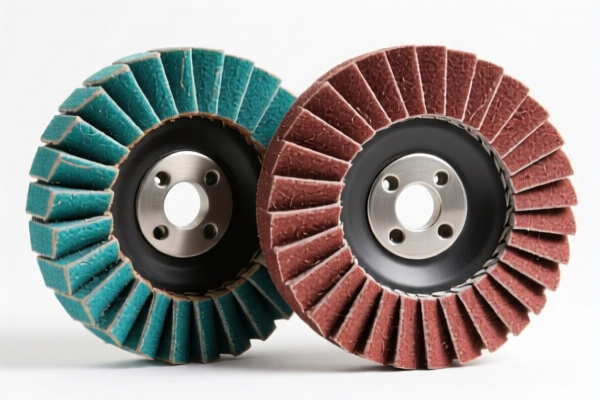
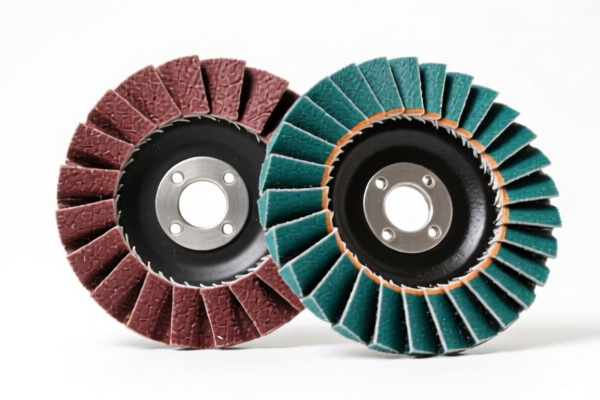
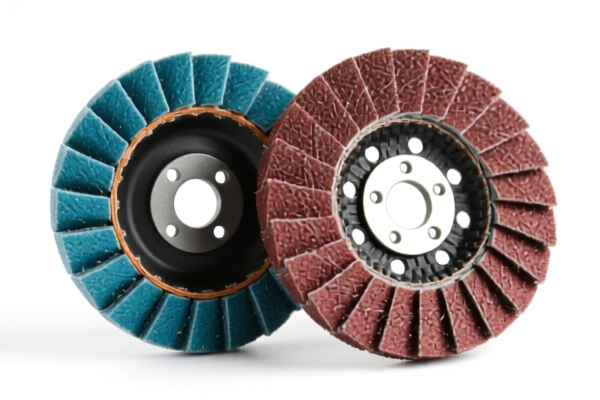
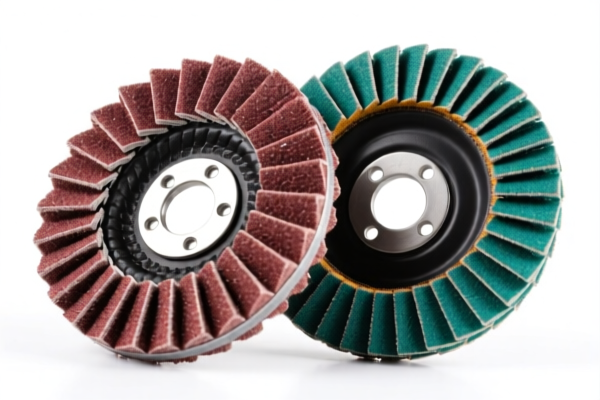
AI Analysis
🛠️ Foot Sandpaper (Foot File / Callus Remover)
🌐 HS Code Classification & Customs Clearance Guide | 2026 Updated Tariff Analysis | Pro-Level Import Strategy
📌 One Product, Multiple Classifications — Why So Many HS Codes? Let’s Break It Down!
📌 I. Product Definition & Key Classification Logic
Foot Sandpaper, also known as foot file, callus remover, or foot scraper, is a handheld tool used for removing dead skin, corns, and calluses from the feet. It's commonly used in foot care routines, pedicures, spa treatments, and home hygiene.
Despite its simple appearance, this product can be classified under multiple HS Codes depending on: - Material (metal vs. non-metal) - Primary Function (sharpening, cleaning, grooming, or massage) - Design & Form (brush-like, scraper-like, or multi-functional)
⚠️ Critical Insight:
The same physical item may fall into different categories based on how it’s used and what it’s made of — making accurate classification essential to avoid customs penalties.
📦 II. HS Code Breakdown (2026 Official Tariff List – U.S. Focus)
| HS Code | Product Description | Functional Category | Material | Key Reasoning |
|---|---|---|---|---|
8214.20.30.00 |
Foot files used for trimming or smoothing calluses; part of foot care tools | Foot care tool /修脚工具 | 贱金属 (Base Metal) | Designed for cutting/sanding, similar to nail clippers or foot scissors |
8214.90.90.00 |
Foot care tools used in pedicure kits; part of beauty or wellness tool sets | Beauty/Foot Spa Tool | 贱金属 (Base Metal) | Fits within "other tools for personal care" under 8214.90.90 |
9603.29.40.10 |
Brush-like or scrubbing tools used for cleaning or exfoliating | Cleaning/Exfoliating Tool | Non-metal (e.g., plastic, rubber) | Shape and function resemble brushes or scrubbers |
9603.29.40.90 |
Personal hygiene tools for body cleaning, especially feet | Body Wash Tool | Non-metal | Used directly on skin for cleansing, fits "other wash tools" |
🔍 Why So Many Options?
The same foot sandpaper can be: - A metal file →8214.20.30.00or8214.90.90.00- A plastic/rubber brush-style tool →9603.29.40.10or9603.29.40.90
💰 III. 2026 U.S. Tariff Breakdown (With Full Legal Basis)
✅ Applicable Country: United States (US)
✅ Origin: China (CN)
✅ Effective Date: November 10, 2025 (Post-2025 Tariff Update)
✅ Key Policy Drivers:
- Section 301 (USITC) → 25% additional tariff
- Section 122 (IEEPA) → 10% additional tariff
- De Minimis Rule: Not applicable (0.2¢ per unit threshold does NOT apply for these items)
🎯 1. 8214.20.30.00 — Foot File (Base Metal Tool)
| Item | Detail |
|---|---|
| Base Duty | 4.0% ad valorem |
| Section 301 (USITC) | +0.0% (No additional tariff under 301 for this code) |
| Section 122 (IEEPA) | +10.0% (from IEEPA: 9903.01.24) |
| Total Effective Rate | 14.0% |
| Tax Calculation | CIF Value × 14.0% |
| De Minimis? | ❌ No (even if value < $800, not exempt) |
| Legal Pathway | IEEPA:9903.01.24 → 8214.20.30.00 → FOOTNOTE:9903.88.01 |
📌 Why 14%?
- The base 4% is standard for metal foot tools. - The +10% IEEPA applies to all Chinese-origin goods under Section 122, regardless of product type. - No 301 tariff applies here — this code is exempt from the 25% USITC tariff.
🎯 2. 8214.90.90.00 — Other Foot Care Tools (Metal)
| Item | Detail |
|---|---|
| Base Duty | 1.4¢ each + 3.2% ad valorem |
| Section 301 (USITC) | +0.0% |
| Section 122 (IEEPA) | +10.0% |
| Total Effective Rate | 1.4¢ each + 3.2% + 10.0% |
| Tax Calculation | (Unit Price × 3.2%) + 1.4¢ + (CIF × 10%) |
| De Minimis? | ❌ No |
| Legal Pathway | IEEPA:9903.01.24 → 8214.90.90.00 → FOOTNOTE:9903.88.01 |
📌 What Does "1.4¢ each" Mean?
- A per-unit fee of $0.014 (1.4 cents) per item, in addition to percentage duties. - This is common for small tools with low value. - Example: A $5 product → 3.2% = $0.16, + $0.014, + 10% = $0.50 → Total = $0.674
🎯 3. 9603.29.40.10 — Brush/Scrubbing Tool (Non-Metal)
| Item | Detail |
|---|---|
| Base Duty | 0.2¢ each + 7% ad valorem |
| Section 301 (USITC) | +0.0% |
| Section 122 (IEEPA) | +10.0% |
| Total Effective Rate | 0.2¢ each + 7% + 10% |
| Tax Calculation | (Unit Price × 7%) + 0.2¢ + (CIF × 10%) |
| De Minimis? | ❌ No |
| Legal Pathway | IEEPA:9903.01.24 → 9603.29.40.10 → FOOTNOTE:9903.88.01 |
📌 Why 7% + 10%?
- 7% is standard for non-metal cleaning tools. - +10% IEEPA applies to all Chinese-origin goods under Section 122. - Per-unit fee: $0.002 (2 cents) — very low, but still mandatory.
🎯 4. 9603.29.40.90 — Other Personal Hygiene Tools (Non-Metal)
| Item | Detail |
|---|---|
| Base Duty | 0.2¢ each + 7% ad valorem |
| Section 301 (USITC) | +0.0% |
| Section 122 (IEEPA) | +10.0% |
| Total Effective Rate | 0.2¢ each + 7% + 10% |
| Tax Calculation | (Unit Price × 7%) + 0.2¢ + (CIF × 10%) |
| De Minimis? | ❌ No |
| Legal Pathway | IEEPA:9903.01.24 → 9603.29.40.90 → FOOTNOTE:9903.88.01 |
📌 Key Note:
- This code applies to non-metal foot scrapers used for personal hygiene. - Even if it looks like a file, if it's made of plastic or rubber, this is the correct code. - Same rate as 9603.29.40.10 — functionally identical.
🛠️ IV. Customs Clearance Best Practices (Pro Tips)
✅ 1. Required Documentation (Must-Have)
| Document | Why It Matters |
|---|---|
| ✅ Product Photos (Front, Back, Side, Close-up) | Show material, shape, and usage — critical for classification |
| ✅ Material Certificate / Composition Report | Prove if it’s metal or plastic/rubber |
| ✅ Technical Specs & Function Description | Explain intended use: "Callus removal", "Foot exfoliation", "Pedicure tool" |
| ✅ Commercial Invoice (Clear Product Name) | Use: "Plastic Foot File for Callus Removal, Non-Metal, 100 pcs/box" |
| ✅ Bill of Lading / Packing List | Match HS code to quantity and packaging |
| ✅ Origin Certificate (CO) | If from Vietnam, Mexico, or Thailand, may qualify for IEEPA exemption |
| ✅ Third-Party Test Report (if applicable) | FCC, CE, RoHS (for electronics or coatings) |
✅ 2.申报技巧(Key Rules of Thumb)
🔥 "Material First, Use Second — Don’t Guess!"
| Scenario | Correct HS Code | Wrong Code to Avoid |
|---|---|---|
| Made of metal (steel, iron) | 8214.20.30.00 or 8214.90.90.00 |
9603.29.40.10 (wrong material) |
| Made of plastic/rubber | 9603.29.40.10 or 9603.29.40.90 |
8214.20.30.00 (wrong material) |
| Used in pedicure kit | 8214.90.90.00 |
8214.20.30.00 (too narrow) |
| Looks like a brush | 9603.29.40.10 |
8214.90.90.00 (too technical) |
✅ 3. Special Cases & Risk Mitigation
| Situation | Solution |
|---|---|
| Mixed material (metal base + plastic head) | Declare based on primary function & material — if metal is dominant, use 8214.20.30.00 |
| Bulk packaging (100 pcs in one box) | Report per-unit duty if applicable (e.g., 1.4¢ each) |
| Importing from Vietnam/Mexico | Apply for IEEPA exemption — 10% tariff may be waived |
| Re-imported goods | Must prove original origin — otherwise treated as Chinese origin |
| Customs Audit Risk | Keep product samples + documentation for 5+ years |
🌍 V. Global Market Comparison (2026)
| Country | Recommended HS Code | Base Tariff | Additional Taxes | Notes |
|---|---|---|---|---|
| 🇺🇸 USA | 8214.20.30.00 / 9603.29.40.10 |
4.0%–7.0% | +10% IEEPA | No de minimis; high compliance risk |
| 🇨🇳 China | 8214.20.30.00 |
5% | None | No extra tariffs |
| 🇪🇺 EU | 8214.20.30.00 |
0% (if CE) | None | No IEEPA/301 |
| 🇦🇺 Australia | 9603.29.40.10 |
5% | None | No additional tariffs |
| 🇯🇵 Japan | 9603.29.40.90 |
0% | None | No extra duties |
📌 Takeaway:
- U.S. is the only market with 10% IEEPA tariff on Chinese-origin foot sandpaper. - Vietnam/Mexico origin can avoid IEEPA — consider shifting production.
📌 VI. Common Mistakes & Real-World Consequences
❌ Mistake 1: Declaring a plastic foot file as 8214.20.30.00 (metal)
👉 Result: Overpayment, audit risk, possible penalties
❌ Mistake 2: Using "foot file" as the only product name
👉 Result: Customs may misclassify it as a tool, leading to wrong duty
❌ Mistake 3: Ignoring per-unit fees (e.g., 1.4¢ each)
👉 Result: Underestimated tax → late payment + interest
❌ Mistake 4: Not providing material proof
👉 Result: Customs may seize goods or delay release
✅ Best Practice:
Use a clear, descriptive name:
"Non-Metal Foot Exfoliator, Plastic Brush-Type, 100 pcs per Box, For Pedicure Use, Made in Vietnam"
🎯 VII. Final Verdict: How to Win the Tariff Game
🔹 If it's metal → use
8214.20.30.00or8214.90.90.00→ 14% or 1.4¢ + 13.2%
🔹 If it's plastic/rubber → use9603.29.40.10or9603.29.40.90→ 0.2¢ + 17%
🔹 Always apply IEEPA 10% if from China
🔹 Avoid de minimis — it does not apply here
🔹 Shift origin to Vietnam/Mexico to avoid IEEPA 10%
📣 Call to Action: Act Now to Avoid Costly Mistakes!
📞 Contact a U.S. Customs Broker + Request HS Code Pre-Ruling
🚀 Get your product classified before shipment
💼 Save thousands in tariffs and penalties
✨ Pro Tip:
If you're exporting 1,000+ units/month, consider relocating production to Vietnam or Mexico — you could save 10%+ in tariffs and avoid IEEPA entirely.
✅ Remember:
"One wrong HS Code = 10% extra tax + 30-day delay + $5,000+ penalty."
But a correct one = smooth clearance, lower cost, faster delivery.
📌 Your Product. Your Risk. Your Profit.
💼 Let’s get it right — the first time.
🚀 Export with confidence. Import with precision.
Customer Reviews
About HS Code Classification
The Harmonized System (HS) is an internationally standardized nomenclature developed by the World Customs Organization (WCO) to classify traded products. Over 200 countries use the HS system as the basis for customs tariffs, trade statistics, and import/export regulations.
Each HS code follows a hierarchical structure:
- Chapter (2 digits) — Broad category of goods (e.g., Chapter 84: Machinery and Mechanical Appliances)
- Heading (4 digits) — More specific grouping within the chapter
- Subheading (6 digits) — Internationally standardized breakdown, used by all WCO member countries
- National subdivisions (8-10 digits) — Country-specific extensions for further classification, such as US HTSUS 10-digit codes
Correct HS code classification is essential for smooth customs clearance, accurate duty payment, and compliance with trade regulations. Misclassification can lead to customs delays, overpayment of duties, or penalties.
When importing from CN to US, the applicable tariff rates may include:
- Most-Favored-Nation (MFN) rate — The standard duty rate applied to WTO members
- General rate — Applied to countries without trade agreements
- Trade remedy duties — Additional tariffs such as Section 301 (anti-dumping), Section 232 (national security), or countervailing duties
The information provided on this page is for reference purposes only. For official classification, please consult with your local customs authority or a licensed customs broker.