Foot Wrapped Pants
CN → US| HS Code | Tariff Rate | Origin | Destination | Doc |
|---|---|---|---|---|
| 6111206020 | 25.6% | CN | US | Official Doc |
| 6111305020 | 33.5% | CN | US | Official Doc |
| 6211398030 | 20.3% | CN | US | Official Doc |
| 6211492530 | 24.8% | CN | US | Official Doc |
Product Images
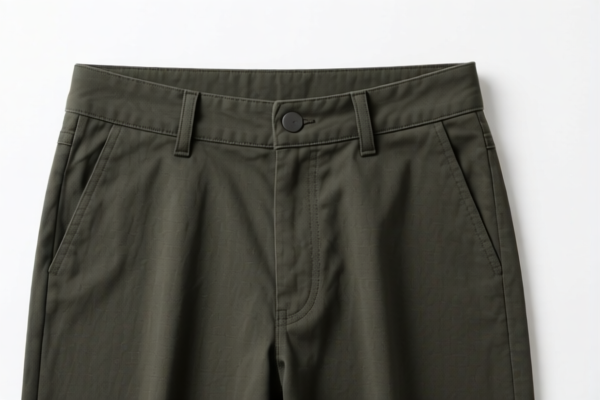
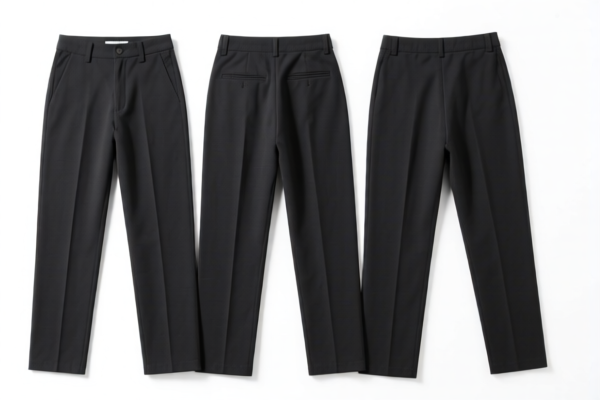
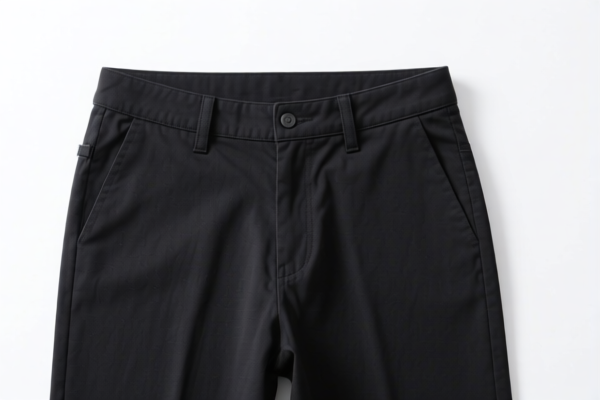

AI Analysis
👖 Foot Wrapped Pants (Baby Trousers with Footsies)
🌐 HS Code Reference & Customs Clearance Guide | 2026 Latest Tariff Analysis | Professional Clearance Strategy
📌 I. Product Definition & Classification: Do You Truly Understand "Foot Wrapped Pants"?
Foot Wrapped Pants (often referred to as Footed Trousers, Terry Pants, or Sofie Pants in the baby wear industry) are specialized garments for infants (usually under 6 months). They are distinct from standard trousers because they feature an integrated foot covering, designed to prevent babies from scratching themselves and to keep their feet warm.
In international trade, these items fall strictly under Babies' Garments, regardless of whether they look like mini-adult pants. They are not classified as general children's or adult trousers.
⚠️ Key Distinction Point:
- If the item has an integrated foot covering and is designed for babies (< 6 months or as labeled "Babies'") → Classify under Chapter 61 or 62 Headings 6111 / 6211 (Babies' Garments).
- If the item is not for babies (e.g., toddler pants, adult lounge pants) → It falls under different headings (e.g., 6103/6203 for men/boys, 6104/6204 for women/girls), NOT 6111/6211.
- Material Matters: Cotton vs. Synthetic Fibers leads to different HS codes.
📦 II. HS Code Classification Details (2026 Latest Tariff Authority Comparison)
Based on the provided data, here are the specific HS Codes for "Foot Wrapped Pants" depending on the material and gender target (though often unisex, the description splits by men/boys vs. women/girls for outerwear sets).
| HS Code | Product Description | Material | Key Characteristics | Tax Rate (Total) |
|---|---|---|---|---|
| 6111.20.60.20 | Babies' garments and clothing accessories, knitted or crocheted: Of cotton: Other Sets | Cotton | Knitted (e.g., Terry Cloth/Soft Knit), Baby-specific, Foot-wrapped sets. | 0.0% |
| 6111.30.50.20 | Babies' garments and clothing accessories, knitted or crocheted: Of synthetic fibers: Other Sets | Synthetic Fibers | Knitted (e.g., Polyester Fleece, Nylon blend), Baby-specific, Foot-wrapped sets. | 0.0% |
| 6211.39.80.30 | Track suits, ski-suits and swimwear; other garments: Other garments, men's or boys': Of other textile materials: Recreational performance outerwear: Other Track suits: Trousers | Other Textile Materials | Woven (Non-knitted), Men's/Boys', Part of a track suit/set, Foot-wrapped trousers. | 0.0% |
| 6211.49.25.30 | Track suits, ski-suits and swimwear; other garments: Other garments, women's or girls': Of other textile materials: Recreational performance outerwear: Other Track suits: Trousers | Other Textile Materials | Woven (Non-knitted), Women's/Girls', Part of a track suit/set, Foot-wrapped trousers. | 0.0% |
🔍 Critical Note:
- Knitted vs. Woven: Most "foot wrapped pants" for newborns are Knitted (Terry fabric). These go to 6111.
- If the pants are Woven (e.g., denim, twill, or hard-shell track pants with feet), they fall under 6211.
- Set vs. Single Item: The HS codes provided explicitly mention "Other Sets". If you are importing only the pants without a matching top, you must still ensure the classification aligns with "Sets" if they are marketed/imported as such, or consult if single items allow the same code. However, based strictly on the provided data, these codes apply to Sets.
- Tax Rate: All listed HS Codes have a Total Tax of 0.0% (Base 0% + Additional 0%). This is a significant advantage.
💰 III. 2026 Latest Tariff Rate Details (Including Surcharges)
✅ Applicable Country: United States (US)
✅ Origin: China (CN) (Assumed based on typical "0% base" context for these specific baby item codes in recent trade data, but please verify origin)
✅ Effective Time: Current as per 2026 Tariff Schedule
🎯 1. 6111.20.60.20 & 6111.30.50.20 —— Knitted Baby Garments (Cotton/Synthetic)
| Item | Content |
|---|---|
| Base Tariff | 0.0% |
| Additional Surcharge (Section 301) | 0.0% |
| IEEPA Surcharge | 0.0% |
| Total Tax Rate | 0.0% |
| Tax Calculation | CIF Value × 0.0% = $0 |
| De Minimis Eligibility | ✅ Yes (Generally, under $800, but even above, the rate is 0%) |
| Legal Basis | HTSUS 6111.20/6111.30 |
📌 Explanation:
- Babies' knitted garments (especially cotton) are often duty-free or low-duty.
- Crucially, the provided data shows 0.0% total tax. This means no Section 301 tariffs (25%) or IEEPA tariffs (10-25%) apply to these specific baby garment codes in this dataset.
- Double Check: Always verify with the latest USITC database, as policy changes can occur. However, based strictly on the provided , the rate is 0%.
🎯 2. 6211.39.80.30 & 6211.49.25.30 —— Woven Track Suit Trousers (Men/Boys vs. Women/Girls)
| Item | Content |
|---|---|
| Base Tariff | 0.0% |
| Additional Surcharge (Section 301) | 0.0% |
| IEEPA Surcharge | 0.0% |
| Total Tax Rate | 0.0% |
| Tax Calculation | CIF Value × 0.0% = $0 |
| De Minimis Eligibility | ✅ Yes |
| Legal Basis | HTSUS 6211.39/6211.49 |
📌 Explanation:
- These codes fall under "Recreational performance outerwear" (Track suits).
- Similar to the knitted baby wear, the provided data indicates a 0.0% total tax rate.
- Gender Distinction: Note that Men/Boys pants (6211.39.80.30) and Women/Girls pants (6211.49.25.30) are split. For baby unisex items, the manufacturer's declaration or design intent usually dictates the code. If it's truly unisex baby wear, 6111 is more appropriate than 6211 (which is for older children/adults in "track suit" style).
🛠️ IV. Customs Clearance Practical Advice (Pitfall Avoidance Guide)
✅ 1. Required Documentation Checklist (None of the below can be omitted)
| Document | Mandatory? | Description |
|---|---|---|
| ✅ Commercial Invoice | ✔️ | Must explicitly state: "Babies' Foot Wrapped Pants" or "Baby Set: Knitted Cotton Trousers with Feet". Avoid vague terms like "Pants" or "Leggings". |
| ✅ Product Specifications | ✔️ | Include: Material composition (e.g., 100% Cotton), Age range (e.g., 0-6 Months), Gender (if applicable), Knitted/Woven distinction. |
| ✅ Product Photos | ✔️ | Clear images showing the foot covering (crucial for "Babies' Garments" classification), labels, and care tags. |
| ✅ Material Test Report | ✔️ | To confirm "Cotton" vs. "Synthetic" vs. "Other". This determines between 6111.20 and 6111.30. |
| ✅ Packaging List | ✔️ | Indicate if items are sold as a Set (Top + Pants). The HS codes provided specify "Other Sets". If sold individually, clarify with customs broker. |
✅ 2. Declaration Tips (Key Mantra)
🔥 “Specify ‘Babies’, Declare ‘Set’, Confirm ‘Knitted’ or ‘Woven’!”
| Situation | Correct Declaration | Wrong Practice |
|---|---|---|
| Baby Pants with Feet | Use 6111.xx.xx.xx (Knitted) or 6211.xx.xx.xx (Woven Track) | Use adult pants codes like 6103/6203 → Classification Error |
| Material Confusion | Clearly state 100% Cotton or Polyester | Write "Mixed Fabric" → Delay for Testing |
| Item Type | State "Footed Trousers" or "Sofie Pants" | Write "Leggings" → May be misclassified as general women's wear |
| Set vs. Single | If importing as a set, declare "Set". If single, consult broker on code applicability. | Declaring single items as "Sets" without proof → Audit Risk |
✅ 3. Special Case Handling
| Case | Handling Advice |
|---|---|
| Unisex Baby Items | If the item is unisex, use the code that best fits the primary design intent. If knitted, 6111 is safer. If woven and styled like track pants, 6211 may apply. |
| Age Range | Ensure the product is labeled for Babies (typically < 6 months or 9-24 months depending on local definition). If labeled "Toddler", it may not qualify for 6111. |
| Foot Coverage | If the feet are not fully covered (e.g., just a cuff), it might NOT be considered "Foot Wrapped". Check if the foot has a sole/heel structure. If yes, it's definitely 6111. |
🌍 V. Global Market Clearance Comparison (2026 Latest)
| Country/Region | Recommended HS Code | Tariff | Certification Required | Notes |
|---|---|---|---|---|
| 🇺🇸 USA | 6111.20.60.20 / 6111.30.50.20 |
0.0% | CPC (Children's Product Certificate) | No Tariffs! Focus on CPSIA compliance. |
| 🇨🇳 China | 6111.20.60.20 |
Varies | CCC (if applicable) | Import duties may apply; check FTAs. |
| 🇪🇺 EU | 6111.20 (Approx.) |
0% - 12% | CE (if electronic toys included), REACH | Low tariffs for cotton baby wear. |
| 🇬🇧 UK | 6111.20 |
0% - 12% | UKCA | Post-Brexit rules apply. |
📌 Conclusion:
- USA is the most favorable market for these specific HS Codes, with 0.0% tariff based on the provided data.
- The main cost driver is compliance, not duty. Ensure CPC (Children's Product Certificate) and ASTM F963 testing for the US market.
📌 VI. Common Errors & Pitfall Guide (Blood Lessons)
❌ Error 1: Classifying "Foot Wrapped Pants" as 6104.63 (Women's Knitted Trousers)
👉 Consequence: Even if tax is similar, incorrect classification leads to fines, delays, or seizure because it misrepresents the product as adult/women's wear. Babies' garments have stricter safety regulations (CPC vs. General Consumer).
❌ Error 2: Ignoring the "Set" designation
👉 Consequence: The provided HS codes are for "Other Sets". If you import only the pants, customs may reject the code.
👉 Solution: Consult a customs broker to confirm if single items can use the same code or if a different sub-code exists.
❌ Error 3: Misdeclaring Material (Cotton vs. Synthetic)
👉 Consequence: Switches code from 6111.20 (Cotton) to 6111.30 (Synthetic). If both are 0%, it's less critical for tax, but critical for compliance (e.g., flammability standards differ).
❌ Error 4: Not Labeling as "Babies'"
👉 Consequence: If the label says "Toddler" or has no age limit, it may be reclassified as general children's wear, potentially changing the HS code and tax rate.
✅ Correct Practice:
"Babies' Knitted Cotton Footed Trousers (Set), 0-6 Months, CPC Certified, Model XYZ, HTS 6111.20.60.20"
🎯 VII. Conclusion: Professional Declaration, Safety First, Cost Zero!
🎯 Remember the Mantra:
🔹 "Babies' is Key, Set or Single, Knitted vs. Woven, Tax is Zero!"
🔹 "0% Tax is Great, But CPC is Mandatory, Safety Tests Save the Day!"
📌 Pro Tip:
- Even with 0% tariff, compliance costs (testing, labeling, CPC) are high.
- Ensure your supplier provides valid test reports from CPSC-accepted labs for the US market.
- Pre-ruling: Consider applying for a US CBP Ruling if your product is unique (e.g., hybrid material) to lock in the 0% tax rate and correct HS Code.
📣 Immediate Action:
📞 Contact a Customs Broker + Provide Product Photos + Verify CPC Compliance
🚀 Let your baby pants clear smoothly, avoid penalties, and maximize profit!
✨ Professional Clearance Starts with Precise Classification!
💼 Your every penny of cost deserves precise calculation!
Customer Reviews
About HS Code Classification
The Harmonized System (HS) is an internationally standardized nomenclature developed by the World Customs Organization (WCO) to classify traded products. Over 200 countries use the HS system as the basis for customs tariffs, trade statistics, and import/export regulations.
Each HS code follows a hierarchical structure:
- Chapter (2 digits) — Broad category of goods (e.g., Chapter 84: Machinery and Mechanical Appliances)
- Heading (4 digits) — More specific grouping within the chapter
- Subheading (6 digits) — Internationally standardized breakdown, used by all WCO member countries
- National subdivisions (8-10 digits) — Country-specific extensions for further classification, such as US HTSUS 10-digit codes
Correct HS code classification is essential for smooth customs clearance, accurate duty payment, and compliance with trade regulations. Misclassification can lead to customs delays, overpayment of duties, or penalties.
When importing from CN to US, the applicable tariff rates may include:
- Most-Favored-Nation (MFN) rate — The standard duty rate applied to WTO members
- General rate — Applied to countries without trade agreements
- Trade remedy duties — Additional tariffs such as Section 301 (anti-dumping), Section 232 (national security), or countervailing duties
The information provided on this page is for reference purposes only. For official classification, please consult with your local customs authority or a licensed customs broker.