Football Socks (Adult Black)
CN → US| HS Code | Tariff Rate | Origin | Destination | Doc |
|---|---|---|---|---|
| 6115969020 | 24.6% | CN | US | Official Doc |
| 6115309010 | 32.1% | CN | US | Official Doc |
| 6115969020 | 24.6% | CN | US | Official Doc |
| 6115309010 | 32.1% | CN | US | Official Doc |
| 6115969020 | 24.6% | CN | US | Official Doc |
Product Images


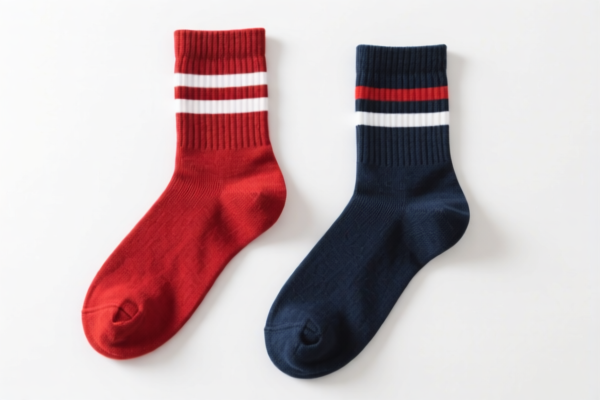
AI Analysis
🧦 Football Socks (Adult Black) – The Ultimate Clearance & Tariff Guide for 2026
🌐 HS Code Reference & Customs Clearance Guide | 2026 Latest Tariff Full Analysis | Professional-Level Clearance Strategy
📌 I. Product Definition & Classification: Do You Really Understand "Football Socks"?
Football socks are essential protective gear for athletes, designed to cover the shin guards and provide cushioning, compression, and moisture management. In international trade, their classification hinges on material composition and knitting method.
Key Distinction Points: - Material: The HS Code varies significantly between Synthetic Fibers (e.g., Polyester, Nylon) and Cotton or Wool. - Construction: Whether they are knitted (most common) or crocheted affects the chapter, though most sports socks fall under Chapter 61. - Target Group: "Adult" implies they are not for infants/children, which can affect sub-heading selection.
⚠️ Critical Warning:
- If made primarily of Synthetic Fibers (e.g., Polyester) → Likely 6115.96.90.20
- If made primarily of Cotton or Other Textile Materials → Likely 6115.30.90.10
- Misclassification leads to severe tariff penalties due to Section 301 and IEEPA surcharges.
📦 II. HS Code Classification Details (2026 Latest Tariff Authority Comparison)
| HS Code | Product Description | Applicable Scenario | Material Inference |
|---|---|---|---|
6115.96.90.20 |
Other knitted socks, with synthetic fiber material | Primary Recommendation: High-performance synthetic football socks | ✅ Synthetic Fibers |
6115.30.90.10 |
Other knitted socks, not of synthetic fibers or cotton | Alternative: Cotton blends or other textile materials | ❌ Not Synthetic |
🔍 Focus Reminder:
- 6115.96.90.20: Matches the morphology and use of football socks, inferring material as synthetic fibers, fitting the non-wool classification. Total Tax: 24.6%
- 6115.30.90.10: Classified as socks, inferring material as synthetic fibers or cotton, fitting general sock classification logic. Total Tax: 32.1%
- Note: The data provided indicates repeated recommendations for6115.96.90.20(Synthetic) and6115.30.90.10(Non-Synthetic/Cotton). Choose based on actual material composition.
💰 III. 2026 Latest Tariff Rate Details (Including Additional Taxes, Policy Add-ons)
✅ Applicable Country: United States (US)
✅ Origin: China (CN)
✅ Effective Time: Current rates apply (including subsequent imports)
🎯 1. 6115.96.90.20 —— Knitted Socks, Synthetic Fiber Material (Recommended for Most Football Socks)
| Item | Detail |
|---|---|
| Base Tariff | 14.6% |
| Section 301 Tariff | 0.0% |
| Section 122 Tariff | 10.0% |
| Total Tax Rate | 24.6% |
| Tax Calculation | CIF Value × 24.6% |
| De Minimis Exemption | ❌ Not Applicable (High tax rate excludes small package exemption) |
| Legal Basis Path | Base: 14.6% → Section 122: 10% → Total: 24.6% |
📌 Explanation:
- Base Tariff (14.6%): Standard MFN rate for knitted socks of synthetic fibers.
- Section 122 Tariff (10%): Applied to certain textile/apparel products from China.
- Section 301 Tariff (0.0%): No additional 25% tariff applies to this specific sub-heading for socks, making it significantly cheaper than other textile categories.
- Total: 24.6% is a moderate rate compared to the alternative.
🎯 2. 6115.30.90.10 —— Knitted Socks, Other Textile Materials (e.g., Cotton Blends)
| Item | Detail |
|---|---|
| Base Tariff | 14.6% |
| Section 301 Tariff | 7.5% |
| Section 122 Tariff | 10.0% |
| Total Tax Rate | 32.1% |
| Tax Calculation | CIF Value × 32.1% |
| De Minimis Exemption | ❌ Not Applicable |
| Legal Basis Path | Base: 14.6% → Section 301: 7.5% → Section 122: 10% → Total: 32.1% |
📌 Warning:
- Section 301 Tariff (7.5%): Applies to this category, adding significant cost.
- Section 122 Tariff (10%): Also applies.
- Total: 32.1% is higher than the synthetic fiber option by 7.5 percentage points.
- Morphology: Fits the sock classification logic, inferring material as synthetic fibers or cotton. However, the tax burden is heavier.
🛠️ IV. Customs Clearance Practical Advice (Battle-Tested Pitfall Avoidance)
✅ 1. Required Documentation Checklist (None Can Be Omitted)
| Document | Mandatory | Description |
|---|---|---|
| ✅ Product Specification Sheet | ✔️ | Must detail material composition (e.g., "80% Polyester, 15% Nylon, 5% Spandex"), length, and thickness. |
| ✅ Material Test Report | ✔️ | Third-party lab report confirming fiber content. Critical for correct HS Code (Synthetic vs. Cotton). |
| ✅ Product Photos (Clear) | ✔️ | Show sock shape, logo, size label, and any shin-guard pockets. |
| ✅ Commercial Invoice | ✔️ | Clearly state "Football Socks, Adult, Black, Knitted, Synthetic Fiber." |
| ✅ Packing List | ✔️ | Specify quantity per carton, gross/net weight. |
| ✅ Origin Certificate (CO) | ✔️ | Proves origin as China. If origin is Vietnam/Mexico, different rules may apply. |
✅ 2. Declaration Tips (Key Mnemonic)
🔥 “Material Defines Code, Synthetic Saves 7.5%, Cotton Costs Extra!”
| Scenario | Correct Declaration | Wrong Practice |
|---|---|---|
| Polyester/Nylon Football Socks | 6115.96.90.20 (14.6% Base + 10% S122 = 24.6%) |
Misdeclare as Cotton → 6115.30.90.10 → 32.1% |
| Cotton Blend Socks | 6115.30.90.10 (14.6% Base + 7.5% S301 + 10% S122 = 32.1%) |
Misdeclare as Synthetic → Penalty + Back Tax |
| Mixed Materials | Declare by primary material (by weight) | Ambiguous description → Customs Inspection Delay |
| Samples | Still subject to tax (No De Minimis) | Assume free entry → Confiscation |
✅ 3. Special Circumstances Handling
| Situation | Handling Advice |
|---|---|
| OEM Custom Socks | Provide customer PO and design specs. Ensure material % matches invoice. |
| High-Compression Socks | Still classified as socks. Focus on material (Synthetic/Cotton) for HS Code. |
| With Shin Guards | Declare separately. Socks as 6115.96.90.20, Shin Guards as protective gear (different HS). |
| Non-Standard Shapes | If not clearly "socks," may be classified under "Other Made-Up Knitted Articles" → Higher Tax. |
🌍 V. Global Market Clearance Comparison (2026 Latest)
| Country/Region | Recommended HS Code | Tariff (China Origin) | Certification Requirements | Notes |
|---|---|---|---|---|
| 🇺🇸 USA | 6115.96.90.20 |
24.6% (Synthetic) | None Specific | Lowest tax among options. Avoid 6115.30.90.10 if possible. |
| 🇨🇳 China | 6115.96.90.20 |
~7-13% (Import) | None | Domestic sales vary. |
| 🇪🇺 EU | 6115.96.90.20 |
12% (Standard) | REACH, OEKO-TEX | No Section 301/122. |
| 🇬🇧 UK | 6115.96.90.20 |
12% (Standard) | UKCA, REACH | Post-Brexit rules apply. |
| 🇦🇺 Australia | 6115.96.90.20 |
5% | ACCC | Low tariff, no surcharges. |
📌 Conclusion:
- USA is the most complex market due to Section 122 (10%) and potential Section 301 (7.5%) on cotton blends.
- Synthetic Fiber Socks (6115.96.90.20) are the preferred choice for US importers to minimize tax burden (24.6% vs. 32.1%).
- Avoid Cotton/Non-Synthetic if possible to save 7.5% in tariffs.
📌 VI. Common Errors & Pitfall Avoidance (Lessons Learned)
❌ Error 1: Misidentifying Material as "Cotton" when it is "Polyester"
👉 Consequence: Classify under 6115.30.90.10 → Pay 32.1% instead of 24.6% → Overpay 7.5%.
❌ Error 2: Declaring "Sports Socks" vaguely without material detail
👉 Consequence: Customs may downgrade to highest tax bracket or request manual review → Delay + Storage Fees.
❌ Error 3: Assuming De Minimis (Section 321) applies
👉 Consequence: Textiles from China are excluded from De Minimis exemptions → Full Tax Applies even on small parcels.
❌ Error 4: Using "Socks" for non-knitted items (e.g., woven compression sleeves)
👉 Consequence: Incorrect HS Code → Penalty + Re-classification fees.
✅ Correct Practice:
"Adult Football Socks, Knitted, Synthetic Fiber (Polyester/Nylon), Black, Size L, HS Code 6115.96.90.20"
🎯 VII. Conclusion: Precise Classification Saves Money!
🎯 Key Takeaways:
🔹 "Synthetic is Cheaper in the US: 24.6% vs. 32.1%."
🔹 "Material Test Report is Mandatory."
🔹 "No De Minimis for Textiles from China."
🔹 "Section 122 (10%) Applies to Both, but Section 301 (7.5%) Only to Cotton/Non-Synthetic."
📌 Pro Tip:
- If your supplier claims "Cotton," demand a lab test. If it's actually synthetic, declare as 6115.96.90.20.
- If it's truly cotton, consider sourcing from Vietnam or Thailand to avoid Section 301 and 122 surcharges (check current FTA status).
- Apply for Advance Ruling if shipping large volumes to lock in the 24.6% rate.
📣 Immediate Action:
📞 Verify Material Composition → 📄 Prepare Test Report → 📦 Declare
6115.96.90.20if Synthetic → 💰 Save 7.5% Tax!
🚀 Clear Customs Smoothly, Boost Profit Margins!
✨ Professional Clearance Starts with Accurate Classification!
💼 Every Percent of Tax Saved is Pure Profit!
Customer Reviews
About HS Code Classification
The Harmonized System (HS) is an internationally standardized nomenclature developed by the World Customs Organization (WCO) to classify traded products. Over 200 countries use the HS system as the basis for customs tariffs, trade statistics, and import/export regulations.
Each HS code follows a hierarchical structure:
- Chapter (2 digits) — Broad category of goods (e.g., Chapter 84: Machinery and Mechanical Appliances)
- Heading (4 digits) — More specific grouping within the chapter
- Subheading (6 digits) — Internationally standardized breakdown, used by all WCO member countries
- National subdivisions (8-10 digits) — Country-specific extensions for further classification, such as US HTSUS 10-digit codes
Correct HS code classification is essential for smooth customs clearance, accurate duty payment, and compliance with trade regulations. Misclassification can lead to customs delays, overpayment of duties, or penalties.
When importing from CN to US, the applicable tariff rates may include:
- Most-Favored-Nation (MFN) rate — The standard duty rate applied to WTO members
- General rate — Applied to countries without trade agreements
- Trade remedy duties — Additional tariffs such as Section 301 (anti-dumping), Section 232 (national security), or countervailing duties
The information provided on this page is for reference purposes only. For official classification, please consult with your local customs authority or a licensed customs broker.