Football Training Mat
CN → US| HS Code | Tariff Rate | Origin | Destination | Doc |
|---|---|---|---|---|
| 6307909891 | 24.5% | CN | US | Official Doc |
| 3921190090 | 41.5% | CN | US | Official Doc |
| 3921110000 | 40.3% | CN | US | Official Doc |
| 5703210090 | 41.7% | CN | US | Official Doc |
| 5703310030 | 41.0% | CN | US | Official Doc |
Product Images
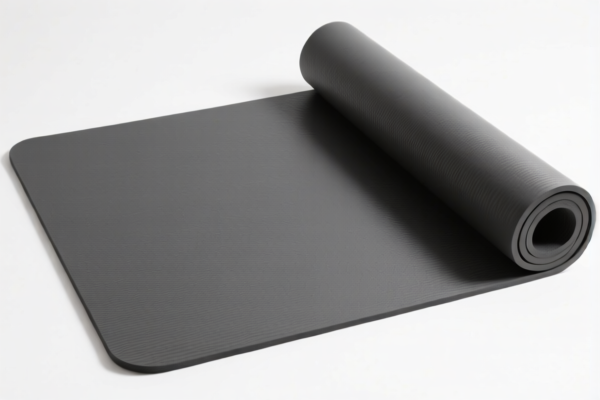

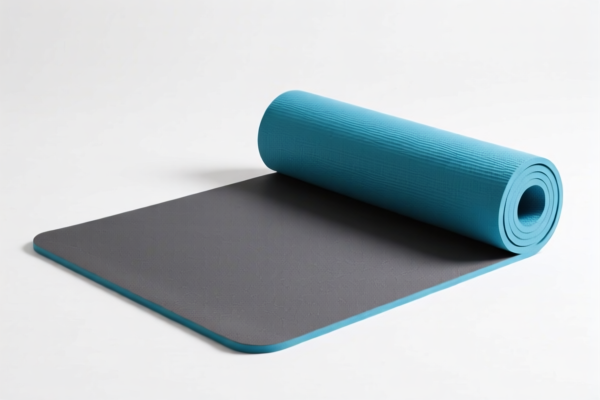

AI Analysis
🦵 Football Training Mat (Soccer Turf Mats)
🌐 HS Code Reference & Customs Clearance Guide | 2026 Latest Tariff Analysis | Professional Clearance Strategy
📌 1. Product Definition & Classification: What Exactly Is a "Football Training Mat"?
A Football Training Mat is a specialized ground cover used for soccer practice. In international trade, it is classified based on its material composition and physical structure. The classification significantly impacts the total tax liability due to varying tariff rates for plastics, textiles, and other materials.
There are four primary classification paths for these mats, depending on the specific manufacturing material (EVA/PE foam, synthetic grass, or other composites).
📦 2. HS Code Classification Details (2026 Latest Tariff Authority Comparison)
| HS Code | Product Description | Key Characteristics | Material Type |
|---|---|---|---|
| 6307.90.98.91 | Other made-up articles | Generic finished goods; broad catch-all for non-specific material classifications. | Synthetic Fibers / Plastic (General) |
| 3921.19.00.90 | Other plates, sheets, film, foil, and strip (of plastics) | Specifically for Plastic Foam mats (e.g., EVA or PE foam mats). | Plastic (EVA/PE) |
| 3921.11.00.00 | Other plates, sheets, film, foil, and strip (of plastics) | Other plastic plates/sheets; a "catch-all" for non-foam plastic mats. | Plastic (General) |
| 5703.21.00.90 | Carpets and other textile floor coverings, tufted | Specifically for Synthetic Turf/Grass mats made of Nylon/Polyamide. | Textile (Nylon/Polyamide) |
| 5703.31.00.30 | Carpets and other textile floor coverings, tufted | Artificial grass/category; textile material with tufted ground covering features. | Textile (Artificial) |
🔍 Critical Distinction:
- If the mat is a solid foam block (soft, sponge-like), it falls under Chapter 39 (Plastics).
- If the mat mimics grass blades (tufted surface), it falls under Chapter 57 (Textile Carpets).
- If the material is unclear or a complex composite, Chapter 63 (Other Made-up Articles) may apply as a fallback, but often carries higher duties.
💰 3. 2026 Latest Tariff Rate Breakdown (Including Additional Taxes & Policy Levies)
✅ Applicable Country: United States (US)
✅ Origin: China (CN)
✅ Effective Date: Current policies (Section 301 & IEEPA)
🎯 1. 6307.90.98.91 —— Other Made-up Articles (General/Fallback)
| Item | Content |
|---|---|
| Base Tariff | 7.0% (ad valorem) |
| Section 301 Add-on | +7.5% |
| IEEPA (122 Clause) | +10% |
| Total Effective Rate | 24.5% |
| Tax Calculation | CIF Value × 24.5% |
| De Minimis Exemption | ❌ Not Eligible (Subject to strict scrutiny) |
| Legal Basis Path | Base: 6307.90.98.91 → Sec301: 7.5% → IEEPA: 10% |
📌 Explanation:
- This category is often used for complex composites or when the material is not strictly "foam" or "tufted textile."
- Warning: While the base rate is lower than plastics, the total 24.5% is still significant. Customs may challenge this if the material is clearly just foam or grass.
🎯 2. 3921.19.00.90 —— Plastic Foam Mats (EVA/PE)
| Item | Content |
|---|---|
| Base Tariff | 6.5% (ad valorem) |
| Section 301 Add-on | +25.0% |
| IEEPA (122 Clause) | +10% |
| Total Effective Rate | 41.5% |
| Tax Calculation | CIF Value × 41.5% |
| De Minimis Exemption | ❌ Not Eligible |
| Legal Basis Path | Base: 3921.19.00.90 → Sec301: 25.0% → IEEPA: 10% |
📌 Note:
- This is the standard classification for EVA (Ethylene-Vinyl Acetate) or PE foam mats. These are common in home gyms and beginner soccer drills.
- High Tax Warning: The 25% Section 301 tariff makes this category expensive. Ensure your product is genuinely foam and not tufted grass, as misclassification can lead to penalties.
🎯 3. 3921.11.00.00 —— Other Plastic Plates/Sheets
| Item | Content |
|---|---|
| Base Tariff | 5.3% (ad valorem) |
| Section 301 Add-on | +25.0% |
| IEEPA (122 Clause) | +10% |
| Total Effective Rate | 40.3% |
| Tax Calculation | CIF Value × 40.3% |
| De Minimis Exemption | ❌ Not Eligible |
| Legal Basis Path | Base: 3921.11.00.00 → Sec301: 25.0% → IEEPA: 10% |
📌 Note:
- This code applies to non-foam plastic mats (e.g., solid rubber-like plastic sheets).
- Slightly cheaper than foam mats (40.3% vs 41.5%), but still subject to heavy tariffs.
🎯 4. 5703.21.00.90 —— Tufted Synthetic Turf (Nylon/Polyamide)
| Item | Content |
|---|---|
| Base Tariff | 6.7% (ad valorem) |
| Section 301 Add-on | +25.0% |
| IEEPA (122 Clause) | +10% |
| Total Effective Rate | 41.7% |
| Tax Calculation | CIF Value × 41.7% |
| De Minimis Exemption | ❌ Not Eligible |
| Legal Basis Path | Base: 5703.21.00.90 → Sec301: 25.0% → IEEPA: 10% |
📌 Note:
- Applies to Nylon or Polyamide synthetic grass mats.
- Highest Base Rate: 6.7% is the highest base rate among the options, leading to the highest total tax (41.7%).
🎯 5. 5703.31.00.30 —— Tufted Artificial Grass (Textile)
| Item | Content |
|---|---|
| Base Tariff | 6.0% (ad valorem) |
| Section 301 Add-on | +25.0% |
| IEEPA (122 Clause) | +10% |
| Total Effective Rate | 41.0% |
| Tax Calculation | CIF Value × 41.0% |
| De Minimis Exemption | ❌ Not Eligible |
| Legal Basis Path | Base: 5703.31.00.30 → Sec301: 25.0% → IEEPA: 10% |
📌 Note:
- The most common classification for professional-grade artificial soccer turf.
- Lowest Base Rate: 6.0% is the lowest base rate, resulting in a slightly lower total tax (41.0%) compared to nylon or foam mats.
- Optimization Tip: If your mat is tufted grass, ensure it is classified here rather than under Chapter 39 or 63 to avoid higher taxes or misclassification fines.
🛠️ 4. Customs Clearance Operational Advice (Practical Pitfall Guide)
✅ 1. Mandatory Documentation Checklist (No Exceptions)
| Document | Required? | Purpose |
|---|---|---|
| ✅ Product Specification Sheet | ✔️ | Must detail: Material (EVA vs. Nylon vs. PE), Thickness, Dimensions, Weight. |
| ✅ Material Composition Proof | ✔️ | Lab test report or supplier declaration stating exact % of plastic vs. textile. |
| ✅ High-Resolution Photos | ✔️ | Close-up of surface (showing tufts vs. smooth foam) and cross-section. |
| ✅ Commercial Invoice | ✔️ | Must explicitly state: "Football Training Mat" and HS Code. |
| ✅ Packing List | ✔️ | Net/Gross weight, package dimensions. |
| ✅ Certificate of Origin (CO) | ✔️ | Proof of China origin triggers the +25% +10% tariffs. |
✅ 2. Declaration Strategy (Key Mnemonic)
🔥 “Material Determines Code, Tufted is Textile, Foam is Plastic, Don’t Guess!”
| Scenario | Correct HS Code | Risk if Misclassified |
|---|---|---|
| Smooth, spongy EVA/PE foam | 3921.19.00.90 |
Declaring as "Grass" (5703) → High Audit Risk |
| Green, blade-like surface | 5703.31.00.30 |
Declaring as "Foam" (3921) → Penalty for incorrect material |
| Unclear Composite Material | 6307.90.98.91 |
Avoid unless necessary; higher scrutiny, no clear benefit. |
| Solid Plastic Sheet (No Foam/No Tufts) | 3921.11.00.00 |
Declaring as "Carpet" → Rejection |
✅ 3. Special Handling Cases
| Situation | Recommendation |
|---|---|
| Mixed Material Mats (e.g., Foam base + Grass top) | Best Practice: Classify based on the essential character (usually the top visible layer). If grass-like, use 5703. If not clearly defined, consult a broker; 6307 may be safer but costs time. |
| OEM Custom Colors/Logos | Provide design files. Ensure the description says "Custom Printed Artificial Turf Mat" to justify 5703 classification. |
| Small Samples (< $800) | Do Not Rely on De Minimis. Even small packages of Chinese goods are subject to Section 301/IEEPA scrutiny. Pre-apply for ruling. |
| Heavy Duty Industrial Mats | Ensure weight/size matches the "Floor Covering" definition in Ch. 57. If too thick/rigid, Customs may classify as 3921 (Plastic). |
🌍 5. Global Market Comparison (2026 Update)
| Country/Region | Recommended HS Code | Estimated Total Duty (China Origin) | Key Certification |
|---|---|---|---|
| 🇺🇸 USA | 5703.31.00.30 (Grass) or 3921.19.00.90 (Foam) |
41.0% - 41.7% | FTC Labeling, CPSIA (if for kids) |
| 🇨🇳 China | 5703.31.00.30 |
~6.0% (Base) | GB Standards |
| 🇪🇺 EU | 5703.39.00 |
0% - 4% (Check CE) | REACH, EN15312 (Safety) |
| 🇬🇧 UK | 5703.39.00 |
0% - 4% | UKCA |
📌 Conclusion:
- USA is the most expensive market due to the 25% Section 301 and 10% IEEPA tariffs.
- EU/UK are much more favorable for textile-based mats (5703).
- If targeting the US, accurate classification is critical to avoid unexpected costs.
📌 6. Common Errors & Pitfalls (Lessons Learned)
❌ Error 1: Declaring a Tufted Grass Mat as 3921 (Plastic Foam).
👉 Consequence: Customs may reject the declaration for incorrect material description. If caught later, you face back taxes + penalties.
❌ Error 2: Declaring a Foam Mat as 5703 (Textile).
👉 Consequence: High audit rate. Customs will request material proof. If you cannot prove it is textile, you will be forced to reclassify and pay duties.
❌ Error 3: Ignoring the 122 Clause (IEEPA) 10%.
👉 Consequence: Many traders only account for Section 301 (25%). Forgetting the 10% IEEPA leads to underpayment of 10% of CIF value.
❌ Error 4: Using generic names like "Sports Mat" or "Gym Pad."
👉 Consequence: Vague descriptions trigger manual examination and delays.
✅ Correct Approach:
"Artificial Grass Football Training Mat, Tufted, Nylon/Polyester, Size 4x4m, Model ABC, Made in China"
🎯 7. Conclusion: Professional Clearance, Cost Efficiency!
🎯 Remember the Rules:
🔹 “Tufted = Textile (5703), Foam = Plastic (3921), Complex = Others (6307).”
🔹 “USA Tax = Base + 25% (Sec301) + 10% (IEEPA).”
🔹 “Never guess the material. Prove it.”
📌 Pro Tip:
If your product is originating from Vietnam, Malaysia, or Thailand, you may be exempt from US Section 301/IEEPA tariffs.
For Chinese goods, Apply for an Advance Ruling from CBP to confirm the HS Code before shipment to avoid customs holds.
📣 Immediate Action:
📞 Contact your customs broker with photos and material specs.
🚀 Secure the right HS Code now, save thousands in duties later!
✨ Professional Customs Clearance Starts with Accurate Classification!
💼 Every dollar of duty saved is pure profit!
Customer Reviews
About HS Code Classification
The Harmonized System (HS) is an internationally standardized nomenclature developed by the World Customs Organization (WCO) to classify traded products. Over 200 countries use the HS system as the basis for customs tariffs, trade statistics, and import/export regulations.
Each HS code follows a hierarchical structure:
- Chapter (2 digits) — Broad category of goods (e.g., Chapter 84: Machinery and Mechanical Appliances)
- Heading (4 digits) — More specific grouping within the chapter
- Subheading (6 digits) — Internationally standardized breakdown, used by all WCO member countries
- National subdivisions (8-10 digits) — Country-specific extensions for further classification, such as US HTSUS 10-digit codes
Correct HS code classification is essential for smooth customs clearance, accurate duty payment, and compliance with trade regulations. Misclassification can lead to customs delays, overpayment of duties, or penalties.
When importing from CN to US, the applicable tariff rates may include:
- Most-Favored-Nation (MFN) rate — The standard duty rate applied to WTO members
- General rate — Applied to countries without trade agreements
- Trade remedy duties — Additional tariffs such as Section 301 (anti-dumping), Section 232 (national security), or countervailing duties
The information provided on this page is for reference purposes only. For official classification, please consult with your local customs authority or a licensed customs broker.