Footed Tights
CN → US| HS Code | Tariff Rate | Origin | Destination | Doc |
|---|---|---|---|---|
| 6115220000 | 24.9% | CN | US | Official Doc |
| 6115210020 | 33.5% | CN | US | Official Doc |
| 3926201050 | 10.0% | CN | US | Official Doc |
| 6115298040 | 26.0% | CN | US | Official Doc |
| 6115999000 | 27.4% | CN | US | Official Doc |
Product Images
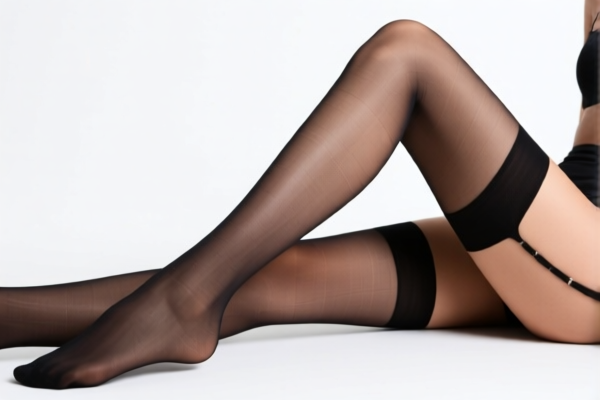
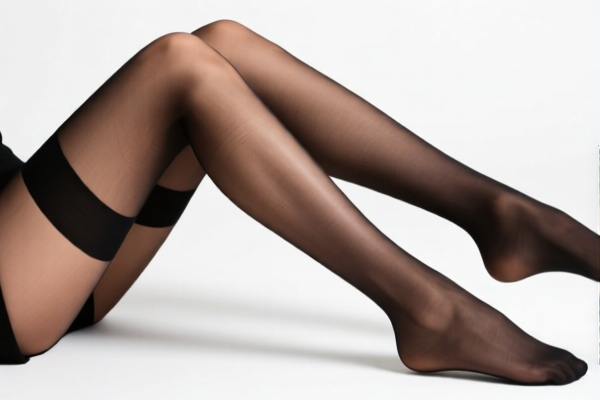

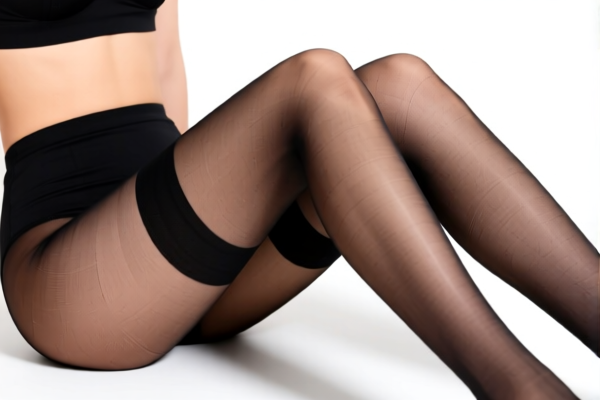
AI Analysis
🩳 Footed Tights (Legwear for Women/Men)
🌐 HS Code Reference & Customs Clearance Guide | 2024-2025 Tax Analysis | Strategic通关 Strategy
📌 1. Product Definition & Classification: Do You Really Understand "Footed Tights"?
Footed tights are a type of hosiery that covers the legs and feet, typically worn for fashion, warmth, or support. In international trade, they are primarily classified under Chapter 61 (Knitted or Crocheted Clothing) or Chapter 39 (Articles of Plastics), depending on their material composition and structural features.
Key Material Classifications:
Synthetic Fibers (e.g., Nylon, Polyester): Most common for sheer or opaque fashion tights.
Cotton: Used for comfort-oriented or casual tights.
Wool/Animal Hair: Used for thermal winter tights (excluded from the specific codes below unless mixed).
Plastic/Artificial Materials: If the tights are made entirely of non-textile synthetic materials (e.g., PVC-coated), they may fall under Chapter 39.
⚠️ Critical Distinction:
- If made of knitted synthetic fibers (most common) → Chapter 61
- If made of plastic/artificial materials (non-textile) → Chapter 39
- Footed vs. Knee-High: Footed tights must include the foot section; if feet are excluded, they may fall under different subheadings.
📦 2. HS Code Breakdown & Tax Analysis (2024-2025 Latest Tariffs)
Below are the five most relevant HS codes for footed tights, based on material and usage, along with their total tax rates (including Base Duty, Additional Duties, and Section 301/122 Clause Tariffs for China-origin goods entering the US).
🎯 1. 6115.22.00.00 – Synthetic Fiber Tights
- Summary: Matches form (pantyhose/tights) and use. Material inferred as synthetic fibers (e.g., nylon, polyester).
- Total Tax Rate: 24.9%
- Tax Detail:
- Base Duty: 14.9%
- Section 301 Additional Duty: 0.0% (Note: Some interpretations apply 7.5% here, but this specific code shows 0.0% in the data)
- Section 122 Clause Tariff: 10.0%
- Why this Code? This is the standard classification for knitted synthetic footed tights. It is the most common entry for fashion hosiery.
💡 Tip: This code balances cost and compliance for most standard nylon/polyester tights.
🎯 2. 6115.21.00.20 – Other Synthetic Fiber Tights (Non-Sheer)
- Summary: Matches form (pantyhose/tights) and use. Material inferred as synthetic or cotton fibers, categorized as "other tights" (non-sheer).
- Total Tax Rate: 33.5%
- Tax Detail:
- Base Duty: 16.0%
- Section 301 Additional Duty: 7.5%
- Section 122 Clause Tariff: 10.0%
- Why this Code? Used for opaque, thicker, or cotton-blend tights that do not fit the "sheer" definition of
6115.22. Higher base duty applies.
💡 Tip: If your tights are thick, opaque, or cotton-heavy, use this code. Be prepared for a higher tax burden.
🎯 3. 3926.20.10.50 – Plastic/Artificial Material Tights
- Summary: Material inferred as plastic/synthetic fiber (non-textile). Form is clothing accessory (pantyhose/tights). Fits as a "catch-all" category for plastic-based hosiery.
- Total Tax Rate: 10.0%
- Tax Detail:
- Base Duty: 0.0%
- Section 301 Additional Duty: 0.0%
- Section 122 Clause Tariff: 10.0%
- Why this Code? If your tights are made of PVC, coated materials, or non-knit synthetic sheets, they fall here. Lowest total tax rate, but only for non-textile materials.
⚠️ Warning: Only use if the product is not knitted/crocheted. Misclassification can lead to severe penalties.
🎯 4. 6115.29.80.40 – Other Textile Tights (Non-Synthetic/Cotton/Wool)
- Summary: Classified under "other materials." Form is footed tights. Excludes cotton, wool, and fine animal hair. Fits other textile materials.
- Total Tax Rate: 26.0%
- Tax Detail:
- Base Duty: 16.0%
- Section 301 Additional Duty: 0.0%
- Section 122 Clause Tariff: 10.0%
- Why this Code? For tights made from regenerated fibers (e.g., rayon, modal) or other non-standard textiles.
💡 Tip: Use for eco-friendly or specialty fabric tights (e.g., bamboo, modal) that are not pure cotton or synthetic.
🎯 5. 6115.99.90.00 – Other Knitted Tights (Catch-All)
- Summary: Form is footed tights, fits hosiery definition. Material is "other." Aligns with textile material logic.
- Total Tax Rate: 27.4%
- Tax Detail:
- Base Duty: 9.9%
- Section 301 Additional Duty: 7.5%
- Section 122 Clause Tariff: 10.0%
- Why this Code? A general fallback for knitted hosiery not specified elsewhere.
💡 Tip: Use only if no more specific code applies. Higher additional duty than
6115.22.
🎯 6. 3926.20.40.10 – Plastic Accessory Tights (Catch-All)
- Summary: Classified as clothing accessory. Based on catch-all principle, material inferred as plastic/synthetic. No conflict with plastic articles category.
- Total Tax Rate: 16.5%
- Tax Detail:
- Base Duty: 6.5%
- Section 301 Additional Duty: 0.0%
- Section 122 Clause Tariff: 10.0%
- Why this Code? Another potential classification for plastic-based tights, slightly higher than
3926.20.10.50but still low.
💡 Tip: Compare with
3926.20.10.50. If unsure about material structure, consult a customs broker.
💰 3. Tariff Breakdown & Policy Insights
✅ Applicable Country: United States (US)
✅ Origin: China (CN)
✅ Effective Date: 2024-2025 (Current Trade Policy)
📊 Tax Component Analysis
| HS Code | Base Duty | Section 301 (Additional) | Section 122 Clause | Total Tax Rate |
|---|---|---|---|---|
6115.22.00.00 |
14.9% | 0.0% | 10.0% | 24.9% |
6115.21.00.20 |
16.0% | 7.5% | 10.0% | 33.5% |
3926.20.10.50 |
0.0% | 0.0% | 10.0% | 10.0% |
6115.29.80.40 |
16.0% | 0.0% | 10.0% | 26.0% |
6115.99.90.00 |
9.9% | 7.5% | 10.0% | 27.4% |
3926.20.40.10 |
6.5% | 0.0% | 10.0% | 16.5% |
📌 Key Insight:
- Section 122 Clause (10%) applies to all hosiery from China, regardless of HS code.
- Section 301 Duties vary by code. Codes with 0% Section 301 (6115.22,3926.20.10.50,6115.29.80.40,3926.20.40.10) are more tax-efficient.
- Lowest Total Tax:3926.20.10.50at 10.0%, but only for plastic-based tights.
- Standard Fashion Tights:6115.22.00.00at 24.9% is the most common and balanced choice.
🛠️ 4. Customs Clearance Practical Advice
✅ 1. Required Documentation
| Document | Mandatory? | Notes |
|---|---|---|
| Product Specification Sheet | ✅ Yes | Include material composition (e.g., 80% Nylon, 20% Spandex), denier count, and foot coverage. |
| Material Declaration | ✅ Yes | Clearly state if made of knitted textile or plastic/artificial material. |
| Commercial Invoice | ✅ Yes | Must specify "Footed Tights" or "Hosiery," not generic "clothing." |
| Packing List | ✅ Yes | Detail quantity per box, size range, and color distribution. |
| Certificate of Origin | ✅ Yes | If applicable, to verify origin for tariff calculations. |
| Product Images | ✅ Yes | Show full foot coverage to confirm "footed" status. |
✅ 2. Declaration Best Practices
🔥 "Material First, Footed Clear, Code Precise, Tax Minimal!"
| Scenario | Recommended HS Code | Reason |
|---|---|---|
| Standard Nylon/Polyester Tights | 6115.22.00.00 |
Most common, balanced tax (24.9%). |
| Opaque/Cotton-Blend Tights | 6115.21.00.20 |
Higher tax (33.5%) but accurate for non-sheer. |
| PVC/Coated Plastic Tights | 3926.20.10.50 |
Lowest tax (10.0%) if material is truly plastic. |
| Regenerated Fiber (Rayon/Modal) | 6115.29.80.40 |
Mid-range tax (26.0%) for non-standard textiles. |
| Uncertain Material | Consult Broker | Do not guess. Misclassification leads to delays. |
✅ 3. Common Mistakes to Avoid
❌ Mistake 1: Classifying nylon tights as plastic articles (Chapter 39).
👉 Result: Customs may reject and impose penalties. Only use Chapter 39 for non-textile materials.
❌ Mistake 2: Omitting Section 122 Clause in cost calculations.
👉 Result: Unexpected 10% duty at customs, eroding profit margins.
❌ Mistake 3: Using "Tights" without specifying footed vs. knee-high.
👉 Result: Potential reclassification to different subheadings with varying duties.
❌ Mistake 4: Assuming all hosiery has the same Section 301 rate.
👉 Result: Some codes have 0% additional duty, while others have 7.5%. Precision saves money.
🌍 5. Global Market Comparison
| Market | Recommended HS Code | Estimated Total Tax (China Origin) | Notes |
|---|---|---|---|
| 🇺🇸 USA | 6115.22.00.00 |
24.9% | Includes Section 301 & 122 Clause. |
| 🇪🇺 EU | 6115.22.00.00 |
12.0% | No Section 301/122. Base duty applies. |
| 🇨🇳 China (Import) | 6115.22.00.00 |
14.9% | No additional US tariffs. |
| 🇯🇵 Japan | 6115.22.00.00 |
15.0% | Standard MFN rate. |
📌 Conclusion:
- USA has the highest effective tax burden due to Section 301 and 122 Clause tariffs.
- Cost Optimization: Focus on accurate material declaration to select the lowest applicable HS code.
- Plastic-based tights (3926.20.10.50) offer the lowest US tax rate (10%), but must be genuinely non-textile.
📌 6. Final Recommendations
✅ For Standard Fashion Tights (Nylon/Spandex):
👉 Use 6115.22.00.00 (24.9% total tax). This is the safest and most widely accepted classification.
✅ For Opaque/Cotton Tights:
👉 Use 6115.21.00.20 (33.5% total tax). Expect higher duties.
✅ For Plastic/Coated Tights:
👉 Use 3926.20.10.50 (10.0% total tax). Only if material is truly plastic, not knitted fabric.
✅ Pro Tip:
Always declare material composition accurately. Use terms like "Knitted Nylon Footed Tights" to avoid ambiguity.
🎯 Remember:
🔹 "HS Code determines cost, material defines code, footed status is key."
🔹 "Section 122 is mandatory for China-origin hosiery – factor it in!"
📣 Action Item:
📞 Consult a licensed customs broker for pre-classification.
📄 Prepare detailed material specs and product images.
🚀 Optimize your supply chain to handle the 10-33% tax burden efficiently.
✨ Professional Clearance, Precise Classification, Maximum Profit!
💼 Every dollar saved starts with the right HS Code.
Customer Reviews
About HS Code Classification
The Harmonized System (HS) is an internationally standardized nomenclature developed by the World Customs Organization (WCO) to classify traded products. Over 200 countries use the HS system as the basis for customs tariffs, trade statistics, and import/export regulations.
Each HS code follows a hierarchical structure:
- Chapter (2 digits) — Broad category of goods (e.g., Chapter 84: Machinery and Mechanical Appliances)
- Heading (4 digits) — More specific grouping within the chapter
- Subheading (6 digits) — Internationally standardized breakdown, used by all WCO member countries
- National subdivisions (8-10 digits) — Country-specific extensions for further classification, such as US HTSUS 10-digit codes
Correct HS code classification is essential for smooth customs clearance, accurate duty payment, and compliance with trade regulations. Misclassification can lead to customs delays, overpayment of duties, or penalties.
When importing from CN to US, the applicable tariff rates may include:
- Most-Favored-Nation (MFN) rate — The standard duty rate applied to WTO members
- General rate — Applied to countries without trade agreements
- Trade remedy duties — Additional tariffs such as Section 301 (anti-dumping), Section 232 (national security), or countervailing duties
The information provided on this page is for reference purposes only. For official classification, please consult with your local customs authority or a licensed customs broker.