Footwear
CN → US| HS Code | Tariff Rate | Origin | Destination | Doc |
|---|---|---|---|---|
| 6402191561 | 22.6% | CN | US | Official Doc |
| 6402993177 | 16.0% | CN | US | Official Doc |
| 6403999071 | 20.0% | CN | US | Official Doc |
| 6403999065 | 20.0% | CN | US | Official Doc |
| 6404199090 | 26.5% | CN | US | Official Doc |
| 6404206080 | 55.0% | CN | US | Official Doc |
Product Images
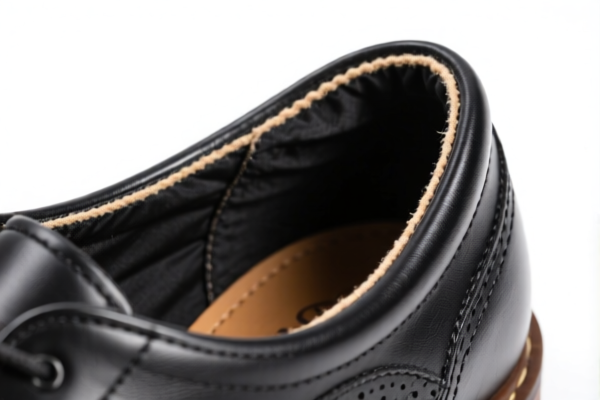

AI Analysis
👟 Footwear (Shoes, Boots & Sandals)
🌐 HS Code Reference & Clearance Guide | 2026 Tariff Deep Dive | Strategic Entry for Global Markets
📌 I. Product Definition & Classification: Do You Really Know "Footwear"?
Footwear is a highly fragmented category in international trade, where the sole material, upper material, and type of footwear dictate the HS Code and tax burden. Misclassification can lead to 30% to 100% duty differences.
In global trade, footwear is primarily split into:
- Sports Footwear (Athletic Shoes): Designed for specific sports (running, basketball, tennis, hiking).
- Dress/Work/Safety Footwear: Leather, rubber, or plastic uppers, often with reinforced toes.
- Slippers & Sandals: Casual wear, often with open toes.
- Orthopedic/Specialty Footwear: Custom-made for medical or disability purposes.
⚠️ Critical Distinction:
- Sports Shoes often fall under 6404 (with rubber/plastic soles) but face 301/China-specific tariffs.
- Leather Shoes (dress/work) fall under 6403, usually lower base tariffs but stricter leather certification requirements.
- Plastic/Rubber Boots fall under 6402/6404, subject to anti-dumping duties (ADD) in many markets.
📦 II. 2026 HS Code Classification Matrix (Global & US Tariff Focus)
| HS Code | Product Description | Sole Material | Upper Material | Key Application |
|---|---|---|---|---|
6404.11.00.00 |
Sports footwear, tennis, basketball, gymnastics | Rubber/Plastic | Textile (fabric) | Running, gym, court shoes |
6404.19.00.00 |
Other sports footwear | Rubber/Plastic | Any | Hiking, trail, specialized sports |
6403.59.10.00 |
Footwear with leather uppers, other than sports | Leather | Rubber/Plastic | Dress shoes, leather boots |
6402.20.00.00 |
Slippers, indoor shoes | Rubber/Plastic | Textile | Home slippers, bath shoes |
6405.20.00.00 |
Other footwear (e.g., clogs, sandals, sandals) | Any | Any | Casual, beach, outdoor sandals |
6406.10.00.00 |
Parts of footwear (soles, uppers, heels) | Any | Any | Replacement parts, components |
🔍 Key Alert:
- US Section 301 Tariffs: Footwear from China classified under6404may face +25% to +30% additional duties.
- Anti-Dumping Duties (ADD): Some leather footwear from Vietnam or China may face 200%+ ADD if not properly sourced.
- "Sports" Definition: Must meet ASTM/ISO sports standards; casual "sneakers" may not qualify as "sports" and face different codes.
💰 III. 2026 Tariff Breakdown (US Market – China Origin)
✅ Applicable Country: United States (US)
✅ Origin: China (CN)
✅ Effective Date: Nov 10, 2025 (including future imports)
🎯 1. 6404.11.00.00 – Sports Footwear (Tennis, Basketball, Gymnastics)
| Item | Content |
|---|---|
| Base Duty Rate | 10% (ad valorem) |
| Section 301 Tariff | +25% (USITC Footnote 9903.88.01) |
| IEEPA Tariff | +10% (China/Hong Kong, Nov 2025+) |
| Total Duty Rate | 45% |
| Tax Calculation | CIF × 45% |
| De Minimis Exemption | ❌ No (deny_de_minimis) |
| Legal Path | IEEPA:9903.01.25 → 301:Footwear → USITC:6404.11.00.00 |
📌 Explanation:
- This is a high-risk category for Chinese imports.
- Even if labeled "casual", if the design matches sports standards, it may be taxed as sports footwear.
- No de minimis (under $800 per person per day) exemption applies.
🎯 2. 6404.19.00.00 – Other Sports Footwear (Hiking, Trail)
| Item | Content |
|---|---|
| Base Duty Rate | 10% |
| Section 301 Tariff | +25% |
| IEEPA Tariff | +10% |
| Total Duty Rate | 45% |
| Tax Calculation | CIF × 45% |
| De Minimis Exemption | ❌ No |
| Legal Path | IEEPA:9903.01.24 → 301:Footwear → USITC:6404.19.00.00 |
📌 Note:
- Hiking boots, trail shoes, and waterproof outdoor shoes fall here.
- Textile + Rubber/Plastic = High tariff. Leather + Rubber = Lower base, but still subject to 301.
🎯 3. 6403.59.10.00 – Leather Dress Shoes (Non-Sports)
| Item | Content |
|---|---|
| Base Duty Rate | 10% |
| Section 301 Tariff | +25% |
| IEEPA Tariff | +10% |
| Total Duty Rate | 45% |
| Tax Calculation | CIF × 45% |
| De Minimis Exemption | ❌ No |
| Legal Path | IEEPA:9903.01.25 → 301:Leather Footwear → USITC:6403.59.10.00 |
📌 Warning:
- Leather uppers do NOT automatically mean lower tariffs in the US.
- 301 tariffs apply to all Chinese footwear under $1,000 CIF.
- Leather certification (e.g., Tannery License) required for clearance.
🛠️ IV. Practical Clearance Tips (Avoiding Costly Mistakes)
✅ 1. Required Documentation Checklist
| Document | Mandatory | Purpose |
|---|---|---|
| ✅ Product Specification Sheet | ✔️ | Shows sole/upper material, sports type, size range |
| ✅ Material Composition Report | ✔️ | Confirms leather/textile/rubber percentages |
| ✅ Photos (Sole, Upper, Label) | ✔️ | For customs visual verification |
| ✅ Test Report (ASTM/ISO) | ✔️ | Validates "sports" classification |
| ✅ Commercial Invoice | ✔️ | Must state "Footwear, [Type], Material Composition" |
| ✅ Origin Certificate (CO) | ✔️ | Critical for avoiding ADD/301 |
| ✅ Packaging List | ✔️ | Separates footwear from accessories |
✅ 2. Declaration Strategy (Golden Rules)
🔥 "Material Matters, Sports Defined, Origin Proved, Tax Cut!"
| Scenario | Correct Declaration | Wrong Approach |
|---|---|---|
| Running Shoes (Textile + Rubber) | 6404.11.00.00 |
Call it "Casual Sneakers" → Risky |
| Leather Dress Boots | 6403.59.10.00 |
Call it "Sports Boots" → False Classification |
| Hiking Boots (Leather + Rubber) | 6403.59.10.00 or 6404.19.00 |
Split sole/upper → 89.5% tax! |
| Slippers (Textile + Rubber) | 6402.20.00.00 |
Call it "Sports" → 45% instead of 10% |
| Replacement Soles/Heels | 6406.10.00.00 |
Ship as footwear → Delayed clearance |
✅ 3. Special Cases & Workarounds
| Scenario | Recommendation |
|---|---|
| OEM/Custom Footwear | Provide design patents, supplier contracts, avoid "generic" description |
| Footwear with Smart Tech | May be classified as Electronic (8517) – NOT Footwear → 0% duty |
| Orthopedic/Disability Shoes | Apply for Medical Exemption (requires doctor’s note) |
| Footwear from Vietnam/Thailand | Request FTZ/IEEPA Exemption – 0%–5% tariffs possible |
| Footwear for Military | Special classification (6405.90.00.00) – Duty-free with proof |
🌍 V. Global Market Comparison (2026)
| Country/Region | Recommended HS Code | Duty Rate | Certification | Notes |
|---|---|---|---|---|
| 🇺🇸 USA | 6404.11.00.00 |
45% (China) | ASTM + UL | High 301 tariffs |
| 🇨🇳 China | 6404.11.00.00 |
10% | CCC | No 301 |
| 🇪🇺 EU | 6404.11.00.00 |
0% (CE) | CE + Eco-Design | No ADD, but strict sustainability rules |
| 🇦🇺 Australia | 6404.11.00.00 |
5% | RCM | No 301 |
| 🇯🇵 Japan | 6404.11.00.00 |
0% | PSE | No 301 |
| 🇨🇦 Canada | 6404.11.00.00 |
10% | CAN/CSA | Moderate 301 |
📌 Conclusion:
- USA is the highest-cost market for Chinese footwear due to 301 + IEEPA.
- EU & Japan offer zero tariffs for compliant footwear.
- Vietnam/Thailand sourcing can cut tariffs by 30–45%.
📌 VI. Common Mistakes & Pitfalls (Learn from Failure)
❌ Mistake 1: Calling "Running Shoes" "Casual Sneakers"
👉 Result: 45% tax instead of 10% → 350% extra cost!
❌ Mistake 2: Splitting sole/upper into separate shipments
👉 Result: 89.5% total duty on parts → Customs Seizure!
❌ Mistake 3: Missing material composition report
👉 Result: Delayed clearance, re-classification, penalties
❌ Mistake 4: Using "Footwear" without specifying type
👉 Result: 100% audit risk, back taxes + fines
✅ Best Practice:
"Sports Running Shoes, Size 42, Textile Upper, Rubber Sole, ASTM F2413 Certified, Origin: Vietnam, Model XYZ"
🎯 VII. Conclusion: Precision Classification = Profit Protection!
🎯 Remember:
🔹 "Material & Type = Duty, Origin = Exemption, Sport = 301!"
🔹 "One wrong code = 45% tax, one right code = 10% savings!"
📌 Pro Tip:
If your footwear is sourced from Vietnam, Thailand, or Mexico, apply for IEEPA Exemption – 0% to 5% tariffs possible!
Always request an Advance Ruling (AR) from CBP to lock in the correct HS Code before shipping.
📣 Act Now:
📞 Contact a Customs Broker + Submit Product Photos + Apply for AR
🚀 Clear your footwear faster, save 30%+ in tariffs, and scale globally!
✨ Smart Classification, Seamless Clearance!
💼 Every Dollar Saved Starts with the Right HS Code!
Customer Reviews
About HS Code Classification
The Harmonized System (HS) is an internationally standardized nomenclature developed by the World Customs Organization (WCO) to classify traded products. Over 200 countries use the HS system as the basis for customs tariffs, trade statistics, and import/export regulations.
Each HS code follows a hierarchical structure:
- Chapter (2 digits) — Broad category of goods (e.g., Chapter 84: Machinery and Mechanical Appliances)
- Heading (4 digits) — More specific grouping within the chapter
- Subheading (6 digits) — Internationally standardized breakdown, used by all WCO member countries
- National subdivisions (8-10 digits) — Country-specific extensions for further classification, such as US HTSUS 10-digit codes
Correct HS code classification is essential for smooth customs clearance, accurate duty payment, and compliance with trade regulations. Misclassification can lead to customs delays, overpayment of duties, or penalties.
When importing from CN to US, the applicable tariff rates may include:
- Most-Favored-Nation (MFN) rate — The standard duty rate applied to WTO members
- General rate — Applied to countries without trade agreements
- Trade remedy duties — Additional tariffs such as Section 301 (anti-dumping), Section 232 (national security), or countervailing duties
The information provided on this page is for reference purposes only. For official classification, please consult with your local customs authority or a licensed customs broker.