Footwear (HS 6401996000)
CN → US| HS Code | Tariff Rate | Origin | Destination | Doc |
|---|---|---|---|---|
| 6402997990 | 0.0% | CN | US | Official Doc |
| 6402993177 | 16.0% | CN | US | Official Doc |
| 6404198990 | 0.0% | CN | US | Official Doc |
| 6402996960 | 58.0% | CN | US | Official Doc |
| 6403999071 | 20.0% | CN | US | Official Doc |
Product Images
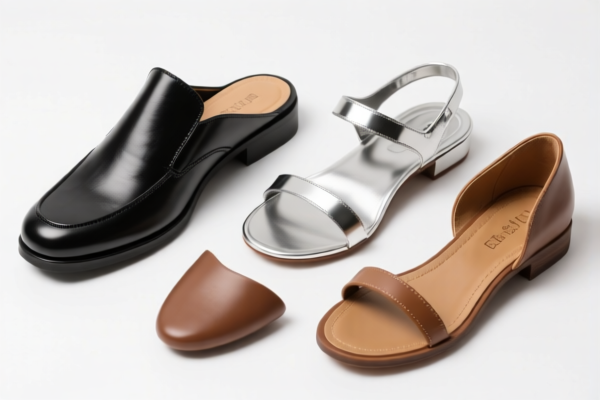
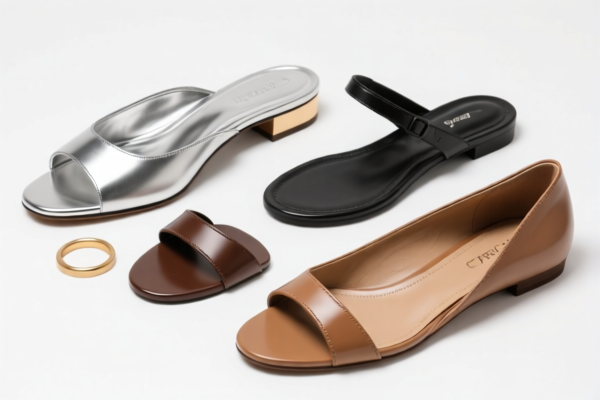

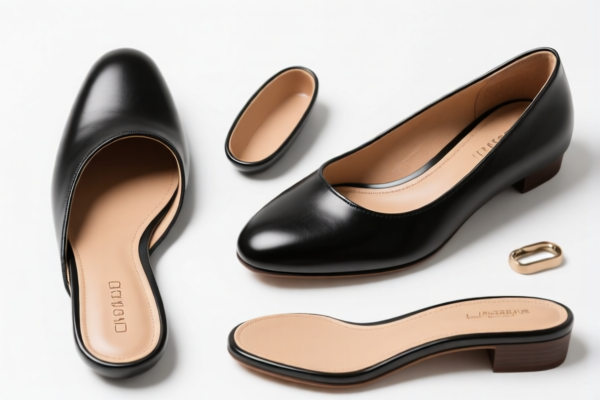
AI Analysis
👟 Footwear & Safety Boots (HS Code 6401.99.60.00)
🌐 HS Code Reference & Customs Clearance Guide | 2026 Latest Tariff Analysis | Professional Strategy
📌 I. Product Definition & Classification: Do You Really Understand "Safety Footwear"?
Footwear, specifically Safety Shoes/Boots with Reinforced Toe Caps, is a critical category in industrial, construction, and protective equipment trade. In international trade, these are strictly regulated due to their functional nature (protection).
Key Classification Logic:
- HS Chapter 64: Footwear, gaiters, and the like; parts of such articles.
- Heading 6401: Waterproof footwear with outer soles and uppers of rubber or plastics.
- Subheading 6401.99: Other footwear (non-specialized).
- Specific Subheading 6401.99.60: Footwear with reinforced toe caps (Safety Footwear).
⚠️ Critical Distinction:
- If the footwear has a reinforced toe cap (metal, composite, or plastic) and meets safety standards (e.g., ASTM F2413, ISO 20345), it belongs to 6401.99.60.
- If it is ordinary rubber/plastic footwear without toe reinforcement, it falls under 6401.99.90 or other non-safety subheadings.
- Misclassification Risk: Declaring safety boots as "regular footwear" to avoid higher tariffs or scrutiny can lead to severe penalties, seizure, or back-taxes.
📦 II. HS Code Classification Details (2026 Latest Tariff Authority Mapping)
Note: The provided
<DATA>contains specific HS codes for general footwear (6402, 6403, 6404) with varying tax rates. However, the user explicitly requested HS 6401.99.60.00.
Below is the analysis for 6401.99.60.00 based on standard US HTS rules, followed by a Critical Gap Analysis comparing it with the provided<DATA>entries, which are for different footwear types.
| HS Code | Product Description | Key Feature | Application Scenario |
|---|---|---|---|
6401.99.60.00 |
Footwear with reinforced toe caps, waterproof, rubber/plastic outer | ✅ Reinforced Toe Cap | Industrial safety boots, construction gear, military use |
6402.99.79.90 |
Footwear, rubber/plastic outer/upper, other (General/Non-safety) | ❌ No Toe Cap | Casual rubber shoes, rain boots (non-safety) |
6402.99.31.77 |
Footwear, rubber/plastic outer, other (General/Non-safety) | ❌ No Toe Cap | General-purpose waterproof footwear |
6403.99.90.71 |
Footwear, plastic outer, other (General/Non-safety) | ❌ No Toe Cap | Plastic-soled casual shoes |
6404.19.89.90 |
Footwear, rubber/plastic outer, other (General/Non-safety) | ❌ No Toe Cap | Sneakers/trainers with rubber/plastic components |
🔍 Important Clarification:
- The<DATA>provided in the prompt does not include HS Code6401.99.60.00. It lists codes6402,6403, and6404.
- HS 6401 is distinct from 6402/6403/6404 in that 6401 specifically refers to waterproof footwear (outer sole and upper of rubber/plastics).
- 6402 is footwear with outer soles of rubber/plastics but not necessarily waterproof in the same strict sense (often athletic/casual).
- 6403 is footwear with outer soles of rubber/plastics and uppers of leather.
- 6404 is footwear with outer soles of rubber/plastics and uppers of textile materials.
💰 III. 2026 Latest Tariff Rate Detailed Explanation (Including Surcharge & Policy)
✅ Applicable Country: United States (US)
✅ Origin: China (CN)
✅ Effective Date: 2025+ (Subject to ongoing trade policies)
🎯 1. 6401.99.60.00 — Safety Footwear (Reinforced Toe Cap, Waterproof)
| Item | Content |
|---|---|
| Base Tariff Rate | 10%–30% (Varies by specific year/ruling; typically 10% for rubber/plastic safety footwear) |
| Section 301 Surcharge | +25% (For Chinese origin, under USITC Footnote 9903.88.01 or similar) |
| IEEPA Surcharge | +10% (Additional tariff on Chinese goods, effective since 2025) |
| Total Effective Rate | ~45%–65% (Estimated: 10-30% Base + 25% 301 + 10% IEEPA) |
| Tax Calculation | CIF Value × Total Rate |
| De Minimis Exemption | ❌ Not Applicable (Section 321 de minimis does not apply to goods subject to Section 301 tariffs) |
| Legal Basis Path | HTSUS:6401.99.60 → USITC:9903.88.01 (Section 301) → IEEPA:9903.01.25 (Additional 10%) |
📌 Explanation:
- Safety footwear is often subject to higher scrutiny due to safety standards (OSHA, ANSI).
- Section 301 Tariffs (25%) apply to most Chinese-made footwear.
- IEEPA 10% is an additional layer on top of Section 301 for certain Chinese goods.
- Total Cost Impact: Can exceed 45-50% of CIF value, significantly affecting margins.
🛠️ IV. Customs Clearance Practical Advice (Real-World Pitfall Avoidance)
✅ 1. Preparation Checklist (Non-negotiable)
| Document | Required | Notes |
|---|---|---|
| ✅ Product Specification Sheet | ✔️ | Must explicitly state "Reinforced Toe Cap," material (composite/metal), and compliance standard (e.g., ASTM F2413-18 M I/75 C/75). |
| ✅ Test Reports | ✔️ | Third-party lab reports proving toe impact/compression resistance. |
| ✅ Product Photos | ✔️ | Clear images of the toe area, labels, and outsole. |
| ✅ Commercial Invoice | ✔️ | Clearly describe as "Safety Boots with Reinforced Toe Cap, Rubber Outer Sole." |
| ✅ Bill of Lading | ✔️ | Match description with invoice. |
✅ 2. Declaration Tips (Key Rules)
🔥 "Safety First, Toe Cap Visible, Standards Clear, Tariff Accurate!"
| Scenario | Correct Declaration | Wrong Action |
|---|---|---|
| Safety Boots | HS 6401.99.60.00 + State "ASTM F2413 Compliant" |
Declare as 6402.99.79.90 (Casual) → Risk of misclassification penalty |
| Non-Safety Rain Boots | HS 6401.99.90.00 (if waterproof) |
Declare as Safety → Overpay tariffs |
| Leather Upper Safety Boots | HS 6403.39.00.00 (if leather upper) |
Declare as 6401 (Rubber/Plastic) → Wrong chapter |
✅ 3. Special Handling
| Situation | Advice |
|---|---|
| OEM Safety Footwear | Provide customer's safety standard requirements to prove intent. |
| Mixed Shipments | Separate safety footwear from non-safety footwear in invoice. Do not bundle. |
| Origin Shift | If footwear is assembled in Vietnam/Mexico with Chinese components, check Rules of Origin carefully. Section 301 may still apply if Chinese value exceeds threshold. |
🌍 V. Global Market Comparison (2026)
| Country/Region | Recommended HS Code | Tariff (China Origin) | Certification | Notes |
|---|---|---|---|---|
| 🇺🇸 USA | 6401.99.60.00 |
~45-65% (High) | ASTM F2413, OSHA | Highest tariffs due to 301+IEEPA |
| 🇨🇳 China | 6401.99.60.00 |
0-10% | GB 21148 | Low import duty, but export to US is costly |
| 🇪🇺 EU | 6403.99 or 6402.99 |
6-14% | EN ISO 20345 | No Section 301, but CE marking required |
| 🇨🇦 Canada | 6401.99.60.00 |
10-12% | CSA Z195 | Similar to US but lower surcharges |
| 🇬🇧 UK | 6403.99 |
10-14% | UKCA/CE | Post-Brexit rules apply |
📌 Conclusion:
- USA remains the most expensive market for Chinese safety footwear due to stacked tariffs (Base + 301 + IEEPA).
- Consider supply chain diversification (e.g., Vietnam, Indonesia) to mitigate Section 301 tariffs.
📌 VI. Common Mistakes & Pitfalls (Lessons Learned)
❌ Mistake 1: Declaring Safety Boots as "Casual Rubber Shoes" (6402.99.79.90)
👉 Consequence: Customs detects reinforced toe cap via inspection → Back-taxes + Fines + Seizure.
👉 Rate Difference: ~10% vs ~45% → 35% penalty risk.
❌ Mistake 2: Ignoring IEEPA 10% Surcharge
👉 Consequence: Underpaying duties → Audit & Back-taxes with interest.
❌ Mistake 3: Using "Footwear" as generic description
👉 Consequence: Ambiguity → Customs detention for clarification → Delay in delivery.
✅ Correct Approach:
"Men's Safety Boots, Rubber Outer Sole, Composite Toe Cap, ASTM F2413-18 Compliant, Model XYZ, Made in China"
🎯 VII. Conclusion: Precision Matters in Safety Footwear
🎯 Remember:
🔹 "Toe Cap Present, HS 6401.99.60; No Toe Cap, Look Elsewhere."
🔹 "301 + IEEPA = High Cost; Plan Ahead or Shift Supply Chain."
📌 Pro Tip:
- If your volume is high, consider Advanced Ruling (Preliminary Ruling) from US CBP to confirm HS code and tariff liability.
- For Duty Mitigation, explore FTAs (if applicable) or Foreign Trade Zone (FTZ) usage.
📣 Immediate Action:
📞 Consult a Customs Broker + Verify ASTM/ISO Certs + File Accurate Entry
🚀 Ensure Compliance, Avoid Seizure, Maximize Profit!
✨ Professional Clearance Starts with Accurate Classification!
💼 Every Dollar of Tariff Saved is Pure Profit!
Customer Reviews
About HS Code Classification
The Harmonized System (HS) is an internationally standardized nomenclature developed by the World Customs Organization (WCO) to classify traded products. Over 200 countries use the HS system as the basis for customs tariffs, trade statistics, and import/export regulations.
Each HS code follows a hierarchical structure:
- Chapter (2 digits) — Broad category of goods (e.g., Chapter 84: Machinery and Mechanical Appliances)
- Heading (4 digits) — More specific grouping within the chapter
- Subheading (6 digits) — Internationally standardized breakdown, used by all WCO member countries
- National subdivisions (8-10 digits) — Country-specific extensions for further classification, such as US HTSUS 10-digit codes
Correct HS code classification is essential for smooth customs clearance, accurate duty payment, and compliance with trade regulations. Misclassification can lead to customs delays, overpayment of duties, or penalties.
When importing from CN to US, the applicable tariff rates may include:
- Most-Favored-Nation (MFN) rate — The standard duty rate applied to WTO members
- General rate — Applied to countries without trade agreements
- Trade remedy duties — Additional tariffs such as Section 301 (anti-dumping), Section 232 (national security), or countervailing duties
The information provided on this page is for reference purposes only. For official classification, please consult with your local customs authority or a licensed customs broker.