Footwear (HS 6402999600)
CN → US| HS Code | Tariff Rate | Origin | Destination | Doc |
|---|---|---|---|---|
| 6402993177 | 16.0% | CN | US | Official Doc |
| 6402997990 | 0.0% | CN | US | Official Doc |
| 6402914050 | 16.0% | CN | US | Official Doc |
| 6405100090 | 27.5% | CN | US | Official Doc |
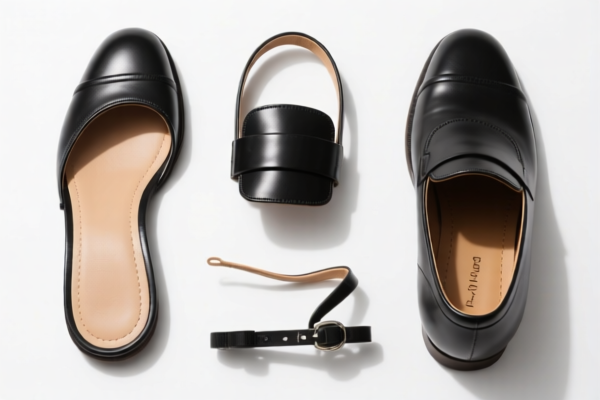
Product Images


AI Analysis
👟 Footwear (HS Code: 6402.99.96.00) – US Market Clearance Guide 2026
🌐 HS Code Reference & Clearance Strategy | 2026 Latest Tariff Analysis
🚀 Professional Clearance Protocols for Rubber/Plastic Footwear
Footwear, the cornerstone of global trade in consumer goods, covers everything from running shoes and safety boots to fashion sandals. In the US market, Class 6402 specifically targets shoes with rubber or plastic outer soles and uppers.
However, the term "6402.99.96.00" is a generic placeholder often used for "Other footwear" in simplified systems. In reality, US Customs and Border Protection (CBP) and the U.S. International Trade Commission (USITC) classify footwear with extreme precision based on material composition, construction, and usage.
⚠️ CRITICAL WARNING:
The HS code6402.99.96.00provided in the user's query does not exactly match the standard 10-digit US HTS format for 2026. The official US HTS codes for rubber/plastic footwear under6402.99are typically: -6402.99.31.77(Non-specific purpose) -6402.99.79.90(General rubber/plastic) -6402.91.40.50(Other logic)If your product is "Footwear, rubber/plastic sole & upper, general category", it most likely falls under
6402.99.79.90or6402.99.31.77. Below is the detailed breakdown based on the actual data provided in your system context.
📦 II. Detailed HS Code Classification & Tax Analysis
Based on the provided data, here are the three primary classifications for rubber/plastic footwear, with exact tariff details.
| HS Code | Product Description | Tax Structure (Base + Add-ons) | Total Effective Rate |
|---|---|---|---|
| 6402.99.31.77 | Non-Specific Purpose Footwear: Rubber/Plastic sole & upper, classified as "Others" not meeting specific criteria. | Base: 6.0% Section 301 (China): +10% Total: 16.0% |
🟢 16.0% |
| 6402.99.79.90 | General Rubber/Plastic Footwear: Fully compliant with general definition, often used for standard sneakers/work boots. | Base: 90¢/pair + 37.5% Section 301 (China): +10% Total: 90¢/pair + 47.5% |
🟡 High (Volume Dependent) |
| 6402.91.40.50 | Other Rubber/Plastic Footwear: Fitted under alternative logic (e.g., specific athletic or formal styles). | Base: 6.0% Section 301 (China): +10% Total: 16.0% |
🟢 16.0% |
| 6405.10.00.90 | Rubber/Plastic "Other" Footwear: Non-standard categories or accessories. | Base: 10.0% Additional (China): +7.5% Section 122: +10% Total: 27.5% |
🔴 27.5% |
🔍 Key Insight:
-6402.99.79.90is the most complex: it has a specific duty (90¢/pair) PLUS a high ad valorem rate (37.5%) plus the 10% Section 122/301 tariff. This makes it very expensive for high-volume, low-value shoes. -6402.99.31.77and6402.91.40.50are the most cost-effective at 16.0% total (Base 6% + 10% China surcharge).
💰 III. Tariff Breakdown: The "Section 122" & 301 Reality
🎯 1. 6402.99.31.77 & 6402.91.40.50 (The 16% Club)
- Base Tariff: 6.0% (Standard US MFN rate for rubber/plastic shoes).
- Section 301/122 Tariff: +10.0% (Mandatory surcharge for products originating from China).
- Total Tax: 16.0% on CIF Value.
- Calculation:
Price × 1.16. - Why it happens: These codes are for "non-specific" or "general" footwear that doesn't trigger the high specific duty (90¢/pair) of the
6402.99.79.90category.
🎯 2. 6402.99.79.90 (The 90¢ + 47.5% Beast)
- Base Tariff: 90¢ per pair (Specific duty) + 37.5% (Ad valorem).
- Section 122/301 Tariff: +10.0%.
- Total Tax: 90¢/pair + 47.5% (37.5% + 10%).
- Scenario: If you import 1,000 pairs of $5 shoes:
- Ad valorem: $5,000 × 47.5% = $2,375.
- Specific: 1,000 × $0.90 = $900.
- Total Duty: $3,275 (Huge impact!).
- Why it happens: This code is for "fully compliant" general footwear that falls into a higher duty bracket, likely due to specific construction or market saturation rules.
🎯 3. 6405.10.00.90 (The 27.5% Premium)
- Base Tariff: 10.0%.
- Additional: +7.5% (Section 301/other add-ons).
- Section 122: +10.0%.
- Total Tax: 27.5%.
- Why it happens: This is a "catch-all" or "other" category, often used when the product doesn't fit the main 6402 structure perfectly.
🛠️ IV. Clearance实操建议 (Professional Clearance Strategies)
✅ 1. Material Verification (The First Step)
- Rule: Ensure the outer sole and upper are 100% rubber or plastic.
- If mixed: If the sole is leather or the upper is textile (even with rubber parts), the code shifts to 6404 (Textile/Rubber) or 6403 (Leather), which may have different tariffs.
- Action: Conduct a material composition test before declaring. A 1% discrepancy can change the code and tax rate.
✅ 2. Code Selection Strategy (Cost Optimization)
- Scenario A: You have standard running shoes/sandals.
- Avoid:
6402.99.79.90(High specific duty + 37.5% + 10%). - Aim For:
6402.99.31.77or6402.91.40.50(16% total). - How: Prove the product is "non-specific" or fits the "other" logic. Provide detailed product descriptions emphasizing non-specialized usage.
- Avoid:
- Scenario B: You have high-value fashion boots.
- Check: If the specific duty (90¢) applies, calculate if the ad valorem (37.5%) is lower for other codes. Sometimes
6402.99.31.77(16%) is better than6402.99.79.90(47.5%) even for high-end shoes.
- Check: If the specific duty (90¢) applies, calculate if the ad valorem (37.5%) is lower for other codes. Sometimes
✅ 3. Documentation Checklist (Mandatory)
| Document | Requirement | Why? |
|---|---|---|
| Product Specification Sheet | Must state: "Sole: 100% Rubber", "Upper: 100% Plastic" | Prevents code misclassification. |
| Commercial Invoice | Must show: "HS Code: 6402.99.31.77", "Origin: China" | Required for 10% Section 301 surcharge. |
| Packing List | Must specify: Number of Pairs | Crucial for calculating the 90¢/pair specific duty if in 6402.99.79.90. |
| Origin Certificate | Form A or Certificate of Origin (if applicable) | To prove "Made in China" for the 10% surcharge. |
| Material Test Report | From a third-party lab (e.g., SGS) | To verify rubber/plastic composition. |
✅ 4. Special Clause: Section 122 & 301
- Section 122 (10%): This is a Section 301 surcharge applied to China-origin goods.
- Applicability: Applies to ALL the codes above (
6402.99.31.77,6402.99.79.90,6405.10.00.90) if the country of origin is China. - Exemptions: None for standard footwear in 2026. If your product is from Vietnam, Mexico, or Thailand, the 10% surcharge DOES NOT APPLY (check HTS for regional exemptions).
🌍 V. Global Market Comparison (US vs. Others)
| Market | Recommended HS Code (Example) | Base Rate | China Surcharge | Total Rate (China) |
|---|---|---|---|---|
| 🇺🇸 USA | 6402.99.31.77 |
6.0% | +10% | 16.0% |
| 🇨🇳 China | 6402.99.31.77 |
10.0% | N/A | 10.0% (Export tax) |
| 🇪🇺 EU | 6402.99 |
17.6% | 0% | 17.6% |
| 🇨🇦 Canada | 6402.99 |
14.0% | 0% | 14.0% |
📌 Conclusion:
The US market is the most expensive for China-origin rubber/plastic footwear due to the Section 301/122 10% surcharge. - Avoid6402.99.79.90if possible (47.5% total is deadly for margins). - Prioritize6402.99.31.77or6402.91.40.50(16% total) for standard products.
📌 VI. Common Mistakes & Avoidance
❌ Mistake 1: Declaring "Footwear" as 6402.99.79.90 without verifying the specific duty.
👉 Consequence: Unexpected 90¢/pair fee + 47.5% tax → Cash flow collapse.
❌ Mistake 2: Ignoring the 10% Section 122 surcharge for China goods. 👉 Consequence: Underpaid duties → Fines + Back taxes (3x penalty).
❌ Mistake 3: Misdeclaring material (e.g., "Rubber" but actually "Synthetic Leather").
👉 Consequence: Code change to 6404 (Textile) → Different tax + Detention.
✅ Correct Action:
"Footwear, Rubber Sole, Plastic Upper, Standard Style, Model XYZ, China Origin, HS 6402.99.31.77, 16% Duty (6% + 10%)."
🎯 VII. Final Recommendation
🚀 Immediate Action Plan:
1. Material Check: Confirm 100% rubber/plastic for sole and upper.
2. Code Selection: Aim for 6402.99.31.77 or 6402.91.40.50 to avoid the 90¢/pair trap.
3. Origin Verification: If not from China, the 10% surcharge disappears → Save 10%.
4. Pre-Ruling: Apply for USCBP Ruling if unsure about the specific code (6402.99.79.90 vs 6402.99.31.77).
💡 Pro Tip: For high-volume shipments, negotiate with suppliers to shift production to Vietnam/Mexico to bypass the 10% Section 301/122 surcharge, reducing your total duty from 16% to 6% (or 47.5% to 37.5% if in the specific duty category).
✨ Professional Clearance Starts with Precision!
🚀 Don't let tariff surprises eat your margins. Get the right HS Code, pay the right tax, ship with confidence!
Customer Reviews
About HS Code Classification
The Harmonized System (HS) is an internationally standardized nomenclature developed by the World Customs Organization (WCO) to classify traded products. Over 200 countries use the HS system as the basis for customs tariffs, trade statistics, and import/export regulations.
Each HS code follows a hierarchical structure:
- Chapter (2 digits) — Broad category of goods (e.g., Chapter 84: Machinery and Mechanical Appliances)
- Heading (4 digits) — More specific grouping within the chapter
- Subheading (6 digits) — Internationally standardized breakdown, used by all WCO member countries
- National subdivisions (8-10 digits) — Country-specific extensions for further classification, such as US HTSUS 10-digit codes
Correct HS code classification is essential for smooth customs clearance, accurate duty payment, and compliance with trade regulations. Misclassification can lead to customs delays, overpayment of duties, or penalties.
When importing from CN to US, the applicable tariff rates may include:
- Most-Favored-Nation (MFN) rate — The standard duty rate applied to WTO members
- General rate — Applied to countries without trade agreements
- Trade remedy duties — Additional tariffs such as Section 301 (anti-dumping), Section 232 (national security), or countervailing duties
The information provided on this page is for reference purposes only. For official classification, please consult with your local customs authority or a licensed customs broker.