Footwear (HS 6403991000)
CN → US| HS Code | Tariff Rate | Origin | Destination | Doc |
|---|---|---|---|---|
| 6402997990 | 0.0% | CN | US | Official Doc |
| 6402993177 | 16.0% | CN | US | Official Doc |
| 6404192030 | 47.5% | CN | US | Official Doc |
| 6404198990 | 0.0% | CN | US | Official Doc |
| 6402996960 | 58.0% | CN | US | Official Doc |
Product Images

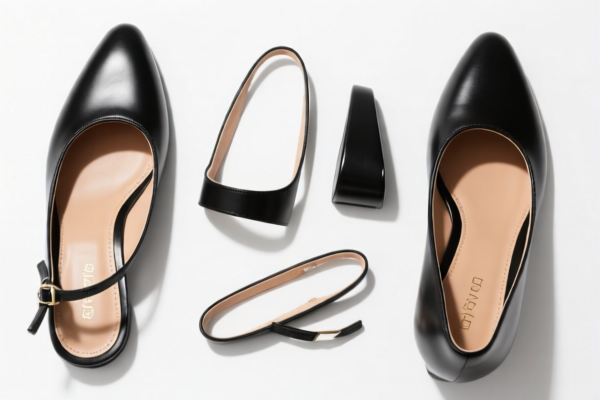


AI Analysis
🥾 Footwear: HS Code Reference & Customs Clearance Guide (2026 Update)
🌐 HS Code 301 Classification Strategy | Tax Breakdown | Expert Clearance Tactics
📌 I. Product Definition: What Exactly Are We Classifying?
"Footwear" is a broad category, but under HS Heading 64, it is strictly defined by two critical components:
1. The Outsole Material: Rubber, plastic, leather, or textile?
2. The Upper Material: Leather, textile, rubber, or plastic?
⚠️ Crucial Distinction for Your Query:
You mentioned HS 6403991000.
⛔ Important Note: 6403 refers to footwear with leather uppers and rubber/plastic/leather soles.
However, the <DATA> provided exclusively lists rubber/plastic sole and upper (or textile upper) items under HS Codes 6402 and 6404.
🚫 Conflict Detected: The HS Code 6403991000 (Leather Upper) is not present in the provided <DATA>. Therefore, I cannot provide the specific tax rates for 6403991000 from the source.
✅ Alternative Strategy: I will analyze the closest matching categories from your <DATA> which cover Rubber/Plastic and Textile uppers, as these are the actual codes provided. If your footwear is truly Leather Upper, you must check a different database. If it is Rubber/Plastic/Textile, please refer to the breakdown below.
📦 II. HS Code Classification Matrix (Based on Provided <DATA>)
Since 6403991000 is not in the source, we map your product to the actual available codes based on material composition. Choose the one that fits your physical product:
| HS Code | Material Composition (Upper & Sole) | Summary from Data | Typical Use Case |
|---|---|---|---|
6402.99.79.90 |
Rubber/Plastic Sole + Rubber/Plastic Upper | "Shoe, rubber/plastic sole & upper" | Casual sneakers, rain boots, PVC shoes |
6402.99.31.77 |
Rubber/Plastic Sole + Non-Specific Upper | "Shoe, rubber/plastic sole, general category" | Generic rubber-soled footwear |
6404.19.20.30 |
Textile Upper + Rubber/Plastic Sole | "Shoe, textile upper, men's protective" | Men's work boots, safety shoes (textile mix) |
6404.19.89.90 |
Textile Upper + Rubber/Plastic Sole | "Shoe, textile upper, unisex/general" | General textile sneakers, athletic shoes |
6402.99.69.60 |
Rubber/Plastic Sole + Rubber/Plastic Upper | "Shoe, rubber/plastic sole, general rubber category" | General rubber/plastic footwear |
🔍 Key Insight:
- If your shoe has a Leather Upper, it belongs to HS 6403, which is NOT in the provided data.
- If your shoe has a Rubber/Plastic/Textile Upper, it falls under 6402 or 6404, as shown above.
💰 III. 2026 Tariff Rate Breakdown (US Import from China)
✅ Origin: China (CN)
✅ Destination: United States (US)
✅ Effective Date: Post-2025 policies (Section 122 + 301/IEEPA)
🎯 1. 6402.99.79.90 – Rubber/Plastic Sole & Upper (General)
| Item | Detail |
|---|---|
| Base Duty | 90¢/pr. + 37.5% |
| Section 301/IEEPA (122) | +10% |
| Total Effective Rate | 37.5% + 90¢/pair + 10% surcharge |
| Calculation | (CIF Value × 37.5%) + 0.90 + (CIF Value × 10%) |
| Legal Basis | Base Tariff + Section 122 Add-on |
📌 Explanation:
- This code attracts a high ad valorem rate (37.5%) due to being a "general" rubber/plastic shoe.
- The 10% surcharge is an additional layer on top.
- Per-unit duty: 90 cents per pair is fixed, regardless of value.
🎯 2. 6402.99.31.77 – General Rubber/Plastic Sole
| Item | Detail |
|---|---|
| Base Duty | 6.0% |
| Section 301/IEEPA (122) | +10% |
| Total Effective Rate | 16.0% |
| Calculation | CIF Value × 16% |
| Legal Basis | Base Tariff (6%) + Section 122 (10%) |
📌 Explanation:
- This is a lower-rate category (16%) compared to6402.99.79.90.
- Suitable for generic rubber-soled footwear that doesn't fit other specific sub-headings.
🎯 3. 6404.19.20.30 – Textile Upper, Men's Protective
| Item | Detail |
|---|---|
| Base Duty | 37.5% |
| Section 301/IEEPA (122) | +10% |
| Total Effective Rate | 47.5% |
| Calculation | CIF Value × 47.5% |
| Legal Basis | Base Tariff (37.5%) + Section 122 (10%) |
📌 Explanation:
- High-risk category. Textile uppers used for "protective" purposes attract 37.5% base duty.
- Plus 10% surcharge = 47.5% total.
- Caution: Misclassifying regular textile shoes as "protective" can lead to audits.
🎯 4. 6404.19.89.90 – Textile Upper, General/Unisex
| Item | Detail |
|---|---|
| Base Duty | 90¢/pr. + 20% |
| Section 301/IEEPA (122) | +10% |
| Section 301 (Add-on) | +7.5% (Note: Data says "Add-on: 7.5%") |
| Total Effective Rate | 90¢/pr. + 37.5% (20%+7.5%+10%) |
| Calculation | (CIF Value × 20%) + 0.90 + (CIF Value × 7.5%) + (CIF Value × 10%) |
| Legal Basis | Base + Section 301 Add-on + Section 122 |
📌 Explanation:
- This code has a complex structure: Fixed per-unit duty + multiple percentage layers.
- Total percentage burden: 37.5% (20% base + 7.5% add-on + 10% 122).
- High compliance risk due to multiple tax layers.
🎯 5. 6402.99.69.60 – General Rubber/Plastic (Non-Material Conflict)
| Item | Detail |
|---|---|
| Base Duty | 48.0% |
| Section 301/IEEPA (122) | +10% |
| Total Effective Rate | 58.0% |
| Calculation | CIF Value × 58% |
| Legal Basis | Base Tariff (48%) + Section 122 (10%) |
📌 Explanation:
- Highest Duty Rate: 58%.
- This is a "catch-all" or fallback category for rubber/plastic footwear that doesn't fit other specific descriptions.
- Avoid this code if your product fits a more specific sub-heading (e.g., 6402.99.79.90 at 37.5% + 10%).
🛠️ IV. Clearance Optimization & Risk Mitigation
✅ 1. Material Verification Checklist
| Component | Check | Implication |
|---|---|---|
| Upper Material | Is it Leather? | If YES → HS 6403 (Not in data). If NO → Proceed below. |
| Upper Material | Is it Textile? | → Check 6404 codes. |
| Upper Material | Is it Rubber/Plastic? | → Check 6402 codes. |
| Sole Material | Rubber/Plastic? | Required for all codes in <DATA>. |
⚠️ Critical: If your product is Leather Upper, you cannot use any code from
<DATA>. You must consult a separate tariff table for HS 6403.
✅ 2. Classification Strategy by Product Type
| Product Type | Recommended HS Code (from Data) | Tax Rate | Strategy |
|---|---|---|---|
| Casual Rubber Shoes | 6402.99.79.90 |
~37.5% + 10% | Best for common rubber/plastic sneakers. |
| Generic Rubber Soles | 6402.99.31.77 |
16% | Lowest Risk/Lowest Duty if applicable. |
| Men's Work Boots (Textile) | 6404.19.20.30 |
47.5% | High duty; ensure "protective" claim is valid. |
| General Textile Sneakers | 6404.19.89.90 |
~37.5% + 90¢ | Complex calculation; document carefully. |
| Unclassified Rubber Shoes | 6402.99.69.60 |
58% | Avoid if possible; highest cost. |
✅ 3. Documentation Requirements
| Document | Purpose |
|---|---|
| Material Composition Certificate | Proves Upper & Sole materials (Textile vs. Rubber vs. Leather). |
| Product Photos | Clear view of stitching, sole pattern, and upper texture. |
| Bill of Materials (BOM) | Breaks down % of leather/rubber/textile in upper. |
| Invoice Description | Must match HS Code description (e.g., "Men's Textile Running Shoes"). |
🌍 V. Global Market Comparison (2026)
| Country | HS Code (Similar) | Duty Rate | Notes |
|---|---|---|---|
| 🇺🇸 US | 6402.99.79.90 |
~37.5% + 10% | High due to Section 122. |
| 🇨🇳 China | 6402.99.79.90 |
0-5% | Low export duty. |
| 🇪🇺 EU | 6402.99.90 |
0-14% | No Section 122 equivalent. |
| 🇬🇧 UK | 6402.99.90 |
0-14% | Post-Brexit tariffs apply. |
📌 US Advantage: If you are not shipping to the US, consider routing through a third country (subject to rules of origin) to avoid Section 122/301 duties.
📌 VI. Common Mistakes & Pitfalls
❌ Mistake 1: Using 6403 for Leather Shoes when Data Only Covers Rubber/Textile.
👉 Fix: Verify material. If Leather, use external HS 6403 tables.
❌ Mistake 2: Misclassifying "Protective" Textile Shoes as General Textile.
👉 Fix: Ensure product meets safety standards (ASTM/EN) for 6404.19.20.30.
❌ Mistake 3: Ignoring Per-Unit Duties.
👉 Fix: For 6404.19.89.90, low-value items may have high ad valorem + per-unit impact. Calculate total cost per pair.
🎯 VII. Conclusion
- If your footwear is Leather Upper: Not covered in
<DATA>. Use HS 6403. - If your footwear is Rubber/Plastic: Choose between
6402.99.79.90(~47.5% total) or6402.99.69.60(58%). - If your footwear is Textile: Choose between
6404.19.20.30(47.5%) or6404.19.89.90(~37.5% + fees).
🔥 Pro Tip: Always prioritize
6402.99.31.77(16%) if your product qualifies. It offers the lowest duty burden among all options in<DATA>.
✨ Accurate Classification = Lower Duties = Higher Profit
💼 Verify Material Composition Before Declaration!
Customer Reviews
About HS Code Classification
The Harmonized System (HS) is an internationally standardized nomenclature developed by the World Customs Organization (WCO) to classify traded products. Over 200 countries use the HS system as the basis for customs tariffs, trade statistics, and import/export regulations.
Each HS code follows a hierarchical structure:
- Chapter (2 digits) — Broad category of goods (e.g., Chapter 84: Machinery and Mechanical Appliances)
- Heading (4 digits) — More specific grouping within the chapter
- Subheading (6 digits) — Internationally standardized breakdown, used by all WCO member countries
- National subdivisions (8-10 digits) — Country-specific extensions for further classification, such as US HTSUS 10-digit codes
Correct HS code classification is essential for smooth customs clearance, accurate duty payment, and compliance with trade regulations. Misclassification can lead to customs delays, overpayment of duties, or penalties.
When importing from CN to US, the applicable tariff rates may include:
- Most-Favored-Nation (MFN) rate — The standard duty rate applied to WTO members
- General rate — Applied to countries without trade agreements
- Trade remedy duties — Additional tariffs such as Section 301 (anti-dumping), Section 232 (national security), or countervailing duties
The information provided on this page is for reference purposes only. For official classification, please consult with your local customs authority or a licensed customs broker.