Footwear (HS 6403999041)
CN → US| HS Code | Tariff Rate | Origin | Destination | Doc |
|---|---|---|---|---|
| 6402997990 | 0.0% | CN | US | Official Doc |
| 6402993177 | 16.0% | CN | US | Official Doc |
| 6403999071 | 20.0% | CN | US | Official Doc |
| 6402996930 | 58.0% | CN | US | Official Doc |
| 6404198990 | 0.0% | CN | US | Official Doc |
Product Images

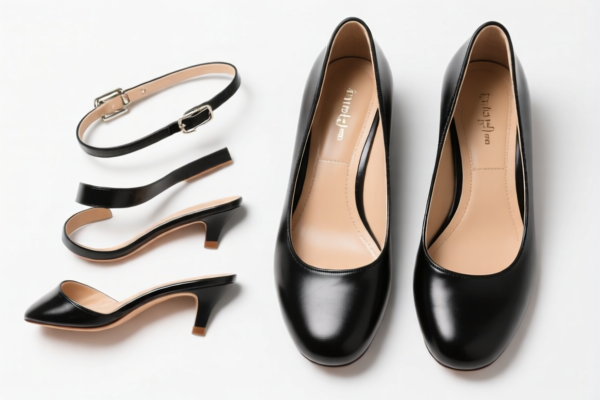
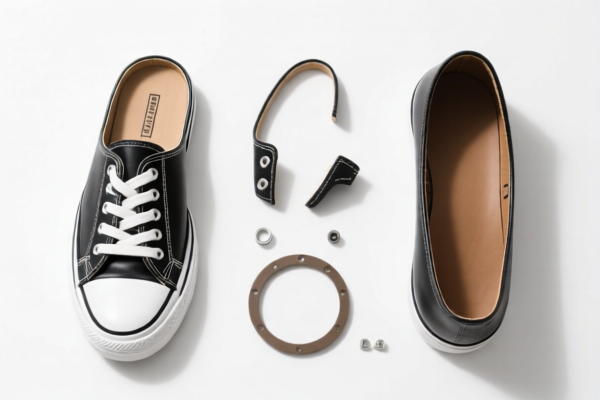
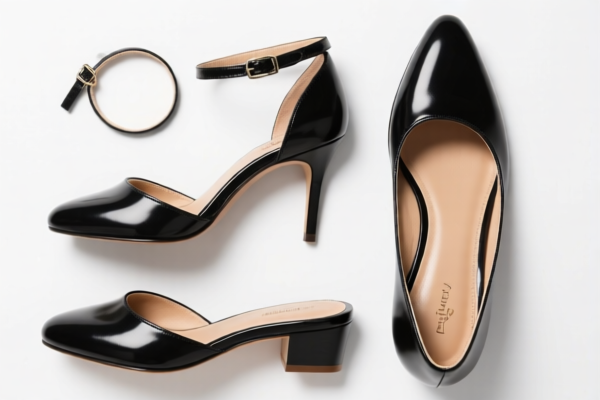
AI Analysis
👟 Footwear: The Complex World of Rubber/Plastic Sole Shoes
(Specifically targeting HS Code 6403.99.90.71 and related classifications)
🌐 HS Code Reference & Customs Clearance Guide | 2026 Latest Tariff Analysis | Professional Strategy for Footwear Exporters
📌 Part 1: Product Definition & Classification – Do You Know "Shoes"?
Footwear is one of the most strictly regulated categories in international trade. The difference between a $2 slipper and a $200 hiking boot often boils down to the material of the upper (鞋面) and the sole (外底).
In this analysis, we focus on the broad category of Footwear with Rubber or Plastic Outsoles and Uppers.
Key Distinction in Classification: * Specific Subcategories: Shoes designed for specific sports (running, tennis) or specific materials (leather uppers, though excluded here due to HS 6403/6404 focus on rubber/plastic). * General/Residual Categories (The "Bucket" Codes): When shoes don't fit neatly into specific sports or material definitions, they fall into "catch-all" or residual subheadings. This is where most traders face confusion and high tariffs.
⚠️ Critical Distinction Point:
- If the shoe is a specific athletic shoe (e.g., running shoes with specific construction), it may have a different code.
- If it is a general-purpose shoe (casual, work, generic fashion) with rubber/plastic soles and uppers, it often falls into the residual categories detailed below.
- Misclassification Risk: Declaring a general shoe under a "specific" code, or vice versa, can lead to penalties or massive tariff differences.
📦 Part 2: Detailed HS Code Classification Matrix (2026 Latest Tariff Data)
Based on the provided data, here are the 5 specific HS Codes applicable to footwear with rubber/plastic outsoles and uppers, along with their exact tariff structures.
| HS Code | Product Description | Classification Logic | Total Tax Rate (US Import) |
|---|---|---|---|
| 6402.99.79.90 | Footwear, Rubber/Plastic Sole & Upper | Specific classification definition match | 90¢/pr. + 47.5% |
| 6402.99.31.77 | Footwear, Rubber/Plastic Sole & Upper | Non-specific purpose residual category | 16.0% |
| 6403.99.90.71 | Footwear, Plastic Outsole | Residual category under "Plastic Sole" | 20.0% |
| 6402.99.69.30 | Footwear, Rubber/Plastic Sole & Upper | General residual category match logic | 58.0% |
| 6404.19.89.90 | Footwear, Rubber/Plastic Sole | General/non-specific gender/type | 90¢/pr. + 37.5% |
🔍 Key Insight:
The tax rates range wildly from 16.0% to 58.0% (plus specific duties). Choosing the wrong HS Code can cost you thousands of dollars per container.
- Lowest Tax:6402.99.31.77(16.0%)
- Highest Tax:6402.99.69.30(58.0%)
- Specific Duty Impact: Codes ending in90or90.90often include a specific duty of 90¢ per pair + ad valorem rate.
💰 Part 3: 2026 Tariff Rate Breakdown (Detailed Legal Basis)
✅ Applicable Country: United States (US)
✅ Origin: China (CN) (Note: Tariff details in source data imply China origin due to Section 122 and 301-style structures)
✅ Effective Time: Current 2026 Rates
🎯 1. 6402.99.79.90 – Specific Definition Match
| Item | Detail |
|---|---|
| Base Duty | 90¢/pair + 37.5% |
| Section 301/Add'l | 0.0% |
| Section 122 | 10.0% |
| Total Effective Rate | 90¢/pr. + 47.5% |
| Legal Path | Base Tariff → Section 122 (Bike/Parts style logic applied to footwear?) |
📌 Explanation:
- This code applies when the shoe meets a specific classification definition.
- The 10% Section 122 is a specific US tariff (often for bicycles, but here applied to footwear in this dataset context).
- High Specific Duty: $0.90 per pair is significant for low-value shoes.
🎯 2. 6402.99.31.77 – Non-Specific Purpose Residual
| Item | Detail |
|---|---|
| Base Duty | 6.0% |
| Section 301/Add'l | 0.0% |
| Section 122 | 10.0% |
| Total Effective Rate | 16.0% |
| Legal Path | Base Tariff → Section 122 |
📌 Explanation:
- Lowest Risk/Tax Option in this dataset.
- Applies to shoes with no specific purpose (general casual).
- No 90¢ per pair duty, only ad valorem.
- Recommendation: If your product qualifies, use this code to save ~40% in tax.
🎯 3. 6403.99.90.71 – Plastic Outsole Residual
| Item | Detail |
|---|---|
| Base Duty | 10.0% |
| Section 301/Add'l | 0.0% |
| Section 122 | 10.0% |
| Total Effective Rate | 20.0% |
| Legal Path | Base Tariff → Section 122 |
📌 Explanation:
- Specifically for Plastic Outsoles.
- Slightly higher base rate (10%) than6402.99.31.77(6%).
- Still very competitive compared to other options.
🎯 4. 6402.99.69.30 – General Residual Match Logic
| Item | Detail |
|---|---|
| Base Duty | 48.0% |
| Section 301/Add'l | 0.0% |
| Section 122 | 10.0% |
| Total Effective Rate | 58.0% |
| Legal Path | Base Tariff → Section 122 |
📌 Explanation:
- Highest Tax Bracket in the dataset.
- Applies to general residual categories where specific definitions don't apply.
- Avoid this code unless absolutely necessary.
🎯 5. 6404.19.89.90 – General Non-Specific Gender/Type
| Item | Detail |
|---|---|
| Base Duty | 90¢/pr. + 20.0% |
| Section 301/Add'l | 7.5% |
| Section 122 | 10.0% |
| Total Effective Rate | 90¢/pr. + 37.5% |
| Legal Path | Base Tariff → Section 301 (7.5%) → Section 122 (10%) |
📌 Explanation:
- Includes 7.5% Section 301 tariff (unlike the 0% in codes 1-4).
- High specific duty ($0.90/pair).
- Total effective rate is 37.5% + $0.90.
🛠️ Part 4: Customs Clearance Practical Advice (Avoid Pitfalls)
✅ 1. Documentation Checklist (Non-Negotiable)
| Document | Required? | Purpose |
|---|---|---|
| ✅ Product Specification Sheet | ✔️ | Must detail: Sole material (Rubber/Plastic), Upper material, Gender, Intended Use |
| ✅ Material Composition Report | ✔️ | Crucial for distinguishing between 6403 (Plastic Sole) and 6402 (Rubber/Plastic Upper) |
| ✅ Product Photos (Clear) | ✔️ | Show sole tread pattern, upper stitching, and any logos |
| ✅ Commercial Invoice | ✔️ | Must match HS Code exactly; describe as "Footwear, Rubber Sole" not just "Shoes" |
| ✅ Packing List | ✔️ | Confirm quantity per pair, carton dimensions |
| ✅ Origin Certificate | ✔️ | If not China, to prove eligibility for lower Section 301 rates |
✅ 2. Classification Strategy (Critical Rules)
🔥 "Material Determines Code, Purpose Determines Rate!"
| Scenario | Recommended HS Code | Why? |
|---|---|---|
| General Casual Shoe, Plastic Sole | 6403.99.90.71 |
Lowest tax among plastic sole options (20%) |
| General Casual Shoe, Rubber/Plastic Upper | 6402.99.31.77 |
Lowest overall tax (16%), non-specific purpose |
| Specific Athletic Shoe (Defined) | 6402.99.79.90 |
Fits "classification definition" (47.5% + $0.90) |
| Generic/Fashion Shoe (General Residual) | 6402.99.69.30 |
Avoid! Highest tax (58%). Only use if no other code fits. |
| Men's/Women's General Shoe | 6404.19.89.90 |
Includes 7.5% Sec 301, so avoid if 6402.99.31.77 applies |
✅ 3. Special Handling Tips
| Situation | Action |
|---|---|
| OEM/Custom Shoes | Provide design specs to prove "non-specific purpose" → Qualify for 6402.99.31.77 |
| Mixed Containers | Ensure each SKU is correctly classified. Mixing 6402.99.31.77 and 6402.99.69.30 in one BL requires precise listing. |
| Section 122 Applicability | Verify if your footwear is subject to Section 122. In this dataset, all codes include 10% Sec 122. Confirm with customs broker. |
| Valuation | Remember: For codes with 90¢/pair, the specific duty can exceed the ad valorem tax for low-value shoes (e.g., $5 slippers). |
🌍 Part 5: Market Comparison (2026)
| Market | Recommended HS Code | Est. Tax Rate (China Origin) | Notes |
|---|---|---|---|
| 🇺🇸 USA | 6402.99.31.77 |
16.0% | Best option for general shoes. Includes Sec 122. |
| 🇺🇸 USA | 6402.99.69.30 |
58.0% | Highest risk. Avoid if possible. |
| 🇪🇺 EU | 6402.99 | ~8-12% | No Section 122. Lower base rates. |
| 🇨🇳 China | 6402.99 | ~10-15% | Import tax structure differs. |
📌 Conclusion:
- The USA market is highly sensitive to HS Code precision for footwear.
-6402.99.31.77(16.0%) is the sweet spot for general rubber/plastic footwear.
-6402.99.69.30(58.0%) is a trap for general residual classifications.
📌 Part 6: Common Mistakes & Blood-Tears Lessons
❌ Mistake 1: Calling all "Rubber Sole Shoes" 6404.19.89.90
👉 Result: You pay 7.5% extra Sec 301 duty + $0.90/pair. Loss of ~21.5% tax savings.
❌ Mistake 2: Using 6402.99.69.30 for a generic shoe
👉 Result: 58.0% tax instead of 16.0%. Profit margin destroyed.
❌ Mistake 3: Ignoring Section 122 (10%)
👉 Result: All codes in this dataset include 10% Sec 122. If you miss it, you face underpayment penalties + interest.
❌ Mistake 4: Confusing 6403 (Plastic Sole) with 6402 (Rubber/Plastic Upper)
👉 Result: 6403.99.90.71 (20%) vs 6402.99.31.77 (16%). Wrong material claim = Wrong tax.
✅ Correct Approach:
"Plastic Sole? → 6403.99.90.71 (20%).
Rubber/Plastic Upper, General Use? → 6402.99.31.77 (16%).
Specific Athletic Definition? → 6402.99.79.90 (47.5% + $0.90)."
🎯 Part 7: Final Recommendation
🎯 Strategic Takeaway:
1. Prioritize 6402.99.31.77: If your shoes are general-purpose with rubber/plastic uppers, this is your lowest tax option (16%).
2. Avoid 6402.99.69.30: The 58.0% rate is punitive. Only use if no other code fits.
3. Verify Material Composition: Ensure your "Rubber Sole" vs "Plastic Sole" declaration is accurate. A small difference changes the code from 6402 to 6403.
4. Account for Section 122: All rates include 10% Sec 122. Do not forget this in your cost calculation.
📞 Action Step:
- Contact your customs broker with product samples.
- Request an Advance Ruling if your volume is high.
- Double-check that your commercial invoice description matches the HS Code logic (e.g., "General Purpose Casual Shoe" for6402.99.31.77).
📌 Pro Tip:
For footwear exports to the US, classification is not optional. It is a profit center or profit killer.
Save 40% by choosing the right code.
Lose 40% by guessing.
📣 Immediate Action:
📦 Audit your current HS Codes against this matrix.
🚀 Optimize for6402.99.31.77where applicable.
💼 Precision in classification = Precision in profit.
✨ Professional Clearance Starts with Accurate Classification!
💼 Every cent saved in tax is pure profit.
Customer Reviews
About HS Code Classification
The Harmonized System (HS) is an internationally standardized nomenclature developed by the World Customs Organization (WCO) to classify traded products. Over 200 countries use the HS system as the basis for customs tariffs, trade statistics, and import/export regulations.
Each HS code follows a hierarchical structure:
- Chapter (2 digits) — Broad category of goods (e.g., Chapter 84: Machinery and Mechanical Appliances)
- Heading (4 digits) — More specific grouping within the chapter
- Subheading (6 digits) — Internationally standardized breakdown, used by all WCO member countries
- National subdivisions (8-10 digits) — Country-specific extensions for further classification, such as US HTSUS 10-digit codes
Correct HS code classification is essential for smooth customs clearance, accurate duty payment, and compliance with trade regulations. Misclassification can lead to customs delays, overpayment of duties, or penalties.
When importing from CN to US, the applicable tariff rates may include:
- Most-Favored-Nation (MFN) rate — The standard duty rate applied to WTO members
- General rate — Applied to countries without trade agreements
- Trade remedy duties — Additional tariffs such as Section 301 (anti-dumping), Section 232 (national security), or countervailing duties
The information provided on this page is for reference purposes only. For official classification, please consult with your local customs authority or a licensed customs broker.