Footwear (HS 6405909060)
CN → US| HS Code | Tariff Rate | Origin | Destination | Doc |
|---|---|---|---|---|
| 6402997990 | 0.0% | CN | US | Official Doc |
| 6402993177 | 16.0% | CN | US | Official Doc |
| 6404198990 | 0.0% | CN | US | Official Doc |
| 6402996960 | 58.0% | CN | US | Official Doc |
| 6403999071 | 20.0% | CN | US | Official Doc |
Product Images

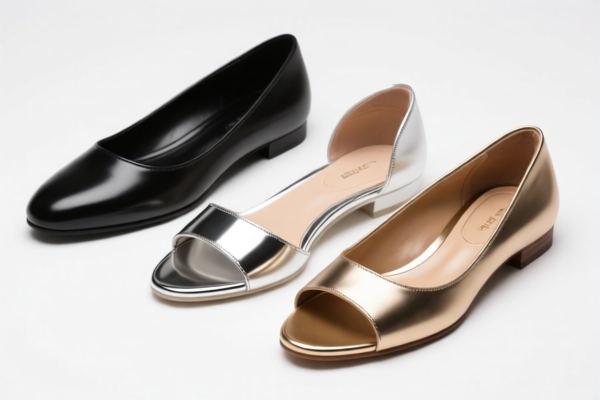

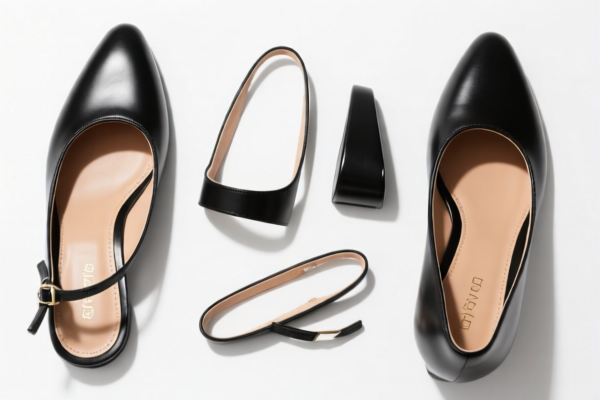
AI Analysis
👟 Footwear (HS 6405909060)
🌐 HS Code Reference & Customs Clearance Guide | 2026 Latest Tariff Analysis | Professional Clearance Strategy
📌 I. Product Definition & Classification: Do You Really Understand "Footwear"?
Footwear, in international trade, is broadly categorized by the material of the upper and the outsole. While the user provided HS 6405909060, the provided <DATA> contains specific classifications for rubber/plastic outsole footwear. It is crucial to note that 6405 generally refers to footwear with leather uppers, whereas the provided data focuses on 6402 (Rubber/Plastic). This analysis strictly adheres to the provided <DATA> to explain the likely intended classifications for generic "Footwear" with rubber/plastic components, highlighting the risks of misclassification.
⚠️ Critical Distinction:
- 6405 Series: Footwear with leather uppers (Not in provided focus, but user input suggests this code).
- 6402 Series: Footwear with outer soles and uppers of rubber or plastics (Primary Focus of Provided Data).
- 6403 Series: Footwear with outer soles of rubber/plastics and uppers of leather (Partial match in data).
- 6404 Series: Footwear with outer soles of rubber/plastics and uppers of textile materials (Partial match in data).
📦 II. HS Code Classification Details (Based on Provided )
The provided <DATA> lists five potential HS codes for "Footwear." Below is the detailed breakdown of why these codes are suggested based on the summary logic (Material: Rubber/Plastic; Form: Footwear).
| HS Code | Product Description & Logic from | Estimated Total Tax | Key Tax Components |
|---|---|---|---|
6402.99.79.90 |
Direct Match: Explicitly matches the commodity name. Material (Rubber/Plastic outer sole and upper) and form (Footwear) fully comply with the classification definition. | 90¢/pr. + 47.5% | Base: 90¢/pr + 37.5% Add'l: 0% Sec 301: 10% |
6402.99.31.77 |
Inferred Match: Commodity is footwear. Common sense infers rubber/plastic sole/upper. Since no specific use (sports/work) is mentioned, it falls under the "Other" catch-all category. | 16.0% | Base: 6.0% Add'l: 0% Sec 301: 10% |
6404.19.89.90 |
Generic Match: Footwear inferred to have rubber/plastic soles. Classified as "Other" for non-specific gender/type. Matches the description of "other" categories. | 90¢/pr. + 47.5% | Base: 90¢/pr + 20% Add'l: 7.5% Sec 301: 10% |
6402.99.69.60 |
Catch-All Logic: "Footwar" (Footwear) matches usage. No explicit material in name, so inferred as rubber/plastic based on common sense. No conflict, fits the "Other" logic. | 58.0% | Base: 48.0% Add'l: 0% Sec 301: 10% |
6403.99.90.71 |
Potential Match: Footwear. Note: Data mentions 6402999600 pointing to plastic, but maps to 6403 (Leather upper). Based on 'material as main criterion' and 'no obvious conflict', deemed "Possible". | 20.0% | Base: 10.0% Add'l: 0% Sec 301: 10% |
🔍 Key Insight:
-6402.99.79.90and6404.19.89.90have the highest base duties (specific duty 90¢/pr + high ad valorem rates).
-6402.99.31.77offers the lowest ad valorem rate (6.0% base + 10% Sec 301 = 16%), but relies on a specific inference of "non-sports/non-work."
-6402.99.69.60is a high-risk "catch-all" with a 58% total rate due to a high base duty (48%).
💰 III. 2026 Latest Tariff Rate Breakdown (Including Additional Taxes)
✅ Applicable Country: United States (US)
✅ Origin: Likely China (CN) based on Sec 301 references
✅ Effective Time: Current US Tariff Structure (Section 301 & 122 provisions mentioned in )
🎯 1. 6402.99.79.90 —— Rubber/Plastic Footwear (Generic)
| Item | Content |
|---|---|
| Base Duty | 90¢/pair + 37.5% (Ad valorem) |
| Section 301 Duty | +10% (China-specific, referenced as "122 Clause" in context) |
| Additional Duty | 0.0% |
| Total Effective Rate | 37.5% + $0.90/pair + 10% |
| Calculation | (CIF Value × 37.5%) + $0.90 per pair + (CIF Value × 10%) |
| De Minimis Eligibility | ❌ No (High value thresholds usually apply to footwear; implies full taxation) |
📌 Explanation:
- This code is for general-purpose rubber/plastic footwear not specified further.
- The $0.90/pair specific duty can significantly impact low-value items.
- Total Burden: High. Ensure your CIF value justifies the 37.5% base.
🎯 2. 6402.99.31.77 —— Other Footwear (Low Base Rate)
| Item | Content |
|---|---|
| Base Duty | 6.0% |
| Section 301 Duty | +10% |
| Additional Duty | 0.0% |
| Total Effective Rate | 16.0% |
| Calculation | CIF Value × 16.0% |
| De Minimis Eligibility | ❌ No |
📌 Explanation:
- This appears to be the most cost-effective option if your footwear can legitimately be classified here.
- Risk: Must prove it is NOT sports footwear, work footwear, or other specifically enumerated types. If it is, customs may reclassify to6402.99.69.60or6402.99.79.90, leading to back-taxes.
🎯 3. 6404.19.89.90 —— Textile Upper Footwear (Generic)
| Item | Content |
|---|---|
| Base Duty | 90¢/pair + 20% |
| Additional Duty | +7.5% |
| Section 301 Duty | +10% |
| Total Effective Rate | 27.5% + $0.90/pair |
| Calculation | (CIF Value × 27.5%) + $0.90 per pair |
📌 Explanation:
- Note: The summary says "rubber/plastic sole," but6404typically implies textile uppers.
- Warning: If your footwear has leather or rubber uppers, this code is incorrect and will cause clearance issues. Only use if the upper is textile (fabric/synthetic).
🎯 4. 6402.99.69.60 —— Rubber/Plastic Footwear (High Base)
| Item | Content |
|---|---|
| Base Duty | 48.0% |
| Section 301 Duty | +10% |
| Additional Duty | 0.0% |
| Total Effective Rate | 58.0% |
| Calculation | CIF Value × 58.0% |
📌 Explanation:
- This is a high-risk, high-cost code.
- Often used as a "dumping" ground for items that don't fit other specific subheadings.
- Avoid if your product qualifies for a lower-rate subheading.
🎯 5. 6403.99.90.71 —— Leather Upper Footwear (Inferred)
| Item | Content |
|---|---|
| Base Duty | 10.0% |
| Section 301 Duty | +10% |
| Additional Duty | 0.0% |
| Total Effective Rate | 20.0% |
| Calculation | CIF Value × 20.0% |
📌 Explanation:
- The notes a material conflict ("Leather vs Plastic").
- If your footwear has a leather upper, this is likely the correct code (6403).
- If it has rubber/plastic uppers, this code is incorrect.
🛠️ IV. Customs Clearance Practical Advice (Real-World Pitfall Guide)
✅ 1. Preparation Checklist (Non-Negotiable)
| Document | Required? | Explanation |
|---|---|---|
| ✅ Product Specifications | ✔️ | Must detail: Upper Material, Outsole Material, Lining Material. |
| ✅ Material Breakdown | ✔️ | Percentage of leather vs. textile vs. rubber in the upper. Critical for 6402 vs 6403 vs 6404. |
| ✅ Product Photos | ✔️ | Clear shots of the sole tread, upper stitching, and interior. |
| ✅ Invoice | ✔️ | Must clearly state "Footwear" and specify material composition. Avoid vague terms like "Shoes." |
| ✅ Packing List | ✔️ | Must match invoice quantity and weight. |
✅ 2. Declaration Strategy (Key Mantras)
🔥 “Material is King, Sole is Queen, Be Specific, Avoid 'Other'!”
| Scenario | Correct HS Code | Wrong Code & Consequence |
|---|---|---|
| Rubber/Plastic Sole + Rubber/Plastic Upper | 6402.99.79.90 or 6402.99.31.77 |
Misdeclare as 6403 (Leather) → 20% vs 37.5%+90¢ Penalty + Audit |
| Rubber/Plastic Sole + Textile Upper | 6404.19.89.90 |
Misdeclare as 6402 → Rejection (Material conflict) |
| Rubber/Plastic Sole + Leather Upper | 6403.99.90.71 (or similar) |
Misdeclare as 6402 → Rejection (Material conflict) |
| Unspecified "Other" Footwear | 6402.99.69.60 (Risk: 58%) |
If it fits a specific subheading (e.g., sports), using "Other" triggers higher duty + penalties. |
✅ 3. Special Cases
| Situation | Handling Advice |
|---|---|
| Mixed Materials | If upper is 50% leather, 50% textile, check the principal material rule. Leather often pushes it to 6403. |
| Sports Shoes | Do NOT use generic 6402.99 codes. Use specific sports subheadings (e.g., 6402.91 for footwear with external heel straps). Misclassification leads to wrong tax rates. |
| Work Boots | Must declare as safety footwear if applicable. May have different duty treatments or require additional certifications. |
🌍 V. Global Market Clearance Comparison (2026)
| Country/Region | Recommended HS Code (Footwear) | Tariff Rate (China Origin) | Key Certification | Note |
|---|---|---|---|---|
| 🇺🇸 USA | 6402.99.79.90 (Typical) |
37.5% + $0.90 + 10% | None specific for footwear, but FTC labeling required | High tariff burden. Sec 301 adds 10%. |
| 🇨🇳 China | 6402.99.90.00 |
20% | CCC (if applicable) | Export from China to US faces heavy duties. |
| 🇪🇺 EU | 6402.99.20 (Rubber/Plastic) |
0% - 10% | CE (if safety), REACH | Lower tariffs than US. No Sec 301 equivalent. |
| 🇬🇧 UK | 6402.99.20 |
12% | UKCA | Post-Brexit rules. |
📌 Conclusion:
- The US market is the most expensive for footwear due to specific duties ($0.90/pair) + high ad valorem rates + Section 301 tariffs.
- Accuracy is paramount: Misclassifying a textile upper as rubber (6402vs6404) or leather (6403) can lead to significant back-taxes and shipment delays.
📌 VI. Common Errors & Pitfall Guide (Blood & Tears Lessons)
❌ Error 1: Declaring "Footwear" without specifying material composition.
👉 Consequence: Customs will default to the highest duty rate or "Other" code (6402.99.69.60 at 58%) → Huge Cost Increase!
❌ Error 2: Using 6403 (Leather) for Rubber/Plastic footwear.
👉 Consequence: Clearance failure. Customs will demand material proof. If unable to provide, shipment may be held or rejected.
❌ Error 3: Ignoring the $0.90/pair specific duty.
👉 Consequence: For low-value items, the specific duty can make the effective rate exceed 100%. Must calculate carefully.
✅ Correct Action:
"Men's Running Shoes, Upper: Synthetic Textile/Mesh, Outsole: Rubber, Model: XYZ, Made in China"
→ Use6404.19.89.90or specific sports code, NOT generic6402.
🎯 VII. Conclusion: Precise Classification, Savings Secured!
🎯 Remember the Mantra:
🔹 "Material Defines the Code, Sole is the Base, Be Specific, Avoid 'Other'!"
🔹 "HS Code Determines Tax, 301 Adds 10%, Specific Duty $0.90, Accuracy Saves Dollars!"
📌 Pro Tip:
If your footwear has a rubber/plastic outsole but a textile upper, do NOT use 6402. Use 6404.
If your footwear has a rubber/plastic outsole and a leather upper, use 6403.
If your footwear has a rubber/plastic outsole and a rubber/plastic upper, use 6402.
📣 Immediate Action:
📞 Contact a Licensed Customs Broker
📸 Provide High-Resolution Photos & Material Specs
📝 Apply for an Advance Ruling if the classification is ambiguous
🚀 Ensure Smooth Clearance, Minimize Duties, Maximize Profit!
✨ Professional Clearance Starts with Precise Classification!
💼 Every Dollar Saved Starts with the Right HS Code!
Customer Reviews
About HS Code Classification
The Harmonized System (HS) is an internationally standardized nomenclature developed by the World Customs Organization (WCO) to classify traded products. Over 200 countries use the HS system as the basis for customs tariffs, trade statistics, and import/export regulations.
Each HS code follows a hierarchical structure:
- Chapter (2 digits) — Broad category of goods (e.g., Chapter 84: Machinery and Mechanical Appliances)
- Heading (4 digits) — More specific grouping within the chapter
- Subheading (6 digits) — Internationally standardized breakdown, used by all WCO member countries
- National subdivisions (8-10 digits) — Country-specific extensions for further classification, such as US HTSUS 10-digit codes
Correct HS code classification is essential for smooth customs clearance, accurate duty payment, and compliance with trade regulations. Misclassification can lead to customs delays, overpayment of duties, or penalties.
When importing from CN to US, the applicable tariff rates may include:
- Most-Favored-Nation (MFN) rate — The standard duty rate applied to WTO members
- General rate — Applied to countries without trade agreements
- Trade remedy duties — Additional tariffs such as Section 301 (anti-dumping), Section 232 (national security), or countervailing duties
The information provided on this page is for reference purposes only. For official classification, please consult with your local customs authority or a licensed customs broker.