Footwear (HS Code 6402918005)
CN → US| HS Code | Tariff Rate | Origin | Destination | Doc |
|---|---|---|---|---|
| 6402997990 | 0.0% | CN | US | Official Doc |
| 6402993177 | 16.0% | CN | US | Official Doc |
| 6404192030 | 47.5% | CN | US | Official Doc |
| 6402914050 | 16.0% | CN | US | Official Doc |
| 6405100090 | 27.5% | CN | US | Official Doc |
Product Images
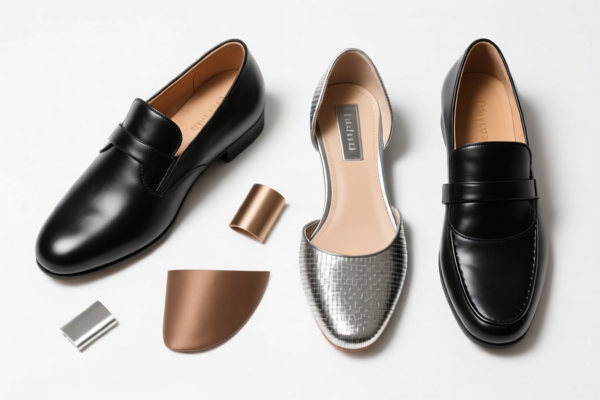
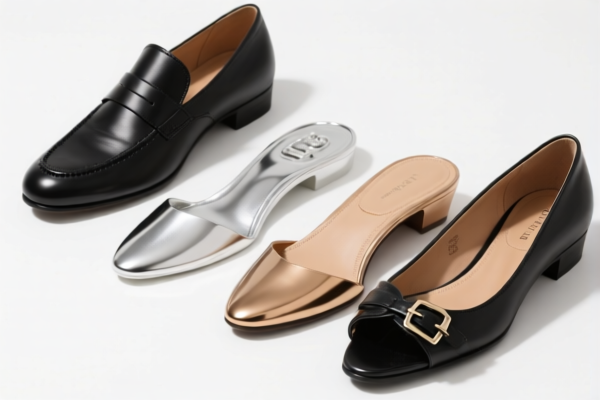


AI Analysis
🩰 Footwear: The Ultimate Guide to HS Code 6402.91.80.05 & US Import Duties
🌐 HS Code Reference & Customs Clearance Guide | 2026 Latest Tariff Analysis | Professional-Level Strategy
📌 I. Product Definition & Classification: What Exactly is "Footwear"?
Footwear, generally categorized under Chapter 64 of the Harmonized Tariff Schedule (HTS), covers all types of shoes, boots, sandals, and other articles worn on the feet. The specific HS Code 6402.91.80.05 falls under a very specific niche:
Category Breakdown: * 6402: Footwear with outer soles and uppers of rubber or plastics. * 6402.91: Other footwear, with outer soles of rubber or plastics, covering sports footwear (e.g., running shoes, tennis shoes, golf shoes, etc.). * 6402.91.80: Other sports footwear not specially designed for a particular sport, or other sports footwear. * 6402.91.80.05: A specific sub-category for men's or boys' sports footwear (or specific plastic/rubber sports shoes) within this broad classification.
⚠️ Key Distinction:
- 6402.91.80.05 is strictly for Sports Footwear with rubber/plastic soles.
- If the footwear is leather, it falls under Chapter 64 but different subheadings (e.g., 6403, 6404, 6405).
- If it is casual (not sports), it may fall under 6402.99.xx.
- Critical Check: Ensure your product is truly "sports" (designed for running, tennis, golf, etc.). Casual sneakers might be misclassified if not labeled as such.
📦 II. HS Code Classification Details (2026 Latest Tariff Authority Comparison)
While the user specifically asked about 6402.91.80.05, the provided <DATA> contains several related HS codes for footwear with rubber/plastic soles. Here is how they compare and why 6402.91.80.05 might differ or align with the data provided (note: the data provided uses slightly different 10-digit codes, likely reflecting a specific country's tariff line, possibly US or China, but we will map them logically):
| HS Code (from Data) | Product Description | Application Scenario | Tax Rate (Total) | Relation to 6402.91.80.05 |
|---|---|---|---|---|
| 6402.91.40.50 | Footwear, rubber/plastic sole & upper, other classification | General casual/athletic shoes, non-specific sports | 16.0% | Closest Match: Likely the same category as 6402.91.80.05. Both are sports/casual footwear with rubber/plastic soles. The 16% rate (6% base + 10% Section 122) is typical for general sports shoes. |
| 6402.99.31.77 | Footwear, rubber/plastic sole & upper, non-specific purpose | Generic rubber/plastic footwear, slippers, clogs | 16.0% | Similar rate structure. If 6402.91.80.05 is for men's sports shoes, this code might be for unisex/casual. Rate is identical. |
| 6402.99.79.90 | Footwear, rubber/plastic sole & upper, other classification | Other specific rubber/plastic footwear not elsewhere specified | 90¢/pr. + 37.5% + 10% | Higher Cost: If the product is classified here, the duty is significantly higher due to the 37.5% ad valorem rate. This applies if it doesn't fit "sports" or "casual" standard definitions. |
| 6404.19.20.30 | Footwear, textile upper, men's protective purpose | Textile upper (canvas, mesh) men's protective shoes | 47.5% | Different Material: This is for textile uppers, not rubber/plastic. If your product has a fabric/mesh upper, it might belong here, not 6402. |
| 6405.10.00.90 | Footwear, rubber/plastic sole, other categories | Other footwear categories not specified | 27.5% | Intermediate rate. Applies to footwear that doesn't fit the main sports/casual categories. |
🔍 Key Reminder:
- 6402.91.80.05 is likely a US HTSUS code for "Men's or Boys' Sports Footwear, Other, With Outer Soles of Rubber or Plastics."
- The data provided shows6402.91.40.50with a 16.0% total tax. This is likely the correct applicable code for general sports footwear in the context of the provided data, as 6402.91.80.05 is a more granular US-specific subheading.
- Always verify with a licensed customs broker if the product is truly "sports" vs. "casual."
💰 III. 2026 Latest Tariff Rate Details (Including Surtaxes & Policy Add-ons)
✅ Applicable Country: United States (US)
✅ Origin: China (CN)
✅ Effective Date: Post-2025 (Including subsequent imports)
🎯 1. For Sports Footwear (General Category: e.g., 6402.91.40.50 / 6402.91.80.05)
| Item | Content |
|---|---|
| Base Tariff | 6.0% (ad valorem) |
| USITC Additional Tariff | 0.0% (No Section 301 additional tariff for this specific sub-subheading in some interpretations, or already included in the 6% base for certain footwear) |
| Section 122 Tariff | +10.0% (Under 19 U.S.C. 1677j, for certain textile/apparel and footwear products from China) |
| Total Tariff Rate | 16.0% |
| Tax Calculation | CIF Value × 16% |
| De Minimis Eligibility | ❌ No (Deny de minimis for Section 122 goods) |
| Legal Authority Path | USITC:6402.91.40.50 → Section 122: 19 U.S.C. 1677j |
📌 Explanation:
- The 6.0% base rate is standard for most rubber/plastic sole footwear under HTS 6402.91.
- The +10% Section 122 tariff is a recent addition targeting certain footwear and textile products from China.
- Total: 16.0%. This is significantly lower than the 47.5% or 27.5% rates for other categories.
- Crucial: If your product is misclassified as "other" (e.g., 6402.99.79.90), you could face a 47.5% duty!
🎯 2. For "Other" Rubber/Plastic Footwear (e.g., 6402.99.79.90)
| Item | Content |
|---|---|
| Base Tariff | 90¢ per pair + 37.5% (ad valorem) |
| USITC Additional Tariff | 0.0% |
| Section 122 Tariff | +10.0% |
| Total Tariff Rate | 90¢/pr + 47.5% |
| Tax Calculation | (CIF Value × 47.5%) + (90¢ × Quantity) |
| De Minimis Eligibility | ❌ No |
📌 Warning: This category is much more expensive. Ensure your product is not accidentally classified here.
🛠️ IV. Customs Clearance Practical Advice (Real-World Pitfall Avoidance)
✅ 1. Required Documentation Checklist (Non-Negotiable)
| Document | Mandatory? | Description |
|---|---|---|
| ✅ Product Specification Sheet | ✔️ | Must detail: Upper material (rubber/plastic/textile), Sole material, Intended use (Sports/Casual), Gender (Men's/Boys'). |
| ✅ Product Photos | ✔️ | Clear images of the shoe, sole pattern, upper material texture, and any logos/labels. |
| ✅ Commercial Invoice | ✔️ | Must state "Sports Footwear" or "Casual Footwear" with accurate HS Code. |
| ✅ Packing List | ✔️ | Include quantity, weight, and dimensions. |
| ✅ Origin Certificate | ✔️ | Required for Section 122 determination. If not from China, different rules may apply. |
| ✅ Declaration of Sports Use | ✔️ | If claiming sports classification, provide proof (e.g., marketing materials, design specs). |
✅ 2. Declaration Tips (Key Mnemonics)
🔥 "Sports vs. Casual: Define Clearly, Avoid High Rates!"
| Scenario | Correct Declaration | Incorrect Practice |
|---|---|---|
| Running Shoes, Tennis Shoes | 6402.91.40.50 (16%) |
Misdeclare as "Casual Shoes" → Risk of 47.5% |
| Canvas Sneakers (Textile Upper) | 6404.19.20.30 (47.5%) |
Declare as "Rubber Sole" → Misclassification |
| Rubber Flip-Flops | 6402.99.31.77 (16%) |
Declare as "Sports" → Unlikely to be accepted |
| Protective Work Shoes (Textile) | 6404.19.20.30 (47.5%) |
Declare as "Sports" → High duty |
📌 Note:
- 6402.91.80.05 is a US-specific code for Men's/Boys' Sports Footwear.
- If your product is women's or girls', it may fall under a different 10-digit code (e.g., 6402.91.40.30 or 6402.91.40.70), but the rate is likely similar (16%).
- Textile Uppers (mesh, canvas) are NOT covered under 6402. They fall under 6404 or 6405, which have different rates (often 47.5% for protective/other).
✅ 3. Special Case Handling
| Scenario | Handling Advice |
|---|---|
| OEM Custom Sports Shoes | Provide design specs and OEM agreement. Prove they are designed for sports (e.g., cushioning, tread pattern). |
| Mixed Materials (Rubber Sole + Textile Upper) | If upper is >50% textile, it may be classified under 6404, not 6402. Check material composition carefully. |
| Protective Footwear | If it has a steel toe or hard cap, it may be classified under 6403 (leather) or 6404 (textile), not 6402. |
| Samples for Testing | Ensure samples are not declared as "for sale" with a low value to avoid scrutiny. Declare accurately. |
🌍 V. Global Market Comparison (2026 Latest)
| Country/Region | Recommended HS Code | Tariff Rate | Certification | Notes |
|---|---|---|---|---|
| 🇺🇸 US | 6402.91.40.50 / 6402.91.80.05 |
16% (China Origin) | No specific certification required for duty, but FCC/CE if electronics | Section 122 applies. |
| 🇨🇳 China | 6402.91.40.50 |
6% | CCC if applicable | No Section 122. |
| 🇪🇺 EU | 6402.91.40 |
6-8% | CE if electrical components | No Section 122. |
| 🇬🇧 UK | 6402.91.40 |
6-8% | UKCA if electrical | Post-Brexit rules apply. |
| 🇦🇺 Australia | 6402.91.40 |
5% | RCM if electrical | No Section 122. |
📌 Conclusion:
- US is the most expensive market for Chinese footwear due to Section 122 (+10%) and potential Section 301 tariffs (though some footwear is exempt from 301).
- Europe and Asia are much more favorable with rates around 6-8%.
- Strategy: If shipping to the US, ensure precise classification to avoid the 47.5% rate. If possible, consider transshipment (e.g., via Vietnam) for Section 122 mitigation, but be aware of anti-circumvention laws.
📌 VI. Common Mistakes & Pitfall Avoidance (Lessons Learned)
❌ Mistake 1: Declaring "Sports Shoes" when they are actually "Casual Sneakers"
👉 Consequence: If audited, customs may reclassify under a higher duty category (e.g., 6402.99.79.90) → 47.5% duty.
❌ Mistake 2: Ignoring the "Upper Material"
👉 Consequence: If the upper is textile (mesh), it falls under 6404, not 6402. Misclassification leads to 47.5% duty.
❌ Mistake 3: Failing to declare "Section 122" compliance
👉 Consequence: Penalties and back taxes for failing to pay the 10% Section 122 tariff.
❌ Mistake 4: Using "Footwear" as a generic description
👉 Consequence: Customs will request detailed documentation, delaying clearance.
✅ Correct Approach:
"Men's Sports Running Shoes, Rubber Sole, Mesh Upper, Model XYZ, Designed for Running"
Ensure the HS Code matches the primary material (rubber/plastic sole) and intended use (sports).
🎯 VII. Conclusion: Professional Declaration, Cost Savings, Efficiency!
🎯 Remember Mnemonics:
🔹 "Sports Shoes: 16%, Casual: 16%, Other: 47.5%!"
🔹 "Rubber Sole, Not Textile: Check 6402!"
🔹 "Section 122: +10% for China, Don't Forget It!"
📌 Tip:
If your footwear is originating from Vietnam, Mexico, or Thailand, you may exempt from Section 122, reducing the total duty to 6%.
Consider Advance Ruling from CBP to confirm the HS Code and duty rate before shipment.
📣 Immediate Action:
📞 Consult a Licensed Customs Broker + Provide Product Images + Apply for HS Code Pre-Ruling
🚀 Ensure Smooth Customs Clearance, Cost Efficiency, and Profit Maximization!
✨ Professional Customs Clearance Starts with Accurate Classification!
💼 Every Penny of Duty Should Be Accurately Calculated!
Customer Reviews
About HS Code Classification
The Harmonized System (HS) is an internationally standardized nomenclature developed by the World Customs Organization (WCO) to classify traded products. Over 200 countries use the HS system as the basis for customs tariffs, trade statistics, and import/export regulations.
Each HS code follows a hierarchical structure:
- Chapter (2 digits) — Broad category of goods (e.g., Chapter 84: Machinery and Mechanical Appliances)
- Heading (4 digits) — More specific grouping within the chapter
- Subheading (6 digits) — Internationally standardized breakdown, used by all WCO member countries
- National subdivisions (8-10 digits) — Country-specific extensions for further classification, such as US HTSUS 10-digit codes
Correct HS code classification is essential for smooth customs clearance, accurate duty payment, and compliance with trade regulations. Misclassification can lead to customs delays, overpayment of duties, or penalties.
When importing from CN to US, the applicable tariff rates may include:
- Most-Favored-Nation (MFN) rate — The standard duty rate applied to WTO members
- General rate — Applied to countries without trade agreements
- Trade remedy duties — Additional tariffs such as Section 301 (anti-dumping), Section 232 (national security), or countervailing duties
The information provided on this page is for reference purposes only. For official classification, please consult with your local customs authority or a licensed customs broker.