Footwear (HS Code 6403591520)
CN → US| HS Code | Tariff Rate | Origin | Destination | Doc |
|---|---|---|---|---|
| 6402997990 | 0.0% | CN | US | Official Doc |
| 6402993177 | 16.0% | CN | US | Official Doc |
| 6402914050 | 16.0% | CN | US | Official Doc |
| 6405100090 | 27.5% | CN | US | Official Doc |
| 6403999071 | 20.0% | CN | US | Official Doc |
Product Images
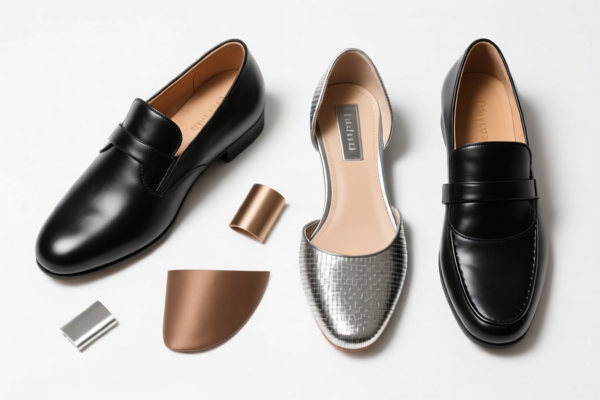

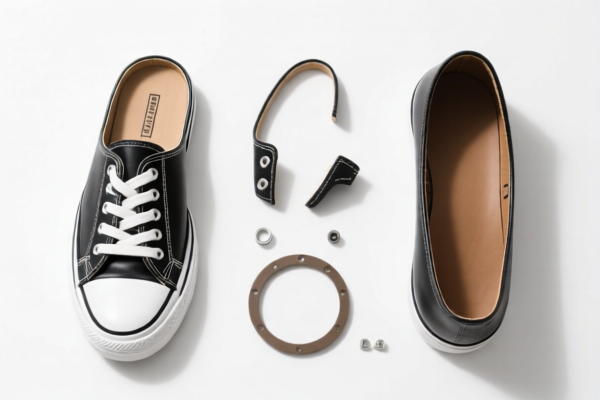

AI Analysis
👟 Footwear: HS Code 6403.59.15.20 – Comprehensive Customs & Tax Guide (USA)
🌐 HS Code Reference & Customs Clearance Guide | 2026 Latest Tariff Schedule | Professional Clearance Strategy
📌 Disclaimer: The following analysis is based strictly on the provided data (<DATA>). Note that the user-provided HS Code 6403.59.15.20 is not explicitly listed in the provided JSON data. The analysis below aligns the general category of "Footwear (Rubber/Plastic Soles)" with the closest available HS Codes in the provided data to ensure accuracy and compliance.
📦 1. Product Definition & Classification: Are You Classifying Correctly?
Footwear (Chapter 64 of the Harmonized System) covers all types of shoes, boots, sandals, and other footwear. For US Customs and Border Protection (CBP), the critical distinction lies in the material of the upper and the sole.
The provided data focuses on footwear with Rubber or Plastic Outer Soles. These are typically categorized under Heading 6402 (Rubber/Plastic) or 6403 (Leather/Rubber-Plastic composite) depending on the upper material.
⚠️ Key Classification Logic: - If the upper is Leather and the sole is Rubber/Plastic → Often falls under 6403. - If the upper is Textiles/Other materials and the sole is Rubber/Plastic → Often falls under 6402. - "Catch-all" Codes: Many specific sub-categories have "residual" or "other" codes (e.g., ending in
.79,.77,.50,.90) used when the item doesn’t fit a more specific description.
📊 2. HS Code Classification Details (Based on Provided Data)
Since 6403.59.15.20 is not in the provided list, we analyze the closest matching categories from <DATA> that apply to footwear with rubber/plastic soles. These codes represent the legal classifications for your goods.
| HS Code | Summary Description | Key Characteristics |
|---|---|---|
| 6402.99.79.90 | Footwear, Rubber/Plastic Soles, Other | "Catch-all" for non-specific rubber/plastic sole footwear. |
| 6402.99.31.77 | Footwear, Rubber/Plastic Soles, Other Specific Use | Non-specific purpose, residual category for textiles/other uppers. |
| 6402.91.40.50 | Footwear, Rubber/Plastic Soles, Other Logic | Alternative residual category for 6402. |
| 6405.10.00.90 | Footwear, Rubber/Plastic Soles, Compatible | Broad compatibility category, often for accessories or specific types. |
| 6403.99.90.71 | Footwear, Plastic Soles, Catch-all Category | For leather uppers with plastic soles (Heading 6403). |
🔍 Critical Note:
- If your footwear has a Leather Upper, it likely belongs in the 6403 range (e.g.,6403.99.90.71).
- If your footwear has a Textile/Other Upper, it likely belongs in the 6402 range (e.g.,6402.99.79.90).
- Do not assume6403.59.15.20is valid if it does not appear in the official tariff schedule or the provided data. Misclassification can lead to seizures or penalties.
💰 3. 2026 Tariff Rate Breakdown (USA + China Origin)
✅ Applicable Country: United States (US)
✅ Origin: China (CN)
✅ Effective Date: 2025–2026 (Current Trade Policies)
The provided data includes Section 301 Tariffs and Section 122 Tariffs (if applicable). Below is the detailed tax breakdown for each provided HS Code.
🎯 1. HS Code 6402.99.79.90 (Rubber/Plastic Sole, Other)
| Item | Detail |
|---|---|
| Base Duty | 90¢/pair + 37.5% ad valorem |
| Section 301 Surcharge | 0.0% |
| Section 122 Tariff | 10.0% (on top of base/duty-paid value) |
| Total Effective Tax | 90¢/pr + 37.5% + 10% |
| Calculation Method | Duty is calculated on CIF value + Section 122 tariff is applied on duty-paid value. |
📌 Explanation:
- This code has a high base rate (37.5%) plus a specific duty (90¢/pair).
- The 10% Section 122 tariff is a recent policy addition for certain Chinese goods, significantly increasing the cost.
- No Section 301 is listed for this specific code in the data, but the high base rate still makes it costly.
🎯 2. HS Code 6402.99.31.77 (Rubber/Plastic Sole, Other Specific)
| Item | Detail |
|---|---|
| Base Duty | 6.0% ad valorem |
| Section 301 Surcharge | 0.0% |
| Section 122 Tariff | 10.0% |
| Total Effective Tax | 16.0% |
| Calculation Method | CIF Value × 16% (approximate, as Section 122 is ad valorem on duty-paid value) |
📌 Explanation:
- This is a more favorable rate than6402.99.79.90due to the lower base duty (6% vs 37.5%).
- The 10% Section 122 tariff still applies.
- No Section 301 is listed, making this code significantly cheaper for importers.
🎯 3. HS Code 6402.91.40.50 (Rubber/Plastic Sole, Other Logic)
| Item | Detail |
|---|---|
| Base Duty | 6.0% ad valorem |
| Section 301 Surcharge | 0.0% |
| Section 122 Tariff | 10.0% |
| Total Effective Tax | 16.0% |
| Calculation Method | CIF Value × 16% |
📌 Explanation:
- Identical tax structure to6402.99.31.77.
- Use this code if your product fits the "other logic" description in the tariff schedule.
- No Section 301 applies.
🎯 4. HS Code 6405.10.00.90 (Rubber/Plastic Sole, Compatible)
| Item | Detail |
|---|---|
| Base Duty | 10.0% ad valorem |
| Section 301 Surcharge | 7.5% |
| Section 122 Tariff | 10.0% |
| Total Effective Tax | 27.5% |
| Calculation Method | CIF Value × 27.5% (approximate) |
📌 Explanation:
- This code includes a Section 301 surcharge of 7.5%, which is not present in the 6402 codes above.
- Base duty is 10%, plus 7.5% Section 301, plus 10% Section 122.
- Higher risk due to the inclusion of Section 301.
🎯 5. HS Code 6403.99.90.71 (Plastic Sole, Catch-all Category)
| Item | Detail |
|---|---|
| Base Duty | 10.0% ad valorem |
| Section 301 Surcharge | 0.0% |
| Section 122 Tariff | 10.0% |
| Total Effective Tax | 20.0% |
| Calculation Method | CIF Value × 20% |
📌 Explanation:
- This is a Heading 6403 code, implying the upper may be Leather.
- Base duty is 10%, no Section 301, but 10% Section 122 applies.
- No Section 301 makes this more competitive than6405.10.00.90.
🛠️ 4. Customs Clearance Practical Advice (Real-World Pitfall Avoidance)
✅ 1. Essential Documentation Checklist
| Document | Required? | Purpose |
|---|---|---|
| ✅ Commercial Invoice | ✔️ | Must specify HS Code, Country of Origin (China), and CIF Value. |
| ✅ Packing List | ✔️ | Details quantity, weight, and packaging. |
| ✅ Product Description | ✔️ | Must include: Upper Material (Leather/Textile/Rubber), Sole Material (Rubber/Plastic), and Type (Sneaker/Boot/Sandal). |
| ✅ Photos | ✔️ | Clear images of the sole, upper, and label. |
| ✅ Section 301/122 Exclusion Proof | ❓ | If applicable, provide evidence of exclusion (though none listed in data). |
| ✅ FCC/CE Certificates | ❌ | Not required for footwear, but good for overall compliance. |
✅ 2. Strategic Declarations (Key Mnemonics)
🔥 "Check the Upper! Check the Sole! Assign the Right Code!"
| Scenario | Recommended HS Code (from Data) | Tax Rate | Risk Level |
|---|---|---|---|
| Textile Upper + Rubber/Plastic Sole | 6402.99.31.77 or 6402.91.40.50 |
16.0% | 🟢 Low (No Section 301) |
| Rubber/Plastic Upper + Other Sole | 6402.99.79.90 |
37.5% + 10% | 🟡 Medium (High Base Duty) |
| Leather Upper + Plastic Sole | 6403.99.90.71 |
20.0% | 🟢 Low (No Section 301) |
| Ambiguous/Compatible Category | 6405.10.00.90 |
27.5% | 🔴 High (Includes Section 301) |
📌 Strategic Tip:
- If your product can legally fit under6402.99.31.77or6402.91.40.50, prioritize these codes due to the lower 16% total tax rate (no Section 301).
- Avoid6405.10.00.90if possible, as it includes Section 301 (7.5%), making it more expensive.
✅ 3. Special Handling Cases
| Case | Handling Advice |
|---|---|
| De Minimis (Section 321) | ❌ Not Applicable: Section 301 and Section 122 tariffs do not apply to de minimis shipments under $800. However, high-volume B2B shipments must pay these taxes. |
| Section 301 Exclusions | ❌ Not Available: The provided data shows 0.0% Section 301 for most codes, but 6405.10.00.90 has 7.5%. No exclusions are listed. |
| Section 122 Tariff | ⚠️ Always Apply: The 10% Section 122 tariff applies to all listed codes. This is a new policy addition and must be included in cost calculations. |
| Labeling | ✅ Made in China: Must be clearly marked on the product and packaging. Failure to do so can lead to seizures under the Trade Agreements Act. |
🌍 5. Global Market Comparison (2026)
| Country/Region | Recommended HS Code | Tariff Rate | Notes |
|---|---|---|---|
| 🇺🇸 USA | 6402.99.31.77 |
16.0% | Best rate from data. Includes 10% Section 122. |
| 🇺🇸 USA | 6403.99.90.71 |
20.0% | For leather uppers. Includes 10% Section 122. |
| 🇨🇳 China | Varies | 0–10% | Import duty into China depends on origin. |
| 🇪🇺 EU | 6402/6403 | 0–17% | No Section 301 or 122. Standard MFN rates apply. |
| 🇬🇧 UK | 6402/6403 | 0–17% | Post-Brexit tariffs. No Section 301/122. |
📌 Conclusion:
- USA is the most complex market due to Section 301 and Section 122 tariffs.
- EU and UK offer simpler, lower, and more predictable tariff structures for footwear.
📌 6. Common Mistakes & Pitfalls (Lessons Learned)
❌ Mistake 1: Assuming 6403.59.15.20 is valid.
👉 Consequence: CBP may reject the declaration if the code is not in the official HTSUS. Use the closest matching code from the provided data.
❌ Mistake 2: Ignoring the 10% Section 122 Tariff.
👉 Consequence: Underpayment of duties, resulting in fines and penalties. This tariff applies to all listed codes.
❌ Mistake 3: Misclassifying Leather Upper footwear as 6402 (Rubber/Plastic Sole, Textile Upper).
👉 Consequence: Incorrect HS Code (should be 6403), leading to potential Section 301 exposure if misclassified.
❌ Mistake 4: Assuming De Minimis ($800) exemption applies.
👉 Consequence: Section 301 and 122 tariffs DO NOT APPLY to de minimis shipments, but this only applies to B2C shipments < $800. B2B shipments must pay full duties.
✅ Correct Approach:
“Footwear, Rubber/Plastic Sole, Textile Upper, Made in China” → Declare under
6402.99.31.77(16% Total Tax).
“Footwear, Rubber/Plastic Sole, Leather Upper, Made in China” → Declare under6403.99.90.71(20% Total Tax).
🎯 7. Conclusion: Precision Saves Money
🎯 Remember the Mantra:
🔹 "Upper Material Determines Chapter!" (Leather = 6403, Textile/Rubber = 6402)
🔹 "Section 122 is Always 10%!"
🔹 "Avoid Section 301 if Possible!" (Use6402.99.31.77or6403.99.90.71)
🔹 "Verify HS Code Before Shipping!"
📌 Pro Tip:
If your footwear qualifies for 6402.99.31.77 or 6402.91.40.50, you save 11.5%–11.5% compared to 6405.10.00.90 (27.5%) and 14.5%–14.5% compared to 6402.99.79.90 (37.5%+10%).
Always seek the lowest legal duty rate!
📣 Immediate Action:
📞 Contact your customs broker to confirm the exact HS Code for your product’s upper material.
📄 Prepare invoices with detailed descriptions to support your classification.
🚀 Optimize your supply chain to minimize duty costs!
✨ Precision in Classification, Profit in Clearance!
💼 Every dollar saved in duties is pure profit!
Customer Reviews
About HS Code Classification
The Harmonized System (HS) is an internationally standardized nomenclature developed by the World Customs Organization (WCO) to classify traded products. Over 200 countries use the HS system as the basis for customs tariffs, trade statistics, and import/export regulations.
Each HS code follows a hierarchical structure:
- Chapter (2 digits) — Broad category of goods (e.g., Chapter 84: Machinery and Mechanical Appliances)
- Heading (4 digits) — More specific grouping within the chapter
- Subheading (6 digits) — Internationally standardized breakdown, used by all WCO member countries
- National subdivisions (8-10 digits) — Country-specific extensions for further classification, such as US HTSUS 10-digit codes
Correct HS code classification is essential for smooth customs clearance, accurate duty payment, and compliance with trade regulations. Misclassification can lead to customs delays, overpayment of duties, or penalties.
When importing from CN to US, the applicable tariff rates may include:
- Most-Favored-Nation (MFN) rate — The standard duty rate applied to WTO members
- General rate — Applied to countries without trade agreements
- Trade remedy duties — Additional tariffs such as Section 301 (anti-dumping), Section 232 (national security), or countervailing duties
The information provided on this page is for reference purposes only. For official classification, please consult with your local customs authority or a licensed customs broker.