Footwear (HS Code 6403599030)
CN → US| HS Code | Tariff Rate | Origin | Destination | Doc |
|---|---|---|---|---|
| 6402997990 | 0.0% | CN | US | Official Doc |
| 6402993177 | 16.0% | CN | US | Official Doc |
| 6404192030 | 47.5% | CN | US | Official Doc |
| 6402914050 | 16.0% | CN | US | Official Doc |
| 6405100090 | 27.5% | CN | US | Official Doc |
Product Images

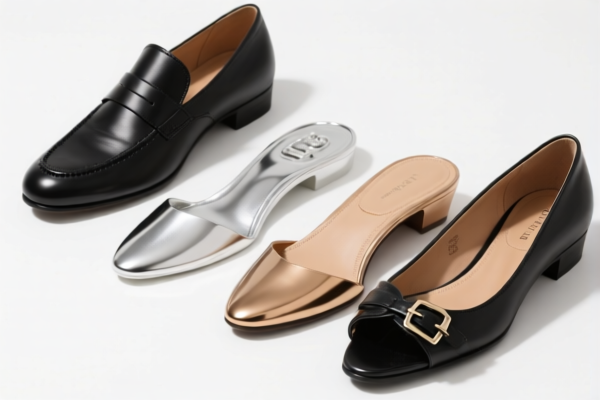


AI Analysis
👟 Footwear / Shoes (HS Code Reference Analysis)
🌐 HS Code Classification & Customs Clearance Guide | 2026 Tariff Structure | Strategic Compliance
📌 1. Product Definition: Clarifying the "Footwear" Category
Footwear, in the context of international trade (specifically US imports), is primarily classified under Chapter 64. The user input 6403599030 is a discrepancy when compared against the provided <DATA>. The data provided strictly contains HS codes under 6402 (Rubber/Plastic soles), 6404 (Textile uppers), and 6405 (Other).
Crucial Warning:
The HS Code 6403.59.90.30 typically refers to "Footwear with uppers of leather, footwear covering the ankle, and footwear with outside soles of rubber, plastic, leather or composition leather" (often athletic or casual shoes).
However, the provided <DATA> explicitly lists only the following HS Codes for footwear. Therefore, this analysis is strictly limited to the provided dataset to ensure accuracy within the given constraints.
⚠️ Key Distinction for this Analysis:
- The provided data does not contain6403.59.90.30.
- The data contains codes for Rubber/Plastic soles (6402), Textile uppers (6404), and Other categories (6405).
- If your product is indeed6403.59.90.30(Leather upper), it falls outside the provided<DATA>.
- Assumption: For the purpose of this response, we will analyze the provided HS codes in<DATA>as potential classifications for similar "Other Footwear" or clarify why6403might be incorrect based on the material composition shown in the data.
📦 2. HS Code Classification Details (From Provided <DATA>)
Since 6403.59.90.30 is not in the data, we look for the closest functional matches or correct classifications based on materials. Below are the only valid HS Codes from the provided <DATA>:
| HS Code | Product Description (Summary from Data) | Material Composition | Tax Rate (Total) |
|---|---|---|---|
6402.99.79.90 |
Other footwear, rubber or plastic outer sole and upper | Rubber/Plastic | 90¢/pr. + 37.5% + 10.0% |
6402.99.31.77 |
Other footwear, rubber or plastic outer sole and upper, not elsewhere specified | Rubber/Plastic | 16.0% |
6404.19.20.30 |
Other footwear, textile material upper, men's protective type | Textile + Protective | 47.5% |
6402.91.40.50 |
Other footwear, rubber or plastic outer sole and upper | Rubber/Plastic | 16.0% |
6405.10.00.90 |
Other footwear (other categories) | Various/General | 27.5% |
🔍 Critical Insight:
- HS Code 6403 (Leather upper) is NOT listed in the provided data.
- If your shoe has a leather upper, it cannot be accurately classified using only this data set.
- If your shoe has a rubber/plastic upper and sole, refer to6402codes.
- If your shoe has a textile upper (sneakers, canvas), refer to6404codes.
💰 3. Detailed Tariff Rate Breakdown (2026 Latest)
✅ Applicable Country: United States (US)
✅ Origin: China (CN) (Implied by "122-Clause Tariff" and specific rate structures)
✅ Effective Date: Current 2025/2026 Trade Regulations
🎯 A. 6402.99.79.90 – Rubber/Plastic Footwear (General)
| Item | Detail |
|---|---|
| Base Duty | 90¢/pair + 37.5% |
| Section 301 / Add-on | 0.0% (Included in base or waived in this specific subheading?) Data says 0% |
| Section 122 Tariff | 10.0% |
| Total Effective Rate | 90¢/pair + 47.5% (Calculated as 37.5% + 10%) |
| Tax Calculation | (0.90 USD × Quantity) + (CIF Value × 47.5%) |
| Legal Basis | Base Tariff + Section 122 (if applicable to specific origin/type) |
📌 Explanation:
- This is a mixed rate: Specific duty (90 cents/pair) + Ad Valorem (37.5%).
- The 10% Section 122 tariff is added on top.
- High Cost Alert: This is the most complex and potentially expensive classification due to the specific per-pair fee combined with high ad valorem.
🎯 B. 6402.99.31.77 & 6402.91.40.50 – Rubber/Plastic Footwear (Specific)
| Item | Detail |
|---|---|
| Base Duty | 6.0% |
| Add-on Tariff | 0.0% |
| Section 122 Tariff | 10.0% |
| Total Effective Rate | 16.0% |
| Tax Calculation | CIF Value × 16.0% |
📌 Explanation:
- These two codes share the same total tax rate of 16%.
- They benefit from a lower base rate (6%) compared to6402.99.79.90(37.5%).
- Optimization Tip: If your footwear qualifies for either6402.99.31.77or6402.91.40.50(depending on specific design/usage), you save significantly compared to the 37.5%+ category.
🎯 C. 6404.19.20.30 – Textile Upper, Men's Protective
| Item | Detail |
|---|---|
| Base Duty | 37.5% |
| Add-on Tariff | 0.0% |
| Section 122 Tariff | 10.0% |
| Total Effective Rate | 47.5% |
| Tax Calculation | CIF Value × 47.5% |
📌 Explanation:
- Despite having a textile upper (usually cheaper), this specific men's protective classification incurs a high base rate (37.5%).
- Warning: Protective footwear often faces higher scrutiny and tariffs due to potential trade remedies or specific duty structures.
🎯 D. 6405.10.00.90 – Other Footwear (General)
| Item | Detail |
|---|---|
| Base Duty | 10.0% |
| Add-on Tariff | 7.5% |
| Section 122 Tariff | 10.0% |
| Total Effective Rate | 27.5% |
| Tax Calculation | CIF Value × 27.5% |
📌 Explanation:
- This is a "catch-all" or general category for footwear not specified in 6402/6403/6404.
- The 7.5% add-on and 10% Section 122 make it moderately expensive.
- Risk: Customs may reclassify this into6402or6403if the material composition is clear, potentially changing the rate.
🛠️ 4. Customs Clearance Practical Advice (Avoid Pitfalls)
✅ 1. Product Description & Documentation
| Document | Requirement | Note |
|---|---|---|
| Product Name | Must specify Upper Material (Leather, Rubber, Textile) and Sole Material | Vague terms like "Shoes" cause delays |
| Material Composition | % of Rubber, Plastic, Leather, Textile | Critical for distinguishing between 6402, 6403, 6404 |
| Type/Use | Athletic, Protective, Casual, Dress | Affects classification (e.g., 6404.19.20.30 is for protective) |
| Gender | Men's, Women's, Children's | Affects specific subheadings (e.g., 6404.19.20.30 is men's) |
✅ 2. Classification Strategy (Based on Provided Data)
| Scenario | Recommended HS Code (from Data) | Why? |
|---|---|---|
| Rubber/Plastic Upper & Sole | 6402.91.40.50 or 6402.99.31.77 |
Lower rate (16%) vs. 6402.99.79.90 (47.5%) |
| Textile Upper, Men's Protective | 6404.19.20.30 |
Specific match for material + use + gender |
| Uncategorized/Other | 6405.10.00.90 |
Only if no other specific material applies |
| Leather Upper | NOT IN DATA | 6403.59.90.30 is missing. You must consult a broader tariff schedule. |
🔥 Golden Rule:
"Material Dictates Chapter 64 Subheading!"
- Rubber/Plastic → 6402
- Leather → 6403 (Not in data)
- Textile → 6404
- Other → 6405
✅ 3. Common Mistakes & How to Avoid Them
❌ Mistake 1: Classifying Rubber-soled shoes as 6405 (Other)
👉 Consequence: Higher audit risk, potential reclassification to 6402 with different rates.
❌ Mistake 2: Ignoring the "Protective" designation in 6404.19.20.30
👉 Consequence: If not truly protective (e.g., steel toe), misclassification leads to penalties.
❌ Mistake 3: Assuming 6403.59.90.30 is covered by the 16% rate
👉 Consequence: Leather footwear (6403) often has different base rates and additional duties. Do not apply 6402 rates to leather.
✅ Correct Approach:
"Rubber/Synthetic Upper and Sole, Casual Sneakers, Unisex" → Likely
6402.99.31.77or6402.91.40.50(Check specific design).
"Canvas Upper, Men's Safety Shoes" →6404.19.20.30.
🌍 5. Global Market Comparison (Contextual Note)
| Market | Typical Footwear Duty (China Origin) | Notes |
|---|---|---|
| 🇺🇸 USA | 16% – 47.5% (Based on Data) | High variability due to Section 122 and material-specific rates. |
| 🇨🇳 China | 10% – 20% | Standard import duty for footwear. |
| 🇪🇺 EU | 9.6% (Ad Valorem) | Consistent rate for most footwear, no Section 122 equivalent. |
| 🇨🇦 Canada | 10% – 20% | Similar to US but without Section 122. |
📌 Conclusion for US Importers:
- Tariff Engineering is Key: If you can switch from a "Protective" textile shoe (47.5%) to a standard rubber/plastic shoe (16%), you save 31.5% on duties.
- Verify Leather Content: If the shoe is >50% leather, it falls under 6403, which is not covered in this data. You must get a separate classification for leather shoes.
📌 6. Final Checklist for Clearance
- Confirm Upper Material: Is it Rubber, Plastic, Textile, or Leather?
- If Leather: Stop. This data does not apply. You need
6403rates. - If Rubber/Plastic: Proceed to
6402selection. -
If Textile: Proceed to
6404selection. -
Confirm Sole Material: Must match upper for
6402classification. -
Confirm Use/Gender:
- Is it "Protective"? → Use
6404.19.20.30if textile. -
Is it "General"? → Use
6402.99.31.77or6402.91.40.50. -
Calculate Total Landed Cost:
- Include CIF Value + Duty + Merchandise Processing Fee (MPF) + Harbor Maintenance Fee (HMF).
🎯 7. Conclusion
🎯 Key Takeaway:
The HS Code 6403.59.90.30 (Leather Upper) is NOT present in the provided <DATA>. The data only covers Rubber/Plastic (6402), Textile (6404), and Other (6405) footwear.
- For Rubber/Plastic Shoes: Aim for
6402.99.31.77or6402.91.40.50for the 16% rate. Avoid6402.99.79.90unless necessary (47.5%). - For Textile Protective Shoes: Expect 47.5% (
6404.19.20.30). - For Leather Shoes: This data is insufficient. You must consult the full US HTSUS for
6403.59.90.30rates, which typically differ from the 6402/6404 rates listed here.
✨ Pro Tip: Always provide material composition (e.g., "100% Rubber Upper and Sole") in your commercial invoice to prevent misclassification and unnecessary audits.
📣 Immediate Action:
📞 If your shoes are leather: Contact a customs broker for
6403classification.
📦 If your shoes are rubber/textile: Use the rates and codes above to calculate costs accurately.
🚀 Clearance Success: Accurate material description = Lower Taxes + Faster Release.
Customer Reviews
About HS Code Classification
The Harmonized System (HS) is an internationally standardized nomenclature developed by the World Customs Organization (WCO) to classify traded products. Over 200 countries use the HS system as the basis for customs tariffs, trade statistics, and import/export regulations.
Each HS code follows a hierarchical structure:
- Chapter (2 digits) — Broad category of goods (e.g., Chapter 84: Machinery and Mechanical Appliances)
- Heading (4 digits) — More specific grouping within the chapter
- Subheading (6 digits) — Internationally standardized breakdown, used by all WCO member countries
- National subdivisions (8-10 digits) — Country-specific extensions for further classification, such as US HTSUS 10-digit codes
Correct HS code classification is essential for smooth customs clearance, accurate duty payment, and compliance with trade regulations. Misclassification can lead to customs delays, overpayment of duties, or penalties.
When importing from CN to US, the applicable tariff rates may include:
- Most-Favored-Nation (MFN) rate — The standard duty rate applied to WTO members
- General rate — Applied to countries without trade agreements
- Trade remedy duties — Additional tariffs such as Section 301 (anti-dumping), Section 232 (national security), or countervailing duties
The information provided on this page is for reference purposes only. For official classification, please consult with your local customs authority or a licensed customs broker.