Footwear (HS Code 6404206040)
CN → US| HS Code | Tariff Rate | Origin | Destination | Doc |
|---|---|---|---|---|
| 6402997990 | 0.0% | CN | US | Official Doc |
| 6402993177 | 16.0% | CN | US | Official Doc |
| 6404192030 | 47.5% | CN | US | Official Doc |
| 6402914050 | 16.0% | CN | US | Official Doc |
| 6405100090 | 27.5% | CN | US | Official Doc |
Product Images
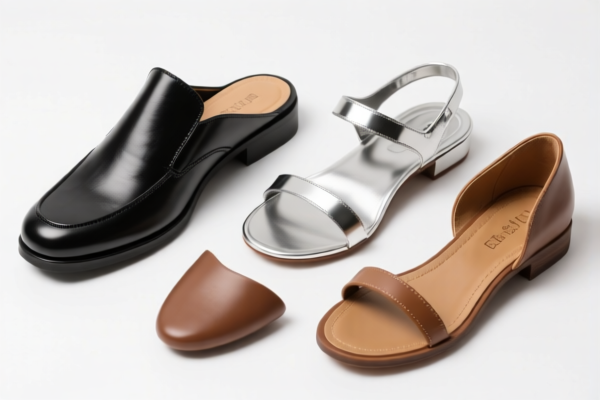


AI Analysis
👟 Footwear (General Apparel/Footwear Category)
🌐 HS Code Reference & Customs Clearance Guide | 2026 Latest Tariff Analysis | Professional Strategy for Footwear Imports
📌 One, Product Definition & Classification: Do You Really Understand “Footwear”?
Footwear, in international trade, is broadly categorized based on sole material and upper material. The Harmonized System (HS) divides shoes primarily into:
- Rubber/Plastic Soles & Uppers (Chapter 64.02): Durable, waterproof, often used for work, sports, or casual wear.
- Textile/Other Materials Soles (Chapter 64.04): Often lighter, breathable, used for sneakers, casual slip-ons, or specific protective gear.
- Other Footwear (Chapter 64.05): Leather, other materials, or specialized footwear not covered above.
⚠️ Key Distinction Point:
- If the sole and upper are both Rubber or Plastic → Likely 6402
- If the upper is Textile and sole is Rubber/Plastic → Likely 6404
- If the purpose is Protective/Industrial → Look at 6404.19
- If the purpose is General/Casual → Look at 6402.99 or 6405
📦 Two, HS Code Classification Details (2026 Latest Tariff Authority Comparison)
Based on the provided data, here are the potential HS codes and their corresponding tax implications for footwear. Note that the specific HS code depends on the exact material composition and intended use of the footwear.
| HS Code | Product Description | Applicability Logic | Total Tax Rate (China Origin) |
|---|---|---|---|
| 6402.99.79.90 | Other footwear, rubber/plastic soles & uppers, unspecified | Direct match: Rubber/plastic sole & upper, general "other" category. | 90¢/pr. + 37.5% + 10% |
| 6402.99.31.77 | Other footwear, rubber/plastic soles & uppers | Inferred: General footwear, no specific use (non-sport/work), fits "Other" fallback. | 16.0% |
| 6404.19.20.30 | Footwear with textile upper, rubber/plastic sole, men's protective | Match: Textile upper inferred, men's protective use. High-risk category. | 47.5% |
| 6402.91.40.50 | Other footwear, rubber/plastic soles & uppers | Match: Rubber/plastic sole & upper, "other" category. | 16.0% |
| 6405.10.00.90 | Other footwear (non-rubber/plastic sole & upper?)* | Compatibility: Inferred rubber/plastic logic, but classified under "Other". | 27.5% |
🔍 Key Warning:
- 6404.19.20.30 carries the highest risk and tax rate (47.5%) due to its "protective" nature and textile upper.
- 6402.99 variants are generally safer for standard rubber/plastic footwear, with rates of 16.0% or 37.5% + fixed fee.
- 6405.10 has a moderate rate of 27.5% but may be disputed if materials don't strictly align.
💰 Three, 2026 Latest Tariff Rate Breakdown (Including Surtaxes, Policy Add-ons)
✅ Applicable Country: United States (US)
✅ Origin: China (CN)
✅ Effective Date: From November 10, 2025 (for subsequent imports)
🎯 1. 6402.99.79.90 —— Other Footwear, Rubber/Plastic Sole & Upper
| Item | Detail |
|---|---|
| Base Tariff | 90¢ per pair + 37.5% (ad valorem) |
| Section 301 Surcharge | 0.0% (Note: Data shows 0%, but verify current 301 status for footwear) |
| Section 122 Tariff | +10% (Specific 122 clause tariff) |
| Total Effective Rate | 37.5% + 90¢/pr. + 10% |
| Calculation Method | (CIF Value × 37.5%) + 90¢/pair + (CIF Value × 10%) |
| De Minimis Exemption | ❌ Not Eligible (High tariff rate disqualifies from de minimis) |
| Legal Basis Path | Section 122: 10% → USITC: 6402.99.79.90 → Base Tariff: 90¢/pr. + 37.5% |
📌 Explanation:
- This code applies to general rubber/plastic footwear not specified as sports or work shoes.
- The 90¢/pair is a fixed fee, which can significantly impact low-value items.
- The 37.5% + 10% ad valorem rate makes this a high-cost classification.
🎯 2. 6402.99.31.77 & 6402.91.40.50 —— Other Footwear (General)
| Item | Detail |
|---|---|
| Base Tariff | 6.0% |
| Section 301 Surcharge | 0.0% |
| Section 122 Tariff | +10% |
| Total Effective Rate | 16.0% |
| Calculation Method | CIF Value × 16% |
| De Minimis Exemption | ❌ Not Eligible (Though lower, still subject to scrutiny) |
| Legal Basis Path | Section 122: 10% → USITC: 6402.99.31.77 / 6402.91.40.50 → Base Tariff: 6.0% |
📌 Note:
- These codes offer a significantly lower effective rate of 16.0%.
- Applicable to general footwear where the material (rubber/plastic) is clear, but no special use (sport/work) is declared.
🎯 3. 6404.19.20.30 —— Men’s Protective Footwear (Textile Upper)
| Item | Detail |
|---|---|
| Base Tariff | 37.5% |
| Section 301 Surcharge | 0.0% |
| Section 122 Tariff | +10% |
| Total Effective Rate | 47.5% |
| Calculation Method | CIF Value × 47.5% |
| De Minimis Exemption | ❌ Not Eligible |
| Legal Basis Path | Section 122: 10% → USITC: 6404.19.20.30 → Base Tariff: 37.5% |
📌 Warning:
- This is the highest tax rate in the dataset.
- Applies to men's protective footwear with textile uppers and rubber/plastic soles.
- Misclassifying protective footwear here can lead to severe underpayment penalties.
🎯 4. 6405.10.00.90 —— Other Footwear
| Item | Detail |
|---|---|
| Base Tariff | 10.0% |
| Section 301 Surcharge | 7.5% (Inferred from total 27.5% - 10% base - 10% 122) |
| Section 122 Tariff | +10% |
| Total Effective Rate | 27.5% |
| Calculation Method | CIF Value × 27.5% |
| De Minimis Exemption | ❌ Not Eligible |
| Legal Basis Path | Section 122: 10% → USITC: 6405.10.00.90 → Base Tariff: 10.0% + Surtax: 7.5% |
📌 Note:
- Moderate rate of 27.5%.
- May be used if the footwear doesn't fit neatly into 6402 or 6404 definitions, or if material inference is ambiguous.
🛠️ Four, Customs Clearance Practical Advice (Battle-Tested Pitfall Guide)
✅ 1. Required Documentation Checklist (All Must Be Provided)
| Document | Mandatory? | Explanation |
|---|---|---|
| ✅ Product Specification Sheet | ✔️ | Must detail sole material (rubber/plastic/leather) and upper material (textile/rubber/plastic). |
| ✅ Material Composition Statement | ✔️ | Explicitly state % of rubber, plastic, textile, leather. |
| ✅ Product Photos (Clear & Detailed) | ✔️ | Show sole, upper, and any protective features (toe cap, etc.). |
| ✅ Commercial Invoice | ✔️ | Clearly state "Footwear" and specify type (e.g., "Men's Safety Shoes"). |
| ✅ Packing List | ✔️ | Consistent with invoice, list pairs per box. |
| ✅ Origin Certificate (CO) | ✔️ | Essential for determining China origin surcharges. |
| ✅ Third-Party Test Report | ✔️ | If claiming "protective" status, provide ANSI/ASTM test reports. |
✅ 2. Declaration Tips (Key Mantras)
🔥 “Material First, Use Second, Name Precise, Tax Lower!”
| Scenario | Correct Declaration | Wrong Approach |
|---|---|---|
| General Rubber/Plastic Shoes | 6402.99.31.77 (16%) |
Declaring as "Protective" → 47.5% |
| Men’s Safety Shoes with Textile Upper | 6404.19.20.30 (47.5%) |
Declaring as "Casual" → 16% (Risk of audit/fine) |
| Sports Shoes | 6402.99.79.90 (37.5% + 90¢) |
Declaring as "General" → 16% (Risk of misclassification) |
| Mixed Material Footwear | Verify exact split | Vague description "Other" → 27.5%+ |
✅ 3. Special Cases Handling
| Situation | Handling Advice |
|---|---|
| OEM Custom Shoes | Provide design specs + material breakdown to avoid "other" classification pitfalls. |
| Protective vs. Casual | If toe cap is present, must declare as protective. Risk of penalty if not. |
| Textile Upper + Rubber Sole | Likely 6404. Do not use 6402 codes. |
| Pure Rubber/Plastic Sole & Upper | Use 6402 codes. Avoid 6404 or 6405. |
🌍 Five, Global Main Market Customs Clearance Comparison (2026 Latest)
| Country/Region | Recommended HS Code | Tariff Rate (China Origin) | Certification Requirements | Remarks |
|---|---|---|---|---|
| 🇺🇸 USA | 6402.99.31.77 / 6402.99.79.90 |
16% to 37.5%+10% + Fixed Fee | None specific, but material proof needed | High scrutiny on "protective" claims. |
| 🇨🇳 China | 6402 / 6404 |
5-10% | CCC (if applicable) | Lower base tariff, no Section 122. |
| 🇪🇺 EU | 6402 / 6404 |
0-10% (if EBA/GSP) | CE (if PPE) | No Section 122 or 301. |
| 🇬🇧 UK | 6402 / 6404 |
0-10% | UKCA (if PPE) | Post-Brexit rules apply. |
| 🇯🇵 Japan | 6402 / 6404 |
0-10% | PSE (if applicable) | Generally low tariffs. |
📌 Conclusion:
- USA has the highest and most complex tariff structure due to Section 122 and potential surcharges.
- Misclassification between "General" and "Protective" is the #1 risk, leading to 16% vs 47.5% differences.
- Material composition must be explicitly declared to avoid audits.
📌 Six, Common Mistakes & Pitfall Guide (Lessons Learned)
❌ Mistake 1: Declaring "Men's Safety Shoes" as "Casual Sneakers"
👉 Consequence: Underpayment of tax (16% vs 47.5%) → Back taxes, fines, and potential seizure!
❌ Mistake 2: Using vague description "Footwear" without material details
👉 Consequence: Customs may assign the highest applicable rate or request additional documentation → Delay in clearance.
❌ Mistake 3: Ignoring the "90¢/pair" fixed fee in 6402.99.79.90
👉 Consequence: For low-value items, the fixed fee can significantly increase the effective tax rate → Unexpected cost.
❌ Mistake 4: Misidentifying Textile Upper + Rubber Sole as 6402
👉 Consequence: Incorrect HS code → Audit risk and potential penalties.
✅ Correct Practice:
“Men’s Protective Safety Shoes, Textile Upper, Rubber Sole, Steel Toe, ANSI Z41 Compliant, Model XYZ”
🎯 Seven, Conclusion: Professional Declaration, Save Time, Reduce Costs!
🎯 Remember the Mantra:
🔹 “Material First, Use Second, Name Precise, Tax Lower!”
🔹 “Protective vs. Casual is the Key, 16% vs. 47.5% is the Risk!”
🔹 “Fixed Fee 90¢, Don’t Forget, Low-Value Items Suffer!”
📌 Pro Tip:
- If your footwear originates from Vietnam, Mexico, or Thailand, check for IEEPA exemptions or lower tariffs.
- Apply for Advance Ruling if you have mixed-material or ambiguous products.
- Consult a licensed customs broker for high-value shipments.
📣 Immediate Action:
📞 Contact a professional customs broker + Provide material specs + Apply for HS Code Advance Ruling
🚀 Ensure your footwear clears smoothly, efficiently, and cost-effectively!
✨ Professional Customs Clearance Starts with Accurate Classification!
💼 Every Dollar Saved is a Dollar Earned!
Customer Reviews
About HS Code Classification
The Harmonized System (HS) is an internationally standardized nomenclature developed by the World Customs Organization (WCO) to classify traded products. Over 200 countries use the HS system as the basis for customs tariffs, trade statistics, and import/export regulations.
Each HS code follows a hierarchical structure:
- Chapter (2 digits) — Broad category of goods (e.g., Chapter 84: Machinery and Mechanical Appliances)
- Heading (4 digits) — More specific grouping within the chapter
- Subheading (6 digits) — Internationally standardized breakdown, used by all WCO member countries
- National subdivisions (8-10 digits) — Country-specific extensions for further classification, such as US HTSUS 10-digit codes
Correct HS code classification is essential for smooth customs clearance, accurate duty payment, and compliance with trade regulations. Misclassification can lead to customs delays, overpayment of duties, or penalties.
When importing from CN to US, the applicable tariff rates may include:
- Most-Favored-Nation (MFN) rate — The standard duty rate applied to WTO members
- General rate — Applied to countries without trade agreements
- Trade remedy duties — Additional tariffs such as Section 301 (anti-dumping), Section 232 (national security), or countervailing duties
The information provided on this page is for reference purposes only. For official classification, please consult with your local customs authority or a licensed customs broker.