Formaldehyde Free Amino Resin
CN → USProduct Images
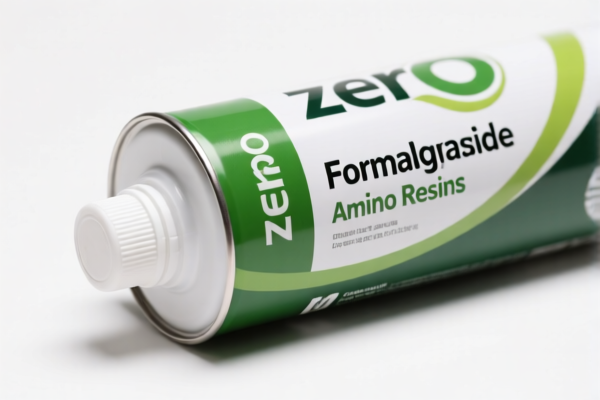
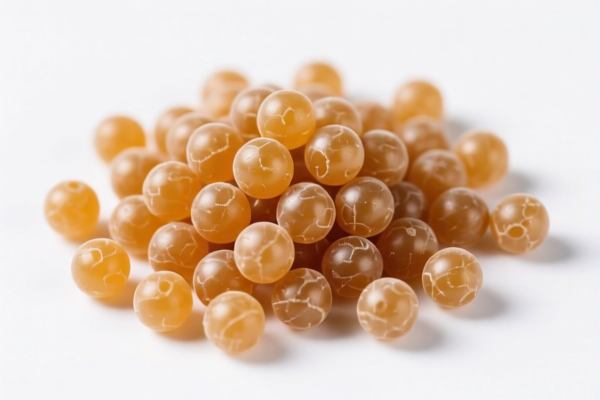
AI Analysis
🧪 Formaldehyde-Free Amino Resin (Chemical Raw Materials for Industry)
🌐 HS Code Reference & Clearance Guide | 2026 Latest Tariff Analysis | Professional Customs Strategy
📌 I. Product Definition & Classification: What is "Formaldehyde-Free Amino Resin"?
Amino resins are a class of polymers formed by the condensation reaction of amino compounds with aldehydes. Traditionally, these were based on Formaldehyde. However, "Formaldehyde-Free" amino resins utilize alternative aldehydes (such as acetaldehyde, propionaldehyde, or glyoxal) to achieve similar bonding and curing properties without releasing harmful formaldehyde gas.
These resins are primarily used in: 1. Textile Finishing: As cross-linking agents for cotton and blended fabrics to improve wrinkle resistance and durability. 2. Paper Treatment: To enhance wet strength and printability. 3. Adhesives: For wood-based panels (though less common than urea-formaldehyde). 4. Coatings & Inks: As additives for hardness and gloss.
⚠️ Key Distinction Point:
- If the product is a pure chemical substance (liquid/powder) used as an intermediate or additive → It falls under Chapter 39 (Plastics) or Chapter 29 (Organic Chemicals), depending on composition.
- If it is a pre-mixed compound containing fillers or solvents not essential to the chemical reaction, it may fall under Chapter 32 (Tanning or Dyeing Extracts; Tanning or Dyeing Extracts; Tanning or Dyeing Extracts).
- Most Common Classification: Typically classified under HS 3906 (Acrylic Polymers) or HS 3214/3215 (Prepared Paints/Coatings) if formulated for application. However, pure amino resins (like melamine derivatives) often fall under HS 3909 (Amino-resins, phenolic resins, polyurethanes, polysiloxanes, etc.).
📦 II. HS Code Classification Details (2026 Latest Tariff Authority Comparison)
| HS Code | Product Description | Applicable Scenario | Formaldehyde Content |
|---|---|---|---|
3909.50.00.00 |
Amino-resins in primary forms | Pure amino resin powders/liquids (e.g., Melamine-formaldehyde alternatives, Glyoxal-based resins) | ❌ Free (or trace <0.1%) |
3909.50.90.00 |
Other amino-resins in primary forms | Specialized amino resins not specified elsewhere | ❌ Free (or trace <0.1%) |
3214.10.00.00 |
Prepared paints and varnishes | If the resin is pre-mixed with solvents, pigments, or additives for direct application | N/A |
3215.11.00.00 - 3215.90.00.00 |
Printing ink, sealant, etc. | If formulated as a finished ink or sealant | N/A |
2924.29.00.00 |
Organic compounds with other oxygen function | If the "resin" is a specific organic compound (e.g., glyoxal) not meeting polymer definition | N/A |
🔍 Key Reminder:
- Pure Resin: Must be classified under 3909.50.xxxx. This is the most common code for "Formaldehyde-Free Amino Resin" sold as a raw material.
- Formulated Product: If it’s a ready-to-use coating or adhesive, it shifts to Chapter 32 (e.g., 3214 or 3215).
- Declaration Tip: Clearly state "Formaldehyde-Free" and "Primary Form" in the description to avoid confusion with traditional melamine-formaldehyde resins (which may face stricter environmental regulations).
💰 III. 2026 Latest Tariff Rate Details (Including Surtaxes & Policy Surcharges)
✅ Applicable Country: United States (US)
✅ Country of Origin: China (CN)
✅ Effective Date: November 10, 2025 onwards (including subsequent imports)
🎯 1. 3909.50.00.00 – Amino-resins in Primary Forms
| Item | Content |
|---|---|
| Base Tariff Rate | 5.3% (ad valorem) |
| USITC Surcharge | +25% (under USITC Footnote 9903.88.01 for Section 301 tariffs) |
| IEEPA Surcharge | +10% (against China/HK products, effective Nov 10, 2025) |
| Total Tariff Rate | 40.3% |
| Tax Calculation | CIF Value × 40.3% |
| De Minimis Eligibility | ❌ No (deny_de_minimis) |
| Legal Pathway | IEEPA:9903.01.25 → IEEPA:9903.01.24 → USITC:3909.50.00.00 → FOOTNOTE:9903.88.01 |
📌 Explanation:
- The 25% USITC surcharge is part of the Section 301 tariffs on Chinese goods.
- The 10% IEEPA surcharge is the additional China-specific tariff under the International Emergency Economic Powers Act.
- Total 40.3% is a high tariff rate. This resin is considered a chemical intermediate, not a finished consumer good, so no de minimis exemption applies.
🎯 2. 3909.50.90.00 – Other Amino-resins in Primary Forms
| Item | Content |
|---|---|
| Base Tariff Rate | 5.3% |
| USITC Surcharge | +25% |
| IEEPA Surcharge | +10% |
| Total Tariff Rate | 40.3% |
| Tax Calculation | CIF × 40.3% |
| De Minimis Eligibility | ❌ No |
| Legal Pathway | IEEPA:9903.01.25 → IEEPA:9903.01.24 → USITC:3909.50.90.00 → FOOTNOTE:9903.88.01 |
📌 Note:
- This code covers amino resins not specifically listed under 3909.50.00.00.
- Tariff rates are identical to the main amino resin category.
- Common examples include glyoxal-based resins, acetaldehyde-based resins, etc.
🎯 3. 3214.10.00.00 – Prepared Paints and Varnishes (If Formulated)
| Item | Content |
|---|---|
| Base Tariff Rate | 5.3% |
| USITC Surcharge | +25% |
| IEEPA Surcharge | +10% |
| Total Tariff Rate | 40.3% |
| Tax Calculation | CIF × 40.3% |
| De Minimis Eligibility | ❌ No |
📌 Note:
- If the amino resin is pre-mixed with solvents, pigments, or other additives for direct use (e.g., as a coating), it is classified under Chapter 32.
- The tariff burden remains high due to Section 301 and IEEPA surcharges.
🛠️ IV. Customs Clearance Practical Advice (Real-World Pitfall Guide)
✅ 1. Required Documentation Checklist
| Document | Must Provide | Description |
|---|---|---|
| ✅ Product Specification Sheet | ✔️ | Must detail chemical composition, molecular weight, and explicit statement of "Formaldehyde-Free" |
| ✅ MSDS (Material Safety Data Sheet) | ✔️ | Essential for chemical imports. Must show no formaldehyde or trace levels below regulatory thresholds |
| ✅ Product Photos (Label & Package) | ✔️ | Clear image of the label showing HS Code recommendation, batch number, and safety warnings |
| ✅ Third-Party Test Report | ✔️ | EPA, REACH, or SGS report proving "Formaldehyde-Free" status (critical for customs and consumer safety) |
| ✅ Commercial Invoice | ✔️ | Must clearly state: "Amino Resin, Formaldehyde-Free, Primary Form, For Textile/Paper Use" |
| ✅ Certificate of Origin (CO) | ✔️ | If not from China, may qualify for preferential tariffs (e.g., RCEP, USMCA) |
| ✅ Packing List | ✔️ | Specify net/gross weight and package type (drum, IBC, etc.) |
✅ 2. Declaration Tips (Key Mantra)
🔥 "Pure Resin = Ch39, Formulated = Ch32, Declare 'Free' to Avoid Inspection!"
| Scenario | Correct Declaration | Wrong Practice |
|---|---|---|
| Pure amino resin (powder/liquid) | 3909.50.00.00 |
Misclassified as 3214 (Coating) → 5.3% base but higher scrutiny |
| Pre-mixed resin for coating | 3214.10.00.00 |
Misclassified as 3909 → Penalty for wrong classification |
| Contains solvents/adhesives | 3214 or 3215 |
Claimed as "pure resin" → Customs seizure & fines |
| "Formaldehyde-Free" claimed | Provide Test Report | No proof → High risk of detention for environmental violation |
✅ 3. Special Case Handling
| Scenario | Handling Advice |
|---|---|
| OEM Custom Resin | Provide client’s design specs. If modified from standard amino resin, still 3909.50 unless significantly changed. |
| Low Formaldehyde (<0.1%) | Still declare "Formaldehyde-Free" if below regulatory limits, but provide test report to avoid quarantine delays. |
| Export to EU/Japan | Ensure REACH (EU) or JIS (Japan) compliance. Tariffs are lower, but environmental standards are stricter. |
| Bulk Chemical Transport | Ensure UN certification for packaging if classified as hazardous (check MSDS). |
🌍 V. Global Market Clearance Comparison (2026 Latest)
| Country/Region | Recommended HS Code | Tariff | Certification Requirements | Notes |
|---|---|---|---|---|
| 🇺🇸 USA | 3909.50.00.00 |
40.3% (CN Origin) | EPA, TSCA | High tariff; strict environmental checks |
| 🇨🇳 China | 3909.50.00.00 |
5% | None (Import) | Low tariff; standard chemical import |
| 🇪🇺 EU | 3909.50.00.00 |
0% (if eligible) | REACH Registration | Zero tariff under many FTAs; REACH is critical |
| 🇦🇺 Australia | 3909.50.00.00 |
5% | NICNAS (AICS) | Moderate tariff; chemical safety assessment required |
| 🇯🇵 Japan | 3909.50.00.00 |
0% | JITMA | Zero tariff; environmental standards strict |
📌 Conclusion:
- USA: Highest cost due to 40.3% tariff. Consider supply chain diversification (e.g., Vietnam, India) if possible.
- EU/Japan: Lower tariffs, but REACH/JITMA compliance is mandatory and costly.
- China: Lowest import tariff, but domestic competition is fierce.
📌 VI. Common Mistakes & Pitfall Guide (Lessons Learned)
❌ Mistake 1: Declaring "Formaldehyde-Free Resin" as 3214 (Paint) without solvents
👉 Consequence: Customs may reclassify and impose penalties for incorrect HS code.
❌ Mistake 2: Ignoring "Formaldehyde-Free" label
👉 Consequence: Higher inspection rate; potential detention for environmental concerns.
❌ Mistake 3: Not providing MSDS or Test Report
👉 Consequence: Cargo held at port for chemical safety verification; delay of 2-4 weeks.
❌ Mistake 4: Using "Melamine Resin" as generic term
👉 Consequence: If it’s not melamine-based, misclassification leads to fines. Use "Amino Resin" for broader accuracy.
✅ Correct Practice:
"Amino Resin, Formaldehyde-Free, Glyoxal-Based, Primary Form, For Textile Finishing, Model XYZ, REACH Registered, MSDS Provided"
🎯 VII. Conclusion: Professional Declaration, Cost Reduction, Efficiency!
🎯 Remember Mantra:
🔹 "Pure Resin = 3909, Formulated = 3214, Declare 'Free' to Pass Faster!"
🔹 "HS Code Determines Tariff, 40.3% is High, Correct Declaration Saves Money!"
📌 Pro Tip:
If your resin is originally from Vietnam, India, or Thailand, you may qualify for zero or low tariffs under USMCA, RCEP, or other FTAs.
Recommend applying for Advance Ruling from US Customs if unsure about classification.
📣 Immediate Action:
📞 Contact professional customs broker + Provide Product Specs + Apply for HS Code Advance Ruling
🚀 Ensure your Formaldehyde-Free Amino Resin clears customs smoothly, complies with environmental laws, and maximizes profit!
✨ Professional Clearance Starts with Accurate Classification!
💼 Every Dollar of Tariff Cost Deserves Precise Calculation!
Customer Reviews
About HS Code Classification
The Harmonized System (HS) is an internationally standardized nomenclature developed by the World Customs Organization (WCO) to classify traded products. Over 200 countries use the HS system as the basis for customs tariffs, trade statistics, and import/export regulations.
Each HS code follows a hierarchical structure:
- Chapter (2 digits) — Broad category of goods (e.g., Chapter 84: Machinery and Mechanical Appliances)
- Heading (4 digits) — More specific grouping within the chapter
- Subheading (6 digits) — Internationally standardized breakdown, used by all WCO member countries
- National subdivisions (8-10 digits) — Country-specific extensions for further classification, such as US HTSUS 10-digit codes
Correct HS code classification is essential for smooth customs clearance, accurate duty payment, and compliance with trade regulations. Misclassification can lead to customs delays, overpayment of duties, or penalties.
When importing from CN to US, the applicable tariff rates may include:
- Most-Favored-Nation (MFN) rate — The standard duty rate applied to WTO members
- General rate — Applied to countries without trade agreements
- Trade remedy duties — Additional tariffs such as Section 301 (anti-dumping), Section 232 (national security), or countervailing duties
The information provided on this page is for reference purposes only. For official classification, please consult with your local customs authority or a licensed customs broker.