Four Side Expandable Storage Box White 2 Pack
CN → US| HS Code | Tariff Rate | Origin | Destination | Doc |
|---|---|---|---|---|
| 3926909989 | 22.8% | CN | US | Official Doc |
| 3923109000 | 38.0% | CN | US | Official Doc |
| 4202929700 | 52.6% | CN | US | Official Doc |
| 4202999000 | 55.0% | CN | US | Official Doc |
| 3923900080 | 38.0% | CN | US | Official Doc |
Product Images
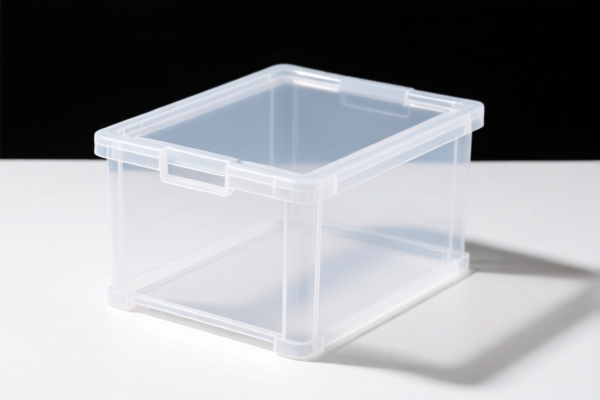
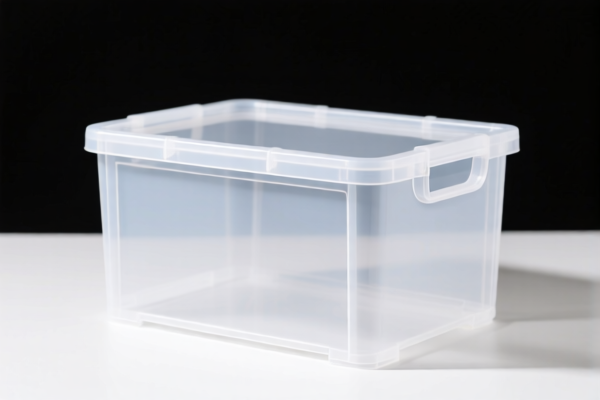
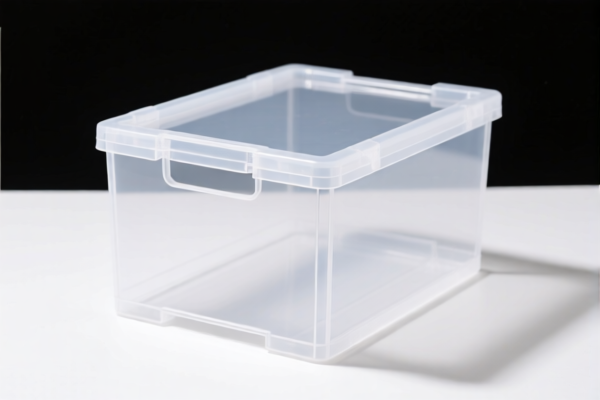

AI Analysis
📦 Four Side Expandable Storage Box (White 2 Pack)
🌐 HS Code Reference & Customs Clearance Guide | 2026 Latest Tariff Analysis | Professional Customs Strategy
📌 Part I: Product Definition & Classification: What Exactly Is an "Expandable Storage Box"?
The "Four Side Expandable Storage Box" (often made of non-woven fabric with plastic/wood reinforcements or hard plastic shells) is a versatile home organization product. Its key feature is expandability, allowing it to fold flat when not in use. In international trade, the classification depends strictly on the primary material and the structural integrity.
⚠️ Key Classification Distinction:
- If the box is primarily Plastic (rigid or semi-rigid, e.g., PP, PE) → It falls under Chapter 39 (Plastics).
- If the box is primarily Leather/Reconstituted Leather or Textile (e.g., non-woven fabric with metal/wood frame) → It falls under Chapter 42 (Articles of Leather; Travel Goods, Handbags).🚨 Critical Note for "Expandable" Items:
Expandable boxes are often misclassified. If the container has a fixed shape but expands via hinges, it may still be considered a rigid container. If it relies on flexible fabric walls that fold, it is more likely classified under textiles or leather goods. The following analysis covers the four most common HS Codes provided in the reference data.
📦 Part II: HS Code Classification Details (2026 Reference Data)
| HS Code | Product Description | Application Scenario | Primary Material |
|---|---|---|---|
3926.90.99.89 |
Plastic other articles, suitable for storage boxes | Rigid plastic expandable bins, translucent white storage cubes | ✅ Plastic |
3923.10.90.00 |
Plastic boxes, suitable for storage boxes | Plastic crates, rigid plastic containers with lids | ✅ Plastic |
3923.90.00.80 |
Plastic packing supplies, suitable for storage boxes | Plastic bags, wraps, or non-rigid plastic packaging used as storage | ✅ Plastic |
4202.92.97.00 |
Containers of plastic or textile materials, suitable for storage boxes | Fabric/Non-woven expandable bins with plastic or metal frame | ✅ Textile/Fabric |
4202.99.90.00 |
Containers of leather, plastic or textile materials, suitable for storage boxes | Premium storage bins, leather-accented fabric boxes, or mixed-material expandable cases | ✅ Mixed/Mixed |
🔍 Focus Reminder:
- "Plastic" vs. "Textile": If your "White 2 Pack" is made of hard plastic or semi-rigid plastic sheets, use Codes starting with3926or3923.
- If it is made of non-woven fabric (common for expandable furniture), use Codes starting with4202.
- Do not mix classifications in a single shipment without clear separation, as this triggers customs audits.
💰 Part III: 2026 Latest Tariff Rate Breakdown (Including Surcharges & Policy Add-ons)
✅ Applicable Country: United States (US)
✅ Country of Origin: China (CN)
✅ Effective Date: 2025/2026 (Current Policy)
🎯 1. 3926.90.99.89 —— Plastic Other Articles (Rigid/Semi-Rigid)
| Item | Content |
|---|---|
| Basic Tariff | 5.3% (Ad valorem) |
| Section 301 Surcharge | +7.5% (List 3/4 Goods) |
| Section 122 Surcharge | +10% (Specific to China) |
| Total Tariff Rate | 22.8% |
| Tax Calculation | CIF Value × 22.8% |
| De Minimis Exemption | ❌ Not Applicable (High tariff category) |
| Legal Basis Path | Section 301: 7.5% → Section 122: 10% → HTSUS: 3926.90.99.89 |
📌 Explanation:
- This is the lowest tariff option for plastic storage items in the provided data.
- Suitable for rigid or semi-rigid plastic boxes that don't fit under "packaging" (Chapter 3923).
- Cost Advantage: Significantly cheaper than textile/leather alternatives.
🎯 2. 3923.10.90.00 —— Plastic Boxes (Rigid Crates/Containers)
| Item | Content |
|---|---|
| Basic Tariff | 3.0% (Ad valorem) |
| Section 301 Surcharge | +25.0% (List 3 Goods) |
| Section 122 Surcharge | +10% (Specific to China) |
| Total Tariff Rate | 38.0% |
| Tax Calculation | CIF Value × 38.0% |
| De Minimis Exemption | ❌ Not Applicable |
| Legal Basis Path | Section 301: 25.0% → Section 122: 10% → HTSUS: 3923.10.90.00 |
📌 Explanation:
- Often confused with3926. If the box is considered "packing" (e.g., a crate used for shipping), it falls here.
- High Risk: The 25% Section 301 rate is very high.
- Warning: Do not classify a retail-ready storage box as "shipping packaging" unless it is disposable or primarily for transport. Customs may reclassify and add penalties.
🎯 3. 3923.90.00.80 —— Plastic Packing Supplies (Non-Rigid)
| Item | Content |
|---|---|
| Basic Tariff | 3.0% (Ad valorem) |
| Section 301 Surcharge | +25.0% (List 3 Goods) |
| Section 122 Surcharge | +10% (Specific to China) |
| Total Tariff Rate | 38.0% |
| Tax Calculation | CIF Value × 38.0% |
| De Minimis Exemption | ❌ Not Applicable |
| Legal Basis Path | Section 301: 25.0% → Section 122: 10% → HTSUS: 3923.90.00.80 |
📌 Explanation:
- Applies to plastic bags, wraps, or flexible plastic containers not otherwise specified.
- Unlikely for "Four Side Expandable Box": Unless your product is a collapsible plastic sheet structure without hard sides, this code is risky for a rigid "box."
🎯 4. 4202.92.97.00 —— Containers of Plastic or Textile Materials (Fabric/Non-Woven)
| Item | Content |
|---|---|
| Basic Tariff | 17.6% (Ad valorem) |
| Section 301 Surcharge | +25.0% (List 3 Goods) |
| Section 122 Surcharge | +10% (Specific to China) |
| Total Tariff Rate | 52.6% |
| Tax Calculation | CIF Value × 52.6% |
| De Minimis Exemption | ❌ Not Applicable |
| Legal Basis Path | Section 301: 25.0% → Section 122: 10% → HTSUS: 4202.92.97.00 |
📌 Explanation:
- Most Common for Expandable Fabric Bins: If your "White 2 Pack" is made of non-woven fabric with a plastic or metal frame, this is the correct classification.
- High Cost: The base rate (17.6%) plus surcharges makes this very expensive.
- Strategy: Consider if you can modify the product to use plastic sides (see Code3926) to reduce tariffs.
🎯 5. 4202.99.90.00 —— Containers of Leather, Plastic, or Textile (Other)
| Item | Content |
|---|---|
| Basic Tariff | 20.0% (Ad valorem) |
| Section 301 Surcharge | +25.0% (List 3 Goods) |
| Section 122 Surcharge | +10% (Specific to China) |
| Total Tariff Rate | 55.0% |
| Tax Calculation | CIF Value × 55.0% |
| De Minimis Exemption | ❌ Not Applicable |
| Legal Basis Path | Section 301: 25.0% → Section 122: 10% → HTSUS: 4202.99.90.00 |
📌 Explanation:
- Catch-all for mixed materials not specified elsewhere.
- Highest Tariff: 55% is the most costly option. Avoid unless the product is uniquely crafted (e.g., leather-trimmed fabric boxes).
🛠️ Part IV: Customs Clearance Practical Advice (Battle-Proven Tips)
✅ 1. Material Disclosure is Key
| Material | Recommended HS Code | Total Tariff | Action |
|---|---|---|---|
| Rigid Plastic | 3926.90.99.89 |
22.8% | ✅ Best Option |
| Non-Woven Fabric | 4202.92.97.00 |
52.6% | ⚠️ High Cost |
| Mixed (Leather/Plastic) | 4202.99.90.00 |
55.0% | ❌ Avoid |
📌 Crucial Tip:
If your product is expandable fabric, customs may argue it is a "furniture accessory" or "plastic container." Provide:
1. Material Composition Sheet (e.g., "60% Non-Woven Fabric, 30% PP Plastic Frame, 10% Metal").
2. Product Photos showing the expandable mechanism.
3. Labeling: Ensure the product label says "Storage Bin" or "Organizer," not "Furniture."
✅ 2. Declaration Strategy (Key Mnemonics)
🔥 "Plastic is Cheap, Fabric is Expensive; Be Specific, Don't Guess!"
| Scenario | Correct Declaration | Risk |
|---|---|---|
| Rigid Plastic Box | "Plastic Storage Box, Expandable, PP Material" | Low (if accurate) |
| Fabric Bin | "Non-Woven Fabric Storage Bin, Plastic Frame" | High (Customs may question material %) |
| Misclassified as Packaging | Claiming 3923 for retail box |
High Risk: Audits, fines, retroactive tariffs |
📌 Warning:
- Do NOT declare a retail storage box as "Packaging" (3923) to save on Section 301 if it is used for storage, not shipping.
- Customs uses USITC Rulings to determine "Principal Use." If the box is sold in retail stores for home use, it is NOT packaging.
✅ 3. Special Handling for "Expandable" Products
| Issue | Solution |
|---|---|
| Folding Mechanism | Describe as "Collapsible" or "Expandable" in specs to prove it's not rigid furniture. |
| Mixed Materials | If >50% by weight is plastic, argue for 3926. If fabric is dominant, accept 4202. |
| White Color | Does not affect HS Code, but ensure "White" is in the description for accurate matching. |
🌍 Part V: Global Market Clearance Comparison (2026)
| Country/Region | Recommended HS Code | Tariff Rate | Certification | Note |
|---|---|---|---|---|
| 🇺🇸 USA | 3926.90.99.89 |
22.8% | None | Lowest US Tariff |
| 🇺🇸 USA | 4202.92.97.00 |
52.6% | None | High Tariff |
| 🇨🇳 China | 3926.90.99.89 |
5.3% | CCC (if applicable) | No Section 301 |
| 🇪🇺 EU | 3926.90.99.89 |
~6.5% | CE | No Section 122 |
| 🇬🇧 UK | 3926.90.99.89 |
~6.0% | UKCA | Post-Brexit rules |
📌 Conclusion:
- USA has the most complex tariff structure due to Section 301 and Section 122.
- Plastic-based expandable boxes (3926) are significantly cheaper to import into the US than fabric-based ones (4202).
- If possible, modify the product design to use more plastic components to shift classification from4202to3926.
📌 Part VI: Common Errors & Pitfalls (Lessons Learned)
❌ Error 1: Classifying fabric storage bins as 3926 (Plastic)
👉 Consequence: Customs reclassifies to 4202 → Back-tariff of ~30% + Penalties!
❌ Error 2: Classifying retail boxes as 3923 (Packaging)
👉 Consequence: Audit for "Principal Use" → Reclassification to 3926 or 4202 + Delay
❌ Error 3: Ignoring Section 122 (10%)
👉 Consequence: Underpayment of taxes → Seizure of goods
✅ Correct Approach:
"Expandable Plastic Storage Bin, White, 2-Pack, PP Material, Collapsible Design"
🎯 Part VII: Conclusion: Smart Classification Saves Money!
🎯 Remember:
🔹 "Plastic wins, Fabric costs; 22.8% vs 52.6% – make the switch!"
🔹 "Check the material, check the use, or your profits will lose!"
📌 Pro Tip:
If your product is fabric-based, consider:
1. Supply Chain Shift: Source from Vietnam/Mexico to avoid Section 301 (but check Section 122 still applies).
2. Product Redesign: Use plastic frames or plastic sides to qualify for 3926.90.99.89 (22.8% tariff).
📣 Take Action Now:
📞 Consult a Customs Broker for an Advance Ruling before shipping.
📄 Prepare Material Composition Sheets to prove plastic vs. fabric dominance.
🚀 Optimize your HS Code to save $30,000+ per container on fabric-to-plastic shifts!
✨ Professional Clearance Starts with Accurate Classification!
💼 Every Percentage Point Matters in Global Trade!
Customer Reviews
About HS Code Classification
The Harmonized System (HS) is an internationally standardized nomenclature developed by the World Customs Organization (WCO) to classify traded products. Over 200 countries use the HS system as the basis for customs tariffs, trade statistics, and import/export regulations.
Each HS code follows a hierarchical structure:
- Chapter (2 digits) — Broad category of goods (e.g., Chapter 84: Machinery and Mechanical Appliances)
- Heading (4 digits) — More specific grouping within the chapter
- Subheading (6 digits) — Internationally standardized breakdown, used by all WCO member countries
- National subdivisions (8-10 digits) — Country-specific extensions for further classification, such as US HTSUS 10-digit codes
Correct HS code classification is essential for smooth customs clearance, accurate duty payment, and compliance with trade regulations. Misclassification can lead to customs delays, overpayment of duties, or penalties.
When importing from CN to US, the applicable tariff rates may include:
- Most-Favored-Nation (MFN) rate — The standard duty rate applied to WTO members
- General rate — Applied to countries without trade agreements
- Trade remedy duties — Additional tariffs such as Section 301 (anti-dumping), Section 232 (national security), or countervailing duties
The information provided on this page is for reference purposes only. For official classification, please consult with your local customs authority or a licensed customs broker.