Four Way Plastic Pipe Fittings
CN → US| HS Code | Tariff Rate | Origin | Destination | Doc |
|---|---|---|---|---|
| 8481805090 | 38.0% | CN | US | Official Doc |
| 3917400050 | 40.3% | CN | US | Official Doc |
| 8481805040 | 38.0% | CN | US | Official Doc |
| 3917400095 | 40.3% | CN | US | Official Doc |
Product Images
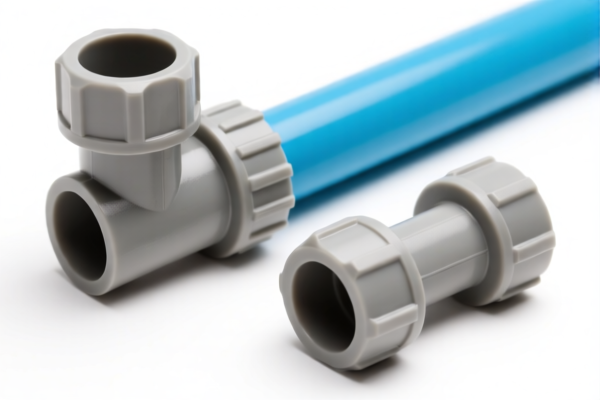
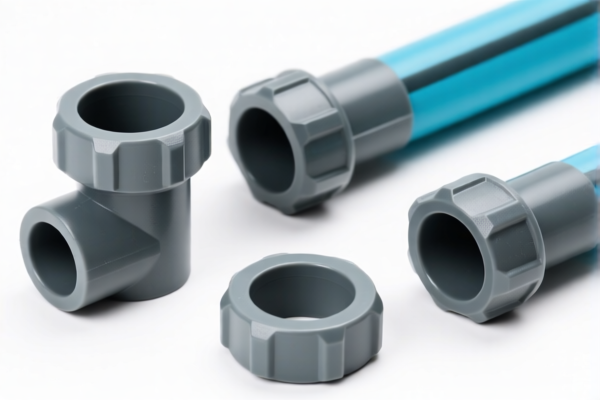
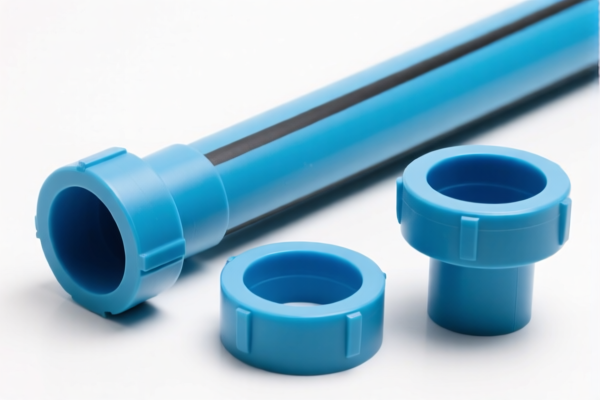
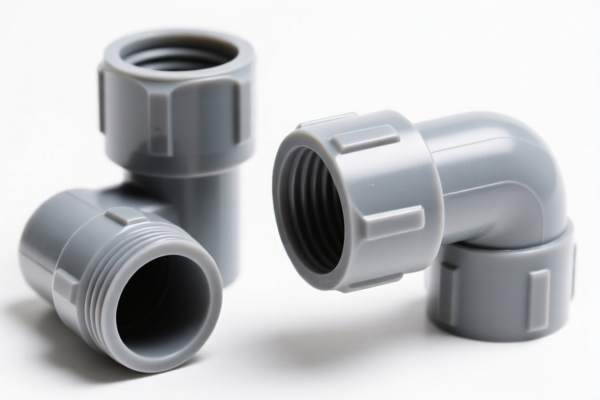
AI Analysis
🚰 Four-Way Plastic Pipe Fittings (Cross Connectors)
🌐 HS Code Reference & Customs Clearance Guide | 2026 Tariff Breakdown | Professional Strategy for Cross Fittings
📌 I. Product Definition & Classification: What Are "Four-Way Plastic Pipe Fittings"?
Four-way plastic pipe fittings, commonly known as Plastic Cross Fittings, are critical components in fluid and gas transmission systems. They allow pipes to connect in four directions (typically perpendicular), facilitating complex piping networks in residential plumbing, industrial processes, and irrigation systems.
In international trade, these fittings are primarily classified under two main chapters depending on their specific structural design and usage context: * Chapter 39 (Plastics and Articles Thereof): For fittings classified strictly as accessories/parts of pipes or tubing. * Chapter 84 (Nuclear Reactors, Boilers, Machinery & Mechanical Appliances): For fittings classified as valves or similar appliances for pipes.
⚠️ Key Distinction:
- If the item is viewed as a structural component/accessory of the plastic pipe system (e.g., PVC/PE cross connector) → It falls under Chapter 39 (Higher base duty, 5.3%).
- If the item is viewed as a valve-like device or appliance for controlling flow (e.g., specialized plastic valve-cum-connector) → It falls under Chapter 84 (Lower base duty, 3.0%).
📦 II. HS Code Classification Details (2026 Latest Tariff Authority)
| HS Code | Product Description | Application Scenario | Classification Logic |
|---|---|---|---|
| 3917.40.00.95 | Other accessories and fittings of plastics, not elsewhere specified | General-purpose plastic cross fittings for plumbing/irrigation | ❌ Classified as "Plastic Accessories" under Ch. 39 |
| 3917.40.00.50 | Other accessories and fittings of plastics, for pipes/tubing | Standard plastic pipe connectors/crosses | ❌ Classified as "Plastic Accessories" under Ch. 39 |
| 8481.80.50.90 | Other appliances for pipes, tubes, or hollow profiles | Plastic fittings classified as "valves or similar appliances" | ✅ Classified as "Appliances/Valves" under Ch. 84 |
| 8481.80.50.40 | Other appliances for pipes, tubes, or hollow profiles (Spare Parts) | Plastic fittings categorized under spare parts category | ✅ Classified as "Appliances/Valves" under Ch. 84 |
🔍 Key Reminder:
- Chapter 39 (3917.40) treats these as materials/accessories. Base duty is 5.3%.
- Chapter 84 (8481.80) treats these as mechanical appliances/valves. Base duty is 3.0%.
- Note: There are duplicate HS codes in the dataset (e.g., 3917.40.00.95 appears twice). They represent the same classification category but may differ in specific customs sub-codes based on exact material composition or minor structural differences.
💰 III. 2026 Latest Tariff Rate Breakdown (Including Surtaxes & Policy Additions)
✅ Applicable Country: United States (US)
✅ Origin: China (CN)
✅ Effective Date: Post-2025 (Including Section 122 & Section 301 tariffs)
🎯 1. Classification under Chapter 39: 3917.40.00.95 / 3917.40.00.50
| Item | Details |
|---|---|
| Base Duty Rate | 5.3% (Ad Valorem) |
| USITC Surcharge (Section 301) | +25% |
| Section 122 Tariff | +10% |
| Total Tariff Rate | 40.3% |
| Tax Calculation | CIF Value × 40.3% |
| De Minimis Exemption | ❌ Not Applicable (High duty rate disqualifies low-value exemption) |
| Legal Basis Path | Section 301: 8481.80.50 → Section 122: 10% → USITC: 3917.40.00.95 → FOOTNOTE: 122 |
📌 Explanation:
- "Base Duty 5.3%": Comes from HTSUS Chapter 39 (Plastics).
- "Section 301 +25%": The standard additional tariff on Chinese goods under the Trade Promotion Authority.
- "Section 122 +10%": A specific tariff provision often applied to certain imports, adding to the burden.
- Total 40.3%: This is a high-cost classification. Importers must budget accordingly.
🎯 2. Classification under Chapter 84: 8481.80.50.90 / 8481.80.50.40
| Item | Details |
|---|---|
| Base Duty Rate | 3.0% (Ad Valorem) |
| USITC Surcharge (Section 301) | +25% |
| Section 122 Tariff | +10% |
| Total Tariff Rate | 38.0% |
| Tax Calculation | CIF Value × 38.0% |
| De Minimis Exemption | ❌ Not Applicable |
| Legal Basis Path | Section 301: 8481.80.50 → Section 122: 10% → USITC: 8481.80.50.90 → FOOTNOTE: 122 |
📌 Explanation:
- "Base Duty 3.0%": Lower base rate because Chapter 84 (Machinery/Appliances) often has lower base duties for mechanical parts.
- "Section 301 +25%" & "Section 122 +10%": Same surcharges apply as above.
- Total 38.0%: While still high, this is 2.3% lower than the Chapter 39 classification. Strategic advantage for importers.
🛠️ IV. Customs Clearance Practical Advice (Avoiding Pitfalls)
✅ 1. Documentation Checklist (Mandatory)
| Document | Required? | Purpose |
|---|---|---|
| ✅ Product Specification Sheet | ✔️ | Must detail: Material (PVC/PE/PP), Size, Pressure Rating, Temperature Limit. |
| ✅ Structure Diagram/Photo | ✔️ | Critical: To prove it is a "fitting/accessory" (Ch. 39) vs. "valve/appliance" (Ch. 84). Show lack of moving parts/controls. |
| ✅ Commercial Invoice | ✔️ | Clearly state "Plastic Four-Way Pipe Fitting" or "Plastic Cross Connector". Avoid vague terms like "Plastic Part". |
| ✅ Packing List | ✔️ | Specify quantity and net/gross weight. |
| ✅ Origin Certificate | ✔️ | Required to confirm CN origin for accurate surtax calculation. |
✅ 2. Declaration Strategy (Key Tips)
🔥 "Declare Correctly, Save 2.3%! Structure Defines Code!"
| Scenario | Recommended HS Code | Why? | Risk if Wrong |
|---|---|---|---|
| Standard Plastic Cross (No moving parts, simple connector) | 3917.40.00.95 or 3917.40.00.50 |
Clearly an "accessory of plastic pipes". | If misdeclared as Ch. 84, customs may reject for lack of "appliance" features. |
| Complex Plastic Connector (With threads, locking mechanisms, valve-like function) | 8481.80.50.90 or 8481.80.50.40 |
Classified as an "appliance" or "valve-like device". | Lower base duty (3% vs 5.3%). |
| Mixed Shipment (Fittings + Valves) | Split Declaration | Fittings → Ch. 39; Valves → Ch. 84. | Mixing them leads to customs delays and potential penalties. |
✅ 3. Special Notes
- Material Matters: If the fitting contains non-plastic components (e.g., metal inserts), it might be reclassified. Pure plastic fittings stick to Chapter 39.
- "Four-Way" vs. "Tee": Ensure your description matches the physical shape (Cross vs. Tee). Misleading descriptions can trigger audits.
- Section 122 Applicability: Verify if Section 122 tariffs are currently active for your specific entry date, as policies can change.
🌍 V. Global Market Comparison (2026 Overview)
| Market | Recommended HS Code | Total Tariff (China Origin) | Notes |
|---|---|---|---|
| 🇺🇸 USA | 8481.80.50.90 |
38.0% | Best option due to lower base duty. |
| 🇺🇸 USA | 3917.40.00.95 |
40.3% | Higher base duty, same surcharges. |
| 🇨🇳 China | 3917.40.00.95 |
5.3% | No Section 301/122 surcharges for imports into China. |
| 🇪🇺 EU | 3917.40.00.00 |
Various | Check EU Taric codes; generally lower than US duties. |
| 🇯🇵 Japan | 3917.40.00.90 |
Variable | Often lower tariffs; check FTAs. |
📌 Conclusion:
- The USA imposes the highest burden on Chinese-origin plastic pipe fittings due to叠加 tariffs (Section 301 + Section 122).
- Chapter 84 classification (8481.80.50.90) is the most cost-effective route for US importers, saving 2.3% on the CIF value compared to Chapter 39.
📌 VI. Common Mistakes & Pitfalls (Lessons Learned)
❌ Mistake 1: Using "Plastic Connector" as the generic name without specifying "Four-Way/Cross".
👉 Consequence: Customs may misclassify, leading to incorrect duty assessment or delays.
❌ Mistake 2: Assuming all plastic pipe parts fall under Chapter 39.
👉 Consequence: Missing the opportunity to use Chapter 84 if the fitting has valve-like characteristics, paying an extra 2.3%.
❌ Mistake 3: Ignoring Section 122 tariffs.
👉 Consequence: Unexpected 10% surcharge added to the bill, reducing profit margins.
❌ Mistake 4: Splitting a single shipment into multiple invoices to hide value.
👉 Consequence: Severe penalties, seizure of goods, and potential legal action.
✅ Best Practice:
"Plastic Four-Way Pipe Fitting, PVC, 2-inch, Cross Type, No Moving Parts, For Water Supply System"
🎯 VII. Conclusion: Smart Classification for Cost Efficiency
🎯 Remember:
🔹 "Ch. 84 for Valves/Appliances (38%); Ch. 39 for Accessories (40.3%)."
🔹 "Every 2.3% counts in high-volume plastic fittings trade."
🔹 "Accurate description prevents customs delays and extra costs."
📌 Pro Tip:
If you import large volumes, consider applying for an Advance Ruling (Pre-Decision) from US Customs and Border Protection (CBP) to confirm whether your specific four-way fitting qualifies for the lower 38.0% rate under HS 8481.80.50.90. This provides legal certainty and avoids post-clearance audits.
📣 Immediate Action:
📞 Consult with your customs broker.
📄 Provide detailed product photos and specifications.
🚀 Optimize your HS code declaration to save on every container.
✨ Professional customs clearance starts with precise classification!
💼 Your profit margin depends on getting the HS code right!
Customer Reviews
About HS Code Classification
The Harmonized System (HS) is an internationally standardized nomenclature developed by the World Customs Organization (WCO) to classify traded products. Over 200 countries use the HS system as the basis for customs tariffs, trade statistics, and import/export regulations.
Each HS code follows a hierarchical structure:
- Chapter (2 digits) — Broad category of goods (e.g., Chapter 84: Machinery and Mechanical Appliances)
- Heading (4 digits) — More specific grouping within the chapter
- Subheading (6 digits) — Internationally standardized breakdown, used by all WCO member countries
- National subdivisions (8-10 digits) — Country-specific extensions for further classification, such as US HTSUS 10-digit codes
Correct HS code classification is essential for smooth customs clearance, accurate duty payment, and compliance with trade regulations. Misclassification can lead to customs delays, overpayment of duties, or penalties.
When importing from CN to US, the applicable tariff rates may include:
- Most-Favored-Nation (MFN) rate — The standard duty rate applied to WTO members
- General rate — Applied to countries without trade agreements
- Trade remedy duties — Additional tariffs such as Section 301 (anti-dumping), Section 232 (national security), or countervailing duties
The information provided on this page is for reference purposes only. For official classification, please consult with your local customs authority or a licensed customs broker.