Four finger insertion rubber composite gloves
CN → US| HS Code | Tariff Rate | Origin | Destination | Doc |
|---|---|---|---|---|
| 4006905000 | 37.7% | CN | US | Official Doc |
| 3926201020 | 10.0% | CN | US | Official Doc |
| 3926204010 | 16.5% | CN | US | Official Doc |
Product Images

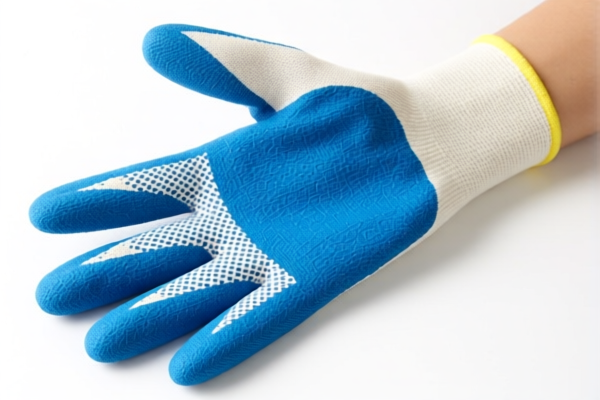

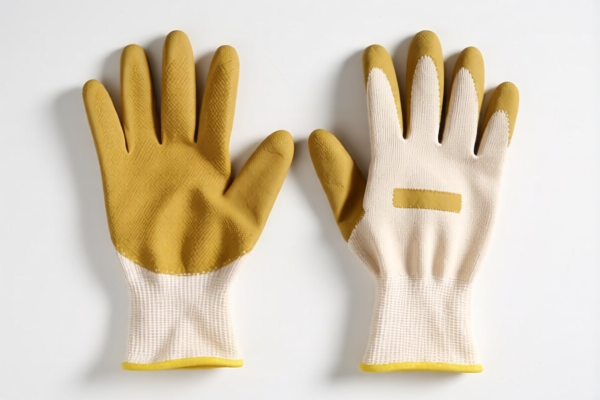
AI Analysis
🧤 Four-Finger Insertion Rubber Composite Gloves (The "Gloveless" Glove)
🌐 HS Code Reference & Customs Clearance Guide | 2026 Latest Tariff Analysis | Professional Clearance Strategy
📌 I. Product Definition & Classification: What is this weird "Glove"?
"Four-finger insertion rubber composite gloves" refer to a unique type of protective gear. Unlike standard gloves where each finger has its own sleeve, these gloves feature a single compartment for four fingers, leaving the thumb separate or integrated into a mitt-like structure. They are typically made from rubber or rubber composite materials.
In international trade, these items are contentious because they straddle the line between rubber articles (Chapter 40) and textile/clothing accessories (Chapter 39/61 depending on material). The core dispute is whether they are "rubber shapes/semimanufactures" or "articles of apparel/accessories."
⚠️ Key Distinction Point:
- If considered pure rubber products without complex textile lining → Falls under Chapter 40 (Rubber Articles).
- If considered composite materials acting as clothing accessories → Falls under Chapter 39 (Articles of Plastic/Rubber, specifically "Other articles of plastics and articles of other materials of heading 39.01 to 39.14... not elsewhere specified..."). Note: Heading 39.26 covers "Other articles of plastics and articles of other materials of heading 39.01 to 39.14" often used for non-textile clothing accessories in specific customs interpretations.
📦 II. HS Code Classification Details (2026 Latest Tariff Authority Comparison)
| HS Code | Product Description | Applicable Scenario | Material/Nature |
|---|---|---|---|
4006.90.50.00 |
Rubber composite gloves, four-finger insertion. Material: Rubber. Classified as "Other shapes and articles of rubber, unvulcanized." | Industrial rubber goods, non-standard glove shapes treated as rubber articles. | ✅ Pure Rubber / Unvulcanized Rubber Shapes |
3926.20.10.20 |
Rubber composite gloves, four-finger insertion. Material: Rubber Composite. Classified under "Clothing and accessories." | General consumer protection, where composite nature is emphasized over pure rubber. | ✅ Composite Material / Accessory |
3926.20.40.10 |
Rubber composite gloves, four-finger insertion. Material: Rubber Composite. Classified under heading 3926.20 "Clothing and wearing accessories." | Specific regulatory interpretation where composite gloves are deemed "wearing accessories." | ✅ Composite Material / Wearing Accessory |
🔍 Key Reminder:
- The critical factor is whether customs views the item as a manufactured rubber good (Ch.40) or a composite accessory (Ch.39). -3926.20codes are often preferred for "composite" goods that serve a clothing function, whereas4006is a residual category for unvulcanized or specific rubber shapes.
💰 III. 2026 Latest Tariff Rate Breakdown (Including Additional Duties & Policy Surcharges)
✅ Applicable Country: United States (US)
✅ Origin: China (CN)
✅ Effective Date: From November 10, 2025 (and subsequent imports)
🎯 1. 4006.90.50.00 — Rubber Composite Gloves (Unvulcanized Rubber Category)
| Item | Content |
|---|---|
| Base Tariff | 2.7% (ad valorem) |
| USITC Additional Tariff (Section 301) | +25.0% |
| IEEPA Surcharge (Section 122) | +10.0% |
| Total Tariff | 37.7% |
| Tax Calculation | CIF Value × 37.7% |
| De Minimis Eligibility | ❌ No (deny_de_minimis) |
| Legal Basis Path | IEEPA:9903.01.25 → USITC:4006.90.50.00 → FOOTNOTE:122 |
📌 Explanation:
- Base 2.7%: Standard MFN rate for rubber articles. - 25% Section 301: Applied to many Chinese rubber goods. - 10% IEEPA (Section 122): Specific surcharge for certain imports. - Total 37.7%: High burden. This classification treats the item as a raw/semi-finished rubber good, attracting full additional tariffs.
🎯 2. 3926.20.10.20 — Rubber Composite Gloves (Clothing/Accessory Category)
| Item | Content |
|---|---|
| Base Tariff | 0.0% (ad valorem) |
| USITC Additional Tariff (Section 301) | 0.0% |
| IEEPA Surcharge (Section 122) | +10.0% |
| Total Tariff | 10.0% |
| Tax Calculation | CIF Value × 10.0% |
| De Minimis Eligibility | ⚠️ Check Specific Exclusions (Often subject to strict scrutiny for rubber composites) |
| Legal Basis Path | IEEPA:9901.25 → USITC:3926.20.10.20 → FOOTNOTE:122 |
📌 Note:
- This is the most favorable classification if accepted. - Base 0% suggests it’s viewed as a non-rubber-specific accessory. - 0% Section 301: Many "clothing accessories" under 3926 may be exempt from the 25% tariff. - 10% IEEPA: Still applies. - Total 10%: Significant savings compared to4006.
🎯 3. 3926.20.40.10 — Rubber Composite Gloves (Wearing Accessories)
| Item | Content |
|---|---|
| Base Tariff | 6.5% (ad valorem) |
| USITC Additional Tariff (Section 301) | 0.0% |
| IEEPA Surcharge (Section 122) | +10.0% |
| Total Tariff | 16.5% |
| Tax Calculation | CIF Value × 16.5% |
| De Minimis Eligibility | ⚠️ Check Specific Exclusions |
| Legal Basis Path | IEEPA:9901.25 → USITC:3926.20.40.10 → FOOTNOTE:122 |
📌 Note:
- A middle-ground classification. - Base 6.5%: Higher than3926.20.10.20but lower than4006. - 0% Section 301: Again, exempt from the 25% duty. - 10% IEEPA: Still applies. - Total 16.5%: Much better than 37.7%, but worse than 10%.
🛠️ IV. Customs Clearance Practical Advice (Combat Pitfalls Guide)
✅ 1. Preparation Checklist (Must-Haves)
| Material | Must Provide | Explanation |
|---|---|---|
| ✅ Product Specification Sheet | ✔️ | Detail material composition (Rubber vs. Composite ratio), dimensions, finger configuration. |
| ✅ Material Composition Report | ✔️ | Crucial for distinguishing between Chapter 40 (Rubber) and Chapter 39 (Composite/Accessory). |
| ✅ Product Photos (Clear View) | ✔️ | Show the "four-finger" unique structure. Label it as "Composite Glove" not just "Rubber Glove." |
| ✅ Commercial Invoice | ✔️ | Describe as "Rubber Composite Safety Gloves, Four-Finger Design" to align with Ch.39 if aiming for 10%/16.5%. |
| ✅ Origin Certificate (CO) | ✔️ | To prove China origin and apply relevant surcharges accurately. |
✅ 2. Declaration Strategy (Key Mantra)
🔥 "Composite is Key, Rubber is High!"
(Aim for Chapter 39 to avoid 25% Section 301 duty)
| Scenario | Correct Declaration | Wrong Practice | Result |
|---|---|---|---|
| Composite Material | 3926.20.10.20 or 3926.20.40.10 |
Declaring as "Rubber Glove" → 4006.90.50.00 |
Save 27.7% (10% vs 37.7%) |
| Pure Rubber | 4006.90.50.00 |
Declaring as "Plastic Accessory" → 3926... |
Risk of Penalty if material is >50% rubber |
| Mixed Packaging | Declare as one unit | Splitting glove + packaging | Unnecessary complexity |
✅ 3. Special Case Handling
| Situation | Handling Advice |
|---|---|
| Is it Rubber or Plastic? | If the composite is primarily rubber, customs may push for 4006. Provide lab tests showing polymer blend if possible. |
| Functionality | If used for medical/industrial protection, emphasize the "composite protective barrier" aspect to support Ch.39 classification. |
| Pre-Ruling | Strongly Recommended. Apply for an Advance Ruling from CBP to lock in the 3926 classification before shipment. |
🌍 V. Global Market Clearance Comparison (2026 Latest)
| Country/Region | Recommended HS Code | Tariff (China Origin) | Notes |
|---|---|---|---|
| 🇺🇸 USA | 3926.20.10.20 |
10.0% | Best option. Avoid 4006 (37.7%). |
| 🇨🇳 China | 4006.90.50.00 / 3926.20 |
~5-13% | Import duties vary. Check latest Chinese HS list. |
| 🇪🇺 EU | 4015.19.00 (Protective Gloves) |
0-6.5% | EU classifies protective gloves under Ch.40 usually. No Section 301 equivalent. |
| 🇬🇧 UK | 4015.19.00 |
6.5% | Post-Brexit rules apply. Similar to EU. |
📌 Conclusion:
- For US imports, the difference between 10% and 37.7% is massive.
- Aggressively argue for Chapter 39 (3926.20) if the product is a composite material acting as an accessory.
- If it is 100% unvulcanized rubber, you may be stuck with4006and 37.7%.
📌 VI. Common Errors & Pitfalls (Blood Lessons)
❌ Error 1: Calling it "Rubber Gloves" in the invoice when it's a composite.
👉 Consequence: Customs will reclassify to 4006.90.50.00 → 37.7% duty.
❌ Error 2: Ignoring the "Four-Finger" uniqueness.
👉 Consequence: Customs may classify it as standard gloves (4015.19 or 3926.90) with different rates. Be precise in description.
❌ Error 3: Assuming all rubber goods are taxed the same.
👉 Consequence: Missing the exemption from Section 301 duty under Chapter 39.
✅ Correct Approach:
"Rubber Composite Four-Finger Insertion Gloves, Industrial Safety Accessory, Material: Rubber-Polymer Blend, Model: F4-COMP"
🎯 VII. Conclusion: Precise Classification Saves Money!
🎯 Remember the Mantra:
🔹 "Composite Class, Save 27! Rubber Class, Pay 37!"
🔹 "Chapter 39 is the Shield, Chapter 40 is the Sword!"
📌 Tip:
If your product is not made in China (e.g., Vietnam, Thailand), Section 301 and IEEPA surcharges do not apply. The total tariff for 4006.90.50.00 would drop to just 2.7% (Base) or 6.5% (Base for 3926).
Strategy: Consider supply chain diversification if US tariffs remain prohibitive.
📣 Immediate Action:
📞 Consult a customs broker for an Advance Ruling.
📦 Ensure your material composition report supports a Chapter 39 classification.
🚀 Clarify the classification first to maximize profit margins!
✨ Professional clearance starts with precise classification!
💼 Your cost efficiency depends on the HS Code!
Customer Reviews
About HS Code Classification
The Harmonized System (HS) is an internationally standardized nomenclature developed by the World Customs Organization (WCO) to classify traded products. Over 200 countries use the HS system as the basis for customs tariffs, trade statistics, and import/export regulations.
Each HS code follows a hierarchical structure:
- Chapter (2 digits) — Broad category of goods (e.g., Chapter 84: Machinery and Mechanical Appliances)
- Heading (4 digits) — More specific grouping within the chapter
- Subheading (6 digits) — Internationally standardized breakdown, used by all WCO member countries
- National subdivisions (8-10 digits) — Country-specific extensions for further classification, such as US HTSUS 10-digit codes
Correct HS code classification is essential for smooth customs clearance, accurate duty payment, and compliance with trade regulations. Misclassification can lead to customs delays, overpayment of duties, or penalties.
When importing from CN to US, the applicable tariff rates may include:
- Most-Favored-Nation (MFN) rate — The standard duty rate applied to WTO members
- General rate — Applied to countries without trade agreements
- Trade remedy duties — Additional tariffs such as Section 301 (anti-dumping), Section 232 (national security), or countervailing duties
The information provided on this page is for reference purposes only. For official classification, please consult with your local customs authority or a licensed customs broker.