Four layer Home Textile
CN → US| HS Code | Tariff Rate | Origin | Destination | Doc |
|---|---|---|---|---|
| 6302992000 | 25.9% | CN | US | Official Doc |
| 6302593020 | 26.3% | CN | US | Official Doc |
| 5811004000 | 35.0% | CN | US | Official Doc |
| 5811002000 | 41.3% | CN | US | Official Doc |
Product Images
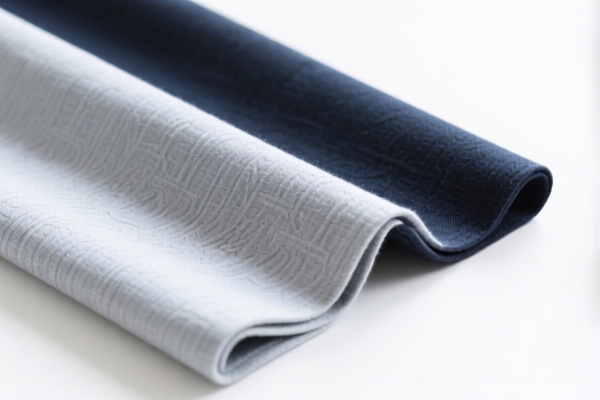
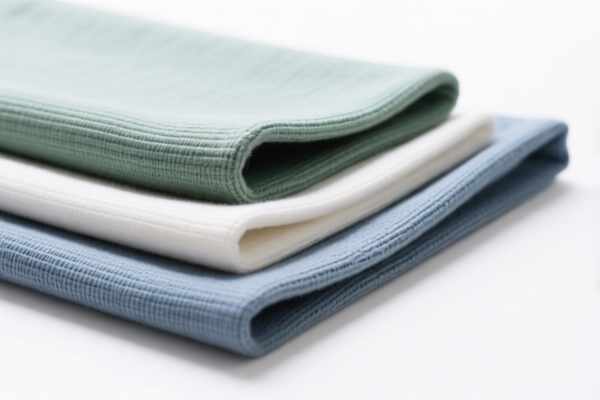
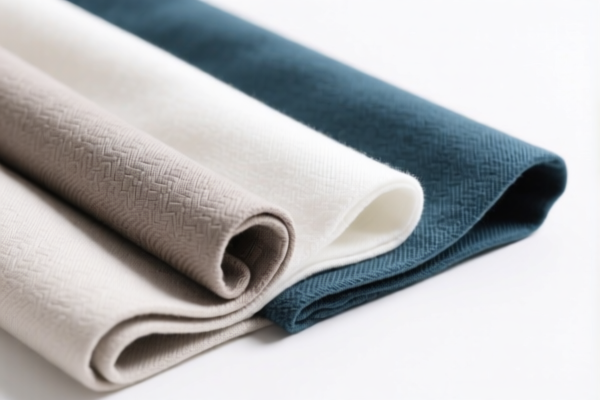
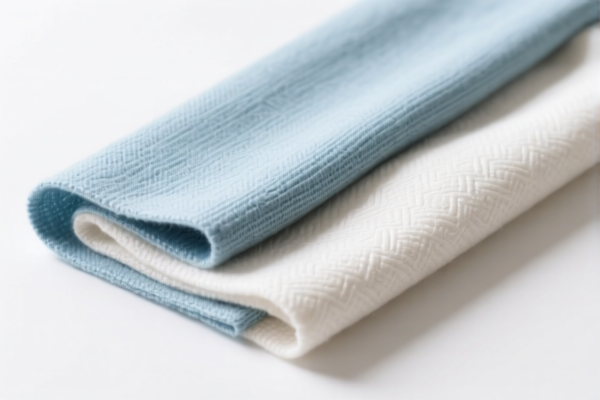
AI Analysis
🛌 4-Layer Home Textile (Bed Linen & Table Linen)
🌐 HS Code Reference & Customs Clearance Guide | 2026 Latest Tariff Analysis | Professional Strategy for US Imports
📌 I. Product Definition & Classification: What Exactly is "4-Layer Home Textile"?
"4-Layer Home Textile" refers to household textile products constructed with four distinct layers of fabric. Common examples include bedsheets, duvet covers, quilts, or tablecloths. In international trade, the classification hinges on two critical factors:
1. Material Composition: Typically cotton, polyester, or blends ("other textile materials").
2. Structure: The "4-layer" construction implies a quilted, padded, or laminated structure, distinguishing it from simple single-weave fabrics.
⚠️ Key Distinction Point:
- If the item is a simple woven fabric (e.g., plain sheet) → Likely 6302 (Household Linens).
- If the item is padded/insulated or has specific industrial/textile construction features → Could fall under 5811 (Quilted Textile Fabrics).
- Misclassification Risk: Declaring a quilted sheet as a simple linen (6302) when it should be 5811 (or vice versa) can lead to significant duty differences due to varying base tariffs and additional Section 301/IEEPA rates.
📦 II. HS Code Classification Details (2026 Latest Tariff Authority Comparison)
Based on the provided data, four potential HS Codes have been identified. Below is the detailed breakdown of why each code might apply, along with the corresponding tax implications.
| HS Code | Product Description & Matching Logic | Application Scenario | Reason for Match |
|---|---|---|---|
6302.99.20.00 |
Household Linens, Other Textile Materials | Bedsheets, Tablecloths | ✅ Match: Explicitly mentions "textile material" (fits "other textile materials"). "4-layer" infers form factor like sheets/tablecloths, consistent with household use. |
6302.59.30.20 |
Other Table Linens/Textile Articles | Tablecloths, Napkins | ✅ Match: "Textile" matches material requirement. "4-layer" is a structural description fitting the "other" (catch-all) category for table linens without specific material restrictions. |
5811.00.40.00 |
Quilted Textile Fabrics, Other | Quilted Pads, Insulated Linens | ✅ Match: "4-layer" fits "sheet-like" (layered) structure. "Home textile" fits "textile material." No material conflict. High base tax-free but high additional tariffs. |
5811.00.20.00 |
Cotton Quilted Textile Fabrics | Cotton Quilts/Pads | ✅ Match: "4-layer" fits "multi-layer" characteristic. Material inferred as cotton/synthetic (common for home textiles), no conflict with "Cotton" category. |
🔍 Critical Note:
- Codes in 6302 are generally for finished household linens (sheets, towels).
- Codes in 5811 are often for fabric or quilted materials, even if used for home purposes. The distinction often lies in whether the product is a "finished good" vs. a "textile structure."
- Duty Impact: The choice between 6302 and 5811 can result in a ~10% difference in total effective tax rate due to base tariff variations (8.4–8.8% vs. 0–6.3%) combined with additional tariffs.
💰 III. 2026 Latest Tariff Rate Breakdown (Including Surcharges)
✅ Applicable Country: United States (US)
✅ Origin: China (CN)
✅ Effective Date: Post-November 2025 (Current Trade Rules)
🎯 1. 6302.99.20.00 – Household Linens, Other Textile Materials
| Item | Detail |
|---|---|
| Base Tariff | 8.4% |
| Additional Tariff (Sec. 301) | +7.5% |
| IEEPA Tariff (China-specific) | +10% |
| Total Effective Tax Rate | 25.9% |
| Tax Calculation | CIF Value × 25.9% |
| De Minimis Eligibility | ❌ Not Eligible (Section 301 & IEEPA generally override de minimis for certain categories, or high value makes it relevant) |
| Legal Basis | USITC:6302.99.20.00 + Section 301 Footnotes + IEEPA:9903.01.24 |
📌 Explanation:
- This code offers a moderate total burden (25.9%).
- The base tariff is moderate (8.4%), but the additional tariffs (17.5%) apply uniformly.
- Best for: General-purpose home textiles (sheets, tablecloths) made of non-cotton/synthetic blends where no specific "quilted" definition applies.
🎯 2. 6302.59.30.20 – Other Table Linens
| Item | Detail |
|---|---|
| Base Tariff | 8.8% |
| Additional Tariff (Sec. 301) | +7.5% |
| IEEPA Tariff (China-specific) | +10% |
| Total Effective Tax Rate | 26.3% |
| Tax Calculation | CIF Value × 26.3% |
| De Minimis Eligibility | ❌ Not Eligible |
| Legal Basis | USITC:6302.59.30.20 + Section 301 + IEEPA |
📌 Note:
- Only 0.4% higher than the previous code due to a slightly higher base tariff (8.8% vs. 8.4%).
- Best for: Specifically table linens (tablecloths, napkins) where the use case is clear.
🎯 3. 5811.00.40.00 – Quilted Textile Fabrics (Other)
| Item | Detail |
|---|---|
| Base Tariff | 0.0% |
| Additional Tariff (Sec. 301) | +25.0% |
| IEEPA Tariff (China-specific) | +10% |
| Total Effective Tax Rate | 35.0% |
| Tax Calculation | CIF Value × 35.0% |
| De Minimis Eligibility | ❌ Not Eligible |
| Legal Basis | USITC:5811.00.40.00 + Section 301 (Footnote 9903.88.01) + IEEPA |
📌 Warning:
- Although the base tariff is 0%, the Section 301 surcharge is significantly higher (25%) compared to the 6302 codes (7.5%).
- Total cost is higher (35%). This often surprises importers who focus only on the base rate.
- Best for: Products that are clearly defined as quilted fabrics/pads rather than finished linens. Must justify "quilted" structure.
🎯 4. 5811.00.20.00 – Cotton Quilted Textile Fabrics
| Item | Detail |
|---|---|
| Base Tariff | 6.3% |
| Additional Tariff (Sec. 301) | +25.0% |
| IEEPA Tariff (China-specific) | +10% |
| Total Effective Tax Rate | 41.3% |
| Tax Calculation | CIF Value × 41.3% |
| De Minimis Eligibility | ❌ Not Eligible |
| Legal Basis | USITC:5811.00.20.00 + Section 301 + IEEPA |
📌 Critical Alert:
- This is the most expensive option (41.3%).
- Even with a lower base tariff than 6302 (6.3%), the 25% Section 301 surcharge dominates.
- Best for: Cotton-specific quilted items. Only choose this if the product is undeniably a "cotton quilted fabric" and not a general home linen. Otherwise, avoid due to high cost.
🛠️ IV. Customs Clearance Practical Advice (Pitfall Avoidance Guide)
✅ 1. Preparation Checklist (Mandatory)
| Document | Required? | Explanation |
|---|---|---|
| ✅ Product Specification Sheet | ✔️ | Must detail: Layers, materials (cotton/poly%), stitching type, final use (bed vs. table). |
| ✅ High-Resolution Photos | ✔️ | Show cross-section (to prove 4-layer structure) and finished product. |
| ✅ Material Composition Label | ✔️ | Must match the HS code justification (e.g., "100% Cotton" vs. "Polyester Blend"). |
| ✅ Commercial Invoice | ✔️ | Clear description: "4-Layer Cotton Quilted Sheets" or "4-Layer Polyester Tablecloth." Avoid vague terms like "Textile." |
| ✅ Origin Certificate | ✔️ | Essential for proving China origin (to confirm applicability of IEEPA/Section 301). |
✅ 2. Declaration Strategy (Key Rules)
🔥 "Define the Use, Define the Structure, Choose the Code!"
| Scenario | Recommended HS Code | Why? | Risk if Misdeclared |
|---|---|---|---|
| General Bedsheets/Tablecloths (Not clearly quilted/padded) | 6302.99.20.00 or 6302.59.30.20 |
Lower additional tariff (7.5%). Fits "household linen" definition. | Declaring as 5811 → Higher duty (35-41%). |
| Quilted Pads/Pads with Insulation | 5811.00.40.00 |
Structure is "quilted/fabric-like." | Declaring as 6302 → Customs may reclassify & penalize. |
| Cotton Quilted Items | 5811.00.20.00 |
Specific cotton + quilted structure. | Declaring as generic 6302 → Risk of audit for material misclassification. |
📌 Pro Tip:
- If your product is a sheet with 4 layers of woven fabric (not padded/quilted), 6302 is safer and cheaper.
- If your product is padded or stitched with filling (quilted), 5811 is more accurate, but more expensive.
- Do not guess. If unsure, provide detailed photos to a customs broker for a Pre-Ruling.
✅ 3. Special Cases & Handling
| Situation | Advice |
|---|---|
| OEM/Private Label | Ensure the invoice matches the product exactly. If "Home Textile" is too vague, use "Quilted Bed Sheet Set." |
| Mixed Material | If the 4 layers are different materials (e.g., cotton top, polyester bottom), the composition determines the code. Provide a detailed breakdown. |
| High-Value Shipments | Consider applying for a Section 301 Exclusion if available (though currently limited for textiles). Check USTR website for current exclusions. |
| De Minimis (Section 321) | ❌ Not Applicable. Items subject to Section 301 and IEEPA tariffs cannot use the $800 de minimis exemption for China-origin goods. Full duties apply. |
🌍 V. Global Market Comparison (2026)
| Country/Region | Recommended HS Code | Total Tax Rate (China Origin) | Notes |
|---|---|---|---|
| 🇺🇸 USA | 6302.99.20.00 |
25.9% | Most cost-effective for general home textiles. |
| 🇺🇸 USA | 5811.00.40.00 |
35.0% | Higher cost due to 25% Sec 301. |
| 🇨🇳 China | 6302.99.20.00 |
10.7% | Lower export/import duties for domestic trade. |
| 🇪🇺 EU | 6302.99 |
~5-12% | No Section 301/IEEPA. Lower barriers. |
| 🇬🇧 UK | 6302.99 |
~5-12% | Post-Brexit tariff schedule, generally lower than US. |
📌 Conclusion:
- The USA is the most challenging market due to Section 301 and IEEPA tariffs.
- Choose 6302 over 5811 whenever possible to save ~9-15% in total duties.
- Accurate material and structure description is the key to avoiding costly reclassifications.
📌 VI. Common Mistakes & Pitfalls (Lessons Learned)
❌ Mistake 1: Calling it "Textile" without specifying "Home Linen" or "Quilted"
👉 Consequence: Customs may assign the highest possible rate or request extensive documentation → Delays & Demurrage Fees.
❌ Mistake 2: Assuming "4-Layer" means "Quilted" (5811)
👉 Consequence: Paying 35-41% duty when 25.9% was possible if the product is simply layered linen (6302).
❌ Mistake 3: Using De Minimis ($800 exemption)
👉 Consequence: Seizure or Forced Payment. China-origin goods with Section 301/IEEPA tariffs cannot use Section 321.
❌ Mistake 4: Ignoring Material Composition
👉 Consequence: If declared as "Cotton" but is 50/50 blend, customs may reclassify → Penalties + Back Duties.
✅ Correct Approach:
"4-Layer Cotton Quilted Sheet Set, 90x90 inches, Made in China. HS Code: 6302.99.20.00 (if not padded) or 5811.00.40.00 (if quilted/padded). CIF Value: $X. Origin: CN."
🎯 VII. Conclusion: Smart Classification, Cost Savings, Smooth Clearance!
🎯 Remember These Rules:
🔹 "6302 is Cheaper, 5811 is Accurate for Quilts."
🔹 "4-Layer ≠ Quilted. Check the Structure."
🔹 "No De Minimis for China Textiles. Prepare for Full Duties."
📌 Pro Tip:
- For bedsheets/tablecloths, aim for 6302.99.20.00 to minimize costs (25.9%).
- For padded/quilted items, you may need 5811, but budget for higher taxes.
- Always consult a customs broker with product samples for a Pre-Ruling if your product sits in a gray area.
📣 Immediate Action:
📞 Contact a Licensed Customs Broker
🖼️ Provide Clear Photos of Layers & Materials
📄 Apply for HS Code Pre-Ruling
🚀 Ensure Smooth US Customs Clearance, Avoid Surprises, Maximize Profit Margins!
✨ Professional Clearance Starts with Precise Classification!
💼 Every Percent Saved is Profit Gained!
Customer Reviews
About HS Code Classification
The Harmonized System (HS) is an internationally standardized nomenclature developed by the World Customs Organization (WCO) to classify traded products. Over 200 countries use the HS system as the basis for customs tariffs, trade statistics, and import/export regulations.
Each HS code follows a hierarchical structure:
- Chapter (2 digits) — Broad category of goods (e.g., Chapter 84: Machinery and Mechanical Appliances)
- Heading (4 digits) — More specific grouping within the chapter
- Subheading (6 digits) — Internationally standardized breakdown, used by all WCO member countries
- National subdivisions (8-10 digits) — Country-specific extensions for further classification, such as US HTSUS 10-digit codes
Correct HS code classification is essential for smooth customs clearance, accurate duty payment, and compliance with trade regulations. Misclassification can lead to customs delays, overpayment of duties, or penalties.
When importing from CN to US, the applicable tariff rates may include:
- Most-Favored-Nation (MFN) rate — The standard duty rate applied to WTO members
- General rate — Applied to countries without trade agreements
- Trade remedy duties — Additional tariffs such as Section 301 (anti-dumping), Section 232 (national security), or countervailing duties
The information provided on this page is for reference purposes only. For official classification, please consult with your local customs authority or a licensed customs broker.