Four layer bag liner
CN → US| HS Code | Tariff Rate | Origin | Destination | Doc |
|---|---|---|---|---|
| 3923290000 | 38.0% | CN | US | Official Doc |
| 3923210095 | 38.0% | CN | US | Official Doc |
| 3921901950 | 40.3% | CN | US | Official Doc |
| 4819400040 | 35.0% | CN | US | Official Doc |
| 4819400020 | 35.0% | CN | US | Official Doc |
Product Images
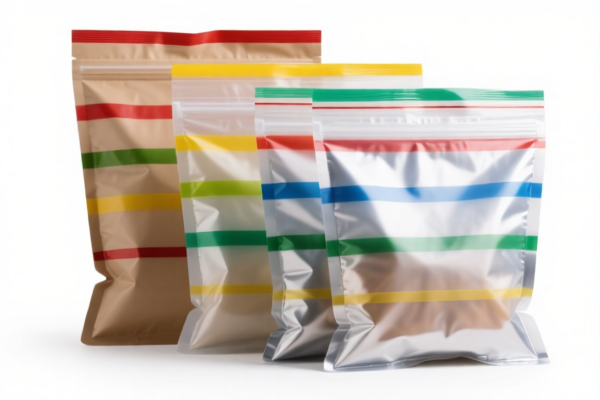
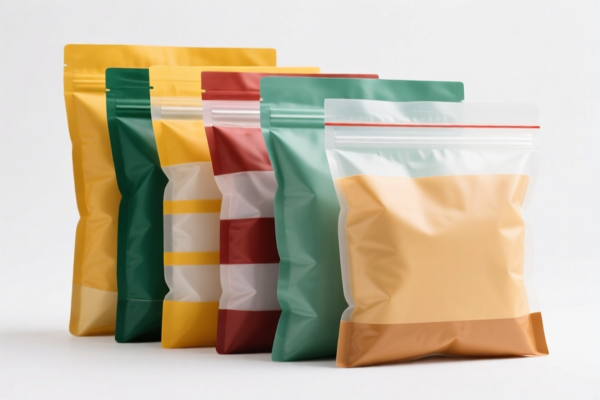
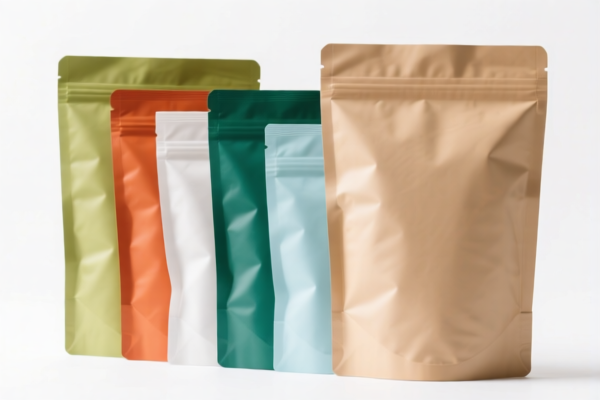
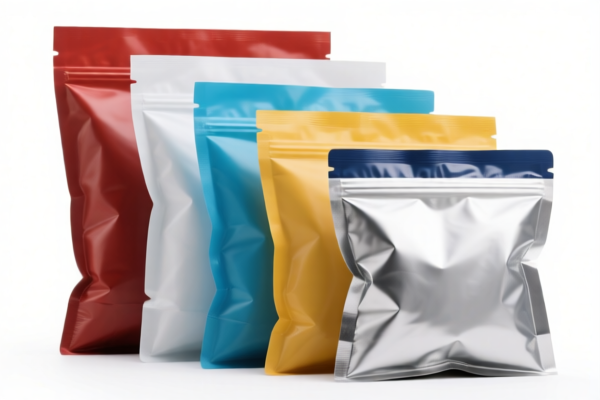
AI Analysis
🛍️ Four Layer Bag Liner: HS Code Classification & Customs Clearance Guide
🌐 HS Code Reference & Customs Clearance Guide | 2026 Latest Tariff Analysis | Professional Compliance Strategy
📌 I. Product Definition & Classification: What is a "Four Layer Bag Liner"?
A Four Layer Bag Liner is typically an internal component used within rigid or semi-rigid packaging containers (such as tote bags, intermediate bulk containers (IBCs), or industrial sacks). Its primary function is to provide a barrier against moisture, contamination, or product leakage.
In international trade, the classification depends heavily on material composition and structural form: - Plastic Liners: If the liner is primarily made of polymer films (e.g., PE, PP, laminated plastics), it falls under Chapter 39. - Paper/Composite Liners: If the liner is made of paper, multi-layer paper, or paper-plastic composites, it falls under Chapter 48.
⚠️ Critical Distinction Point: - If the item is a plastic film/sheet used as a lining → Classify under Chapter 39. - If the item is a paper-based bag or liner → Classify under Chapter 48.
📦 II. HS Code Classification Details (Based on Provided Data)
| HS Code | Product Description | Inference Basis | Total Tax Rate |
|---|---|---|---|
3923.29.00.00 |
Other plastic sacks and bags | Inferred from pouch/bag shape (囊袋), assumed to be plastic material. | 38.0% |
3923.21.00.95 |
Other plastic bags | Inferred from bag liner as part of a bag structure, made of ethylene polymer plastic. | 38.0% |
3921.90.19.50 |
Other plastic plates, films, sheets | Inferred from film/foil state (薄膜/片状), assumed to be plastic material. | 40.3% |
4819.40.00.40 |
Other paper bags and packages | Inferred from paper-based packaging container component. | 35.0% |
4819.40.00.20 |
Multi-layer bags | Inferred from multi-layer structural bag component, assumed to be paper or composite paper. | 35.0% |
🔍 Key Reminder: - If the liner is plastic but shaped like a pouch → 3923.29.00.00. - If the liner is plastic film not formed into a bag → 3921.90.19.50. - If the liner is paper-based → 4819.40.00.40 or 4819.40.00.20 (depending on layer structure).
💰 III. 2026 Latest Tariff Rate Breakdown (Including Surcharges)
✅ Applicable Country: United States (US)
✅ Origin: China (CN)
✅ Effective Date: 2025年11月10日起 (From Nov 10, 2025)
🎯 1. Plastic-Based Liners (3923.29.00.00, 3923.21.00.95)
| Item | Detail |
|---|---|
| Base Duty | 3.0% |
| Section 301 Surcharge | 25.0% |
| Section 122 Tariff | 10.0% |
| Total Tax Rate | 38.0% |
| Tax Calculation | CIF Value × 38.0% |
| De Minimis Exemption | ❌ Not Available (deny_de_minimis) |
📌 Explanation: - Base Duty 3%: Standard MFN rate for plastic sacks/bags. - Section 301 (25%): Additional tariff on Chinese goods under US Trade Act Section 301. - Section 122 (10%): Additional tariff under US Trade Act Section 122 (national emergency/import surge). - Total 38%: High cost factor. Must be factored into pricing strategy.
🎯 2. Plastic Film/Sheet Liners (3921.90.19.50)
| Item | Detail |
|---|---|
| Base Duty | 5.3% |
| Section 301 Surcharge | 25.0% |
| Section 122 Tariff | 10.0% |
| Total Tax Rate | 40.3% |
| Tax Calculation | CIF Value × 40.3% |
| De Minimis Exemption | ❌ Not Available (deny_de_minimis) |
📌 Note: - Plastic films/sheets not formed into bags have a slightly higher base duty (5.3%). - Same surcharges apply → Total 40.3%.
🎯 3. Paper-Based Liners (4819.40.00.40, 4819.40.00.20)
| Item | Detail |
|---|---|
| Base Duty | 0.0% |
| Section 301 Surcharge | 25.0% |
| Section 122 Tariff | 10.0% |
| Total Tax Rate | 35.0% |
| Tax Calculation | CIF Value × 35.0% |
| De Minimis Exemption | ❌ Not Available (deny_de_minimis) |
📌 Advantage: - Paper-based liners have 0% base duty, making them slightly cheaper than plastic film liners. - However, surcharges still apply → Total 35%. - Suitable for eco-friendly branding, but ensure material composition is clearly stated as paper/composite.
🛠️ IV. Customs Clearance Practical Advice (Risk Avoidance Guide)
✅ 1. Documentation Checklist (Must-Haves)
| Document | Required? | Notes |
|---|---|---|
| ✅ Product Specification Sheet | ✔️ | Must include material type (plastic/paper), layer structure, dimensions. |
| ✅ Material Composition Report | ✔️ | Critical for distinguishing between Chapter 39 (Plastic) and Chapter 48 (Paper). |
| ✅ Product Photos (Including Cross-Section) | ✔️ | Show layered structure to justify "multi-layer" classification. |
| ✅ Commercial Invoice | ✔️ | Clearly state "Bag Liner" and material (e.g., "4-Layer PE Plastic Liner"). |
| ✅ Packing List | ✔️ | Indicate quantity per container, weight, and dimensions. |
| ✅ Origin Certificate (CO) | ✔️ | Required for origin verification; China-origin goods face surcharges. |
✅ 2. Declaration Strategy (Key Tips)
🔥 "Material First, Structure Second, Name Precise, Tax Minimized!"
| Scenario | Correct Declaration | Incorrect Practice |
|---|---|---|
| Plastic pouch-shaped liner | 3923.29.00.00 |
Misdeclare as "plastic sheet" → Higher tax (40.3%) |
| Plastic film (non-bag shape) | 3921.90.19.50 |
Misdeclare as "bag" → Lower tax (38.0%) but risk penalty if inconsistent |
| Paper-based liner | 4819.40.00.40 or 4819.40.00.20 |
Misdeclare as plastic → Risk of reclassification + penalties |
| Multi-layer paper liner | 4819.40.00.20 |
Misdeclare as single-layer → Inconsistent with proof |
✅ 3. Special Cases Handling
| Scenario | Handling Advice |
|---|---|
| Multi-material Liners | If liner contains both plastic and paper layers, consult customs broker for "principal material" determination. Usually, plastic dominates classification under Chapter 39. |
| OEM Custom Liners | Provide design drawings and material specs to avoid misclassification. |
| Eco-Friendly Claims | If claiming biodegradable or recycled content, provide certification; however, tax rates remain unchanged under current US rules. |
| Small Quantity Imports | No de minimis exemption for Chinese-origin goods under current tariffs. Do not attempt to split shipments to avoid tariffs. |
🌍 V. Global Market Comparison (2026 Latest)
| Country/Region | Recommended HS Code | Tariff Rate | Certification Requirements | Notes |
|---|---|---|---|---|
| 🇺🇸 USA | 3923.29.00.00 / 4819.40.00.20 |
35%-40.3% | None specific for liners | High tariffs due to Section 301 + 122 |
| 🇨🇳 China | 3923.29.00.00 / 4819.40.00.20 |
5%-10% | None | Lower base duty, no surcharges |
| 🇪🇺 EU | 3923.29.00 / 4819.40.00 |
0%-6.5% | REACH, RoHS (if plastic) | No Section 301 equivalent |
| 🇬🇧 UK | 3923.29.00 / 4819.40.00 |
0%-6.5% | UKCA marking | Post-Brexit tariffs aligned with EU |
| 🇯🇵 Japan | 3923.29.00 / 4819.40.00 |
3.0%-5.0% | JIS, RoHS | No major surcharges |
📌 Conclusion: - USA is the most expensive market for Chinese-made bag liners due to layered tariffs. - Plastic liners face higher total tax (38-40.3%) than paper liners (35%). - Consider supply chain diversification (e.g., Vietnam, Thailand) if targeting US market to avoid surcharges.
📌 VI. Common Mistakes & Pitfalls (Lessons Learned)
❌ Mistake 1: Declaring plastic liners as "packaging materials" without specifying form.
👉 Result: Customs may classify under general packaging (higher tax) or request clarification → Delay.
❌ Mistake 2: Ignoring the "Section 122" 10% surcharge.
👉 Result: Underestimating landed cost by 10% → Margin erosion.
❌ Mistake 3: Using "bag" for film-like liners.
👉 Result: Incorrect HS code → Potential penalties for misdeclaration.
❌ Mistake 4: Assuming de minimis applies to small shipments.
👉 Result: No exemption for Chinese goods → Full tax liability.
✅ Correct Practice:
"4-Layer PE Plastic Bag Liner, Pouch Shape, For Industrial Sacks, Model XYZ, Compliant with FDA/REACH"
🎯 VII. Conclusion: Precise Classification, Efficient Customs Clearance
🎯 Remember:
🔹 "Material dictates Chapter, Shape dictates Subheading, Surcharges dictate Cost."
🔹 "Plastic = Ch39, Paper = Ch48, Surcharge = +35% on base."
📌 Pro Tip:
- If your liner is originating from Vietnam, Mexico, or Thailand, you may avoid Section 301 & 122 surcharges.
- Apply for Advance Ruling (Pre-classification) with US CBP to confirm HS Code and tax liability before shipment.
📣 Immediate Action:
📞 Consult a licensed customs broker + Provide material specs + Apply for Advance Ruling
🚀 Ensure smooth customs clearance, reduce landed costs, and maximize profit margins!
✨ Professional clearance starts with accurate classification!
💼 Every cent of cost deserves precise calculation!
Customer Reviews
About HS Code Classification
The Harmonized System (HS) is an internationally standardized nomenclature developed by the World Customs Organization (WCO) to classify traded products. Over 200 countries use the HS system as the basis for customs tariffs, trade statistics, and import/export regulations.
Each HS code follows a hierarchical structure:
- Chapter (2 digits) — Broad category of goods (e.g., Chapter 84: Machinery and Mechanical Appliances)
- Heading (4 digits) — More specific grouping within the chapter
- Subheading (6 digits) — Internationally standardized breakdown, used by all WCO member countries
- National subdivisions (8-10 digits) — Country-specific extensions for further classification, such as US HTSUS 10-digit codes
Correct HS code classification is essential for smooth customs clearance, accurate duty payment, and compliance with trade regulations. Misclassification can lead to customs delays, overpayment of duties, or penalties.
When importing from CN to US, the applicable tariff rates may include:
- Most-Favored-Nation (MFN) rate — The standard duty rate applied to WTO members
- General rate — Applied to countries without trade agreements
- Trade remedy duties — Additional tariffs such as Section 301 (anti-dumping), Section 232 (national security), or countervailing duties
The information provided on this page is for reference purposes only. For official classification, please consult with your local customs authority or a licensed customs broker.