Four strand fabric sofa cover
CN → US| HS Code | Tariff Rate | Origin | Destination | Doc |
|---|---|---|---|---|
| 5112192000 | 42.0% | CN | US | Official Doc |
| 5111191000 | 42.0% | CN | US | Official Doc |
| 5407932090 | 47.0% | CN | US | Official Doc |
Product Images
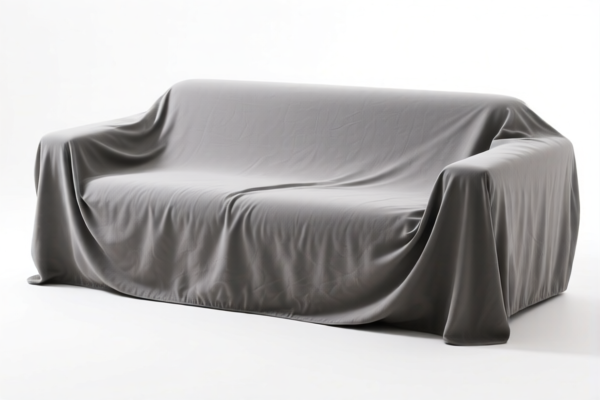
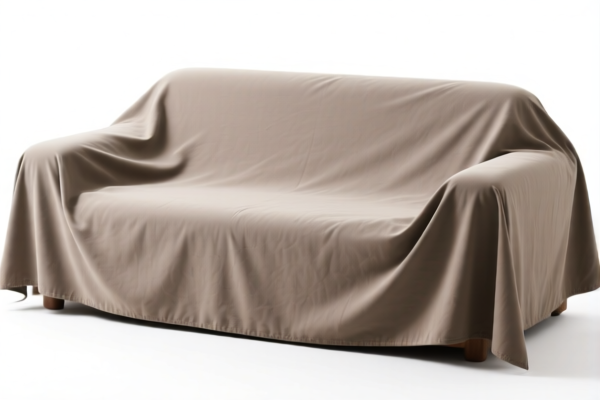
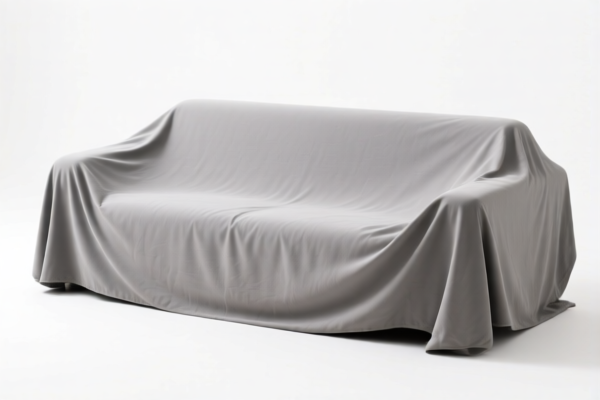
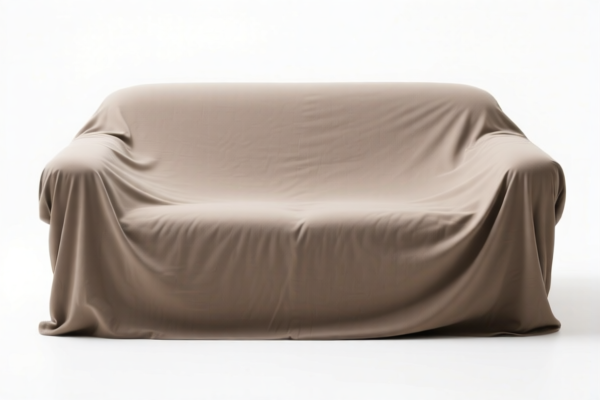
AI Analysis
🛋️ Four Strand Fabric Sofa Cover (Decorative Upholstery)
🌐 HS Code Reference & Customs Clearance Guide | 2026 Latest Tariff Analysis | Professional通关 Strategy
📌 I. Product Definition & Classification: Do You Really Understand "Four Strand Fabric"?
"Four Strand Fabric Sofa Cover" refers to upholstery fabric composed of four twisted yarns (plies), primarily used for decorative purposes such as sofa covers, curtains, or home decor. In international trade, its classification depends heavily on the material composition (Wool vs. Synthetic vs. Other Fibers) and form (Woven).
⚠️ Key Distinction Point:
- If made of Wool or other animal fibers →归入 5112/5111 series;
- If made of Synthetic Filaments (e.g., Polyester, Nylon) →归入 5407 series.
- Misclassification leads to significant tariff differences and customs delays!
📦 II. HS Code Classification Details (2026 Latest Tariff Authority Comparison)
| HS Code | Product Description | Application Scenario | Material Inference |
|---|---|---|---|
5112.19.20.00 |
Woven fabric of other animal hair or of fine or coarse animal hair, weighing ≤ 200 g/m², with synthetic filaments or rubber thread | Decorative upholstery, sofa covers | Wool/Animal Fiber (High logic match) |
5111.19.10.00 |
Woven fabric of other animal hair or of fine or coarse animal hair, weighing > 200 g/m² | Heavy-duty decorative fabrics, thick sofa covers | Fiber Woven Fabric (General category) |
5407.93.20.90 |
Other woven fabrics of synthetic filament yarn, mainly containing ≥ 85% synthetic filaments | Synthetic fiber sofa covers (Polyester/Nylon) | Synthetic Fiber (Fallback logic) |
🔍 Important Reminder:
- The term "Four Strand" refers to the yarn structure (plies), not the final fabric classification. You must declare the raw material (Wool vs. Synthetic).
- If the material is unclear, customs may apply the "fallback" logic to 5407.93.20.90, but this carries a higher tax burden (see below).
💰 III. 2026 Latest Tariff Rate Breakdown (Including Surtaxes & Policy Add-ons)
✅ Applicable Country: United States (US)
✅ Origin: China (CN)
✅ Effective Date: November 10, 2025 onwards (including subsequent imports)
🎯 1. 5112.19.20.00 —— Woven Fabric of Animal Hair/Other Textile Materials
| Item | Content |
|---|---|
| Base Duty Rate | 7.0% (Ad Valorem) |
| Section 301 Surtax | +25.0% |
| Section 122 Tariff | +10.0% |
| Total Tax Rate | 42.0% |
| Tax Calculation | CIF Value × 42% |
| De Minimis Exemption | ❌ Not Applicable (deny_de_minimis) |
| Legal Basis Path | USITC:5112.19.20.00 → USITC:Footnote 9903.88.01 → IEEPA:9903.01.25 |
📌 Explanation:
- This HS code is highly logical for wool-based or animal fiber sofa covers.
- The 42% total rate is high due to the combination of Base Duty (7%) + Section 301 (25%) + Section 122 (10%).
- Section 122 is a specific add-on for certain textile products from China.
🎯 2. 5111.19.10.00 —— Woven Fabric of Other Animal Hair (Heavier Weight)
| Item | Content |
|---|---|
| Base Duty Rate | 7.0% (Ad Valorem) |
| Section 301 Surtax | +25.0% |
| Section 122 Tariff | +10.0% |
| Total Tax Rate | 42.0% |
| Tax Calculation | CIF Value × 42% |
| De Minimis Exemption | ❌ Not Applicable (deny_de_minimis) |
| Legal Basis Path | USITC:5111.19.10.00 → USITC:Footnote 9903.88.01 → IEEPA:9903.01.25 |
📌 Note:
- Same tax structure as5112.19.20.00.
- Applicable if the fabric weight is > 200 g/m² and still of animal fiber origin.
🎯 3. 5407.93.20.90 —— Woven Fabric of Synthetic Filament Yarn (Fallback)
| Item | Content |
|---|---|
| Base Duty Rate | 12.0% (Ad Valorem) |
| Section 301 Surtax | +25.0% |
| Section 122 Tariff | +10.0% |
| Total Tax Rate | 47.0% |
| Tax Calculation | CIF Value × 47% |
| De Minimis Exemption | ❌ Not Applicable (deny_de_minimis) |
| Legal Basis Path | USITC:5407.93.20.90 → USITC:Footnote 9903.88.01 → IEEPA:9903.01.25 |
📌 Warning:
- This is the "fallback" classification for synthetic fibers (e.g., Polyester).
- Total Rate 47% is 5% higher than wool-based fabrics.
- Why? The base duty is 12% (vs. 7% for animal fibers).
- If you are unsure of the material, do not guess. Providing incorrect material data can lead to penalties.
🛠️ IV. Customs Clearance Practical Advice (Real-World Pitfall Guide)
✅ 1. Documentation Checklist (Absolutely Required)
| Document | Required? | Explanation |
|---|---|---|
| ✅ Fabric Composition Label | ✔️ | Must clearly state % of Wool, Polyester, Cotton, etc. |
| ✅ Product Specification Sheet | ✔️ | Includes weight (g/m²), weave type (e.g., Twill, Plain), width |
| ✅ Photos of Fabric | ✔️ | Close-up of texture and weave pattern |
| ✅ Commercial Invoice | ✔️ | Description: "Four Strand Woven Fabric for Sofa Cover, 100% Wool" (or appropriate material) |
| ✅ Packing List | ✔️ | Net/Gross weight, dimensions |
| ✅ Third-Party Test Report | ✔️ | To verify fiber content (Critical for avoiding 47% rate!) |
✅ 2. Declaration Tips (Key Mnemonic)
🔥 "Material First, Weight Second, Four Strands is Just Structure!"
| Scenario | Correct Declaration | Wrong Approach |
|---|---|---|
| Wool Sofa Cover | 5112.19.20.00 or 5111.19.10.00 |
Declaring as "Synthetic" → 47% Tax |
| Polyester Sofa Cover | 5407.93.20.90 |
Declaring as "Wool" → Penalty & 42% Tax |
| Unspecified Fabric | Provide Test Report | Guessing → Customs assigns 5407 (47%) |
| Cotton Fabric | Not listed in Data → Likely different HS | ❌ Do not force into 51xx/54xx without verification |
✅ 3. Special Handling
| Situation | Handling Advice |
|---|---|
| Mixed Material (e.g., 80% Poly, 20% Wool) | Declared under the predominant material. If >85% synthetic → 5407.93.20.90 (47%). |
| Fabric with Rubber Thread | Check for "rubber thread" presence. If present, may fall under 5112.19.20.00 (if animal fiber) or similar. |
| Sample vs. Bulk | Both are subject to tariffs. "Four Strand" description must be consistent. |
| Origin Labeling | Must clearly state "Made in China" to apply Section 301/122 correctly. |
🌍 V. Global Market Comparison (2026 Latest)
| Country/Region | Recommended HS Code | Tariff | Notes |
|---|---|---|---|
| 🇺🇸 USA | 5112.19.20.00 / 5407.93.20.90 |
42% / 47% | High due to 301 + 122 clauses |
| 🇨🇳 China | Same HS | ~5-8% | Base rate only, no 301/122 |
| 🇪🇺 EU | Similar HS | 0-12% | No Section 122; potential GSP benefits |
| 🇦🇺 Australia | Similar HS | 5% | No major surtaxes |
📌 Conclusion:
- USA is the most expensive market for this product due to layered tariffs.
- Cost Optimization: If possible, confirm if the fabric can be classified under a lower base rate (e.g., wool vs. synthetic) through precise material declaration.
- Avoid Misclassification: Declaring polyester as wool to save 5% is fraud and leads to severe penalties.
📌 VI. Common Errors & Pitfall Guide (Lessons Learned)
❌ Error 1: Declaring "Four Strand" as a material type
👉 Consequence: Customs rejects declaration, demands re-submission → Delay & Demurrage Costs
❌ Error 2: Guessing HS Code for unknown fabric
👉 Consequence: Assigned 5407.93.20.90 (47%) instead of correct 42% → Unnecessary 5% Overpayment
❌ Error 3: Omitting "Sofa Cover" use in description
👉 Consequence: Misinterpretation as "Industrial Fabric" → Different HS Code & Potential Audit
❌ Error 4: Not providing fiber test report
👉 Consequence: Customs suspects synthetic content → Applies highest rate (47%)
✅ Correct Approach:
"Woven Fabric, 4-Ply Yarn, 100% Wool, for Upholstery, Weight 180g/m², Model XYZ"
🎯 VII. Conclusion: Precise Classification, Smart Sourcing!
🎯 Remember the Mantra:
🔹 "Material Determines HS, Weight Determines Subheading, Four Strands are Just Yarn Structure!"
🔹 "Wool = 42%, Synthetic = 47%, Guessing = 100% Risk!"
📌 Pro Tip:
If your fabric is made in Vietnam, Thailand, or Malaysia, you may qualify for IEEPA Exemptions or lower base rates.
Recommendation: Apply for a Pre-Ruling (Advance Ruling) with CBP to lock in the correct HS Code and tax rate.
📣 Take Action Now:
📞 Contact a Licensed Customs Broker
📄 Provide Fiber Composition Test Report
🚀 Ensure Smooth Clearance, Minimize Tax Burden, Maximize Profit!
✨ Professional Customs Clearance Starts with Accurate Classification!
💼 Every Cent Saved is a Cent Earned!
Customer Reviews
About HS Code Classification
The Harmonized System (HS) is an internationally standardized nomenclature developed by the World Customs Organization (WCO) to classify traded products. Over 200 countries use the HS system as the basis for customs tariffs, trade statistics, and import/export regulations.
Each HS code follows a hierarchical structure:
- Chapter (2 digits) — Broad category of goods (e.g., Chapter 84: Machinery and Mechanical Appliances)
- Heading (4 digits) — More specific grouping within the chapter
- Subheading (6 digits) — Internationally standardized breakdown, used by all WCO member countries
- National subdivisions (8-10 digits) — Country-specific extensions for further classification, such as US HTSUS 10-digit codes
Correct HS code classification is essential for smooth customs clearance, accurate duty payment, and compliance with trade regulations. Misclassification can lead to customs delays, overpayment of duties, or penalties.
When importing from CN to US, the applicable tariff rates may include:
- Most-Favored-Nation (MFN) rate — The standard duty rate applied to WTO members
- General rate — Applied to countries without trade agreements
- Trade remedy duties — Additional tariffs such as Section 301 (anti-dumping), Section 232 (national security), or countervailing duties
The information provided on this page is for reference purposes only. For official classification, please consult with your local customs authority or a licensed customs broker.