Free Standing Dog Gate
CN → US| HS Code | Tariff Rate | Origin | Destination | Doc |
|---|---|---|---|---|
| 7326908635 | 87.9% | CN | US | Official Doc |
| 7326908688 | 87.9% | CN | US | Official Doc |
| 4421917020 | 35.0% | CN | US | Official Doc |
| 4421997020 | 35.0% | CN | US | Official Doc |
Product Images

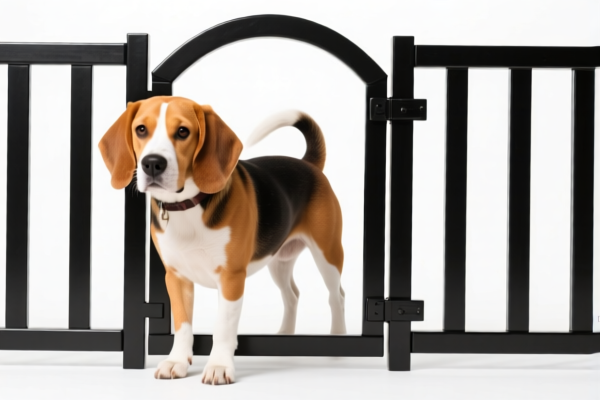

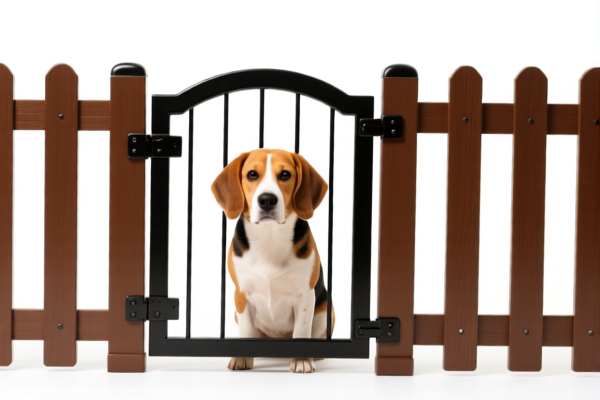
AI Analysis
🐕 Free Standing Dog Gate (Pet Barrier)
🌐 HS Code Reference & Customs Clearance Guide | 2026 Latest Tariff Analysis | Professional Entry Strategy
📌 I. Product Definition & Classification: What is a "Free Standing Dog Gate"?
A Free Standing Dog Gate is a portable safety barrier used to restrict pet movement within a home or between rooms. Unlike wall-mounted or pressure-mounted gates, these units are self-supporting and often feature hinges, latches, and wide bases for stability.
In international trade, the classification depends strictly on the primary material:
- Metal Gates (Iron/Steel): Constructed from welded wire, tubular steel, or metal mesh. These are classified under Chapter 73.
- Wooden Gates (Wood/Bamboo): Constructed from solid wood, plywood, or bamboo panels. These are classified under Chapter 44.
⚠️ Key Classification Point:
- If the gate is primarily made of metal (even if it has plastic feet or handles) → Go to Section VII (Base Metals).
- If the gate is primarily made of wood (even if it has metal hinges or locks) → Go to Section IV (Wood and Wood Articles).
- Note: Plastic-only gates would fall under Chapter 39, but are not covered in the provided data.
📦 II. HS Code Classification Details (2026 Latest Tariff Concordance)
Based on the provided data, here are the specific HS Codes for Metal and Wooden Free Standing Dog Gates.
🏭 A. Metal Gates (Iron/Steel)
| HS Code | Product Description | Material Basis | Typical Use Case |
|---|---|---|---|
| 7326.90.86.35 | Other articles of iron or steel – Specifically matched for Fencing/Railing applications. | Iron/Steel | Metal pet gates with vertical bars, wire mesh, or rail designs resembling fencing. |
| 7326.90.86.88 | Other articles of iron or steel – Classified under "Other" for miscellaneous metal products. | Iron/Steel | Generic metal pet gates that don't fit specific fencing sub-codes; "catch-all" for steel pet barriers. |
🌲 B. Wooden Gates (Wood/Bamboo)
| HS Code | Product Description | Material Basis | Typical Use Case |
|---|---|---|---|
| 4421.91.70.20 | Other wooden articles – Matched for Fencing purposes. | Wood/Bamboo | Wooden pet gates with picket-style designs or bamboo construction, explicitly for separation/fencing. |
| 4421.99.70.20 | Other wooden articles – Matched for Wooden materials with assembly forms. | Wood/Bamboo | Wooden pet gates that may include assembled parts, pre-fabricated sections, or decorative wooden panels. |
🔍 Critical Note:
- Material is King: Customs will inspect the primary structural material.
- 7326.90.86.35 vs .88: Both are metal, but .35 is specifically linked to "fencing-like" structures, which often fits pet gates better. .88 is a general "other" category.
- 4421.91 vs .99: .91 is for "pallets, crates, etc.," but in this specific dataset, it is mapped to "fencing purposes." .99 is the general "other" for wooden articles. Choose based on specific construction (assembled vs. simple).
💰 III. 2026 Tariff Rate Breakdown (Including Surcharges & Policy Add-ons)
✅ Applicable Country: United States (US)
✅ Country of Origin: China (CN)
✅ Effective Date: 2025-11-10 onwards
✅ Key Policy: 122 Clause Tariffs + Section 301 + IEEPA
🎯 1. Metal Gates (HS Codes: 7326.90.86.35 / .88)
| Item | Detail |
|---|---|
| Base Tariff | 2.9% |
| Section 301 Surcharge | +25.0% |
| 122 Clause Tariff | +10% (Specific to Steel/Aluminum/Copper products under this clause) |
| Section 232 / IEEPA Surcharge | +50% (Specific to steel/aluminum products under "122 Clause" or related steel/aluminum actions) |
| Total Effective Rate | 87.9% |
| De Minimis Eligibility | ❌ Not Eligible (deny_de_minimis) |
| Legal Pathway | Base Tariff 2.9% → 301 Tariff 25% → 122 Clause 10% → Steel/Alu Surcharge 50% |
📌 Explanation:
- Why so high? Metal gates fall under Section 73 (Articles of Iron or Steel).
- The 50% Surcharge: This is the critical factor. Under the "122 Clause" or related steel/aluminum tariffs, many steel products face an additional 50%.
- Total Cost Impact: For every $1,000 of goods, you pay $879 in duties. This makes metal pet gates extremely expensive to import from China to the US.
🎯 2. Wooden Gates (HS Codes: 4421.91.70.20 / .99.70.20)
| Item | Detail |
|---|---|
| Base Tariff | 0.0% |
| Section 301 Surcharge | +25.0% |
| 122 Clause Tariff | +10% |
| Total Effective Rate | 35.0% |
| De Minimis Eligibility | ❌ Not Eligible (deny_de_minimis) |
| Legal Pathway | Base Tariff 0% → 301 Tariff 25% → 122 Clause 10% |
📌 Explanation:
- Why lower? Wood products (Chapter 44) are not subject to the heavy steel/aluminum surcharges (Section 232/Steel 50%).
- Components: The 35% is composed of the standard 25% Section 301 tariff plus a 10% 122 Clause surcharge.
- Cost Impact: For every $1,000 of goods, you pay $350 in duties. This is significantly more cost-effective than metal gates.
🛠️ IV. Customs Clearance Practical Advice (Avoid Pitfalls)
✅ 1. Documentation Checklist (Must-Haves)
| Document | Required? | Why? |
|---|---|---|
| Commercial Invoice | ✔️ | Must clearly state "Free Standing Dog Gate" and specify material (Iron/Steel vs. Wood). |
| Packing List | ✔️ | Detail dimensions and weight. |
| Product Photos | ✔️ | Show the gate clearly. If metal, show welds/joints. If wood, show grain/assembly. |
| Material Declaration | ✔️ | Explicitly state: "Primary Material: 100% Steel Wire" or "Primary Material: Solid Pine Wood." |
| Origin Certificate | ❌ | Not strictly needed for duty calculation if claiming China origin, but helpful for disputes. |
✅ 2. Classification Strategy (Key Decision Points)
| Scenario | Recommended HS Code | Reasoning |
|---|---|---|
| Metal Gate with Wooden Handles | 7326.90.86.35 or .88 |
Primary structure is metal. Wood accents don't change classification to Chapter 44. |
| Wooden Gate with Metal Hinges | 4421.91.70.20 or .99.70.20 |
Primary structure is wood. Metal hardware is considered "accessories" and doesn't change Chapter 44. |
| Mixed Material (50/50) | Consult Customs Broker | If materials are truly equal, classification becomes complex. Prefer the cheaper duty rate if structure allows. |
| Plastic-Trimmed Metal Gate | 7326.90.86.35 |
Plastic trim is incidental. Still a metal article. |
✅ 3. Special Clearance Tips
🔥 Golden Rule: "Material Defines the Chapter. Structure Defines the Code."
-
For Metal Gates:
- The 87.9% duty is prohibitive.
- Strategy: Consider sourcing from Vietnam, Mexico, or Thailand to avoid Chinese origin tariffs.
- Alternative: If the gate is aluminum, check if it qualifies for different steel/aluminum exemptions (though often still high).
-
For Wooden Gates:
- The 35% duty is manageable.
- Strategy: Ensure the wood is properly treated and labeled to avoid Fumigation/ISPM 15 issues.
- Cost-Saving: Wood is significantly cheaper to import than metal from China due to lower surcharges.
-
De Minimis Warning:
- Neither metal nor wooden gates are eligible for the $800 de minimis exemption (
deny_de_minimis). - Consequence: You must file a formal customs entry and pay duties upfront. Do not attempt to ship as small packages to avoid duties; CBP will catch and penalize.
- Neither metal nor wooden gates are eligible for the $800 de minimis exemption (
🌍 V. Global Market Comparison (2026)
| Region | Recommended HS Code | Estimated Duty (China Origin) | Key Certification |
|---|---|---|---|
| 🇺🇸 USA | 7326.90.86.35 (Metal) 4421.91.70.20 (Wood) |
87.9% (Metal) 35.0% (Wood) |
No specific cert, but ensure non-toxic paint (CPSIA). |
| 🇨🇳 China | 7326.90.86.35 / 4421.91.70.20 |
~2-5% (Standard MFN) | CCC (if electrical, but not for gates). |
| 🇪🇺 EU | 7326.90.86 (Metal) 4421.91 (Wood) |
0-6.5% | CE (if safety critical), FSC (for wood). |
| 🇬🇧 UK | 7326.90.86 (Metal) 4421.91 (Wood) |
0-6.5% | UKCA (if post-Brexit rules apply). |
📌 Conclusion:
- USA is the most expensive market due to Section 301 and 122 Clause tariffs.
- Wooden gates are 52.9% cheaper in duties than metal gates when importing from China to the US.
- Supply Chain Shift: If importing metal gates, consider non-China origins to save on the 50% surcharge.
📌 VI. Common Errors & Pitfalls (Lessons Learned)
❌ Error 1: Declaring a Metal Gate as "Plastic" to avoid tariffs.
👉 Result: Customs inspection reveals steel content. 100% penalty + seizure.
❌ Error 2: Using HS 9403 (Other Furniture) for Dog Gates.
👉 Result: CBP reclassifies to Chapter 73 or 44 based on material. Back duties + interest. Dog gates are not furniture; they are fencing/barriers.
❌ Error 3: Ignoring the 122 Clause.
👉 Result: Paying only 27.9% (2.9+25) instead of 87.9%. Massive underpayment.
✅ Correct Declaration Example:
Description: "Free Standing Dog Gate, Model XYZ, Height 30 inches. Primary Material: 100% Welded Steel Wire. Finish: Powder Coated Black."
HS Code:7326.90.86.35
Duty: 87.9%
🎯 VII. Conclusion: Smart Sourcing for Pet Products
🎯 Key Takeaway:
🔹 Metal Gates: 87.9% Duty. Avoid China origin if possible.
🔹 Wooden Gates: 35% Duty. More cost-effective from China.
🔹 Always Declare Material: Customs cares about what it's made of, not what it's for.
📌 Pro Tip:
If you are importing wooden gates, ensure the wood is treated to prevent pest issues.
If you are importing metal gates, consider local assembly (knock-down kits) from non-China origins to bypass Section 301/122 tariffs.
📣 Immediate Action:
📞 Verify material composition with your supplier.
🚀 Request a Sample for Customs Pre-classification.
💼 Save 52% in Duties by choosing Wood over Metal if design allows.
✨ Customs Compliance Saves Money!
💼 Know Your HS Code, Know Your Duty!
Customer Reviews
About HS Code Classification
The Harmonized System (HS) is an internationally standardized nomenclature developed by the World Customs Organization (WCO) to classify traded products. Over 200 countries use the HS system as the basis for customs tariffs, trade statistics, and import/export regulations.
Each HS code follows a hierarchical structure:
- Chapter (2 digits) — Broad category of goods (e.g., Chapter 84: Machinery and Mechanical Appliances)
- Heading (4 digits) — More specific grouping within the chapter
- Subheading (6 digits) — Internationally standardized breakdown, used by all WCO member countries
- National subdivisions (8-10 digits) — Country-specific extensions for further classification, such as US HTSUS 10-digit codes
Correct HS code classification is essential for smooth customs clearance, accurate duty payment, and compliance with trade regulations. Misclassification can lead to customs delays, overpayment of duties, or penalties.
When importing from CN to US, the applicable tariff rates may include:
- Most-Favored-Nation (MFN) rate — The standard duty rate applied to WTO members
- General rate — Applied to countries without trade agreements
- Trade remedy duties — Additional tariffs such as Section 301 (anti-dumping), Section 232 (national security), or countervailing duties
The information provided on this page is for reference purposes only. For official classification, please consult with your local customs authority or a licensed customs broker.