Freestanding Pet Gate
CN → US| HS Code | Tariff Rate | Origin | Destination | Doc |
|---|---|---|---|---|
| 7323999080 | 88.4% | CN | US | Official Doc |
| 3925200091 | 22.8% | CN | US | Official Doc |
| 9403200078 | 85.0% | CN | US | Official Doc |
| 7323999040 | 88.4% | CN | US | Official Doc |
| 9403896003 | 35.0% | CN | US | Official Doc |
Product Images
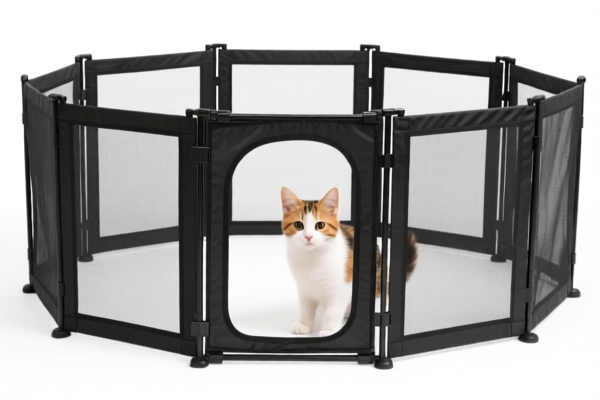
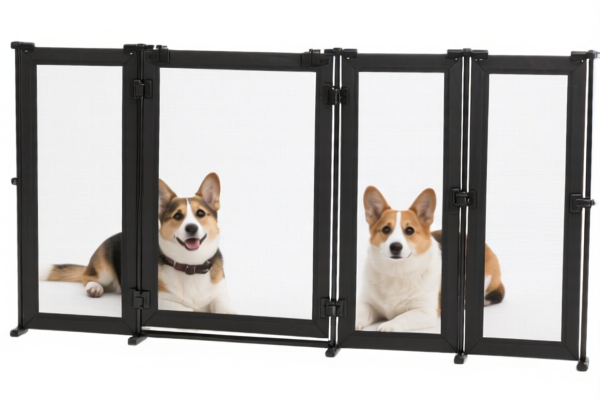
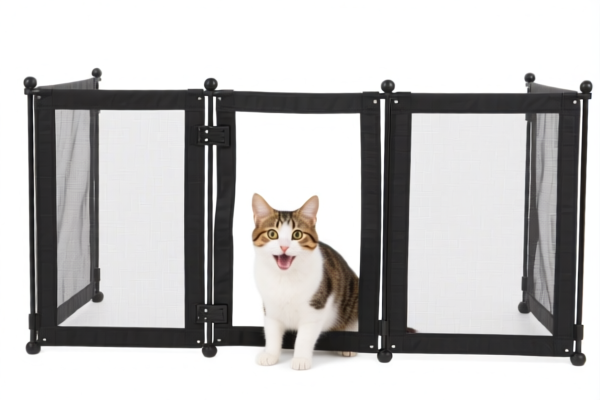
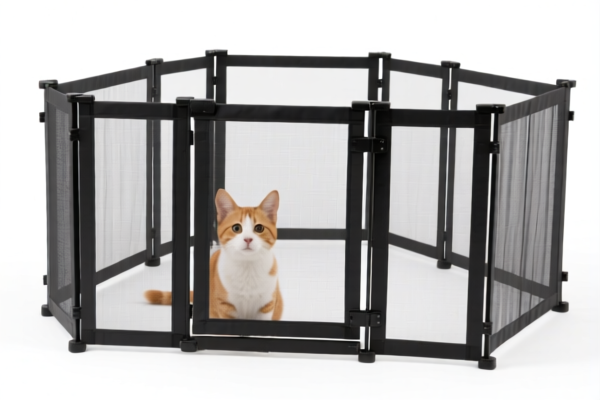
AI Analysis
🐾 Freestanding Pet Gate
🌐 HS Code Reference & Customs Clearance Guide | 2026 Latest Tariff Analysis | Professional Strategy
📌 I. Product Definition & Classification: Do You Truly Understand "Pet Gates"?
A Freestanding Pet Gate is a barrier designed to restrict the movement of pets within a home or specific area. It is typically portable, does not require permanent installation (drilling), and relies on pressure, feet, or a base for stability. In international trade, its classification depends heavily on material composition and primary function.
⚠️ Key Distinction Points:
- If made of metal and viewed as a furniture-like item or household article → Often falls under Chapter 94 (Furniture) or Chapter 73 (Articles of Iron/Steel);
- If made of plastic and viewed as a construction component → Falls under Chapter 39 (Plastics);
- If made of metal/plastic but clearly a fence/barrier → May fall under Chapter 94 (Other Furniture) or Chapter 73 (Metal Structures).
📦 II. HS Code Classification Details (2026 Latest Tariff Authority Comparison)
| HS Code | Product Description | Applicable Scenario | Material | Primary Function |
|---|---|---|---|---|
9403.20.00.78 |
Other metal furniture | Metal gates, pet barriers with furniture-like attributes | Metal | Restricting activity / Furniture attribute |
7323.99.90.80 |
Table, kitchen, or other household articles of iron or steel | Freestanding metal gates, pet barriers | Metal | Household use / Home isolation |
7323.99.90.40 |
Other household articles of iron or steel | Pet fences, specifically matched for pets | Metal | Pet confinement |
3925.20.00.91 |
Other plastic building articles | Plastic doors, gates, rails, frames | Plastic | Architectural/construction component |
9403.89.60.03 |
Other furniture of base metals or other materials | Freestanding fences limiting activity | Metal or Plastic | Restricting movement / Barrier |
🔍 Critical Reminder:
- Metal Pet Gates are often disputed between9403.20.00.78(Furniture) and7323.99.90.80(Household Articles). If the gate is decorative or part of a home setup,9403.20.00.78is frequently preferred; if utilitarian,7323.99.90.80applies.
- Plastic Pet Gates are typically classified as building articles (3925.20.00.91) because they resemble temporary architectural components, unless they are clearly standalone plastic furniture.
-9403.89.60.03serves as a catch-all for other materials or combinations where the primary function is a barrier.
💰 III. 2026 Latest Tariff Rate Breakdown (Including Additional Taxes & Policy Surcharges)
✅ Applicable Country: United States (US)
✅ Country of Origin: China (CN)
✅ Effective Date: 2025-11-10 onwards (including subsequent imports)
🎯 1. 9403.20.00.78 —— Metal Furniture Category
| Item | Content |
|---|---|
| Base Tariff | 0.0% |
| Section 301 Surcharge | +25.0% |
| Section 232 Surcharge (Steel/Aluminum) | +50.0% |
| Total Tax Rate | 85.0% |
| Tax Calculation | CIF Value × 85.0% |
| De Minimis Exemption | ❌ Not Eligible (deny_de_minimis) |
| Legal Basis Path | Section 232: Steel/Aluminum → Section 301: 9903.01.25 → USITC:9403.20.00.78 |
📌 Explanation:
- Section 301 (25%): Standard additional tariff on Chinese goods.
- Section 232 (50%): Additional 50% tariff on steel/aluminum products imported under US law.
- Total 85%: Extremely high. This classification is dangerous for metal pet gates unless an exemption or alternative route is found.
🎯 2. 7323.99.90.80 —— Metal Household Articles (Household Use)
| Item | Content |
|---|---|
| Base Tariff | 3.4% |
| Section 301 Surcharge | +25.0% |
| Section 232 Surcharge (Steel/Aluminum) | +50.0% |
| Total Tax Rate | 88.4% |
| Tax Calculation | CIF Value × 88.4% |
| De Minimis Exemption | ❌ Not Eligible (deny_de_minimis) |
| Legal Basis Path | Section 232: Steel/Aluminum → Section 301: 9903.01.25 → USITC:7323.99.90.80 |
📌 Explanation:
- Similar to9403.20.00.78, this triggers both Section 301 and Section 232.
- Total 88.4%: The highest potential rate. Avoid this if possible unless the product is strictly defined as a non-structural household item with no steel content subject to 232.
🎯 3. 7323.99.90.40 —— Metal Pet Fences (Specific Use)
| Item | Content |
|---|---|
| Base Tariff | 3.4% |
| Section 301 Surcharge | +25.0% |
| Section 232 Surcharge (Steel/Aluminum) | +50.0% |
| Total Tax Rate | 88.4% |
| Tax Calculation | CIF Value × 88.4% |
| De Minimis Exemption | ❌ Not Eligible (deny_de_minimis) |
| Legal Basis Path | Section 232: Steel/Aluminum → Section 301: 9903.01.25 → USITC:7323.99.90.40 |
📌 Explanation:
- Even if marketed specifically as a "Pet Fence," if it is made of steel, it is subject to Section 232 (50%).
- Total 88.4%: No advantage over other metal household goods.
🎯 4. 3925.20.00.91 —— Plastic Building Articles
| Item | Content |
|---|---|
| Base Tariff | 5.3% |
| Section 301 Surcharge | +7.5% |
| Section 232 Surcharge | ❌ Not Applicable (Plastic) |
| Total Tax Rate | 22.8% |
| Tax Calculation | CIF Value × 22.8% |
| De Minimis Exemption | ❌ Not Eligible (deny_de_minimis) |
| Legal Basis Path | Section 301: 9903.01.24 → USITC:3925.20.00.91 |
📌 Explanation:
- Section 232 does NOT apply to plastic.
- Section 301 surcharge is lower (7.5%) compared to metal (25%).
- Total 22.8%: The most cost-effective classification for plastic freestanding pet gates. This is a strategic advantage for plastic manufacturers.
🎯 5. 9403.89.60.03 —— Other Furniture/Barriers
| Item | Content |
|---|---|
| Base Tariff | 0.0% |
| Section 301 Surcharge | +25.0% |
| Section 232 Surcharge | ❌ Not Applicable (Unless primarily steel, but this code is for "other materials") |
| Total Tax Rate | 35.0% |
| Tax Calculation | CIF Value × 35.0% |
| De Minimis Exemption | ❌ Not Eligible (deny_de_minimis) |
| Legal Basis Path | Section 301: 9903.01.24 → USITC:9403.89.60.03 |
📌 Explanation:
- This code is for mixed materials or other base metals not covered under strict steel/aluminum definitions, or for plastic/metal combinations where the "furniture" aspect is primary.
- Total 35.0%: A middle-ground option. If the gate is plastic with metal hinges, this might be a viable, lower-tax alternative to pure metal classifications.
🛠️ IV. Customs Clearance Practical Advice (Real-World Pitfall Guide)
✅ 1. Required Documentation Checklist
| Document | Mandatory? | Explanation |
|---|---|---|
| ✅ Product Specification Sheet | ✔️ | Include material (Plastic vs. Metal), dimensions, weight, and assembly instructions. |
| ✅ Product Photos (Clear) | ✔️ | Show the gate in use, highlighting material texture and structure. |
| ✅ Bill of Materials (BOM) | ✔️ | Critical for distinguishing between Steel (Section 232) and Plastic. |
| ✅ Commercial Invoice | ✔️ | Clearly state "Freestanding Pet Gate" and material composition. |
| ✅ Packing List | ✔️ | Ensure items are not split incorrectly (e.g., don't ship gate as "parts" if it's assembled). |
✅ 2. Declaration Strategy (Key Mantras)
🔥 "Plastic is Cheap, Metal is Expensive! Choose Your Material Wisely!"
| Situation | Correct Declaration | Wrong Action |
|---|---|---|
| Plastic Pet Gate | 3925.20.00.91 (22.8%) |
Misdeclare as Metal → 88.4% Tax! |
| Metal Pet Gate | 9403.20.00.78 (85.0%) or 9403.89.60.03 (35.0% if mixed) |
Misdeclare as Plastic → Penalty + Back Tax! |
| Mixed Material (Plastic + Metal Hinges) | 9403.89.60.03 (35.0%) |
Declare as Pure Metal → 88.4% Tax! |
| Pet Gate Sold as "Furniture" | 9403.20.00.78 |
Declare as "Building Material" → Risk of Re-classification |
📌 Note:
- If your gate is primarily plastic (e.g., ABS, PP) with minor metal parts (screws, hinges), argue for3925.20.00.91or9403.89.60.03.
- If it is wire-mesh steel, it will likely fall under Section 232 codes (7323or9403.20), triggering the 50% steel surcharge.
🌍 V. Global Market Comparison (2026 Latest)
| Country/Region | Recommended HS Code | Tariff Rate | Certification | Notes |
|---|---|---|---|---|
| 🇺🇸 USA | 3925.20.00.91 (Plastic) |
22.8% | No specific | Avoid Metal if possible due to Section 232 |
| 🇨🇳 China | 9403.89.60.03 |
0%~5% | N/A | Import duties are low; focus on export strategy |
| 🇪🇺 EU | 9403.89.60.03 |
0% (if CE) | CE + RoHS | No additional surcharges like Section 232 |
| 🇬🇧 UK | 9403.89.60.03 |
0%~5% | UKCA | Post-Brexit rules apply; no Section 232 |
| 🇯🇵 Japan | 9403.89.60.03 |
0%~10% | PSE (if electric) | No major additional tariffs |
📌 Conclusion:
- USA is the only market with punitive Section 232 tariffs on steel/aluminum.
- For US exports, Plastic Pet Gates (3925.20.00.91) are significantly more profitable than Metal ones due to lower total tax (22.8% vs. 85%+).
- Consider material substitution or design changes to reduce metal content if targeting the US market.
📌 VI. Common Mistakes & Pitfall Guide (Blood & Tears Lessons)
❌ Mistake 1: Declaring a Steel Wire Mesh Gate as "Plastic"
👉 Consequence: Customs inspection reveals metal content → Heavy penalties + Retrospective Tax (88.4%).
❌ Mistake 2: Not declaring Section 232 impact on Metal Gates
👉 Consequence: Importer underestimates landed cost → Profit margin wiped out by 50% steel surcharge.
❌ Mistake 3: Splitting shipment into "Gate Parts" to avoid duty
👉 Consequence: Customs considers it "assembled goods" → Back-tax on entire assembly + Fraud Investigation.
❌ Mistake 4: Using "Pet Barrier" instead of "Gate" in description
👉 Consequence: Vague description leads to customs hold for classification review.
✅ Correct Approach:
"Freestanding Pet Gate, Plastic Body with Metal Hinges, Model XYZ, CE/RoHS Certified"
Use9403.89.60.03(35.0%) or argue for3925.20.00.91if plastic >50% by weight/value.
🎯 VII. Conclusion: Professional Declaration, Save Costs, Enhance Efficiency!
🎯 Remember the Mantra:
🔹 "Plastic Wins in USA, Metal Burns in Tariffs!"
🔹 "Section 232 is the Killer for Steel; Choose Plastic or Mixed Materials!"
🔹 "HS Code Determines Profit Margin; One Digit Can Change Everything!"
📌 Pro Tip:
If your pet gate is made of stainless steel, it may still be subject to Section 232. Consider powder-coated aluminum (if applicable) or high-density plastic to reduce tariff burden.
Recommendation: Apply for Advance Ruling from CBP if the material mix is complex.
📣 Immediate Action:
📞 Contact a Licensed Customs Broker + Provide Material Test Reports + Apply for HS Code Pre-Ruling
🚀 Let your Pet Gates Clear Smoothly, Export Efficiently, and Maximize Profits!
✨ Professional Clearance Starts with Accurate Classification!
💼 Your Every Cent of Cost Deserves to Be Precisely Calculated!
Customer Reviews
About HS Code Classification
The Harmonized System (HS) is an internationally standardized nomenclature developed by the World Customs Organization (WCO) to classify traded products. Over 200 countries use the HS system as the basis for customs tariffs, trade statistics, and import/export regulations.
Each HS code follows a hierarchical structure:
- Chapter (2 digits) — Broad category of goods (e.g., Chapter 84: Machinery and Mechanical Appliances)
- Heading (4 digits) — More specific grouping within the chapter
- Subheading (6 digits) — Internationally standardized breakdown, used by all WCO member countries
- National subdivisions (8-10 digits) — Country-specific extensions for further classification, such as US HTSUS 10-digit codes
Correct HS code classification is essential for smooth customs clearance, accurate duty payment, and compliance with trade regulations. Misclassification can lead to customs delays, overpayment of duties, or penalties.
When importing from CN to US, the applicable tariff rates may include:
- Most-Favored-Nation (MFN) rate — The standard duty rate applied to WTO members
- General rate — Applied to countries without trade agreements
- Trade remedy duties — Additional tariffs such as Section 301 (anti-dumping), Section 232 (national security), or countervailing duties
The information provided on this page is for reference purposes only. For official classification, please consult with your local customs authority or a licensed customs broker.