French Fry Maker
CN → US| HS Code | Tariff Rate | Origin | Destination | Doc |
|---|---|---|---|---|
| 8437800090 | 35.0% | CN | US | Official Doc |
| 8438800000 | 35.0% | CN | US | Official Doc |
| 8437800010 | 35.0% | CN | US | Official Doc |
| 8438600000 | 35.0% | CN | US | Official Doc |
| 8210000000 | 38.7% | CN | US | Official Doc |
Product Images
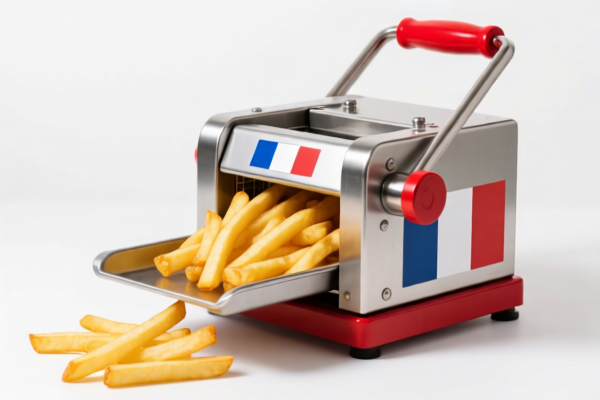
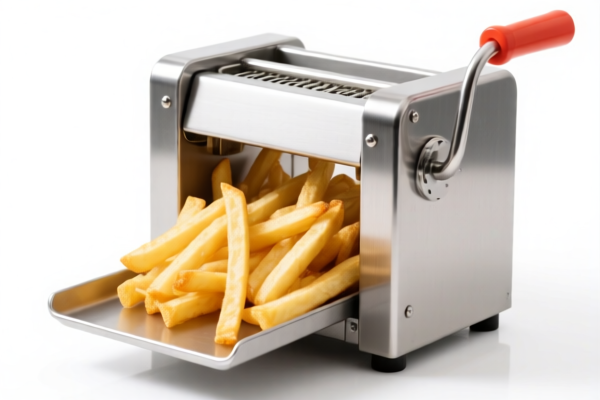
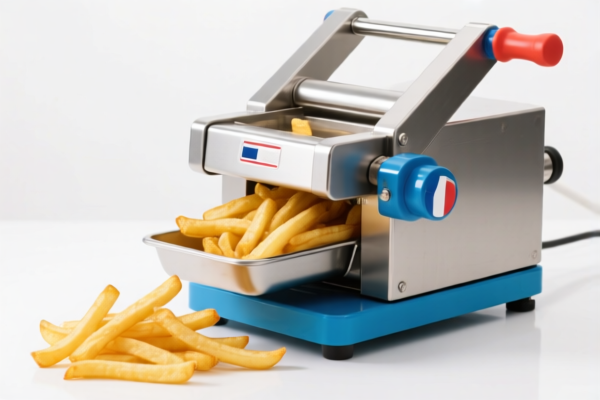
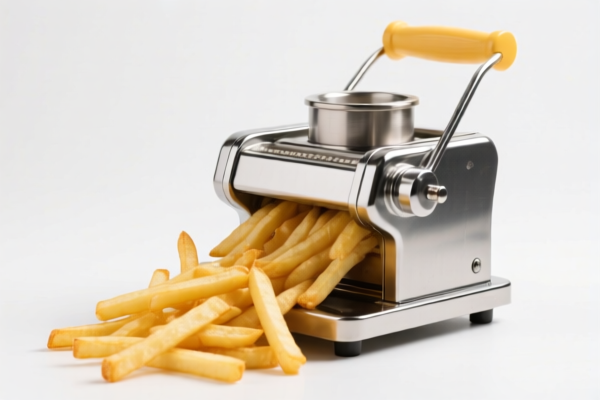
AI Analysis
🍟 French Fry Maker (Dehydrators & Processing Machinery for Potato/Solanum Vegetables)
🌐 HS Code Reference & Customs Clearance Guide | 2026 Latest Tariff Analysis | Professional Strategy
📌 I. Product Definition & Classification: Do You Really Know "French Fry Maker"?
A "French Fry Maker" in an industrial context is rarely a single home appliance. In international trade, it refers to the machinery used to process raw potatoes or dehydrated bean/vegetable products into french fry raw materials.
Depending on the degree of automation, specific function (peeling, cutting, dehydrating, frying), and mechanism, these machines fall into different HS Code categories. Misclassification here is critical because the tax burden can vary significantly between "general food machinery" and "specialized processing equipment."
⚠️ Key Distinction Points:
- Is it for dehydrating beans/vegetables specifically? → 8437.80.00.90
- Is it for general industrial food/beverage preparation? → 8438.80.00.00
- Is it for processing vegetables/grains (peeling/cutting)? → 8437.80.00.10
- Is it for preparing fruits/nuts/vegetables (slicing/chopping)? → 8438.60.00.00
- Is it a manual or small mechanical tool? → 8210.00.00.00
📦 II. HS Code Classification Details (2026 Latest Tariff Authority Comparison)
| HS Code | Product Description | Application Scenario | Key Feature |
|---|---|---|---|
8437.80.00.90 |
Machines for treating dehydrated vegetable products (e.g., french fry raw material) | Industrial dehydration lines, post-drying processing of potato/bean strips | ✅ Specialized for dehydrated products |
8438.80.00.00 |
Machinery for industrial preparation or manufacture of food or drink | Large-scale fry processing, coating, or general food line machinery | ✅ General industrial food machinery |
8437.80.00.10 |
Machinery for processing vegetables (e.g., beans/grains) and their by-products | Pre-processing stages: peeling, washing, cutting of raw vegetables | ✅ Focuses on raw vegetable processing |
8438.60.00.00 |
Machinery for preparing fruits, nuts, or vegetables | Slicers, choppers, dicing machines for raw veggies | ✅ Preparation stage (raw state) |
8210.00.00.00 |
Hand-operated or small mechanical appliances for food preparation | Small-scale, non-industrial, manual or semi-auto tools | ✅ Small/Manual scale |
🔍 Critical Reminder:
- If the machine is part of a continuous industrial line for french fries, it usually falls under 8438 (General Food Machinery) or 8437 (Vegetable Processing).
- If it is specifically for dehydrated products (e.g., rehydrating or further drying bean-based fries), use 8437.80.00.90.
- Do not classify industrial machines as "manual tools" (8210) to avoid penalties.
💰 III. 2026 Latest Tariff Rate Breakdown (Including Surtaxes & Policy Add-ons)
✅ Applicable Country: United States (US)
✅ Origin: China (CN)
✅ Effective Date: 2025/2026 (Subject to current trade policies)
🎯 1. General Industrial Food Machinery (8438.80.00.00, 8437.80.00.10, 8438.60.00.00, 8437.80.00.90)
These four codes share the same tariff structure for Chinese-origin goods.
| Item | Details |
|---|---|
| Base Tariff Rate | 0.0% (Ad Valorem) |
| Section 301 Surtax | +25.0% (From USITC Footnote for China-origin goods) |
| Section 122 Surtax | +10.0% (Specific trade remedy/tariff clause) |
| Total Tariff Rate | 35.0% |
| Tax Calculation | CIF Value × 35% |
| De Minimis Exemption | ❌ Not Eligible (Deny de minimis) |
| Legal Basis Path | USITC:8438.80.00.00 → SECTION301:Footnote → SECTION122:Clause |
📌 Explanation:
- Although the base tariff is 0%, the Section 301 surtax of 25% applies due to the trade war measures against China.
- An additional 10% surtax under Section 122 is also applied.
- Total burden: 35%. This is a high-cost category for importing industrial food machinery from China.
🎯 2. Small/Manual Mechanical Appliances (8210.00.00.00)
| Item | Details |
|---|---|
| Base Tariff Rate | 3.7% (Ad Valorem) |
| Section 301 Surtax | +25.0% (From USITC Footnote for China-origin goods) |
| Section 122 Surtax | +10.0% (Specific trade remedy/tariff clause) |
| Total Tariff Rate | 38.7% |
| Tax Calculation | CIF Value × 38.7% |
| De Minimis Exemption | ❌ Not Eligible (Deny de minimis) |
| Legal Basis Path | USITC:8210.00.00.00 → SECTION301:Footnote → SECTION122:Clause |
📌 Note:
- This code is for smaller, non-industrial appliances.
- The total tariff is slightly higher (38.7%) due to the 3.7% base rate.
- Risk: If an industrial machine is misclassified here to avoid the 25% surtax (incorrectly assumed), customs will penalize for misdeclaration. The base rate is higher, and the surtaxes are the same.
🛠️ IV. Customs Clearance Practical Advice (Battle-Tested Pitfall Guide)
✅ 1. Required Documentation Checklist (Must-Haves)
| Document | Must Provide | Description |
|---|---|---|
| ✅ Product Specification Sheet | ✔️ | Details capacity, power, dimensions, automation level |
| ✅ Technical Diagrams | ✔️ | Shows internal mechanisms to prove it's not "manual" |
| ✅ Product Photos (with Nameplate) | ✔️ | Clear view of model, brand, input/output, voltage |
| ✅ Commercial Invoice | ✔️ | Must state: "Industrial Food Processing Machinery" |
| ✅ Packing List | ✔️ | Separate parts from main unit if shipped disassembled |
| ✅ Certificate of Origin (CO) | ✔️ | For origin verification (China) |
| ✅ Third-Party Test Reports | ✔️ | UL, CE, NSF (if applicable for food contact) |
✅ 2. Declaration Tips (Key Mantra)
🔥 "Industrial vs. Manual: Define Function, Not Form!"
| Situation | Correct Declaration | Wrong Practice |
|---|---|---|
| Large automated french fry line | 8438.80.00.00 or 8437.80.00.90 |
Misclassify as "kitchen appliance" |
| Small electric slicer for restaurant | 8438.60.00.00 |
Misclassify as "hand tool" |
| Dehydrator for bean snacks | 8437.80.00.90 |
Misclassify as general "food mixer" |
| Manual potato peeler | 8210.00.00.00 |
Over-declare as industrial machine |
📌 Advice:
- If the machine is electric, motorized, or part of a production line, it is NOT8210.
- Use8438for general food manufacturing equipment.
- Use8437for vegetable processing specific equipment.
✅ 3. Special Case Handling
| Situation | Handling Advice |
|---|---|
| OEM Custom Machine | Provide client orders + design drawings to prove industrial use |
| Multi-function Machine | Declare based on the primary function (e.g., if it mainly dehydrates, use 8437) |
| Used Machinery | Provide age certificate, inspection report, and "Used" label on invoice |
| Components Shipped Separately | Declare main unit under correct HS; accessories under appropriate parts code |
🌍 V. Global Market Comparison (2026 Latest)
| Country/Region | Recommended HS Code | Tariff Rate | Certification Required | Notes |
|---|---|---|---|---|
| 🇺🇸 USA | 8438.80.00.00 / 8437.80.00.90 |
35% | UL, NSF, EPA | High surtaxes apply |
| 🇨🇳 China | 8438.80.00.00 |
0-5% | CCC, GB Standards | No surtaxes |
| 🇪🇺 EU | 8438.80.00.00 |
0% | CE, Machinery Directive | No surtaxes |
| 🇬🇧 UK | 8438.80.00.00 |
0% | UKCA | Post-Brexit standards |
| 🇦🇺 Australia | 8438.80.00.00 |
5% | RCM | Moderate duty |
📌 Conclusion:
- USA is the most expensive market due to 35% effective tariff.
- EU/UK offer 0% base duty, making them more favorable for imports from China.
- Consider supply chain diversification (e.g., Vietnam, Mexico) if shipping to the US to avoid surtaxes.
📌 VI. Common Mistakes & Pitfall Guide (Lessons Learned)
❌ Mistake 1: Classifying industrial french fry makers as "Kitchen Appliances" (0409)
👉 Consequence: Seizure, penalties, retroactive 35% tax + interest.
❌ Mistake 2: Misclassifying motorized machines as "Manual Tools" (8210)
👉 Consequence: Customs audit, back-tariffs, legal action for fraud.
❌ Mistake 3: Ignoring Section 122 and Section 301 surtaxes
👉 Consequence: Underpayment of duties, hold at customs, storage fees.
❌ Mistake 4: Vague description: "French Fry Machine"
👉 Consequence: Customs request for clarification, delays, potential misclassification.
✅ Correct Practice:
"Industrial Dehydrating Machine for Potato Slices, Electric, 380V, 50Hz, Capacity 500kg/hr, Model XYZ, UL Certified"
🎯 VII. Conclusion: Professional Declaration, Cost Savings, Efficiency!
🎯 Remember the Mantra:
🔹 "Industrial ≠ Manual; Function Defines Code."
🔹 "USA Tariff is 35%, Prepare Early."
🔹 "Accurate HS Code Saves Thousands, Misclassification Costs Everything."
📌 Pro Tip:
If your machinery is originating from Vietnam, Mexico, Thailand, or Malaysia, you may qualify for IEEPA exemptions or lower tariffs.
Recommendation: Apply for Advance Ruling from CBP before shipment to confirm the correct HS Code and tariff liability.
📣 Immediate Action:
📞 Contact a licensed customs broker + Provide technical specs + Request HS Code Advance Ruling
🚀 Ensure your French Fry Machinery clears customs smoothly, efficiently, and profitably!
✨ Professional customs clearance starts with precise classification!
💼 Every cent of cost deserves precise calculation!
Customer Reviews
About HS Code Classification
The Harmonized System (HS) is an internationally standardized nomenclature developed by the World Customs Organization (WCO) to classify traded products. Over 200 countries use the HS system as the basis for customs tariffs, trade statistics, and import/export regulations.
Each HS code follows a hierarchical structure:
- Chapter (2 digits) — Broad category of goods (e.g., Chapter 84: Machinery and Mechanical Appliances)
- Heading (4 digits) — More specific grouping within the chapter
- Subheading (6 digits) — Internationally standardized breakdown, used by all WCO member countries
- National subdivisions (8-10 digits) — Country-specific extensions for further classification, such as US HTSUS 10-digit codes
Correct HS code classification is essential for smooth customs clearance, accurate duty payment, and compliance with trade regulations. Misclassification can lead to customs delays, overpayment of duties, or penalties.
When importing from CN to US, the applicable tariff rates may include:
- Most-Favored-Nation (MFN) rate — The standard duty rate applied to WTO members
- General rate — Applied to countries without trade agreements
- Trade remedy duties — Additional tariffs such as Section 301 (anti-dumping), Section 232 (national security), or countervailing duties
The information provided on this page is for reference purposes only. For official classification, please consult with your local customs authority or a licensed customs broker.