Fresh Cattle Hides for Leather Products
CN → US| HS Code | Tariff Rate | Origin | Destination | Doc |
|---|---|---|---|---|
| 4101203500 | 19.9% | CN | US | Official Doc |
| 4101503500 | 19.9% | CN | US | Official Doc |
| 4103901190 | 17.5% | CN | US | Official Doc |
| 4101901020 | 17.5% | CN | US | Official Doc |
| 4101901010 | 17.5% | CN | US | Official Doc |
Product Images
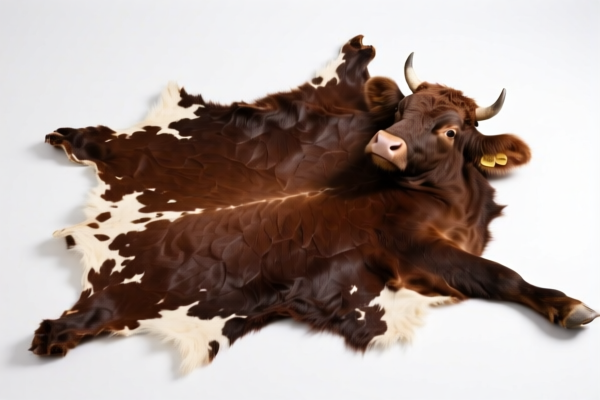
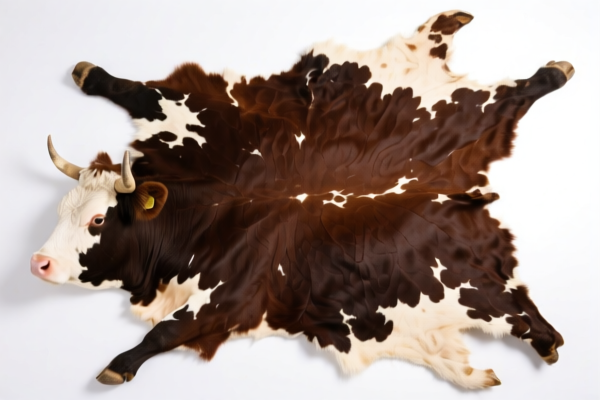
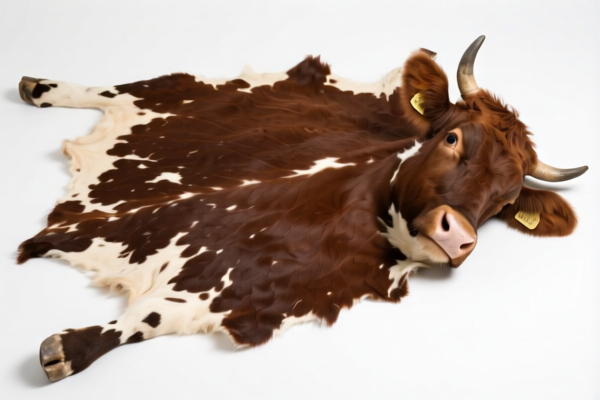
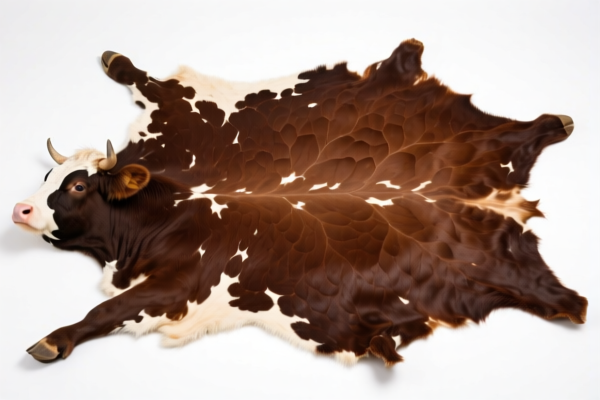
AI Analysis
🐂 Fresh Cattle Hides for Leather Products (Raw Skins & Hides)
🌐 HS Code Reference & Customs Clearance Guide | 2026 Latest Tariff Analysis | Professional Entry Strategy
📌 I. Product Definition & Classification: Do You Really Understand "Raw Hides"?
Fresh Cattle Hides are the primary raw material for the global leather industry. In international trade, these raw animal skins are classified based on species, preservation state (fresh, wet-salted, or dried), and treatment level (un-tanned).
Key Distinction: The "Fresh" vs. "Processed" Boundary * Un-tanned / Raw State: Includes "Fresh" (wet, un-preserved), "Wet-Salted," or "Pickled." These retain their natural collagen structure and are not considered leather yet. * Pre-tanned / Crust: Any chemical treatment that fixes the protein structure moves the product out of Chapter 41, Heading 4101-4103 into Chapter 41, Heading 4104-4106.
⚠️ Critical Classification Point:
- If the hide is Fresh (wet, no salt/drying) or Wet-Salted → It falls under Heading 4101 (Cattle Bovines) or 4103 (Other Skins).
- If the hide is Salted/Dried but Un-tanned → Still generally under 4101/4103.
- If the hide is Pre-tanned (e.g., vegetable tanned crust) → Move to 4104/4105/4106.
📦 II. HS Code Classification Matrix (Based on Provided Data)
The following HS Codes are derived strictly from the provided dataset for Raw/Un-tanned Cattle Bovine Skins and related raw materials.
| HS Code | Product Description | Material State | Key Features |
|---|---|---|---|
4101.20.35.00 |
Raw Water Buffalo Hide | Un-tanned, Un-split | Specifically for Water Buffalo material in raw state. |
4101.50.35.00 |
Raw Water Buffalo Skin | Un-tanned, Preserved | Water buffalo material, un-tanned, only preserved (e.g., salted). |
4103.90.11.90 |
Other Raw Skins (Fresh) | Un-tanned, Fresh | Category for other raw skins (non-bovine specific or unclassified) in fresh state. |
4101.90.10.20 |
Fresh Cattle Bovine Hide | Un-tanned, Fresh | Primary Category for fresh/un-tanned Cattle (Bovine) hides. Primary form. |
4101.90.10.10 |
Fresh Cattle Bovine Hide | Un-tanned, Wet-Salted | Primary Category for Cattle (Bovine) hides that are fresh or wet-salted. |
🔍 Important Note:
- 4101.90.10.10 and 4101.90.10.20 are the most common codes for Cattle (Bovine) hides.
- 4103.90.11.90 is used for "Other" raw skins if they don't fit specific bovine/ovine categories or are in a different fresh state.
- 4101.20/50 are specific to Water Buffalo, not typical Cattle Bovine. Ensure species matches!
💰 III. 2026 Latest Tariff Rate Breakdown (Including Surcharges & Policy Add-ons)
✅ Applicable Country: USA (US)
✅ Country of Origin: China (CN)
✅ Effective Date: 2025/2026 Import Period
All raw hides below are subject to the same tariff structure due to their inclusion in Section XI or relevant headings subject to US-China trade measures.
🎯 1. 4101.90.10.10 & 4101.90.10.20 —— Fresh Cattle Bovine Hides (Most Common)
| Item | Detail |
|---|---|
| Base Duty Rate | 0.0% (Ad Valorem) |
| Section 301 / Added Duty | +7.5% |
| Section 122 Duty | +10.0% |
| Total Tax Rate | 17.5% |
| Tax Calculation | CIF Value × 17.5% |
| De Minimis Eligibility | ❌ Not Applicable (Section 321 de minimis usually excludes textiles/leather or has specific restrictions; raw hides are high-risk for anti-dumping). |
| Legal Basis Path | USITC:4101.90.10.10 → FOOTNOTE:301 → IEEPA:122 |
📌 Explanation:
- Base 0%: Raw hides often have low base duties to support domestic tanning industries.
- 7.5% Added Duty: From US Trade Act Section 301 (China-specific tariffs).
- 10% Section 122 Duty: Additional duty under Section 122 of the Trade Act of 1974 (often applied to specific goods from specific countries).
- Total 17.5%: This is the landed duty cost before freight/insurance.
🎯 2. 4101.20.35.00 & 4101.50.35.00 —— Raw Water Buffalo Hides/Skins
| Item | Detail |
|---|---|
| Base Duty Rate | 2.4% (Ad Valorem) |
| Section 301 / Added Duty | +7.5% |
| Section 122 Duty | +10.0% |
| Total Tax Rate | 19.9% |
| Tax Calculation | CIF Value × 19.9% |
| De Minimis Eligibility | ❌ Not Applicable |
| Legal Basis Path | USITC:4101.20.35.00 / 4101.50.35.00 → FOOTNOTE:301 → IEEPA:122 |
📌 Explanation:
- Water buffalo hides have a slightly higher base rate (2.4%) compared to standard bovine hides (0%).
- Same surcharges apply: 7.5% + 10%.
- Total 19.9%: Higher than standard cattle hides due to the base rate.
🎯 3. 4103.90.11.90 —— Other Raw Skins (Fresh)
| Item | Detail |
|---|---|
| Base Duty Rate | 0.0% (Ad Valorem) |
| Section 301 / Added Duty | +7.5% |
| Section 122 Duty | +10.0% |
| Total Tax Rate | 17.5% |
| Tax Calculation | CIF Value × 17.5% |
| De Minimis Eligibility | ❌ Not Applicable |
| Legal Basis Path | USITC:4103.90.11.90 → FOOTNOTE:301 → IEEPA:122 |
📌 Explanation:
- Same effective rate as standard cattle hides (17.5%) because base is 0%.
- Use only if the material is not classified under 4101 (Cattle) or 4102 (Sheep).
🛠️ IV. Customs Clearance Practical Advice (Avoid Pitfalls)
✅ 1. Required Documentation Checklist (Mandatory)
| Document | Must Provide? | Notes |
|---|---|---|
| ✅ Commercial Invoice | ✔️ | Must clearly state: "Raw Un-tanned Cattle Hide," "Species: Bovine," "Condition: Fresh/Wet-Salted." |
| ✅ Packing List | ✔️ | Detail weight (Gross/Net), number of hides, and dimensions. |
| ✅ Health/Veterinary Certificate | ✔️ | Critical! Must confirm no diseases (BSE, FMD, etc.) and origin from approved countries. |
| ✅ Species Declaration | ✔️ | Confirm if Bovine, Buffalo, or Other. Misclassification leads to penalties. |
| ✅ Preservation Method | ✔️ | Specify: "Fresh," "Wet-Salted," or "Dry-Salted." Affects HS Code sub-heading. |
| ✅ Bill of Lading/Air Waybill | ✔️ | Standard shipping docs. |
| ✅ ISF (10+2) Filing | ✔️ | Must file 24 hours before loading if entering by sea. |
✅ 2. Declaration Best Practices
🔥 Rule: "Describe the State, Not Just the Material"
| Scenario | Correct Declaration | Wrong Declaration |
|---|---|---|
| Fresh, Wet Cattle Hide | 4101.90.10.10 - "Raw Un-tanned Cattle Bovine Hide, Fresh State" |
"Leather Hides" (Too vague, wrong chapter) |
| Salted Cattle Hide | 4101.90.10.10 or 4101.90.10.20 - "Raw Un-tanned Cattle Bovine Hide, Salted" |
"Processed Leather" (Incorrect, implies tanned) |
| Water Buffalo Hide | 4101.20.35.00 - "Raw Water Buffalo Hide" |
"Cattle Hide" (Species mismatch, leads to inspection) |
| Tanned Leather | 4104.11.00 (Example) |
4101.90.10.10 (Wrong Chapter, high penalty) |
📌 Key Tip:
- Do NOT use the word "Leather" in the description unless it is tanned. Use "Raw Hide," "Raw Skin," or "Un-tanned Hide."
- Do NOT split the shipment into hides and trimmings unless necessary. Hides and trimmings may have different classifications, but bulk raw hides are usually declared as a single commodity.
✅ 3. Special Handling for Raw Hides
| Situation | Handling Advice |
|---|---|
| Strong Odor/Packaging | Raw hides can emit odors. Use sealed, leak-proof packaging. Declare "Hazardous" only if required by specific regulations (usually not for raw hides, but check EPA/USDA rules). |
| Pest Control | Ensure hides are free from insects/larvae. USDA APHIS may inspect. |
| BSE Risk | If from countries with BSE (Bovine Spongiform Encephalopathy) restrictions, specific age limits and tissue exclusions apply. |
| Wet vs. Dry | Wet-salted hides are heavier (water weight). Declare Net Weight accurately to avoid duty underpayment claims. |
🌍 V. Global Market Comparison (2026)
| Country/Region | Recommended HS Code | Total Duty Rate | Notes |
|---|---|---|---|
| 🇺🇸 USA | 4101.90.10.10 |
17.5% | Includes 7.5% Section 301 + 10% Section 122. |
| 🇪🇺 EU | 4101 Series |
Varies (0-5%) | No Section 301/122. May have anti-dumping if from China. |
| 🇨🇳 China | 4101 Series |
0-5% | Imports raw hides for domestic tanning. VAT applies (13%). |
| 🇮🇳 India | 4101 Series |
5-10% | Strict phytosanitary/quarantine rules. |
| 🇧🇩 Bangladesh | 4101 Series |
0% (Often) | Duty-free for certain raw materials in export processing zones. |
📌 Conclusion:
- USA is the most complex market due to Section 301 and Section 122 tariffs.
- EU and Asia are more straightforward but require strict veterinary documentation.
📌 VI. Common Mistakes & Pitfalls (Lessons Learned)
❌ Mistake 1: Labeling "Raw Hides" as "Leather"
👉 Consequence: Misclassification under Chapter 41 vs. 4104. Penalty + Back Taxes.
❌ Mistake 2: Ignoring Section 122 Duty
👉 Consequence: Underpayment of 10%. Customs Audit & Fines.
❌ Mistake 3: Incorrect Species Declaration (Bovine vs. Buffalo)
👉 Consequence: Different HS codes have different base rates (0% vs 2.4%). Discrepancy in Duties.
❌ Mistake 4: Missing Veterinary Certificate
👉 Consequence: Holds at Port, potential destruction of goods. Total Loss.
✅ Correct Practice:
"Raw Un-tanned Cattle Bovine Hides, Wet-Salted, Net Weight 5000kg, Origin China, BSF-Free Certificate Attached"
🎯 VII. Conclusion: Precision in Raw Material Import
🎯 Remember:
🔹 "Raw is Raw, Tanned is Leather. Don't mix them!"
🔹 "Check Section 301 & 122: 17.5% is the new normal for China-origin raw hides."
🔹 "Species Matters: Cattle vs. Buffalo changes the base rate."
📌 Pro Tip:
If you are importing large volumes, consider Applying for a Customs Ruling in advance to confirm the exact HS code for your specific hide condition (Fresh vs. Salted). This prevents costly delays at the border.
📣 Take Action:
📞 Contact your customs broker + Provide Vet Certs + Accurate Weight
🚀 Ensure your raw hides clear US Customs smoothly and avoid the 17.5%+ trap if not properly documented!
✨ Professional Customs Clearance Starts with Accurate HS Codes!
💼 Your Raw Material, Your Competitive Advantage.
Customer Reviews
About HS Code Classification
The Harmonized System (HS) is an internationally standardized nomenclature developed by the World Customs Organization (WCO) to classify traded products. Over 200 countries use the HS system as the basis for customs tariffs, trade statistics, and import/export regulations.
Each HS code follows a hierarchical structure:
- Chapter (2 digits) — Broad category of goods (e.g., Chapter 84: Machinery and Mechanical Appliances)
- Heading (4 digits) — More specific grouping within the chapter
- Subheading (6 digits) — Internationally standardized breakdown, used by all WCO member countries
- National subdivisions (8-10 digits) — Country-specific extensions for further classification, such as US HTSUS 10-digit codes
Correct HS code classification is essential for smooth customs clearance, accurate duty payment, and compliance with trade regulations. Misclassification can lead to customs delays, overpayment of duties, or penalties.
When importing from CN to US, the applicable tariff rates may include:
- Most-Favored-Nation (MFN) rate — The standard duty rate applied to WTO members
- General rate — Applied to countries without trade agreements
- Trade remedy duties — Additional tariffs such as Section 301 (anti-dumping), Section 232 (national security), or countervailing duties
The information provided on this page is for reference purposes only. For official classification, please consult with your local customs authority or a licensed customs broker.