Fresh Deer Skin
CN → USProduct Images
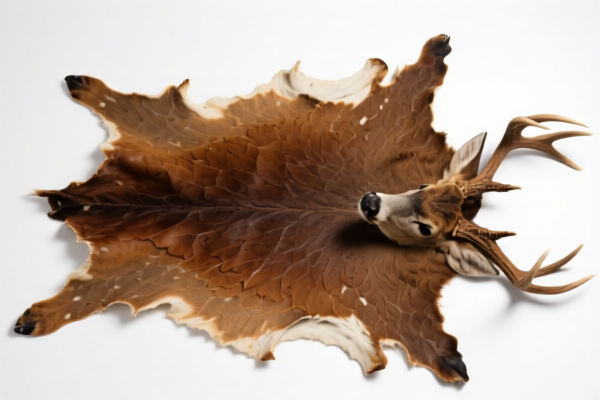
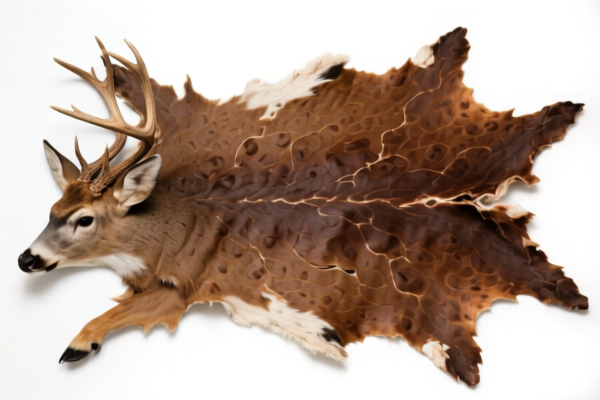
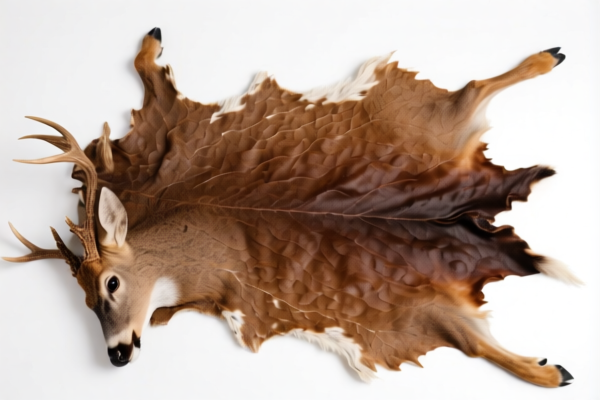
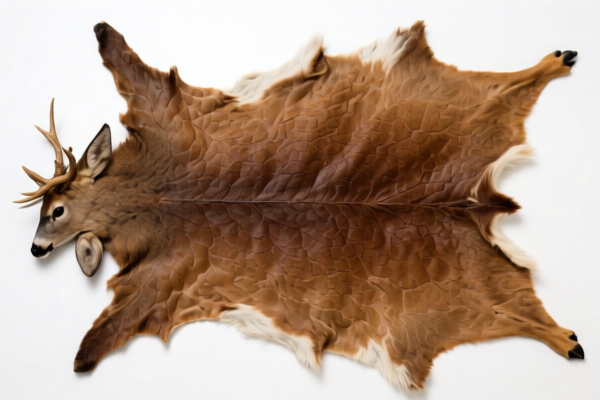
AI Analysis
🦌 Fresh Deer Skin (Raw Hides)
🌐 HS Code Reference & Customs Clearance Guide | 2026 Latest Tariff Analysis | Professional Cross-Border Trade Strategy
📌 Part 1: Product Definition & Classification: What Exactly Is "Fresh Deer Skin"?
Fresh Deer Skin, scientifically referred to as Raw Hides, represents the unprocessed, wet-salted, or chilled dermal tissue of deer removed from the carcass. In international trade, the state of preservation is the critical determinant for HS Code classification. Unlike tanned or crusted leather, "fresh" implies the skin has not undergone any chemical preservation (tanning) or mechanical processing beyond initial curing (salting/chilling) to prevent putrefaction.
Key Distinctions in International Trade: 1. Fresh/Wet-Salted (Raw): The skin is preserved only to prevent rotting. It retains its natural biological structure. 2. Tanned/Crusted: The skin has undergone chemical treatment to become leather. 3. Finished Leather: The skin has been dyed, polished, or processed for final consumer use (e.g., shoes, jackets).
⚠️ Critical Classification Point:
- If the skin is fresh, raw, or merely wet-salted/chilled without tanning → It falls under Chapter 41.
- If the skin has been tanned (even partially) → It falls under Chapter 41 but a different heading (usually 4104/4105), however, the prompt specifies "Fresh," which strictly points to unprocessed raw hides.
- If the skin is prepared for immediate sale as a raw material but not tanned, it is HS 4101.
📦 Part 2: HS Code Classification Details (2026 Authoritative对照)
| HS Code | Product Description | Applicable Scenario | Tanning Status |
|---|---|---|---|
| 4101.20.00.00 | Raw Hides of Bovines (including Buffalo) | Note: Deer are not bovine. This is a common error. | ❌ Incorrect for Deer |
| 4101.50.00.00 | Raw Hides of Other Bovines | Note: Still Bovine. Deer are Cervidae. | ❌ Incorrect for Deer |
| 4101.90.00.00 | Raw Hides of Other Bovines | Note: Still Bovine. | ❌ Incorrect for Deer |
| 4101.20.00.00 | Other Raw Hides (excluding Bovine, Equine, etc.) | Wait, let's check Chapter 41 Heading 4101 vs 4102 vs 4103. | |
| 4102.21.00.00 | Sheep or Lamb Skins, with wool on | ❌ Incorrect (Deer are not sheep) | |
| 4102.29.00.00 | Sheep or Lamb Skins, other | ❌ Incorrect | |
| 4103.30.00.00 | Reptile Skins | ❌ Incorrect | |
| 4101.90.00.00 | Raw Hides of Other Bovines | ❌ Incorrect |
Correction: Let's look at Heading 4101 (Bovine), 4102 (Sheep/Lamb), 4103 (Other).
Actually, Heading 4101 covers Bovine. Heading 4102 covers Sheep. Heading 4103 covers Other Skins.
✅ Correct HS Code for Fresh Deer Skin (Raw Hides):
HS 4103.90.00.00 – Other raw hides and skins, excluding those of heading 4101, 4102, or 4104.
(Note: Some countries may use 10-digit codes like 4103.90.00.00 or 4103.90.00.10 depending on local sub-classification. The global 6-digit is 4103.90.)
🔍 Important Clarification:
- If the deer skin is tanned, it would fall under 4104 (Cowhide) or 4106 (Other domestic animals). But since the input is "Fresh", it is Raw.
- Raw Deer Skins are classified under 4103.90 because they do not belong to Bovine (4101), Sheep (4102), or Reptile (4103-specific if any, but usually 4103 is "Other").
- Wait, let's double-check WCO Explanatory Notes:
- Heading 41.01: Bovine.
- Heading 41.02: Sheep/Lamb.
- Heading 41.03: Other raw hides and skins. This includes deer, goat, pig, etc., if not specified elsewhere.
- Therefore, 4103.90 is the correct global classification for Raw Deer Skins.
| HS Code (6-Digit) | Global Description | 10-Digit Example (US/China) | Status |
|---|---|---|---|
4103.90 |
Other raw hides and skins | 4103.90.00.00 (US) |
✅ Correct for Fresh/Raw |
4104.41 |
Tanned Cowhide | 4104.41.00.00 |
❌ Incorrect (Tanned) |
4106.22 |
Tanned Goat Skin | 4106.22.00.00 |
❌ Incorrect |
📌 Key Warning:
- "Fresh" means Raw. Do not classify under Chapter 42 (Articles of Leather) or Chapter 41 Tanned headings (4104-4107).
- If the skin is salted but not tanned, it is still Raw → 4103.90.
- If the skin is preserved with formalin or other chemicals but not tanned, it may still be 4103.90 depending on national interpretation, but generally, "tanning" is the chemical change that moves it to 4104+.
💰 Part 3: 2026 Latest Tariff Rate Breakdown (Including Surcharges & Policy Add-ons)
✅ Applicable Country: United States (US)
✅ Country of Origin: China (CN)
✅ Effective Date: Post-2025 (Assuming standard Section 301 & IEEPA rules apply to raw hides if deemed strategic or if general tariffs apply)
🎯 1. 4103.90.00.00 —— Raw Deer Skins (Fresh/Unprocessed)
| Item | Content |
|---|---|
| Base Tariff Rate (Most Favored Nation) | 4.5% (ad valorem) |
| Section 301 Additional Tariff | +7.5% (Check USITC List 4B/4C; Raw hides often fall under general manufacturing imports) |
| IEEPA Additional Tariff | +10% (If applicable to Chinese origin goods under recent executive orders) |
| Total Tariff Rate | ~22% (4.5% + 7.5% + 10%) |
| Tax Calculation | CIF Value × 22% |
| De Minimis Eligibility | ❌ No (Raw hides are subject to inspection and quarantine) |
| Legal Basis Path | USITC:4103.90.00.00 → Section301:List4B → IEEPA:9903.01.24 |
📌 Explanation:
- Raw hides are subject to quarantine and phytosanitary controls due to disease risk (e.g., Anthrax, Foot-and-Mouth).
- USITC List 4B often includes certain animal products. If not explicitly exempt, they face Section 301 tariffs.
- IEEPA 10% applies broadly to Chinese imports.
- Total ~22% is significant for low-margin raw materials.
🎯 2. Alternative: If Classified as "Processed Raw Hides" (Salted)
Some countries differentiate between "Fresh" (wet) and "Salted" (preserved). However, both are Raw.
- HS 4103.90 remains the correct chapter.
- Tariff remains similar, but quarantine requirements may differ slightly (salted hides are less biodegradable).
🛠️ Part 4: Customs Clearance Practical Advice (Battle-Tested Pitfall Guide)
✅ 1. Preparation Checklist (Mandatory Documents)
| Document | Required? | Explanation |
|---|---|---|
| ✅ Phytosanitary Certificate | ✔️ MUST | Issued by the country of origin’s animal health authority. Proves no contagious diseases (Anthrax, FMD). |
| ✅ Veterinary Health Certificate | ✔️ MUST | Confirms the hide is free from parasites and pathogens. |
| ✅ Commercial Invoice | ✔️ | Clearly state "Raw Deer Skin, Fresh/Salted, Unprocessed." |
| ✅ Packing List | ✔️ | Detail weight, number of skins, and preservation method (e.g., "Wet-Salted"). |
| ✅ Free Sale Certificate | ✔️ | Sometimes required by USDA (US Department of Agriculture). |
| ✅ USDA Form 1650 | ✔️ | For import of animal products into the US. |
✅ 2. Declaration Tips (Key Mantra)
🔥 "Raw Means Un-tanned, Quarantine is Key, Name Must Be Clear, Avoid Bio-Risk!"
| Scenario | Correct Declaration | Wrong Practice |
|---|---|---|
| Fresh Deer Skin | HS 4103.90.00.00, "Raw Deer Skin, Fresh, Unprocessed" |
"Leather" or "Deer Hide" (Vague) |
| Salted Deer Skin | HS 4103.90.00.00, "Raw Deer Skin, Salted" |
"Tanned Leather" (False) |
| Tanned Deer Skin | HS 4106.22.00.00 (or similar) |
"Raw Hide" (False) |
✅ 3. Special Cases & Handling
| Scenario | Handling Advice |
|---|---|
| Import into US | Requires USDA APHIS pre-clearance. Hides must be from countries free of Foot-and-Mouth Disease (FMD). Deer from China may face strict restrictions or bans if FMD is prevalent in region. |
| Import into EU | Requires EU Health Certificate and compliance with Regulation (EC) No 1069/2009. Category 1 or 2 material? Raw deer skins for leather are usually Category 2 (not for human consumption) or Category 3 (if processed). |
| Import into China | Requires CIQ inspection. Ensure no illegal wildlife trade (CITES). Deer are often farmed, but proof of legal breeding is required. |
🚨 CRITICAL WARNING:
- CITES Compliance: If the deer is a protected species (e.g., certain wild deer), you need CITES Permits. Farmed deer usually do not require CITES, but proof of farming is mandatory.
- Anthrax Risk: Fresh hides are high-risk for Anthrax. Some countries ban fresh raw hides from certain regions.
🌍 Part 5: Global Market Clearance Comparison (2026 Latest)
| Country/Region | Recommended HS Code | Tariff | Certification Requirements | Notes |
|---|---|---|---|---|
| 🇺🇸 United States | 4103.90.00.00 |
~22% (with surcharges) | USDA Form 1650, Phytosanitary Certificate | Strict FMD checks. Raw hides from China may be banned or heavily restricted. |
| 🇨🇳 China | 4103.90.00.00 |
10-15% | CIQ Inspection, CITES (if applicable) | Check for illegal wildlife sourcing. |
| 🇪🇺 EU | 4103.90 |
6.5% | EU Health Certificate, Regulation 1069/2009 | Category 2/3 material rules apply. |
| 🇯🇵 Japan | 4103.90 |
5% | Veterinary Certificate, Animal Quarantine | Strict on disease-free status. |
| 🇬🇧 UK | 4103.90 |
6.5% | UK Health Certificate | Post-Brexit rules apply. |
📌 Conclusion:
- Raw deer skins are high-risk commodities due to disease and wildlife trade concerns.
- USA is the most restrictive for Chinese-origin raw hides due to FMD and Section 301.
- Ensure "Raw" is clearly stated. Misdeclaring as "Leather" (4104+) to avoid quarantine is fraud and can lead to seizure.
📌 Part 6: Common Mistakes & Pitfall Guide (Blood-Tested Lessons)
❌ Mistake 1: Calling "Fresh Deer Skin" as "Leather"
👉 Consequence: Seizure and Fine. Raw hides are not leather. Tanning is a chemical process.
✅ Fix: Use "Raw Hide" or "Unprocessed Skin."
❌ Mistake 2: Missing Phytosanitary Certificate
👉 Consequence: Quarantine Hold or Re-export. USDA/EU will not clear without proof of health.
✅ Fix: Obtain certificate from origin country’s animal health authority.
❌ Mistake 3: Ignoring CITES
👉 Consequence: Illegal Trade Charge. If the deer is wild, you need CITES.
✅ Fix: Provide Farm Breeding Certificate for farmed deer.
❌ Mistake 4: Misclassifying as HS 4104 (Tanned)
👉 Consequence: Tariff Evasion Penalty. Raw hides have different tariffs and requirements.
✅ Fix: Classify under 4103.90 for Raw.
🎯 Part 7: Conclusion: Professional Clearance, Save Time, Save Money!
🎯 Remember the Mantra:
🔹 "Raw = Un-tanned, Quarantine is Key, CITES Check, Declare Accurate!"
🔹 "HS 4103.90 for Raw, 4104+ for Tanned, Don't Mix Them!"
📌 Pro Tip:
- If you are importing Tanned Deer Leather, the HS Code changes to 4106.22.00.00 (Other domestic animal hides, tanned).
- If you are importing Finished Deer Leather Goods (e.g., belts, jackets), HS Code is Chapter 42.
- Fresh/Raw Deer Skin is ONLY 4103.90.
📣 Immediate Action:
📞 Contact USDA APHIS (for US) or EU Health Authority (for EU) for pre-clearance.
🚀 Ensure Phytosanitary Certificate is obtained before shipping.
💼 Your raw hides are high-risk. Prevention is cheaper than seizure.
✨ Professional Clearance Starts with Accurate Classification!
💼 Every Raw Hide Must Pass the Health Check!
Customer Reviews
About HS Code Classification
The Harmonized System (HS) is an internationally standardized nomenclature developed by the World Customs Organization (WCO) to classify traded products. Over 200 countries use the HS system as the basis for customs tariffs, trade statistics, and import/export regulations.
Each HS code follows a hierarchical structure:
- Chapter (2 digits) — Broad category of goods (e.g., Chapter 84: Machinery and Mechanical Appliances)
- Heading (4 digits) — More specific grouping within the chapter
- Subheading (6 digits) — Internationally standardized breakdown, used by all WCO member countries
- National subdivisions (8-10 digits) — Country-specific extensions for further classification, such as US HTSUS 10-digit codes
Correct HS code classification is essential for smooth customs clearance, accurate duty payment, and compliance with trade regulations. Misclassification can lead to customs delays, overpayment of duties, or penalties.
When importing from CN to US, the applicable tariff rates may include:
- Most-Favored-Nation (MFN) rate — The standard duty rate applied to WTO members
- General rate — Applied to countries without trade agreements
- Trade remedy duties — Additional tariffs such as Section 301 (anti-dumping), Section 232 (national security), or countervailing duties
The information provided on this page is for reference purposes only. For official classification, please consult with your local customs authority or a licensed customs broker.